
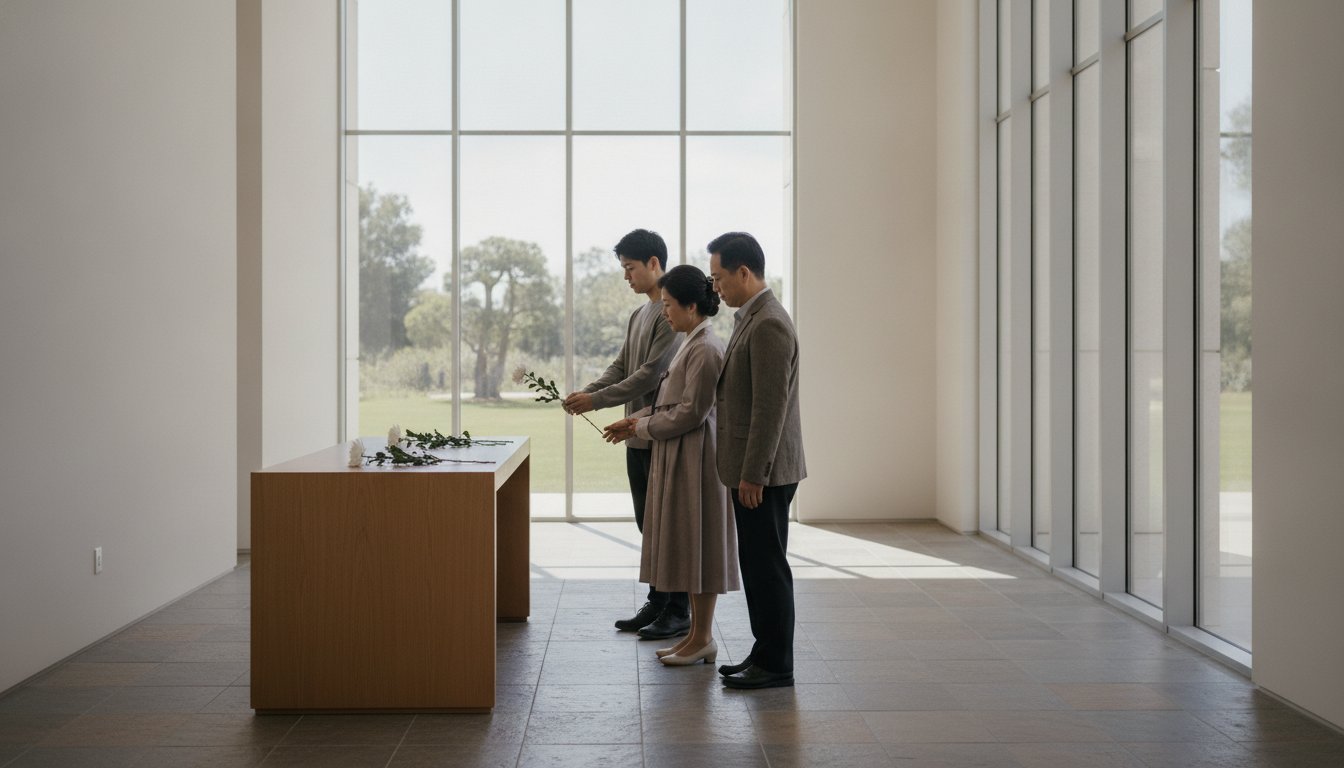
How do you bridge the gap between ancient traditions of filial piety and the structured regulations of a modern cemetery in Southern California? It's natural to feel a heavy weight of responsibility when planning a final farewell, especially when you're balancing the specific nuances of Buddhist or Taoist rites with the logistical requirements of local landmarks like Forest Lawn or Rose Hills. The fear of missing a key ritual or feeling lost in translation shouldn't overshadow the love you feel for your ancestors.
Finding a Chinese funeral home Orange County families can trust means looking for a partner who understands both the language of your heritage and the practicalities of our local area. We've created this guide to help you discover the deep meanings behind traditional Chinese funeral symbols and rituals, ensuring your loved one is honored with the dignity they deserve. You'll find clarity on addressing religious differences, overcoming language barriers, and taking practical steps to plan a service that feels both sacred and seamless. Through this journey, you can find a sense of peace knowing your family's legacy is preserved with the utmost reverence.
Key Takeaways
- Understand the core philosophy of Filial Piety (Xiao) and its vital role in ensuring a peaceful transition and lasting family prosperity.
- Learn about the sacred encoffining ceremony and how to choose traditional garments that reflect a life of dignity and respect.
- Navigate the specific meanings of funeral colors and symbols with help from a Chinese funeral home Orange County families trust to maintain cultural integrity.
- Compare traditional burial preferences with the modern shift toward cremation to make an informed decision that honors both heritage and practical needs.
- Discover how to coordinate with Mandarin-speaking professionals to bridge generational gaps and simplify complex local cemetery regulations.
Understanding the Heart of Traditional Chinese Funeral Customs
A Chinese funeral isn't just a ceremony to mark the end of a life. It's a sacred bridge between generations. For families in Irvine, Cerritos, and across Southern California, these rituals represent a final act of devotion. Choosing a Chinese funeral home Orange County families trust helps ensure that every step honors the deep spiritual heritage of the deceased. These traditions focus on two essential goals: guiding the soul safely into the next world and securing the ongoing prosperity of the family left behind.
To understand these practices, you can look at an overview of Chinese funeral rituals which emphasizes the importance of performing rites correctly to maintain spiritual harmony. If the rituals are handled with care, the ancestor finds peace, and their blessings continue to flow through the family line. This sense of continuity is why many families prioritize these customs even decades after moving to the United States.
The Concept of Filial Piety (Xiao) in End-of-Life Care
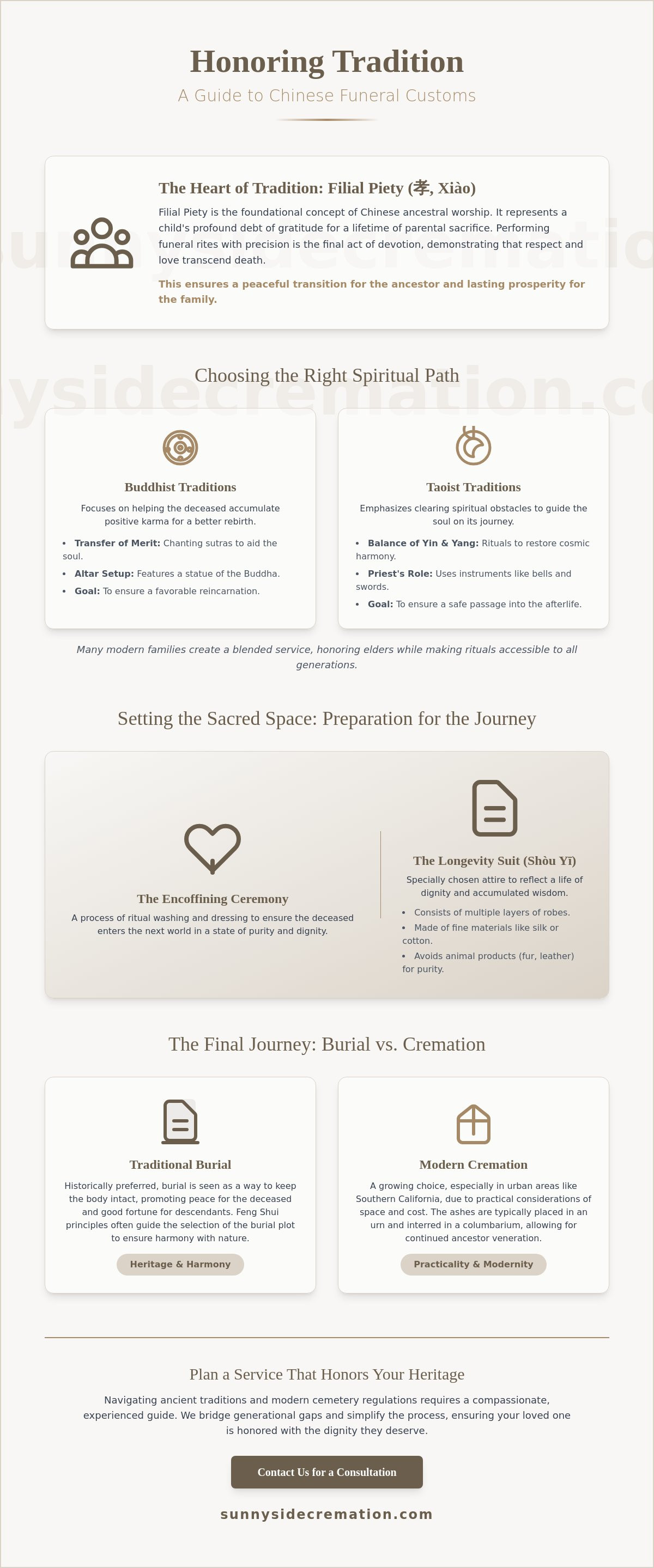
At the center of every ritual is the concept of Filial Piety, or Xiao. Filial Piety is the foundation of Chinese ancestral worship. It's the belief that children owe a debt of gratitude to their parents for a lifetime of sacrifice and care. By performing these rites with precision, children demonstrate that their respect doesn't end with death. The eldest son usually takes the lead in these ceremonies. He acts as the primary representative of the family hierarchy, ensuring that the legacy of the parents remains unbroken and respected by the entire community.
Buddhist vs. Taoist Traditions: Choosing the Right Path
While the core values remain consistent, the specific rituals often depend on the family's religious path. Many families in Southern California find themselves blending these traditions to accommodate different generations.
- Buddhist Traditions: These focus heavily on the "transfer of merit." Monks or family members chant sutras to help the deceased accumulate positive karma for a better rebirth. The altar usually features a statue of the Buddha alongside the portrait of the deceased.
- Taoist Traditions: These rituals emphasize the balance of yin and yang. Taoist priests may use specific instruments, like bells and swords, and elaborate altar setups to clear spiritual obstacles for the soul.
- Multicultural Approaches: It's common for modern families to choose a simplified blend of these paths. This approach honors the traditional wishes of elders while remaining accessible to younger family members who may not speak the language fluently.
The pressure to "get it right" can be intense for families who don't want to fail their ancestors. This is why having a steady, compassionate guide at a Chinese funeral home Orange County families can lean on is so important. In cities like Westminster and Fullerton, the community understands that a well-conducted funeral isn't just about the past. It's about setting a foundation for the future. When rituals are performed with the right intention, it brings a sense of order to the chaos of loss. It reassures the living that they've fulfilled their duty, allowing them to move forward with a clear heart and a peaceful mind.
Preparation and the Wake: Setting the Sacred Space
The transition from life to the afterlife begins with the preparation of the physical body. It's a time for quiet reflection and deep respect. In the Chinese tradition, this stage is often referred to as the "encoffining" ceremony. It involves the ritual washing and dressing of the deceased, a process that ensures they enter the next world in a state of purity and dignity. When you're working with a Chinese funeral home Orange County families rely on, this process is handled with a gentle touch, recognizing that these first steps are vital for the family's peace of mind.
The Ritual of Dressing and Preparation
Choosing the right attire for a loved one is a significant decision. Traditionally, families select a "Longevity Suit," which consists of multiple layers of high-quality robes. These garments are often made of silk or fine cotton, specifically avoiding animal products like fur or leather to maintain spiritual purity. A scholarly analysis of Chinese death rituals highlights how these layers represent the accumulated wisdom and years of the deceased. The number of layers is often odd, as even numbers are reserved for celebrations of the living.
Practical details matter just as much as the fabric. It's common to place a small pearl or a coin in the mouth of the deceased, a gesture intended to provide "currency" or protection for their journey. While traditional robes remain the gold standard, many families in Orange County now blend these customs with Western business attire. This choice often reflects the professional life the person led in Southern California while still incorporating symbolic inner layers or accessories that honor their heritage.
Altar Essentials and Symbolic Offerings
The wake, or visitation, serves as a community gathering point. It's a space where friends and relatives come together to offer support and share memories. At the heart of this gathering is the altar, which acts as a focal point for prayer and remembrance. A properly set altar includes specific items to guide the spirit:
- A central portrait: A clear, respectful photo of the loved one.
- The Spirit Tablet: This serves as a temporary resting place for the soul during the rituals.
- Flowers: White or yellow chrysanthemums are used to symbolize grief and nobility.
- Incense and candles: These provide light and a way for prayers to reach the heavens.
Offerings of fruit are always presented in odd numbers, as even numbers are associated with joyful celebrations like weddings. Oranges and apples are frequent choices, representing luck and peace. Creating this respectful space within local mortuaries requires a steady hand and an eye for detail. A professional Chinese funeral home Orange County provider understands how to balance these requirements with the rules of the facility. If you're feeling overwhelmed by these arrangements, exploring a Chinese Funeral Package can provide a structured way to ensure every symbolic element is in its proper place.
Symbols of Respect: Colors, Joss Paper, and Incense
Every detail in a traditional ceremony carries a specific message, acting as a silent language of love and duty. When you visit a Chinese funeral home Orange County families often look for guidance on the visual cues that define a respectful space. In Chinese culture, symbols like colors and incense aren't just decorations; they're essential tools for honoring the deceased and protecting the living. Understanding these Chinese funeral rituals helps families navigate the emotional landscape with confidence and grace.
Navigating the Color Palette of Mourning
White is the primary color of mourning. It represents purity and the absence of life's distractions. You'll see white used in floral arrangements, banners, and even the clothing worn by the closest family members. Yellow or gold also plays a vital role, especially in Buddhist traditions, symbolizing the sacred and the eternal. These colors create an atmosphere of quiet reverence, focusing the mind on the spiritual transition taking place.
There's one color you'll almost never see: red. In the Chinese tradition, red is the color of joy, vitality, and celebration. Using it at a funeral is considered deeply disrespectful, as it's reserved for weddings and the Lunar New Year. Even the smallest red details are carefully removed or covered to maintain the solemnity of the occasion. Family members often wear specific colored armbands or headbands to show their relationship to the deceased. Black usually denotes the children, while white or blue may be worn by grandchildren and more distant relatives. This visual hierarchy helps the community understand who is in the deepest state of grief.
The Practice of Burning Joss Paper and Effigies
Providing for a loved one doesn't stop at the grave. Burning Joss paper, or spirit money, is a way to ensure the soul has everything it needs in the afterlife. Families may also burn paper effigies of houses, cars, or even modern electronics to provide comfort and status for the departed. Joss paper provides "financial security" for the soul as it navigates the spiritual realm.
Incense acts as a bridge, carrying prayers and messages from the living to the dead. The rising smoke is a physical manifestation of the family's continued connection to their ancestor. In Orange County, navigating these traditions requires a bit of practical planning. Many local cemeteries, such as Forest Lawn or Rose Hills, have specific fire regulations regarding open flames. Working with an experienced Chinese funeral home Orange County provider ensures you can perform these essential rites safely. They can help you locate designated burning areas or provide alternative ways to honor these traditions while respecting local safety rules. This careful balance allows you to fulfill your cultural duties without the stress of logistical hurdles.
The Final Journey: Burial vs. Cremation Traditions
Deciding between burial and cremation is one of the most personal choices a family will make. Historically, Chinese culture has placed a high value on "Ground Peace," or burial, to maintain the wholeness of the physical body. This practice is rooted in the belief that the physical form should return to the earth intact. However, the cremation vs burial Chinese tradition has evolved significantly in modern California. Many families now find that cremation provides a dignified way to honor their loved ones while navigating the practicalities of Southern California life.
Feng Shui plays a vital role in selecting a final resting place. It isn't just about the beauty of the landscape; it's about the orientation of the site and the flow of natural energy. A knowledgeable Chinese funeral home Orange County families work with will often coordinate closely with major memorial parks like Forest Lawn and Rose Hills. These locations are well-versed in the specific needs of the Chinese community, offering sections designed with favorable orientation to ensure the ancestor's spirit remains at peace and continues to bless the family.
The Graveside Service and Burial Rites
The service at the cemetery is a moment of deep connection. During the "Handful of Earth" ritual, family members and guests may each toss a bit of soil onto the casket as a final gesture of parting. This act signifies the physical return to the earth and the beginning of the soul's new journey. Logistics can be complex for large family processions, but a steady hand makes the transition from the chapel to the graveside feel seamless. After the burial, it's traditional to distribute a small packet containing a piece of candy and a coin to every guest. The candy is meant to take away the bitterness of the day, while the coin represents a wish for future prosperity and luck.
Cremation and Urn Placement
From a Buddhist perspective, cremation is often viewed as a sacred release. It symbolizes the soul's transition from the physical vessel toward a new state of being. Selecting a niche for the urn is handled with the same care as choosing a burial plot. Families often look for locations that allow for future ancestral visits during Qingming, the traditional tomb-sweeping festival. For those who wish to be present for the beginning of this process, some families choose witnessed cremation Orange County services. This allows immediate family members to gather in a private space, providing a final, quiet goodbye before the cremation begins.
If you're ready to explore these options for your family, our team is here to help you understand our Chinese Funeral and cremation packages designed to honor every tradition with grace.
Planning a Culturally Respectful Service in Orange County
Planning a funeral is a profound responsibility that often falls on the shoulders of the younger generation while the elders carry the heaviest grief. In Southern California, this process involves balancing complex local cemetery regulations with ancient rites. Choosing a Chinese funeral home Orange County families trust means finding a partner who understands that every detail, from the incense to the altar, must be handled with precision. It's about creating a bridge between the wisdom of the past and the practical realities of the present.
Bridging Language and Cultural Gaps
For many grieving families, the first hurdle is communication. Grieving is difficult enough without the added stress of a language barrier. Working with a Mandarin funeral home Orange County elders can talk to directly provides immediate relief. It ensures that the specific wishes of parents and grandparents are heard and respected without being lost in translation. This direct connection fosters a sense of security, letting the family focus on their emotional journey rather than struggling to explain traditional requirements.
Professional coordination also helps prevent technical errors during sensitive rituals. Whether it's the specific timing of a chant or the proper placement of a spirit tablet, having an experienced guide ensures nothing is overlooked. A family-owned mortuary in Orange County often provides a level of personalized care that larger corporate entities cannot match. At Sunnyside, we specialize in Chinese funeral services Southern California families have relied on for years, focusing on the human connection behind the logistics. We act as a steady hand, helping you honor your heritage while managing the intricate details of local mortuary care.
Next Steps for Your Family
When a loss occurs, the first 24 hours can feel like a blur. Taking small, methodical steps can help reduce the cognitive load during this emotional time. We recommend following this simple path to begin the process:
- Notify the authorities: If the death occurs at home, contact the local physician or emergency services to obtain a legal declaration.
- Gather documentation: You'll need the deceased's legal name, Social Security number, and birthplace to secure Orange County death certificates.
- Consult with elders: Ask about specific religious preferences (Buddhist vs. Taoist) to ensure the service reflects their lifelong values.
- Begin the conversation: Even if a loss isn't imminent, funeral pre-planning for Asian families is a compassionate way to protect your legacy and ease the future burden on your children.
Our team at Sunnyside Cremation and Funeral is here to serve as your compassionate advocate. We understand the weight of your duty and the importance of your heritage. If you need guidance or simply a calm presence to walk you through the options, we invite you to reach out for a tradition-first consultation. Let us handle the details so you can focus on honoring the life and legacy of your loved one within a Chinese funeral home Orange County environment that feels like home.
Honoring Your Family Legacy with Reverence and Care
Preserving the sacred rituals of your heritage is a profound act of love that ensures your ancestors find peace while bringing harmony to the living. We've explored how the core values of filial piety guide every decision, from the choice of traditional garments to the specific orientation of a final resting place. Finding a Chinese funeral home Orange County families can rely on is the first step in making sure these ancient traditions are respected within the modern landscape of Southern California.
As a family-owned and operated mortuary, we take pride in our specialized Mandarin-speaking staff who understand the nuances of your culture. We provide expert coordination with local landmarks like Forest Lawn and Rose Hills, ensuring that every logistical detail aligns with your family's spiritual needs. Our goal is to serve as your steady guide, reducing the burden of planning so you can focus on reflection and remembrance. Please contact our compassionate team for a culturally respectful Chinese funeral consultation. You aren't alone in this journey; we're here to help you honor your loved one with the dignity they deserve.
Frequently Asked Questions
Why do people wear white instead of black at a traditional Chinese funeral?
White is the traditional color of mourning in Chinese culture because it represents purity and the absence of life's distractions. While Western traditions favor black, Chinese families use white to honor the soul's transition into the spiritual realm. In some ceremonies, you may also see yellow or gold, which are sacred colors often used in Buddhist rites to symbolize the eternal nature of the spirit.
Is it disrespectful to choose cremation over burial in Chinese culture?
Choosing cremation is not considered disrespectful and has become a widely accepted practice for modern families in Southern California. While traditional "Ground Peace" through burial was once the standard, many Buddhist traditions actually view cremation as a sacred release for the soul. Families often find that a Chinese funeral home Orange County provider can help them maintain all essential rituals while choosing the method of disposition that feels right for their situation.
What is the "candy and a coin" tradition after a Chinese funeral service?
The "candy and a coin" tradition is a gesture of gratitude and spiritual protection given to guests as they depart the service. The sweet candy is intended to take away the bitter taste of grief, while the coin represents a wish for future prosperity and luck. It's customary for guests to eat the candy immediately and spend the coin before they return home to ensure the blessing is fully realized.
How long does a traditional Chinese funeral service typically last?
A traditional Chinese funeral service usually lasts between one and three hours, depending on the depth of the religious chanting and rituals involved. If the family chooses to hold a full wake or multiple visitation periods, the entire process may span several days. Professional coordination ensures these timelines are managed with a steady hand, allowing the family to move through each stage of the ceremony without feeling rushed or overwhelmed.
Can we hold a Buddhist ceremony at a non-Buddhist funeral home in Orange County?
You can certainly hold a Buddhist ceremony at a non-Buddhist funeral home as long as the facility allows for specific ritual items like altars and incense. It's vital to work with a director who understands how to set the sacred space and accommodate the needs of visiting monks or priests. Most mortuaries in the area are familiar with these requirements and will help you arrange the chapel to reflect your family's specific spiritual path.
What should I avoid doing or wearing when attending a Chinese funeral?
You should strictly avoid wearing the color red, as it's reserved for joyful celebrations and is considered deeply disrespectful at a funeral. It's also important to avoid loud conversations or any behavior that might disrupt the solemn atmosphere of the gathering. When you're unsure of a specific ritual, it's best to follow the lead of the immediate family and maintain a quiet, reverent presence throughout the service.
Why is Joss paper burned during the ceremony, and is it allowed in California?
Joss paper is burned to provide "financial security" and essential goods for the soul in the afterlife, and it's permitted in California when conducted in designated areas. Most local cemeteries and funeral homes have specific fire safety policies or provided containers to ensure these rites are performed safely. Your funeral director will guide you to the proper locations for burning to ensure you comply with all local regulations while honoring your traditions.
How can I find a Mandarin-speaking funeral director in the Garden Grove area?
Finding a Mandarin-speaking professional is as simple as reaching out to a Mandarin funeral home Orange County families trust for their cultural expertise. Many providers in the Garden Grove and Westminster areas specialize in serving the Chinese community and offer staff who speak Mandarin, Cantonese, and Taiwanese. This language support is essential for ensuring that elders feel comfortable and that every complex ritual is explained clearly to the entire family.


