
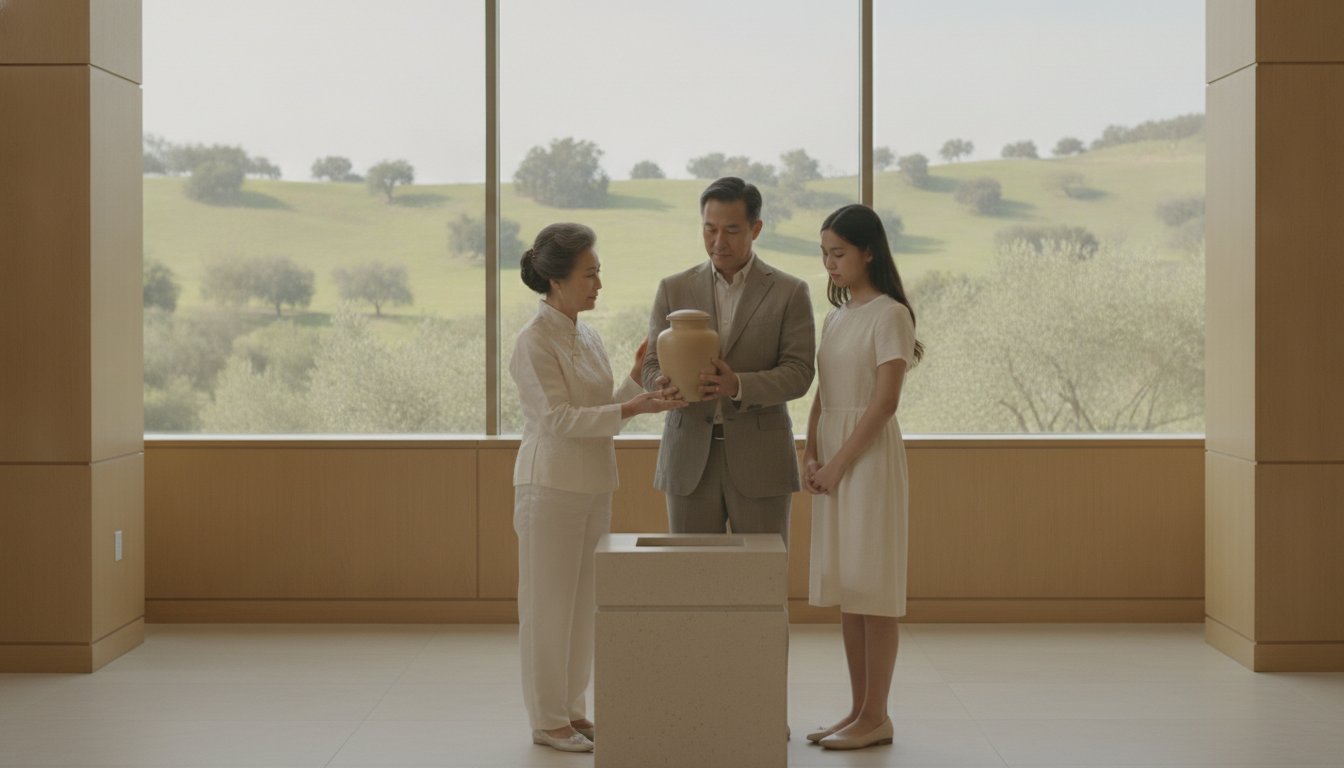
Ritual, not the method of disposition, is the true vessel of filial piety in Chinese funeral traditions. In 2026, many families find themselves at a crossroads where ancient values meet modern realities. You might feel that choosing between cremation vs burial Chinese tradition is a choice between your budget and your heart. However, the true essence of honoring an ancestor lies in the sincerity of the ritual. With burial plots in Southern California reaching record prices and seven out of ten Californians now choosing cremation, the way we express reverence is evolving.
We understand the weight of this responsibility and the desire to provide a dignified legacy without causing generational conflict. It's difficult to balance the fear of breaking tradition with the practical needs of today. This guide will show you how to maintain deep ancestral reverence while making modern end-of-life choices. You'll discover how traditional rituals can be beautifully adapted for cremation, ensuring your loved ones are honored with the same respect and peace that has guided families for centuries.
Key Takeaways
- Understand how the core principle of filial piety (Xiao) remains the heart of any funeral decision, regardless of the method you choose.
- Learn about the spiritual significance of "whole body" integrity and how these traditional beliefs are being reconciled with modern needs.
- Explore how families navigate the choice of cremation vs burial Chinese tradition by adapting Buddhist and Taoist rites to ensure a peaceful transition.
- Identify the essential rituals, such as the critical "Seven Days" period and the burning of Joss paper, that remain vital for honoring the deceased.
- Discover practical ways to coordinate services at local parks like Forest Lawn or Rose Hills while utilizing Mandarin-speaking support to ease family stress.
Choosing Between Cremation and Burial in Chinese Tradition
The heart of every Chinese funeral decision is the profound concept of Xiao, or filial piety. This isn't just a social expectation; it's a sacred duty to provide the highest level of care for a parent or elder even after they've passed. When families weigh the choice of cremation vs burial Chinese tradition, they aren't just looking at logistics. They're asking how they can best fulfill their role as devoted children and stewards of their family's legacy. While the method of disposition has evolved, the intention of honoring one's roots remains constant.
Traditionally, burial has been the preferred path, rooted in the belief of Ru tu wei an, which translates to "returning to the earth for peace." This philosophy suggests that the soul finds its ultimate rest when the physical body is reunited with the soil. To understand the depth of these practices, one can look at the history of Chinese funeral rituals, which emphasize the physical body's return to the soil to complete the cycle of life. However, by 2026, many Chinese-American families have found that cremation can be just as respectful when performed with the right intention and spirit rites.
The Cultural Weight of the Decision
For many elders, the method of disposition is a direct reflection of the family's respect and social standing. This often creates a delicate tension between the traditional wishes of the older generation and the practical constraints faced by younger family members. A Feng Shui master often plays a vital role here, advising on the timing and location for both burials and the placement of urns in a columbarium. Their guidance ensures that the chosen path aligns with spiritual harmony, providing peace of mind to the living and the deceased alike.
Modern Realities in Southern California
In areas like Orange County and Los Angeles, land scarcity has made traditional burial plots increasingly difficult to secure and maintain. High costs and limited space are practical hurdles that can't be ignored. Cremation has emerged as a compassionate and flexible solution, especially for families with members living across the globe. It allows for more time to gather and provides options for memorialization that fit a modern lifestyle while still upholding ancient values. Having a Mandarin-speaking funeral guide can help bridge this gap, ensuring that every detail is explained clearly and that no cultural nuance is lost during the planning process.
Traditional Burial: The Spiritual Significance of "Whole Body" Integrity
For many families, the choice between cremation vs burial Chinese tradition centers on the sacred concept of Quan Shi, or whole body integrity. Rooted deeply in Confucian thought, this principle suggests that our physical forms are gifts from our parents. To return them to the earth incomplete is often seen as a lapse in filial duty. This physical wholeness is intimately tied to the dual nature of the soul: the Hun, which ascends to the heavens, and the Po, which remains with the physical remains. A traditional burial provides a stable anchor for the Po, ensuring the spirit doesn't become restless or wander. It's this spiritual stability that families seek when they choose the path of the earth.
In this tradition, the coffin is far more than a simple vessel. It's prepared as a permanent "home" for the deceased in the afterlife. An elaborate coffin serves as a sanctuary, offering the spirit a sense of security and dignity. This transition from the world of the living to the realm of the ancestors is a delicate process. Every detail, from the quality of the wood to the silk lining, is a final act of care intended to provide the ancestor with comfort for eternity.
Rituals Specific to Traditional Burial
The success of a traditional burial depends heavily on the orientation of the site. A Feng Shui master is typically consulted to ensure the grave is positioned to capture positive energy, which is believed to bring blessings to future generations. During the preparation, families place "lucky" items inside the coffin, such as coins, pearls, or personal treasures, to assist the spirit on its journey. The graveside ceremony concludes with the family casting the first shovelful of earth. This act is a powerful symbol of acceptance and the fulfillment of their earthly responsibilities to their loved ones.
Challenges for Modern Families
While the spiritual pull of a traditional burial remains strong, modern life presents significant hurdles. In our mobile society, maintaining a burial site over multiple generations can be difficult as family members move away from Southern California. There's also a substantial financial commitment involved in securing permanent land rights in prestigious memorial parks. Balancing these ancient "whole body" requirements with local health regulations and space limitations requires careful planning. If you're feeling the weight of these decisions, the compassionate staff at Sunnyside Cremation & Funeral can offer a steady hand to help you honor these traditions in a way that fits your family's current needs.
Cremation in Chinese Culture: Reconciling Modernity with Honor
While the choice of cremation vs burial Chinese tradition often starts with practical concerns, it's deeply rooted in a shifting spiritual landscape. The Buddhist perspective offers a profound way to view this choice, seeing the physical body as a temporary vessel. In this light, cremation serves as a powerful symbol of impermanence and spiritual release, helping the soul move forward without being tethered to its earthly form. As of 2026, seven out of ten Californians choose cremation, reflecting a growing comfort with this path. Even in urban centers like Beijing and Shanghai, cremation rates have surpassed 90%, showing that modern Chinese communities are finding ways to blend ancient respect with new realities.
Taoist traditions have also found a path to harmony with this method. For Taoist families, the priority isn't necessarily the physical remains, but the meticulous performance of spirit rites. By ensuring the correct prayers are offered and the spirit is guided through its transition, cremation becomes a dignified extension of traditional care. The focus shifts from the preservation of the body to the stewardship of the soul's journey, ensuring that the ancestor's legacy remains vibrant and protected.
Comparing Cremation and Burial
Choosing the right path requires a clear understanding of how each method impacts your family's experience and long-term responsibilities. This table provides a gentle comparison of the two paths as they stand in 2026.
| Feature | Traditional Burial | Modern Cremation |
|---|---|---|
| Spiritual Focus | Physical integrity and "returning to earth" | Spiritual release and impermanence |
| Memorial Space | Permanent burial plot in a cemetery | Columbarium niche or family temple |
| Maintenance | Ongoing care of the gravesite | Minimal maintenance within a niche |
| Flexibility | Fixed location for future generations | Urns can be moved or kept in family homes |
Witnessed Cremation: A Crucial Ritual Element
Many families worry that cremation feels too distant or clinical compared to a traditional graveside service. Witnessed cremation in Orange County serves as a vital bridge to tradition. This service allows family members to be present as the process begins, mimicking the ancient custom of "watching over" the coffin until the very last moment. It provides a necessary sense of closure and ensures that the loved one is never left alone during their final transition. At Sunnyside, we provide a private and reverent space for this ceremony, allowing families to perform final rites and say goodbye with the same dignity found in a traditional burial.
Preserving Essential Rituals: Honoring the Deceased Regardless of Method
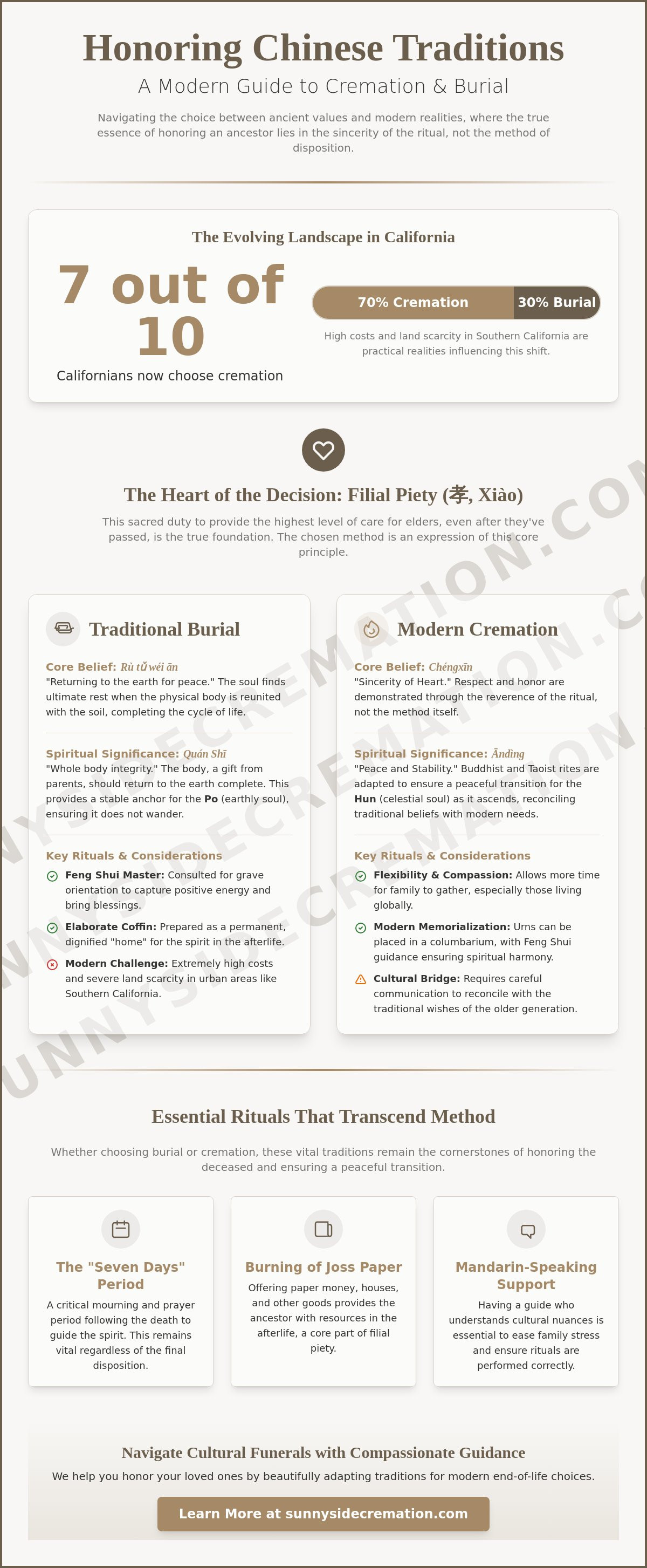
The debate of cremation vs burial Chinese tradition often focuses on the physical remains, but the spiritual rituals remain the true constant. The first week after a loss, known as the "Seven Days" period, is considered the most critical time for the soul's transition. Families believe the spirit returns home during this window, making it essential to maintain a peaceful and prayerful environment. Regardless of the method chosen, these ancient customs ensure the deceased is never forgotten and is provided for in the afterlife. It's the sincerity of these acts that fulfills the duty of filial piety.
Burning spirit money, or Joss paper, remains a foundational practice even when cremation is selected. These paper offerings represent currency, clothing, and luxuries intended for the ancestor's use in the spiritual realm. In a cremation setting, these offerings are often burned in a dedicated furnace or during the memorial service. This act of giving provides the family with a tangible way to express their love and care. Similarly, the use of incense and the placement of an ancestral tablet in the home serve as a daily bridge between the living and the departed, keeping the memory of the loved one vibrant.
During the mourning period, tradition dictates specific clothing colors to signify grief. White is the primary color of mourning, often accompanied by sackcloth for immediate family members. These outward symbols of respect help the community understand the family's loss and provide a structured way to process the journey of grief. By adhering to these visual markers, families honor the gravity of the transition and maintain the dignity of their lineage.
The Funeral Ceremony Elements
A central photo of the deceased and elaborate food offerings are staples of the ceremony. These elements invite the ancestor to the service, where Buddhist chanting or Taoist prayers guide the soul toward a peaceful destination. Many families find peace of mind by documenting these specific desires in a pre-planned funeral contract. This ensures that every cultural nuance is respected, removing the burden of difficult decisions from grieving children during their time of vulnerability.
Post-Funeral Traditions
The Longevity Banquet, held after the funeral, serves as a celebration of the ancestor's life and a way to thank those who attended. This gathering reinforces the bonds of the lineage, showing that the family's duty continues long after the service ends. Annual traditions like the Qingming Festival, or Tomb Sweeping Day, remain equally important for those who choose a columbarium niche. Visiting the site to offer prayers and clean the area ensures that the lineage honors the spirit's enduring presence rather than just the physical remains. If you need assistance arranging these delicate ceremonies, you can contact Sunnyside Cremation & Funeral to speak with a compassionate professional.
Navigating Cultural Funerals in Southern California
Organizing a final tribute in Southern California involves more than just selecting a method of disposition. It requires a deep understanding of local regulations and the specific requirements of regional memorial parks. Whether your family is deciding on cremation vs burial Chinese tradition, the logistical path can feel overwhelming during a time of heavy grief. Our expertise in communities like Garden Grove and Buena Park allows us to manage traditional processions and rituals within the framework of California law. We act as a steady guide, ensuring that every cultural requirement is met while navigating the practicalities of the modern world.
The presence of Mandarin-speaking staff is often the most significant factor in reducing a family's stress. Communication during a period of emotional vulnerability should be clear, gentle, and culturally attuned. By speaking your language, we ensure that no detail of your loved one's legacy is lost in translation. This linguistic and cultural bridge allows elders to feel heard and respected; meanwhile, younger generations can rely on our methodical approach to handle the complex paperwork and coordination required in Orange County. This structural clarity serves to reduce the cognitive load on you, providing a steady hand through a landscape of uncertainty.
Local Memorial Park Coordination
Managing the specifics of local cemeteries requires a partner who understands the unique landscape of Southern California. We work closely with Forest Lawn and Rose Hills to facilitate either traditional burial or the placement of an urn in a columbarium niche. Each park has its own set of rules regarding offerings, incense, and graveside ceremonies. We navigate these guidelines on your behalf, ensuring that your family's traditions are honored without conflict. From securing death certificates to coordinating the timing of the funeral procession, our role is to provide a seamless experience that allows you to focus on reflection and remembrance.
A Compassionate Partner for Your Family
Our commitment to your family is rooted in reverence, dignity, and cultural stewardship. We believe that every person deserves a farewell that reflects their life's values, regardless of the chosen method. We help you find a path that honors your budget while maintaining the high level of honor your ancestors deserve. This balance is achievable through thoughtful planning and a deep respect for the rituals that define your heritage. If you're ready to begin these important conversations, please speak with our compassionate Mandarin-speaking staff today to learn how we can support your journey.
Honoring Your Ancestors with Peace and Clarity
Deciding between cremation vs burial Chinese tradition is a journey of the heart that requires balancing ancient duties with the realities of life in 2026. Whether you choose the stability of a traditional burial or the spiritual release of cremation, your devotion remains the most important element. By preserving critical rituals like the "Seven Days" period and Joss paper offerings, you ensure your loved one's spirit is guided with the utmost reverence. These choices don't have to be a source of conflict; instead, they can be a final, beautiful act of stewardship for your family's legacy.
You don't have to navigate these complex decisions alone. Our team provides specialized Buddhist and Chinese funeral packages designed to bring comfort and order to your planning. With our Mandarin-speaking staff and expert coordination with local parks like Forest Lawn and Rose Hills, we handle every detail with a steady, experienced hand. Please contact Sunnyside Cremation & Funeral for a respectful cultural consultation today. We're here to help you find a path forward that honors your heritage and provides your family with lasting peace.
Frequently Asked Questions
Is cremation forbidden in Chinese culture?
Cremation is not forbidden and has become a respected choice for many families navigating the choice of cremation vs burial Chinese tradition. While burial was historically preferred for its connection to the earth, modern spiritual perspectives from Buddhism and Taoism fully embrace cremation. In fact, urban areas in China now see cremation rates exceeding 90%. It's seen as a dignified way to release the spirit while still maintaining all traditional honors.
How much does a traditional Chinese burial cost in Orange County?
The cost of a traditional burial in Orange County depends largely on the cemetery you choose and the specific location of the plot. Land scarcity in Southern California has made burial a significant financial commitment compared to other options. Families should consider the costs of the plot, the vault, and the monument, which vary across prestigious memorial parks. We recommend discussing your budget with a guide who understands these local market trends and can help you find a path that honors your loved one.
Can we still burn spirit money if we choose cremation?
Yes, you can and should continue the tradition of burning spirit money, or Joss paper, even if you choose cremation. This ritual is a vital way to provide for your loved one in the afterlife and is easily incorporated into a cremation service. Many facilities provide dedicated spaces or furnaces specifically for this purpose. It remains a powerful act of love that transcends the physical method of disposition and ensures your ancestor's needs are met.
What is the most important ritual in a Chinese funeral?
The expression of filial piety, or Xiao, is the most important element of any service. This is often manifested through the "Seven Days" rituals, where the family gathers to pray and offer food during the first week of the soul's transition. Whether you're performing these rites at a graveside or a columbarium, the sincerity of your actions ensures the deceased feels honored and cared for as they journey forward. These acts of devotion are what truly define a respectful farewell.
How do we choose between a Buddhist or Taoist service?
Choosing between a Buddhist or Taoist service usually depends on your family's personal beliefs and the wishes of the deceased. A Buddhist service often emphasizes the cycle of reincarnation and the concept of impermanence, while a Taoist service focuses more on specific rituals to guide the spirit and maintain cosmic balance. Many families find that a blend of both traditions best reflects their unique heritage and spiritual needs. We can help you coordinate with local practitioners for either path.
What color should I wear to a Chinese funeral in 2026?
White remains the traditional color of mourning in Chinese culture and is the most appropriate choice for attendees. Immediate family members might also wear sackcloth or specific armbands to denote their relationship to the deceased. You should strictly avoid wearing red, as it's a color associated with celebration and joy. Dark, somber colors like black or navy are also generally acceptable for guests in modern Southern California settings. It's always best to favor modesty and simplicity.
Does Sunnyside Cremation offer Mandarin-speaking assistance?
Yes, we provide dedicated Mandarin-speaking staff to support your family through every step of the planning process. We believe that clear communication in your native language is essential for reducing stress during a period of emotional vulnerability. Our team understands the cultural nuances of a Chinese funeral and can explain all your options with the reverence and clarity you deserve. We're here to be your steady, reliable partner through this difficult time.
How long is the traditional Chinese mourning period?
The traditional mourning period typically lasts for 49 days, which is divided into seven cycles of seven days. The first seven days are considered the most intense, as the soul is believed to be in its most active transition. While modern schedules may require some adaptation, many families still observe these milestones with specific prayers and offerings. This structured time allows the living to process their grief while consistently honoring their ancestor's memory and ensuring a peaceful transition.


