

Traditional Vietnamese mourning is not a single event. It is a structured three-year journey of "weaning" grief that honors the soul's transition with profound respect. When you're navigating the loss of a loved one, the pressure to uphold every detail of Vietnamese mourning period customs can feel like a heavy burden. You want to ensure your ancestors are honored with the dignity they deserve, but the specific timing of rites often brings more questions than clarity.
It's natural to worry about missing a milestone or unintentionally disrespecting a long-held tradition. We believe that these rituals are a bridge between generations, offering a path toward healing. This guide provides the clarity you need to plan a culturally respectful tribute in 2026. We'll walk through the spiritual meaning behind the 49 and 100-day ceremonies, provide a clear timeline for the years ahead, and help you find the local resources necessary to carry out these traditions with peace of mind.
Key Takeaways
- Understand the spiritual foundation of filial piety and why specific rituals are essential for guiding a loved one's soul toward peace.
- Master the timeline of Vietnamese mourning period customs, including the immediate preparation steps and the symbolic use of white headbands.
- Learn the distinct roles of the 49-day and 100-day rites, providing your family with a structured path for navigating deep grief.
- Gain confidence in planning for the long-term three-year cycle and the vital first death anniversary to maintain your family's heritage.
- Discover how to coordinate traditional Buddhist or Catholic ceremonies with modern services at local memorial parks like Rose Hills or Forest Lawn.
The Spiritual Philosophy of Vietnamese Mourning Customs
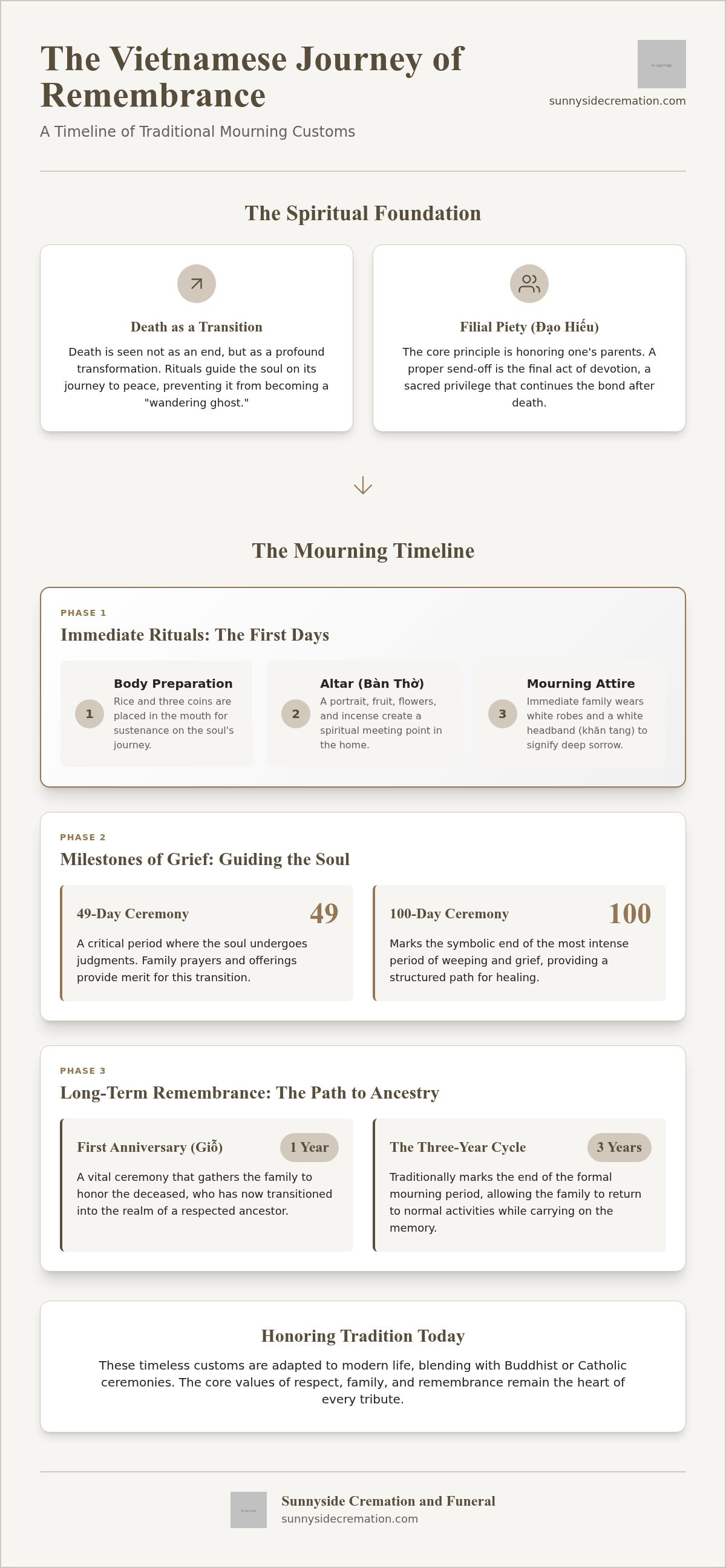
Vietnamese culture views death as a profound transformation rather than a final conclusion. It's a transition that requires the careful guidance of the living. This perspective is the foundation of Vietnamese mourning period customs, which are designed to ensure the soul finds its way to peace while providing the family a structured path through their grief. In 2026, these traditions remain a vital bridge for families in Orange County, blending ancient wisdom with contemporary life to honor those who have passed.
Properly observing these rites is believed to protect the soul. Without the direction provided by family prayers and offerings, a spirit might become a "wandering ghost," lost between worlds and unable to find rest. These rituals serve a dual purpose; they offer spiritual security for the deceased and therapeutic structure for the living. By focusing on specific tasks and milestones, families find a sense of purpose and order during a time that often feels chaotic and overwhelming.
Filial Piety: The Heart of the Ritual
At the center of every ceremony is the concept of Đạo Hiếu, or filial piety. This is the deeply held belief that children owe a debt of gratitude to their parents that continues even after death. Providing a "proper" send-off is the final act of devotion. It's an opportunity for the family to resolve any unfinished business and express the love they held in life. This duty isn't seen as a burden, but as a sacred privilege of stewardship.
Community involvement plays a significant role here as well. In traditional circles, the weight of loss is shared. Neighbors, extended family, and friends gather to support the immediate mourners, ensuring that the deceased is never left alone during the initial transition. This collective presence reaffirms the legacy of the individual and the strength of the family bond, providing a steady hand when it's needed most.
The Journey of the Soul
The 49-day period following a death is a critical window in Vietnamese tradition. During this time, it's believed the soul undergoes a series of judgments and transitions. The family altar becomes the focal point of the home, serving as a physical space where the living and the spirit meet. Offerings of food, incense, and prayers are made daily to provide the soul with the merit and energy needed for its journey. Through the completion of these sacred milestones, the spirit moves from the state of the newly deceased into the respected realm of the eternal ancestor.
While Buddhist families may focus on chanting and sutras to assist in reincarnation, Catholic families often integrate these Vietnamese mourning period customs with the liturgy of the Church. They focus on the hope of the resurrection and the communion of saints. Both paths emphasize that the bond of family is never truly broken by death, ensuring that the memory of a loved one is carried forward with dignity and grace.
Immediate Rituals: From Death to the Funeral Service
The moments immediately following a loss are often the most difficult for a family to navigate. In these hours, the physical preparation of the body begins, grounded in ancient traditions that offer both comfort and direction. One of the most symbolic Vietnamese mourning period customs involves placing a small amount of rice and three coins into the mouth of the deceased. The rice ensures the soul has sustenance for the journey ahead, while the coins signify the resources they carry into the next realm. Some families also place a small knife on the chest of the departed, a traditional practice intended to protect the spirit during its initial transition.
Setting up the Bàn Thờ, or family altar, is the next critical step in honoring your loved one. This space becomes the spiritual heart of the home or funeral chapel during the wake. It must include a framed portrait of the deceased, surrounded by fresh fruit, flowers, and incense. In Southern California, many families choose a Vietnamese funeral package that includes assistance with these delicate arrangements, ensuring the altar is placed in a position of honor that respects traditional guidelines.
The Symbolism of Mourning Garb
White is the color of deep sorrow in Vietnamese culture. During the funeral service, immediate family members wear white cotton robes and the khăn tang, which is a white headband. This attire signifies a specific level of mourning and the fulfillment of filial duty. While children and grandchildren wear white, friends and more distant relatives typically wear black or dark, muted colors as a sign of respect. In modern times, many families in Orange County choose to wear the headband only during the formal ceremonies, though some traditional households may keep it for the duration of the initial mourning period.
The Visitation and Altar Offerings
During the visitation, guests will notice the constant presence of incense. It's vital to use an odd number of sticks, usually one or three, as odd numbers represent the bridge between the living and the spirit world. Common offerings placed on the altar include:
- Fresh tea or wine poured into small, dedicated cups
- Boiled chicken or sticky rice
- White chrysanthemums or lilies, which symbolize purity and grief
Handling phúng điếu, or funeral contributions, is another area where families seek clarity. These gifts are intended to help cover the costs of the service and are usually presented in white envelopes. It's customary for the family to maintain a guest book and a discreet box for these offerings. If a family prefers not to accept financial gifts, they often include the phrase "Miễn Phúng Điếu" on the obituary. Whether you're coordinating with a Buddhist monk for chanting or a Catholic priest for a funeral Mass, these Vietnamese mourning period customs provide a familiar, comforting rhythm to the first few days of loss.
Milestones of Grief: The 49-Day and 100-Day Ceremonies
After the initial funeral rites, the family enters a period of structured remembrance. This time is designed to support the soul's transition while helping the living navigate the weight of their loss. These Vietnamese mourning period customs act as spiritual anchor points, ensuring that the deceased is never forgotten as the family moves through the first few months of life without them. In communities like Garden Grove and Westminster, these milestones are often observed with a blend of home based altars and temple ceremonies.
During these ceremonies, the home is filled with the scent of incense and the sound of rhythmic chanting. Families typically prepare elaborate vegetarian meals to offer at the altar. Choosing vegetarian food is an act of compassion, intended to create positive merit that is symbolically transferred to the loved one. It's a quiet, methodical process that provides a sense of order when emotions are still raw.
The 49-Day Transition (Lễ Chung Thất)
Lễ Chung Thất is perhaps the most significant milestone following the funeral. Rooted in Buddhist tradition, it's believed that the soul undergoes a seven week cycle of judgment and transformation. Every seven days, the family offers prayers to assist the spirit on this journey. The 49th day marks the conclusion of this intermediate state, where the soul's path toward rebirth is finalized. Because of this, the 49 day ceremony is often a large gathering, involving extended family and a Buddhist monk who leads the final prayers to help the soul find a favorable and peaceful path.
The 100-Day 'End of Crying' (Lễ Tốt Khốc)
As the family reaches the 100 day mark, they observe Lễ Tốt Khốc. This ritual is known as the "End of Crying" ceremony. It doesn't suggest that the pain of loss has vanished, but rather that the period of acute, public mourning is coming to a close. Psychologically, it helps the bereaved transition from the intense shock of death to a more sustainable, long term form of remembrance. The family may stop the daily offerings of meals at the altar, moving instead to a schedule of weekly or monthly tributes. The 100 day ceremony serves as a compassionate permission for the living to carry their grief more quietly while acknowledging that the soul has safely reached its destination.
By following these Vietnamese mourning period customs, families ensure their loved ones are honored with cultural precision. Whether you're coordinating these events at home or at a local temple, these rituals provide the spiritual "why" behind the grieving process, offering a steady hand through the landscape of uncertainty. In this same spirit of comprehensive care, the Animal Hospital of Sullivan County serves as a reminder to look after the health of our animal companions, who often provide deep emotional support during these periods of transition.
Long-Term Remembrance: The Three-Year Cycle and Giỗ
The journey of honoring a loved one doesn't end after the first hundred days. In traditional Vietnamese culture, the mourning process for a parent or spouse is a deliberate, three-year commitment. This extended timeline is a beautiful reflection of the "weaning" process, allowing the family to slowly integrate their loss into their daily lives while ensuring the soul is never forgotten. These Vietnamese mourning period customs are rooted in the belief that a child should mourn for three years to repay the three years of constant care a parent provides during infancy.
As time passes, the focus shifts from acute sorrow to a state of permanent veneration. The deceased is no longer viewed as a "newly departed" soul but is officially welcomed into the lineage of ancestors. This transition is marked by specific gatherings that bring the community together to share stories, food, and prayers. For families in Westminster and Garden Grove, maintaining these traditions helps preserve a vital link to their heritage across generations.
The First Anniversary (Giỗ Đầu)
Giỗ Đầu, the first death anniversary, is often considered the most significant milestone after the initial funeral. It's essential to remember that this date is calculated using the lunar calendar rather than the solar calendar. Because the lunar year varies, the anniversary will fall on a different day each year by Western standards. Planning for this event involves preparing the family altar with the deceased's favorite foods, fresh flowers, and high-quality incense.
The family invites relatives and close friends to share a commemorative meal. Before anyone eats, the head of the household offers the food to the ancestor's spirit through prayer and the lighting of incense. It's a time of reconnection where the legacy of the loved one is celebrated through shared memories. If you're feeling overwhelmed by the logistics of these long-term traditions, you can find support through a specialized Vietnamese funeral package that offers guidance on cultural milestones and altar etiquette.
To help personalize these important family reunions, services like Signed By Kimmie Sue provide custom signage and rental options that can assist in creating a respectful and heartfelt atmosphere for celebrating a loved one's legacy during the commemorative meal.
The Three-Year Milestone (Xả Tang)
The conclusion of the formal mourning period is marked by a ceremony called Xả Tang. This ritual signifies the completion of the child's primary filial duty. The most symbolic act during this ceremony is the ritual burning of the white mourning headbands that were first donned at the funeral. By releasing these garments into the fire, the family officially "ends" the period of heavy grief.
Modern families in Orange County sometimes choose to adapt this timeline, often concluding the formal mourning period at the two-year mark or combining rituals to fit contemporary schedules. Regardless of the exact timing, the spiritual intent remains the same. The soul is now fully established as a protective ancestor, and the family moves forward with a sense of peace, knowing they've upheld the Vietnamese mourning period customs with dignity and heart.
Honoring Tradition in Orange County with Sunnyside Cremation and Funeral
Upholding the deep spiritual significance of Vietnamese mourning period customs while living in a modern urban environment requires a partner who understands the delicate balance of heritage and logistics. In the heart of the Little Saigon community, families often face the challenge of finding a space that respects ancient rites while providing the efficiency of contemporary services. Sunnyside Cremation and Funeral focuses on bridging this gap, ensuring that every chant, every incense stick, and every headband is handled with the reverence your ancestors deserve. Whether you're in Garden Grove or Westminster, having a guide who speaks your language and understands your values provides a sense of security during an emotionally vulnerable time.
Our role is to act as a steady hand, managing the intricate details so you can focus on your family's healing journey. From the immediate rituals at the time of passing to the long-term milestones of the three-year cycle, we provide the cultural precision necessary for a dignified tribute. By coordinating with local spiritual leaders and memorial parks, we ensure that the transition from the physical world to the realm of the ancestors is seamless and respectful.
Cremation and Traditional Customs
Many families are surprised to learn that modern cremation can be beautifully integrated with traditional Vietnamese rites. Witnessed cremation, for example, allows the family to be present during the initial process, satisfying the traditional need for a physical "send-off" that mirrors a traditional burial. This practice provides a sense of closure and ensures that the soul is never left alone during its first major transition. For more information on navigating these choices, you can explore our Vietnamese funeral home Orange County guide.
Once the cremation is complete, we assist families in finding a permanent place of rest. We maintain close coordination with major memorial parks like Rose Hills and Forest Lawn, helping you select a columbarium or niche that allows for traditional altar offerings. These locations provide a serene environment where the 49-day, 100-day, and annual death anniversaries can be observed with dignity, ensuring your loved one's legacy is preserved in a place of honor.
Serving the Little Saigon Community
As a family-owned provider, we're deeply committed to serving our neighbors in Garden Grove and Westminster with empathy and professional grace. We understand that the logistics of a funeral can be overwhelming, which is why we handle the essential coordination in Orange County, including the filing of death certificates and obtaining necessary permits. This allows you to dedicate your energy to the Vietnamese mourning period customs that bring your family together in remembrance.
Pre-planning a culturally respectful Vietnamese funeral in 2026 is one of the most compassionate gifts you can provide for your children. It ensures that your specific wishes regarding Buddhist or Catholic rites are documented and that the financial details are settled in advance. By making these decisions now, you remove the burden of uncertainty from your loved ones, allowing them to mourn with a clear heart. When you're ready to begin this journey of reflection, we're here to help you plan a respectful Vietnamese funeral with Sunnyside Cremation and Funeral.
Preserving Your Family Legacy Through Every Milestone
Walking the path of loss is a journey that requires both time and a deep connection to your roots. By understanding the spiritual significance of the 49-day and 100-day transitions, you provide your loved one with a peaceful passage while finding a structured way to process your own grief. These Vietnamese mourning period customs are more than just obligations; they're a sacred expression of filial piety that spans generations. Whether you're planning for immediate preparation or looking ahead to the three-year anniversary, each step is an opportunity to celebrate a life well-lived.
As a local, family-owned service in Orange County, we're dedicated to acting as your compassionate guide through these complex traditions. We bring specialized expertise in coordinating both Buddhist and Catholic rites, ensuring every detail aligns with your family's specific values. You don't have to manage these nuances alone. We're here to provide the steady hand and cultural precision you need for honoring your family's heritage with a culturally respectful Vietnamese funeral package. Your commitment to tradition is a beautiful tribute, and we're honored to help you carry it forward with peace and dignity.
Common Questions About Vietnamese Mourning Traditions
How long does the traditional Vietnamese mourning period last?
The traditional Vietnamese mourning period for a parent or spouse typically lasts three years. This timeline represents the three years of constant care a parent provides a child during infancy. In modern practice, many families in Orange County choose to condense this period to two years or even one year, depending on their specific circumstances and family consensus.
What should I wear to a Vietnamese funeral in 2026?
Immediate family members traditionally wear white cotton robes and white headbands as a sign of deep mourning. If you're attending as a friend or distant relative, you should wear dark, conservative colors like black, navy, or charcoal. It's best to avoid bright colors or flashy jewelry out of respect for the solemn nature of the ceremony.
What is the significance of the 49th day after death in Vietnamese culture?
The 49th day is significant because it's believed to be the time when the soul's path toward rebirth is finalized. In many Vietnamese mourning period customs, this marks the end of a seven week cycle where the family offers prayers and vegetarian meals to help the soul find peace. It's often the largest gathering after the funeral service itself.
Can Vietnamese families choose cremation instead of burial?
Yes, Vietnamese families can absolutely choose cremation, and it has become increasingly common in 2026. Many families opt for witnessed cremation to maintain the tradition of being present for the "send-off" of their loved one. The cremated remains are then often placed in a columbarium at local memorial parks like Forest Lawn or Rose Hills to provide a permanent place for visitation.
Is it appropriate to bring money (phúng điếu) to a Vietnamese funeral?
Bringing a financial contribution, known as phúng điếu, is a standard and appreciated gesture to help the family cover funeral costs. These contributions should be placed in a white envelope and are typically handed to the family or placed in a designated box near the guest book. If the family prefers not to receive money, they'll specify "Miễn Phúng Điếu" in the obituary or service announcement.
What happens during the 100-day ceremony (Lễ Tốt Khốc)?
Lễ Tốt Khốc, or the 100-day ceremony, marks the symbolic "end of crying" for the bereaved family. This ritual signifies that the period of acute grief is transitioning into long-term remembrance and veneration. While the pain of loss remains, the family stops the daily ritual of offering meals at the altar and begins to focus on the upcoming annual death anniversary.
How do I calculate the date for a Vietnamese death anniversary (Giỗ)?
The date for a Vietnamese death anniversary, or Giỗ, is always calculated using the lunar calendar. Because the lunar calendar shifts each year relative to the solar calendar, the anniversary date will change on a standard Western calendar. It's important to consult a lunar calendar or speak with a temple official to ensure you're observing the correct day for your loved one.
Are there differences between Buddhist and Catholic Vietnamese mourning customs?
While both traditions share core values like filial piety, Buddhist Vietnamese mourning period customs focus on chanting and creating merit to assist in reincarnation. Catholic customs integrate traditional Vietnamese elements, such as the family altar and headbands, with the funeral Mass and prayers for the resurrection. Both faiths emphasize the importance of family gatherings and the continued veneration of ancestors.


