

What if a simple choice of clothing or the way you hand over an envelope could unintentionally signal celebration instead of sorrow? When you're invited to honor a loved one, the pressure to get every detail right can feel overwhelming. Understanding Chinese funeral etiquette for guests is about more than just following rules; it's about providing a steady, respectful presence for a grieving family. You likely want to show your support without the fear of making a cultural misstep or causing accidental offense during such a delicate time.
We understand that these traditions can feel complex, especially when you're already carrying the weight of loss. This guide will help you move through the service with quiet confidence and sincere reverence. We'll walk you through a practical checklist of appropriate attire and explain the "white envelope" tradition of condolence money. You'll also find clear steps for participating in rituals like bowing or offering incense. By the end, you'll have a clear path forward. This allows you to focus entirely on honoring a life well lived and supporting those left behind with a gentle hand.
Key Takeaways
- Understand how your presence honors the traditional concept of filial piety and provides essential emotional support to the grieving family.
- Identify which colors to embrace and which specific shades to avoid to ensure your attire remains respectful and appropriate for the occasion.
- Navigate Chinese funeral etiquette for guests with confidence by learning the specific "odd number" rule for preparing traditional white envelope gifts.
- Gain a clear understanding of what to expect during the service, including the proper protocol for bowing and participation in incense rituals.
- Learn how specialized guidance and Mandarin-speaking support can help you bridge the gap between ancient traditions and modern memorial park settings.
The Significance of Guest Presence in Chinese Funerals
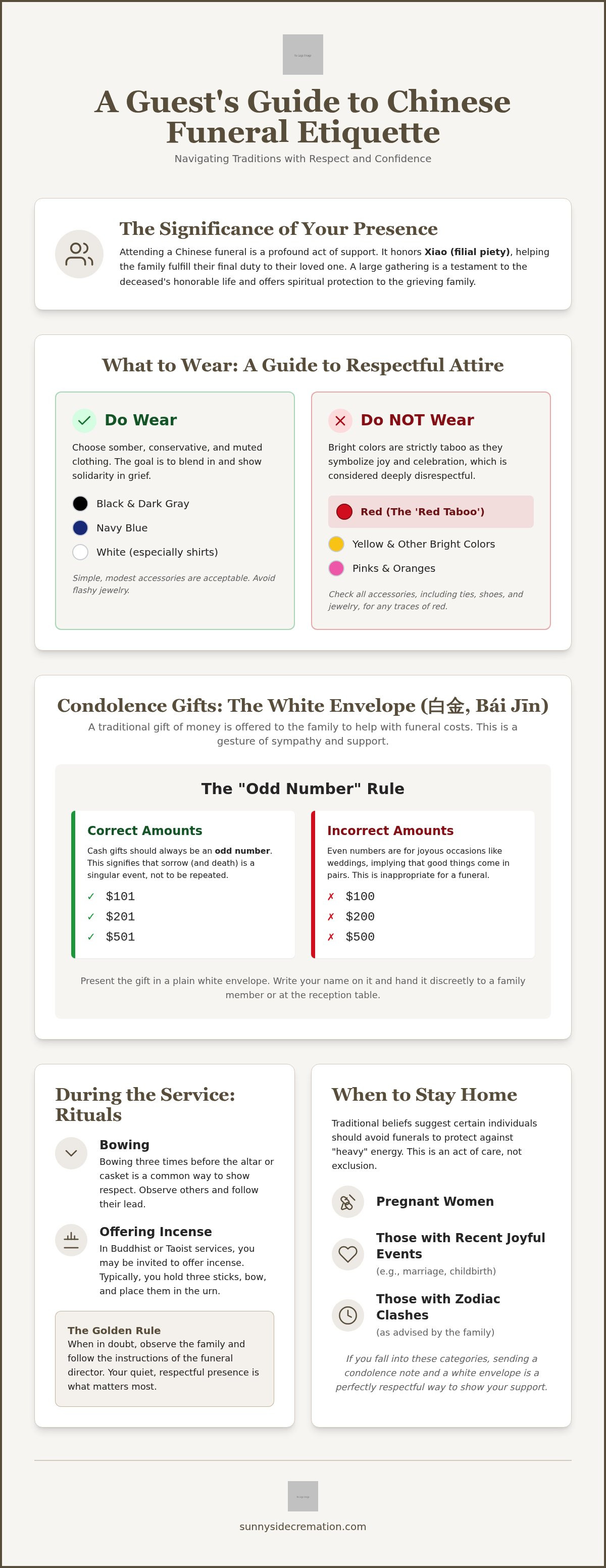
In many cultures, a funeral is a private farewell. However, within Chinese traditions, your presence is a profound act of service. Understanding Chinese funeral etiquette for guests begins with the concept of Xiao, or filial piety. This virtue represents the deep respect and devotion children owe their parents. When you attend, you aren't just a mourner; you're helping the family fulfill their final duty to their loved one. A large, respectful gathering is seen as a testament to the deceased’s character. It signals to the community that this person lived a life of merit and leaves behind a legacy of strong connections.
The community plays a vital role during the mourning period. Your attendance helps maintain a spiritual balance, ensuring the transition from this life to the next is peaceful. By following traditional Chinese funeral rituals, guests provide a protective layer of support that prevents "bad luck" from settling on the bereaved family. This collective participation acts as a shield, helping the family navigate their grief without the added weight of spiritual uncertainty.
Cultural Variations: Buddhist, Taoist, and Christian
While the core values of respect remain the same, specific guest expectations change based on the family's faith. In a Buddhist or Taoist service, you might see incense being offered or specific chanting. If you're attending a Christian service, the rituals may feel more familiar, focusing on prayer and scripture. It's always best to follow the lead of the funeral director or the family members. Our team at Sunnyside understands these nuances deeply. Our Buddhist funeral services in Orange County provide a structured framework where guests can participate comfortably, regardless of their own background.
The Concept of 'Bad Luck' and Protective Rituals
Chinese funeral etiquette for guests also includes knowing when it might be more respectful to stay home. Traditional beliefs suggest that certain life stages or events can clash with the energy of a funeral. These guidelines are meant to protect the guest as much as the family.
- Pregnancy: Expectant mothers are often advised to skip the service to protect the unborn child from "heavy" or sorrowful energy.
- Recent Joy: If you've recently married or had a child, attending a funeral might create a conflict between "red" (joy) and "white" (sorrow) luck.
- Zodiac Clashes: Sometimes, the family will note that certain zodiac signs shouldn't view the casket to avoid spiritual friction.
If you fall into these categories, a thoughtful note or a white envelope sent later is a perfectly acceptable way to show you care. Your primary role is to be a witness to the life lived, providing a steady hand through the storm of grief. By respecting these boundaries, you demonstrate a deep understanding of the family's heritage and their desire for a harmonious farewell.
What to Wear: A Guide to Funeral Colors and Attire
Choosing your attire is one of the first ways you can show respect. In the context of Chinese funeral etiquette for guests, your clothing serves as a silent message of sympathy. It tells the family that you understand their sorrow and honor their traditions. While Western funerals often default to all-black, Chinese customs offer a slightly broader but very specific palette. Dark, muted tones are the standard. Black, navy blue, and dark gray are reliable choices that convey the necessary gravity of the occasion.
White holds a unique place in this tradition. In many Asian cultures, white is actually the primary color of mourning rather than black. If you see family members wearing white robes or headbands, they're following an ancient tradition of grief. As a guest, wearing a white shirt under a dark suit or a dark cardigan is perfectly appropriate. Keep your accessories humble and somber. It's best to avoid flashy jewelry or expensive watches that might distract from the solemnity of the day. Your goal is to blend in as a supportive witness to the family's loss.
The 'Red Taboo' Explained
Red is the most significant color to avoid. In Chinese culture, red represents happiness, vitality, and celebration. It's the color of weddings and New Year festivities. Wearing it to a funeral is considered a severe insult. It suggests you're celebrating the loss rather than mourning it. Check your accessories carefully before leaving home. Even a red tie, a ruby ring, or shoes with red soles can be seen as disrespectful. You should also avoid "near-red" colors like bright pink, orange, or deep purple, as these still carry celebratory connotations that clash with the spirit of the day.
Practical Dress Code Tips for Orange County Services
If the service is held at a Buddhist temple, modesty is essential. Ensure your shoulders are covered and your necklines are high. For graveside services at local memorial parks like Forest Lawn or Rose Hills, choose footwear that is respectful but practical for walking on grass. Flat shoes or sturdy heels are better than thin stilettos for these outdoor portions of the ceremony.
There's one rare exception to the rules of color. If the deceased lived a very long, full life, typically over the age of 80, it's sometimes called a "joyous funeral." In these specific cases, the family might invite guests to wear pink or muted red to celebrate a life of longevity and legacy. However, unless you're specifically told this is the case, stick to the somber tones. If you're ever unsure about the family's specific expectations, our Mandarin-speaking staff can provide gentle guidance to ensure you feel comfortable and prepared for the service.
Condolence Gifts: The White Envelope (Bai Jin)
A central pillar of Chinese funeral etiquette for guests is the presentation of Bai Jin, or "white gold." This tradition involves giving a monetary gift in a plain white envelope to help the bereaved family cover the significant costs of the service. It's a practical and deeply symbolic way to share the family's burden during a vulnerable time. Unlike some Western traditions where flowers are the primary gift, Bai Jin is often expected and serves as a tangible expression of your support. When you arrive at the service, you'll typically find a reception desk where you can sign a guest book and hand over your envelope to an attendant or family member.
The way you present this gift is just as important as the gift itself. Always use both hands when handing the envelope over. This small, purposeful gesture signals humility and profound respect for the family's loss. It's also helpful to write your name clearly on the back of the envelope. This allows the family to acknowledge your kindness later when they're in a more settled state of mind. This tradition isn't about the specific dollar amount; it's about the spirit of community and the collective effort to honor a life well lived.
Calculating the Amount: How Much to Give
Deciding on an amount can feel stressful, but your relationship with the deceased is the best compass. For acquaintances or distant relatives, an amount between $30 and $50 is a respectful baseline. Close friends or long-time neighbors might choose to give between $70 and $150. However, there's one critical rule you must follow: the amount should always be an odd number. You might give $31, $51, or $101. In Chinese culture, even numbers are reserved for joyous occasions like weddings or birthdays because they suggest "doubles" or "pairs." Since death is an event we don't want to see repeated or paired, an odd number represents a "break" in the cycle. It's a symbolic wish that this sorrow doesn't visit the family again soon.
Alternative Gifts and Flowers
If you prefer to send flowers, white chrysanthemums and lilies are the most traditional and respectful choices. These blooms symbolize grief and the purity of the soul's journey. You must avoid red flowers at all costs, as red is the color of celebration and would be seen as a severe insult. Some guests also choose to send blankets or scrolls, which are traditional options for those who were very close to the deceased. These items are often displayed prominently during the service as a visual tribute. Our team at Sunnyside works closely with local florists to ensure that Chinese funeral services in Southern California are adorned with appropriate floral tributes. We can help you coordinate these details so your gift arrives exactly when and where it's needed most.
What to Expect During the Service: Rituals and Participation
Entering the service space, you'll notice a rhythmic, methodical flow to the proceedings. Chinese funeral etiquette for guests often involves active participation in rituals designed to provide for the deceased and protect the living. These movements aren't just for show; they're purposeful acts of remembrance that help the family feel supported in their duty. While the atmosphere is solemn, don't feel pressured to perform every action perfectly. Your presence as a witness to the life lived is the most valuable gift you can offer.
You may see the burning of Joss paper, often called "spirit money," in a dedicated brazier. This ancient practice is believed to send financial support to the loved one in the afterlife. While guests aren't always required to participate in the burning, witnessing this act with quiet reverence is part of being a supportive guest. It's a moment of reflection on the legacy the deceased leaves behind and the care the family continues to provide even after death.
The Bowing and Incense Ritual
This is the most common guest interaction. When it's your turn to approach the altar, you'll typically be handed three incense sticks, also known as Joss sticks. Hold them with both hands, usually with the left hand over the right as a sign of respect. Offer three distinct, slow bows from the waist toward the memorial display. This "three-bow salute" is a high honor. If you're uncomfortable participating for religious or personal reasons, it's perfectly acceptable to stand respectfully with your hands at your sides or offer a simple, silent nod of the head. The family values your presence more than a perfect execution of the ritual.
The Candy and Coin: Essential Post-Service Etiquette
As you prepare to leave, a family member or attendant will likely hand you a small red envelope. This is a vital part of Chinese funeral etiquette for guests that many general guides overlook. Inside, you'll find a single coin and a piece of hard candy. This gift is meant to "sweeten" the bitterness of the occasion and ensure you don't carry the sorrow of the funeral back to your own home. It's a protective gesture for the guests.
There are specific rules for these items. The candy should be eaten immediately, ideally before you reach your car. The coin must be spent on your way home rather than being taken inside your house. Many guests use it to buy a small snack or a drink at a convenience store. When you receive this envelope, simply accept it with both hands. You should never say "thank you" for this gift, as it's considered improper to thank someone for anything related to a funeral. If you're feeling uncertain about these steps, our Mandarin-speaking staff is always available on-site to provide quiet, gentle cues during the service.
Navigating Local Services in Orange County with Sunnyside
At Sunnyside Cremation and Funeral, we act as a bridge between time-honored traditions and the practical logistics of Southern California. Whether you're attending a service in Garden Grove or Buena Park, our goal is to ensure that every aspect of Chinese funeral etiquette for guests is handled with grace. We specialize in Mandarin-speaking and Buddhist-led ceremonies, providing a steady, reliable presence in a landscape that can sometimes feel overwhelming. Choosing a family-owned funeral home in Orange County ensures that the small, personal details aren't lost in a corporate process.
Our team coordinates seamlessly with local memorial parks like Forest Lawn and Rose Hills. We understand the specific layout requirements and guest protocols of these venues, allowing us to guide you through the transition from the chapel to the graveside without confusion. This local expertise reduces the cognitive load on grieving families and their guests, creating a soothing environment where the focus remains entirely on honoring a legacy. We take pride in being a calm presence in the storm, managing intricate details so you don't have to.
Mandarin-Speaking Support for Guests
Many guests attending a traditional service may not speak Mandarin or be familiar with every ancient custom. Our staff is dedicated to assisting these visitors, offering gentle explanations of the service flow as it happens. We want every person who walks through our doors to feel included and respectful, regardless of their cultural background. By providing these quiet, timely cues, we help maintain the solemnity of the ritual while ensuring no one feels out of place. It's our way of preserving cultural heritage within the vibrant, diverse community of Orange County.
Planning Ahead for Cultural Preservation
Honoring heritage often begins long before a service is needed. The role of funeral pre-planning for Asian families is a gift of clarity for the next generation. It ensures that specific rites, such as the placement of the deceased or the timing of the chanting, are secured in advance. This foresight provides a sense of peace and security, knowing that your family’s traditions will be stewarded by professionals who truly understand them. If you're looking for guidance on traditional arrangements or want to understand more about Chinese funeral etiquette for guests, contact Sunnyside Cremation and Funeral. We're here to serve as your compassionate advocate and steady guide.
Honoring a Legacy with Cultural Confidence
Attending a service is a profound way to show you care. By choosing muted colors, preparing your white envelope with an odd-numbered gift, and participating in rituals with a humble heart, you provide a steady hand of support. Understanding Chinese funeral etiquette for guests ensures that your focus remains on the legacy of the departed. These small, thoughtful actions help the family feel that their loved one’s life was truly honored by their community. It's about providing comfort and security during a period of deep emotional vulnerability.
If you're helping a family organize a service or need more specific guidance, we're here to help. Our Mandarin-speaking staff provides specialized Buddhist and Taoist guidance to ensure every ritual is preserved with dignity. We offer expert coordination with local memorial parks like Rose Hills and Forest Lawn to make the process as seamless as possible. You don't have to navigate these complex traditions alone. Plan a Culturally Respectful Chinese Funeral with Sunnyside and find peace in knowing your traditions are in capable, compassionate hands. We're dedicated to helping you honor your heritage with the reverence it deserves.
Frequently Asked Questions
What is the most important rule for a guest at a Chinese funeral?
The most important rule is to act with quiet reverence while strictly avoiding the color red in your attire and gifts. Red symbolizes joy and celebration, which is seen as a severe insult during a time of mourning. By arriving in dark, muted colors and following the family's lead during rituals, you demonstrate a deep respect for the deceased. This mindful presence is the core of proper Chinese funeral etiquette for guests.
Can I wear navy blue or dark gray instead of black?
Yes, navy blue and dark gray are perfectly appropriate alternatives to black. While black is a traditional Western choice, Chinese customs also embrace these dark, somber tones as signs of respect. The primary goal is to remain understated and humble. You should ensure your clothing is modest, covering your shoulders and knees, especially for services held in Buddhist temples throughout Orange County or local memorial parks like Rose Hills.
How much money should I put in the white envelope (Bai Jin)?
Your contribution should always be an odd-numbered amount, such as $31, $51, or $101. Even numbers are reserved for happy celebrations and aren't used for "white gold" gifts. The specific amount typically depends on your relationship with the deceased. Acquaintances often give smaller amounts, while close friends may give more. This gift is a practical way to support the family with funeral costs in cities like Garden Grove and Anaheim.
What should I do if I am pregnant or recently had a death in my own family?
Traditionally, individuals who are pregnant or have recently experienced a death in their own family are advised to skip the funeral service. This is rooted in the belief that "heavy" or sorrowful energy can clash with your current life state or existing grief. If you fall into these categories, it's considered respectful to stay home. You can still show your support by sending a thoughtful note or a white envelope to the family later.
Why shouldn't I say 'thank you' to the family at the funeral?
You shouldn't say "thank you" because it's considered improper to express gratitude for anything related to a funeral. In Chinese culture, a funeral is not an event one would be thankful for, and saying it can feel out of place. This rule also applies when you receive the red envelope at the end of the service. Instead of saying "thank you," a simple, respectful nod or a soft expression of sympathy is much more appropriate.
What do I do with the coin and candy given to me at the end of the service?
You should eat the candy immediately after leaving the service to "wash away" the bitterness of the occasion. The coin must be spent on your way home rather than being taken inside your house. This ritual is a protective gesture designed to ensure you don't carry the sorrow of the day back to your own family. Many guests in the Fullerton or La Habra area stop at a local store to purchase a small item.
Is it okay to bring my children to a traditional Chinese funeral?
Yes, children are generally welcome as their presence can represent the continuation of the family lineage. However, they must be able to remain quiet and respectful throughout the rituals. If your children are very young, you might consider their ability to sit through a long service before deciding. For families in Cerritos or Norwalk, bringing children is often seen as a way to teach them about "Xiao" and the importance of honoring their ancestors.
Do I have to participate in the incense burning if it's against my religion?
No, you aren't required to participate in incense burning if it conflicts with your personal beliefs or religion. Chinese funeral etiquette for guests prioritizes your presence and sincere respect over the perfect execution of every ritual. You can stand quietly and respectfully while others participate, or offer a simple, silent bow of the head. The bereaved family will appreciate your attendance and the emotional support you provide regardless of your participation in specific spiritual rites.


