

As you sit in the quiet stillness of a Garden Grove chapel, the gentle scent of incense may bring comfort, yet your mind might be heavy with the worry of whether every ancient tradition is being honored correctly. It's natural to feel a sense of pressure when trying to bridge the gap between sacred Theravada rituals and the practical requirements of California law. You want to ensure every act of merit-making is perfect for their soul's transition, but the logistics of coordinating a traditional Thai funeral with local mortuary regulations can feel like a heavy burden during a time of deep grief.
At Sunnyside Cremation and Funeral, we offer a steady hand and a compassionate heart to help you find peace by blending these profound spiritual needs with a clear, manageable path forward. In this article, we'll walk you through the essential steps of planning a Thai funeral in Southern California. You'll gain a clear understanding of guest etiquette, the importance of the bathing ceremony, and how to coordinate seamlessly with local Wats in Anaheim and Garden Grove to ensure a dignified farewell that honors your loved one's legacy.
Key Takeaways
- Understand the vital role of merit-making and how these sacred acts assist your loved one's soul through the cycle of rebirth.
- Learn the symbolic meaning behind the Bathing Ceremony and the traditional bindings used to honor deep family connections.
- Discover how to navigate California cremation laws while maintaining the spiritual integrity of a traditional Thai funeral through coordination with local temples.
- Find clarity on appropriate guest etiquette, including the traditional dress code and the respectful use of the Wai during the service.
- Gain peace of mind by partnering with a guide who understands the specific altar setups and chanting requirements for a Buddhist ceremony.
The Spiritual Foundation of Thai Funeral Rites
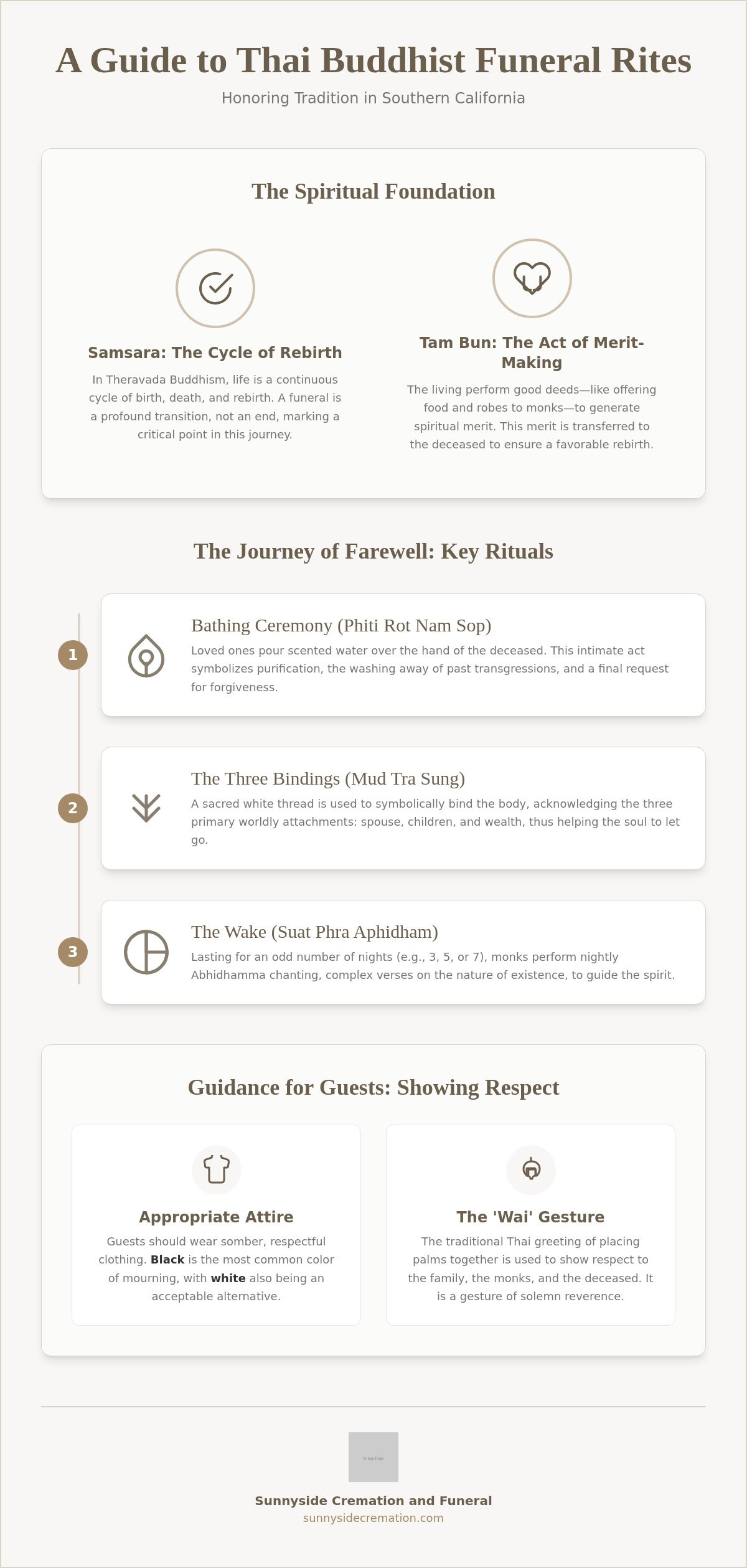
In the heart of Thai culture, death is seen as a profound threshold rather than a final conclusion. This perspective is deeply rooted in Theravada Buddhism, which views life as a continuous cycle of rebirth known as Samsara. Because of this, a Thai funeral is much more than a memorial service; it's a sacred opportunity to assist the departing soul as it journeys toward its next existence. Families gather not just to mourn, but to actively participate in the spiritual transition of their loved one, ensuring they're supported by the collective love and prayers of the community.
The concept of merit-making, or Tam Bun, serves as the heartbeat of these rites. It's believed that the good deeds performed by the living can be transferred to the deceased, helping to ease their path and ensure a favorable rebirth. This belief makes the funeral the most significant life-cycle ceremony in a person's journey, often surpassing even weddings in its cultural weight. During the service, monks perform the Abhidhamma chanting. These complex philosophical verses reflect on the nature of existence and reality. These Thai funeral customs create a space where the living can find collective peace while offering vital spiritual support to the one who has passed.
The Role of the Family in Merit-Making
Family members act as the primary stewards of the deceased’s spiritual legacy. By offering food, saffron robes, and essential goods to the monks, you perform acts of selfless giving that generate merit. One of the most intimate moments is the Watering Ceremony, where friends and family pour scented water over the hand of the departed. This ritual isn't just a final goodbye. It represents a final earthly connection and a request for forgiveness, ensuring the soul leaves this world without the weight of unresolved attachments or regrets.
Buddhist Symbolism in the Mortuary Space
Every element within the ceremony room carries a specific spiritual weight. Guests typically wear black or white, colors that signify solemnity and the purity of the soul's transition. You'll often see the lotus flower, symbolizing the potential for enlightenment even in the mud of worldly suffering. Burning incense serves to purify the air and carry prayers upward. We understand how vital it is to set the right intention during Buddhist funeral services. Focusing the mind on peace and loving-kindness throughout the rituals helps guide the soul toward a calm and dignified transition.
Essential Rituals: From the Watering Ceremony to the Wake
The transition from life to the next journey begins with the physical preparation of the body. In a traditional Thai funeral, the first major ritual is the Bathing Ceremony, or Phiti Rot Nam Sop. Unlike Western traditions that often keep the body secluded until a viewing, this ceremony invites loved ones to touch the hand of the deceased one last time. It's a moment of deep cultural and spiritual symbolism, where scented water is poured over the palm to signify purification and the washing away of earthly sins.
As the rituals progress, the family may observe the Mud Tra Sung. This involves the symbolic "three bindings" using a sacred white thread. These bindings represent the three worldly attachments that keep a soul tied to the cycle of rebirth: the spouse, children, and wealth. By acknowledging these ties, the living help the deceased let go of the physical world. Merit-making also extends to the community through luncheons. Feeding the Sangha (the community of monks) and the guests is a vital act of generosity that generates positive energy for the departed soul. These acts of service are seen as a communal gift to the one who has passed.
Conducting the Watering Ceremony in California
Organizing these rituals in Southern California requires a space that understands the need for specific preparations. We help families prepare the scented water, often infused with jasmine petals and traditional fragrances, to ensure the ritual feels authentic. The hierarchy of pouring is strictly observed. The eldest family members or most respected guests go first, followed by children and friends. Our team provides a calm, respectful environment where this intimate ritual can unfold without feeling rushed, allowing your family the time needed for this sacred farewell.
The Multi-Night Wake (Suat Phra Aphidham)
The wake, known as Suat Phra Aphidham, typically lasts for an odd number of nights, such as three, five, or seven. During these evenings, four monks are invited to chant the Abhidhamma. A white thread called the Sai Sin is often stretched from the monks' hands to the casket, serving as a spiritual conduit for the chanting. Organizing food for the local Thai community during these nights is a significant task. If you're feeling overwhelmed by these details, our supportive staff can help coordinate the logistics of the wake to ensure every tradition is honored with grace.
Planning a Thai Buddhist Funeral in Orange County
Organizing a Thai funeral within the modern landscape of Southern California involves a delicate balance between ancient spiritual timelines and local logistics. While the heart of the ceremony remains rooted in the temple, the practical steps often begin with a funeral home that understands these specific needs. Coordination with local Wats in Anaheim, Garden Grove, and North Hollywood is essential. These temples serve as the spiritual anchor for the community, providing the space for monks to lead chanting and for families to gather in merit-making. We act as a bridge between these sacred spaces and the necessary legal frameworks of California.
The "Prachum Phloeng," or cremation ceremony, is the culmination of the funeral rites. In Thailand, this might involve a grand pyre, but in California, it's conducted in a modern crematory. To honor the tradition, many families choose a "witnessed cremation." This allows loved ones to be present as the process begins, offering a final moment of prayer and reflection. It's a respectful way to maintain the spiritual integrity of the transition while adhering to state safety regulations. This approach ensures that the soul's departure is witnessed with the same reverence as it would be in a traditional setting.
Local Coordination with Memorial Parks
Families in Orange County often look toward established memorial parks like Rose Hills or Forest Lawn to provide a final resting place. We handle the intricate details of transport and paperwork for families planning with Forest Lawn, ensuring the transition from the temple to the cemetery is seamless. These parks offer beautiful, serene settings that can accommodate the large community gatherings typical of Thai services. Whether you choose a traditional burial or a niche for cremated remains, we ensure the space is prepared with the reverence your loved one deserves. Securing these spaces early helps provide a sense of peace for the entire community.
Legal and Practical Steps in California
Navigating the legal requirements shouldn't add to your emotional burden. In California, a death certificate must be filed with the local registrar within eight calendar days of the passing. This document is vital for international family notification and settling the estate. We also assist in securing the "Permit for Disposition," which is required before any cremation can take place. Beyond the paperwork, we help you manage the timing of the service. Thai traditions often favor specific auspicious dates, and we work closely with your chosen temple to align these spiritual preferences with the availability of local facilities. If your family wishes to include traditional Thai music or dance, we can help facilitate the space and logistics for these cultural expressions.
Thai Funeral Etiquette: Guidance for Families and Guests
Attending a Thai funeral for the first time can feel intimidating if you're unfamiliar with the customs. However, the community is generally very welcoming and appreciates your presence as an act of merit-making. The atmosphere is one of collective support where respect is shown through quiet observation and following the lead of the family. Even if you aren't Buddhist, your participation is seen as a kindness that helps the soul transition peacefully. It's a shared journey where every guest plays a role in honoring a life well-lived.
Clothing choices are a significant part of showing reverence. Guests should strictly adhere to black or white attire. Black is the traditional color of mourning, while white represents purity and the hope for a favorable rebirth. It's vital to avoid bright colors, especially red or yellow. These shades are associated with celebration and are considered deeply inappropriate in a mortuary space. During the service, you'll see people performing the "Wai," which involves placing your palms together at chest level and bowing slightly. This gesture is used to greet the family, show respect to the monks, and honor the deceased. Silence is expected during the Abhidhamma chanting to allow the spiritual focus to remain on the sacred rites.
A Guest’s Guide to the Service
When you arrive, you might be given incense or a sandalwood flower known as Dok Mai Chan. When approaching the casket, it's customary to perform a Wai or a simple bow to pay your final respects. If you're unsure of what to do, don't worry. Simply watch those around you or ask a family member for guidance. Greeting the monks is done with a deep Wai, though you shouldn't expect them to return the gesture. Their focus is on the spiritual chanting and the preservation of the sacred space. You can place your flowers or incense in the designated area near the altar as a final tribute.
Donations and Sympathy Gifts
A unique aspect of Thai tradition is the "Grit," which involves giving monetary donations in white envelopes. This isn't just a financial gift; it's a way for guests to participate in merit-making by helping the family cover the costs of the service. While there's no set amount, a donation is a common way to show support depending on your relationship with the family. Large floral wreaths are also a traditional way to express sympathy and are often displayed prominently. If you need help organizing these details or want to ensure your arrangements are culturally appropriate, you can reach out to our supportive team for guidance. Expressing condolences should be done with a gentle tone, focusing on the legacy and the peaceful transition of the person who has passed.
Culturally Respectful Thai Funeral Coordination with Sunnyside
At Sunnyside Cremation and Funeral, we believe that every farewell should be as unique as the life it honors. For families planning a Thai funeral, this means more than just managing logistics; it's about preserving a spiritual legacy with absolute precision. As a family-owned business deeply rooted in Orange County, we've dedicated ourselves to understanding the intricate details that make these ceremonies so profound. We act as a steady bridge between traditional cultural heritage and the practical standards of US funeral service, ensuring that your sacred traditions are never lost in translation or overlooked by clinical procedures.
Our team provides specialized guidance for Buddhist funeral services, including the specific requirements for altar arrangements and the coordination of monastic chanting. We understand how to create a space that facilitates merit-making, from the initial bathing ceremony to the final cremation. We work closely with local Wats to ensure that every ritual follows the correct spiritual order. This allows you to focus on your family's emotional healing while we handle the complexities of coordination, from monk transportation to the proper placement of the white thread (Sai Sin).
Why Choose a Multicultural Specialist?
Choosing a mortuary that specializes in multicultural care reduces the immense burden on grieving families during an already vulnerable time. You don't have to explain why certain rituals are necessary or worry about whether a facility can accommodate traditional offerings and incense. We prioritize dignity and cultural accuracy in every step. Our commitment is to provide a sense of security, knowing that your loved one's transition is being handled with the highest level of reverence and professional stewardship. We've built our reputation on being a calm presence in the storm, offering the expertise needed to navigate both modern laws and ancient customs.
Pre-Planning for Peace of Mind
Documenting your wishes ahead of time is one of the kindest gifts you can leave for your children and grandchildren. This is especially true when considering funeral pre-planning for Asian families, where specific Buddhist rites must be carefully documented and funded. By establishing a plan now, you ensure that your spiritual needs are met and that your family isn't left guessing during a period of high stress. We invite you to take the first step with a complimentary consultation. Our compassionate staff is here to listen and help you create a roadmap that honors your heritage, protects your legacy, and provides lasting peace of mind for those you love.
Honoring a Sacred Transition with Confidence
A Thai funeral is a profound communal effort designed to support a loved one as they navigate the cycle of rebirth. By blending the sacred merit-making rituals discussed throughout this guide with the practical steps required here in Orange County, you ensure a farewell that is both culturally authentic and legally sound. Whether you're navigating the immediate needs of a service or looking ahead to secure your own legacy, the path forward is defined by reverence and peace.
At Sunnyside Cremation and Funeral, we take our role as community stewards seriously. Our experience with local Wats and major memorial parks like Rose Hills and Forest Lawn allows us to manage every intricate detail of the altar setup and monk coordination. This leaves you free to focus on the emotional weight of the moment and the spiritual needs of your family. We're committed to providing the steady hand and gentle professionalism your family deserves during this sacred time.
Please speak with our compassionate directors about Thai funeral arrangements to begin this journey with a trusted partner. We're here to ensure your loved one's transition is honored with the dignity and cultural accuracy it requires.
Frequently Asked Questions
What is the traditional color to wear to a Thai funeral?
Black and white are the traditional colors for a Thai funeral. Black signifies mourning, while white symbolizes purity and the hope for a favorable rebirth. You should avoid wearing bright colors, particularly red or yellow, as these are associated with celebratory events and can be seen as disrespectful in a solemn mortuary setting. Simple, modest attire that covers the shoulders and knees is always appreciated.
How long does a traditional Thai funeral service last?
A traditional Thai funeral service often lasts for three, five, or seven days. These multi-day wakes involve nightly chanting by monks to help the family make merit for the deceased. The final cremation ceremony usually takes place on the last day. In Southern California, families may choose a condensed schedule based on temple availability and the practical needs of those traveling from out of state.
Is cremation required in Thai Buddhist tradition?
Cremation is the standard practice in Thai Buddhist tradition because it's believed to release the soul from the physical body. While burial isn't forbidden, it's rarely chosen by Thai families who follow Theravada Buddhism. The process of returning the body to the elements through fire is a central spiritual act that facilitates the soul's transition into the next cycle of existence.
What should I put in a sympathy envelope (Grit) for a Thai family?
You should put a monetary donation inside a white sympathy envelope, often referred to as "Grit." This gift helps the family cover the costs of the monks, food, and funeral arrangements. While there's no fixed amount, guests typically give what they can afford, with closer friends or relatives often contributing more. This act is considered a form of merit-making that supports the grieving family.
Can non-Buddhists participate in the merit-making rituals?
Non-Buddhist guests are absolutely welcome to participate in merit-making rituals. You can join in the watering ceremony or offer food to the monks as a gesture of respect for the deceased's heritage. The Thai community views these acts as a kindness that generates positive energy for the soul. If you're uncomfortable with specific religious acts, simply standing in respectful silence during the chanting is perfectly acceptable.
How do we coordinate with a local Thai temple (Wat) in Orange County?
We handle the coordination with local Thai temples (Wats) in Anaheim and Garden Grove to ensure a seamless experience. Our team works directly with the monks to schedule the chanting sessions and organize the logistics for the multi-day wakes. We understand the importance of these relationships and act as a bridge between the temple's spiritual requirements and the mortuary's practical services.
What happens during the 100-day memorial service in Thai culture?
The 100-day memorial service marks the final major milestone in the soul's transition after a Thai funeral. It's a significant merit-making event where family and friends gather once more at the temple to offer prayers and food to the monks. This ceremony is believed to provide a final boost of positive energy for the deceased as they settle into their next life, offering the family a sense of closure.
Can we have a traditional Thai funeral at Forest Lawn or Rose Hills?
You can certainly have a traditional service that includes burial or cremation at Forest Lawn or Rose Hills. We have extensive experience coordinating with these major Orange County memorial parks to ensure your cultural traditions are respected within their facilities. We manage the transport, paperwork, and scheduling so that the transition from the temple to the final resting place is handled with dignity.


