

When a family in Anaheim gathers to begin the Pasiyam, they aren't just reciting prayers; they're reaching across an ocean to keep a sacred heritage alive. It's often difficult to feel that same deep connection to traditional rites when you're coordinating a Tagalog funeral within the busy landscape of Southern California. You might worry that the spirit of the Lamay will be lost among the logistics of Orange County or the vast hills of Forest Lawn and Rose Hills. We believe that honoring your loved one's journey should never feel like a compromise between your culture and your current home.
In the following sections, you'll discover how to honor traditional Tagalog customs while navigating modern funeral arrangements in Garden Grove and the surrounding areas. We'll provide a clear path for coordinating multi-day events and explain how to manage local requirements, such as the 2026 Orange County burial permit and death certificate procedures. You will gain a clear understanding of how to weave the 9-day and 40-day prayer traditions into a respectful service that celebrates a life well-lived and a legacy that will never be forgotten.
Key Takeaways
- Learn how the spirit of pakikiramay (shared grief) transforms a memorial into a communal event that honors your loved one’s deep cultural roots.
- Understand the logistics of managing a traditional Tagalog funeral, including the multi-day Lamay wake and the sacred nine-day Pasiyam prayer period.
- Gain clarity on coordinating Catholic funeral Masses and burial processions within the specific landscape of Southern California cemeteries and mortuaries.
- Discover how to seamlessly navigate complex arrangements with major memorial parks like Forest Lawn and Rose Hills while keeping your family traditions central.
- Explore how pre-planning serves as a final act of stewardship, ensuring your family's heritage is preserved and the burden of decision-making is lifted from your children.
Understanding the Heart of a Tagalog Funeral
A Tagalog funeral is a deeply woven tapestry of shared grief and communal strength. It doesn't belong solely to the immediate family; it belongs to the entire community. In cities like Garden Grove and Anaheim, this "barangay" spirit remains a vital lifeline for those mourning a loss. It's a time when the distance from the Philippines feels a little shorter because the traditions are held so closely. Honoring these customs isn't just about following a checklist. It's about creating a familiar space where the soul is honored and the living find the strength to continue.
The Concept of Pakikiramay
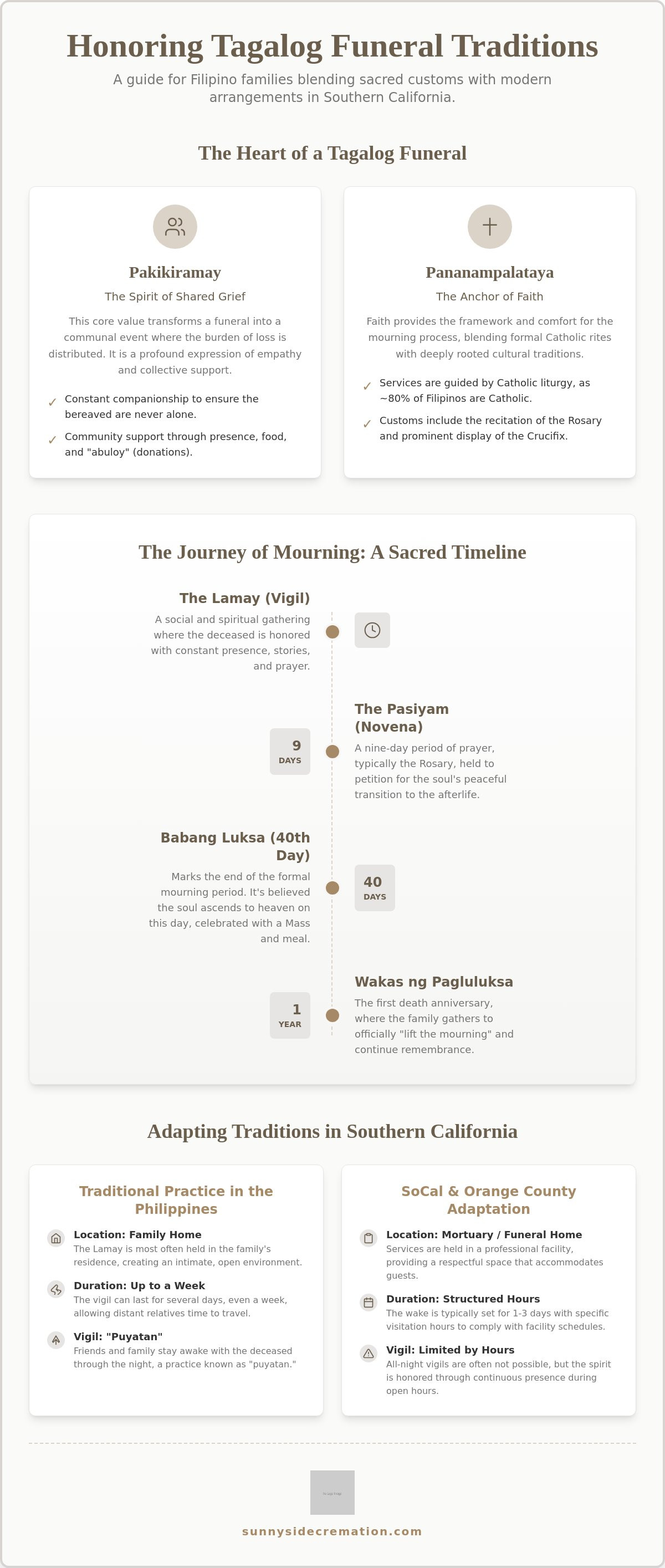
Pakikiramay is the cultural cornerstone of Filipino grief support, where the burden of loss is distributed across the shoulders of many. In Southern California, this often looks like neighbors from Cerritos or Norwalk arriving with trays of food or offering "abuloy" to help with expenses. This isn't just about charity. It's about presence. Family members and friends don't just attend a service; they inhabit it, staying for hours to ensure the bereaved are never left alone. This constant companionship reflects a deep respect for Filipino funeral practices that have survived for generations.
The Role of Faith and 'Pananampalataya'
Faith, or pananampalataya, acts as the anchor for almost every Tagalog funeral. Since approximately 80% of Filipinos identify as Catholic, the rituals usually revolve around the liturgy of the Church. However, these services often include unique cultural layers. You'll see the prominent display of the crucifix and the rhythmic recitation of the rosary. It's common for a respected elder or a local priest from a parish in Buena Park to lead the community in prayer. This blend of formal Catholic rites and folk traditions creates a space that feels both holy and familiar.
For Filipino-American elders, these specific sounds and symbols provide a profound sense of security. They offer the comfort of knowing that even in a foreign land, their final journey will be paved with the same prayers that guided their ancestors. When a service mirrors the values of the homeland, it validates the life lived and the heritage passed down to the next generation. This continuity is essential for healing, providing a steady hand through the initial days of loss and the weeks of reflection that follow.
The Journey of Mourning: Lamay, Pasiyam, and Babang Luksa
In Tagalog culture, mourning is not a single event but a deliberate journey that unfolds over weeks and months. This process allows the family to slowly transition from the sharpness of immediate loss toward a place of peaceful remembrance. It begins with the Lamay, which is much more than a viewing. It's a social and spiritual gathering where stories are shared, laughter is permitted, and the deceased is never left alone. This constant presence ensures the soul feels the warmth of their community before they move on to the next stage of their journey.
Organizing the Lamay in Orange County
Hosting a traditional wake in Southern California presents unique logistical hurdles. In the Philippines, a Lamay might last for a week in a family home, but local regulations and mortuary schedules in cities like Anaheim require a more structured approach. We help families bridge this gap by providing a welcoming space where "merienda" can be shared and relatives can gather comfortably. While the tradition of "puyatan," or staying awake all night with the deceased, is often limited by modern visitation hours, we work to ensure the time you have is meaningful and reflects the deep hospitality central to a Tagalog funeral.
The Spiritual Timeline: 9 Days and 40 Days
The spiritual path continues with the Pasiyam, a nine-day novena of prayers usually held at the family home or a local parish. These prayers are intended to petition for the soul's peaceful transition. Many families find that this period provides a necessary structure for their grief, bringing the community together every evening. This culminates in the 40th-day milestone, known as the Babang Luksa. It's a significant moment in Catholic Filipino traditions, as it's widely believed this is when the soul finally ascends to heaven.
- The Pasiyam: A nine-day prayer period where the Rosary is typically recited with family and friends.
- The 40th Day: Marked by a special Mass and a communal meal to signify the end of the formal mourning period.
- Wakas ng Pagluluksa: The first death anniversary, where the family gathers to officially "lift" the mourning and celebrate the loved one's legacy.
Hosting the Babang Luksa meal is an opportunity to thank the community for their support. It’s common to serve traditional dishes that the deceased enjoyed, turning the event into a celebration of life. If you're feeling overwhelmed by these timelines, seeking compassionate support can help you focus on the prayers and your family rather than the logistics. This steady progression from the initial loss to the one-year anniversary ensures that no one has to walk the path of grief alone.
Navigating the Service: Mass, Burial, and Cremation
The final farewell during a Tagalog funeral is a moment of profound gravity. For most families, this begins with the Funeral Mass, a final commendation that entrusts the soul to God's mercy. This sacred liturgy bridges the gap between the earthly goodbye and the spiritual journey ahead. Whether you choose a traditional burial or cremation, the presence of the community remains the defining characteristic of this day. It's a time for the family to stand together, supported by the prayers of those who knew and loved the deceased.
The Rituals of the Libing
The "libing," or burial, involves a procession that serves as a public testament to the loved one's life. It's common to see family members wearing white to represent peace or black armbands to signify mourning. A unique aspect of this day is the "Pagpag" tradition. Many believe that guests shouldn't go directly home after the service, stopping instead at a restaurant or store to "shake off" any lingering spirits. This practice highlights how deeply Filipino American death perspectives are rooted in a desire to protect the living while honoring the dead.
Coordinating this procession requires careful planning, especially when moving between a local parish in Garden Grove and major memorial parks like Forest Lawn or Rose Hills. Logistics such as securing the $12.00 Orange County burial permit, effective as of January 1, 2026, are essential steps we manage to ensure the day proceeds without interruption. This allows you to focus on the "huling hantungan," the final resting place, without the burden of administrative details or traffic coordination through the busy streets of Anaheim.
Cremation with Cultural Respect
While traditional burial remains the standard, cremation is an increasingly common choice for Filipino-American families. The Catholic Church allows cremation, provided the remains are treated with the same reverence as a body. This means the ashes should be present at the Funeral Mass and eventually interred in a sacred place rather than scattered or kept at home. This ensures the deceased remains part of the community of the faithful.
For families who feel the need for additional closure, we offer options for witnessed cremation in Orange County. This process allows the family to be present for the start of the cremation, providing a final moment of prayer and physical connection. Choosing an urn that reflects the dignity and legacy of your loved one ensures their memory is preserved with honor. We're here to help you navigate these choices, ensuring that every ritual, whether ancient or modern, is performed with the utmost respect.
Planning a Tagalog Service in Orange County
Organizing a Tagalog funeral in Southern California requires a delicate balance between ancestral tradition and local logistics. In the heart of cities like Anaheim and Buena Park, Filipino families are known for their size and their deep commitment to being present for one another. This means choosing a venue isn't just about the room; it's about finding a space that can hold the warmth of a large community. From the initial viewing to the post-funeral gathering, every detail should reflect the hospitality and reverence that your loved one deserves.
Local Coordination with Forest Lawn and Rose Hills
Many families choose to lay their loved ones to rest at major memorial parks like Forest Lawn in Cypress or Rose Hills in Whittier. These beautiful locations are vast and involve complex scheduling and paperwork. We act as a steady bridge for you, managing the intricate details of graveside burials and processions. Whether you're navigating the hills of Whittier or the quiet gardens of Cypress, we ensure that your cultural specificities are respected by the cemetery staff. This coordination includes securing the necessary Orange County burial permit, which is $12.00 as of January 1, 2026, so you can focus entirely on the farewell.
Logistics for the Garden Grove and Buena Park Communities
In neighborhoods across Garden Grove and Buena Park, the local parish often serves as the spiritual center for the service. Finding a mortuary that understands the "Filipino way" of hospitality is essential for a seamless transition from the church to the reception hall. We help you identify local venues that accommodate traditional food sharing and large groups of mourners. Managing the legal requirements is another practical step we handle with care. For instance, obtaining certified death certificates in Orange County currently costs $26.00 per copy in 2026, and we ensure these are processed promptly for your family’s needs.
Having a guide with local expertise in Orange County mortuary law is vital for a smooth service, as it prevents administrative delays from intruding upon your time of mourning. We also assist in finding Tagalog-speaking officiants or choir members who can lead the community in familiar hymns and prayers. These linguistic touches bring a sense of home to the service, providing comfort to elders and a connection to heritage for the younger generation. If you need assistance balancing these traditions with modern requirements, please contact our compassionate team today to discuss how we can support your family.
How Sunnyside Cremation Supports Filipino Families
At Sunnyside, we understand that a Tagalog funeral is not just a service; it's a profound act of love and community. Being family-owned allows us to mirror the values held dear in Filipino culture, such as reverence for elders, deep hospitality, and the importance of family unity. We don't see ourselves as just a service provider, but as a dedicated partner in your journey of mourning. Our team is here to ensure that every tradition, from the first night of the Lamay to the final prayers of the Babang Luksa, is handled with the dignity your loved one deserves.
We believe that every family should have access to a service that feels both deeply personal and highly respectful. This is why we offer customizable packages designed to honor your specific traditions while remaining mindful of your budget. Our goal is to provide a sense of peace and security, ensuring that the logistical details never overshadow the spiritual significance of the farewell. From the moment you make the first call, you'll find a supportive team ready to lead you through the process with a gentle, professional hand.
The Value of Pre-Planning for Heritage
Many families find that documenting their wishes in advance is a final gift of stewardship to their children. Our specialized funeral pre-planning for Asian families helps you secure your heritage today. By outlining specific customs and funding the arrangements now, you protect your children from making difficult decisions during a time of intense grief. It allows you to consult with our staff to ensure the specific nuances of your Filipino roots are documented and preserved. This forward-thinking approach ensures your legacy is honored exactly as you intended.
- Documented Traditions: Ensure your preference for specific novenas or burial sites is recorded.
- Financial Protection: Lock in current costs to relieve the future burden on your next of kin.
- Legacy Planning: Create a service that reflects your life's work and cultural identity.
A Steady Hand in a Time of Need
Trust is earned through consistency and kindness. Families in Anaheim and Garden Grove rely on us because we offer more than just logistics; we provide a calm presence in the storm. Whether you're coordinating a complex multi-day event or seeking a simple, respectful cremation, we act as your compassionate advocate. Our deep familiarity with local parishes and memorial parks means you can focus on your family while we handle the coordination. We are committed to cultural stewardship, ensuring that the "barangay" spirit of support is felt in every interaction. We invite you to contact us today to discuss a culturally respectful service and learn how we can help you honor your loved one's legacy.
Honoring a Legacy of Faith and Heritage
Organizing a Tagalog funeral in Southern California is a journey of both deep emotion and intricate detail. Throughout this guide, we've explored how sacred traditions like pakikiramay and the rhythmic prayers of the Pasiyam provide a necessary foundation for healing. We've also addressed the practical side of navigating local logistics, from managing Orange County death certificate procedures to coordinating the final procession at major memorial parks. These rituals do more than just mark a passing; they weave the story of a life into the enduring fabric of your family's heritage.
As a family-owned and operated team in Orange County, we are specialists in multicultural Asian funeral traditions. Our deep roots in the community ensure expert coordination with Forest Lawn and Rose Hills, providing you with a steady hand during a time of transition. We are here to act as your advocate, ensuring that every prayer and every custom is observed with the utmost reverence. You can plan a culturally respectful Tagalog funeral service with Sunnyside Cremation to ensure your loved one's final journey is paved with dignity. Your heritage is a precious gift, and we are honored to help you preserve it for generations to come.
Frequently Asked Questions
What is the traditional dress code for a Tagalog funeral?
The traditional dress code for a Tagalog funeral typically involves wearing white or black to signify respect and mourning. White is often preferred as it symbolizes peace and the hope of a spiritual journey, while black remains a standard sign of grief. Men frequently wear a Barong Tagalog with a black mourning armband, while women opt for modest, conservative attire. These choices reflect a deep reverence for the deceased and the solemnity of the occasion.
How long does a traditional Filipino wake (Lamay) usually last in California?
A traditional Filipino wake in California usually lasts between one and three days, which is shorter than the week-long vigils common in the Philippines. This timeframe allows family members traveling from out of state or overseas to arrive and pay their respects. We help you manage these hours by providing a comfortable space for the community to gather, ensuring the spirit of the Tagalog funeral is preserved within modern mortuary schedules.
Can we have a Catholic Mass if we choose cremation?
You can certainly have a Catholic Funeral Mass if you choose cremation, provided the cremated remains are present and treated with the same dignity as a body. The Church requires that the ashes be interred in a sacred place, such as a cemetery or columbarium, rather than being scattered or kept at home. We coordinate closely with local parishes in Anaheim to ensure the liturgy is followed correctly while respecting your family's wishes.
What is the significance of the 9-day novena (Pasiyam)?
The Pasiyam is a sacred nine-day novena of prayers intended to petition for the peaceful transition of the loved one's soul. It's a time when the community gathers each evening, often at the family home, to recite the Rosary and offer collective support. This tradition provides a structured period for grief, ensuring that the bereaved are surrounded by the warmth and faith of their community during the most difficult first days.
Are there specific Filipino funeral traditions regarding food?
Food is a vital element of the mourning process, serving as a way to thank the community for their presence and support. It's customary to provide merienda or light meals throughout the wake, as no guest should leave the family's side hungry. This hospitality is a physical extension of pakikiramay, ensuring that the gathering remains a place of shared strength and communal comfort through the sharing of traditional dishes.
How do we coordinate a service at Forest Lawn or Rose Hills through Sunnyside?
We act as your dedicated liaison for services at Forest Lawn or Rose Hills by managing all scheduling, transportation, and paperwork requirements. Our family-owned firm specializes in the multicultural needs of a Tagalog funeral, bridging the gap between your traditions and the requirements of these large memorial parks. We ensure that every cultural detail is respected during the graveside service, providing you with a seamless and dignified experience.
What does the 40th-day tradition (Babang Luksa) involve?
The 40th-day tradition, or Babang Luksa, marks the moment the soul is believed to ascend to heaven and signifies the end of the formal mourning period. Families typically gather for a special Mass followed by a communal meal to celebrate the loved one's legacy. It's a significant milestone that offers a sense of closure, allowing the family to transition from the sharpness of early grief toward a place of lasting remembrance.
Why is the tradition of 'Pagpag' observed after a funeral?
The tradition of Pagpag is observed to prevent any lingering spirits from following guests back to their own residences. After the funeral service or burial, it's customary for attendees to stop at a restaurant or public place before returning home. This shaking off of the funeral atmosphere is a traditional way to protect the household and ensure that the spirit of mourning doesn't enter the sanctuary of the home.


