
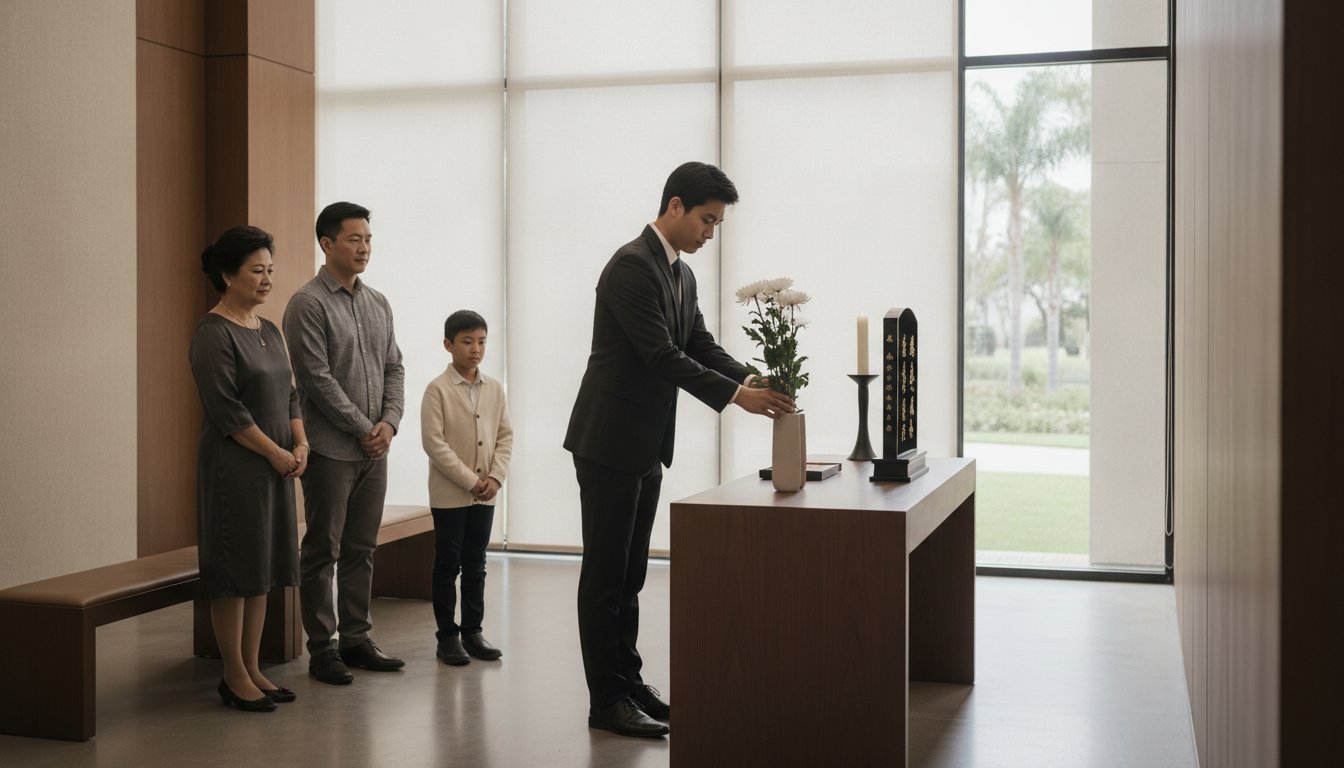
Imagine standing in a quiet room, trying to explain the deep significance of a multi-week mourning period or the sacred burning of Joss paper, only to feel that your family’s most cherished values are being misunderstood. For many families in Garden Grove and Anaheim, the fear that a traditional Taiwanese funeral might be simplified or erased by Western customs is a source of genuine heartache. It is difficult to find peace when you are worried that language barriers or rigid facility rules might prevent you from fulfilling your final duties of filial piety.
We believe that honoring your loved one requires more than just a logistical arrangement; it requires a sacred bridge between your ancestral heritage and your life here in Southern California. You deserve a partner who speaks your language and respects the delicate nuances of Buddhist and Taoist rites. In the following sections, you will discover how to create a meaningful farewell that blends ancient traditions with modern local services. We will explore how to coordinate seamlessly with memorial parks like Rose Hills or Forest Lawn, ensuring every chant and offering is handled with the reverence it deserves.
Key Takeaways
- Understand the spiritual foundation of Taiwanese rites, focusing on the blend of Buddhist and Taoist values that honor filial piety.
- Learn how to incorporate essential traditions like the Spirit Tablet and Joss paper offerings into a local Southern California ceremony.
- Navigate the logistical differences between traditional 49-day mourning periods and the standard timelines found in Western funeral homes.
- Discover how to plan a respectful Taiwanese funeral by coordinating with Mandarin-speaking staff and major memorial parks like Forest Lawn or Rose Hills.
- Identify the benefits of working with a local advocate who understands the specific cultural nuances of the Taiwanese-American community in Orange County.
What is a Taiwanese Funeral? Understanding the Cultural Foundation
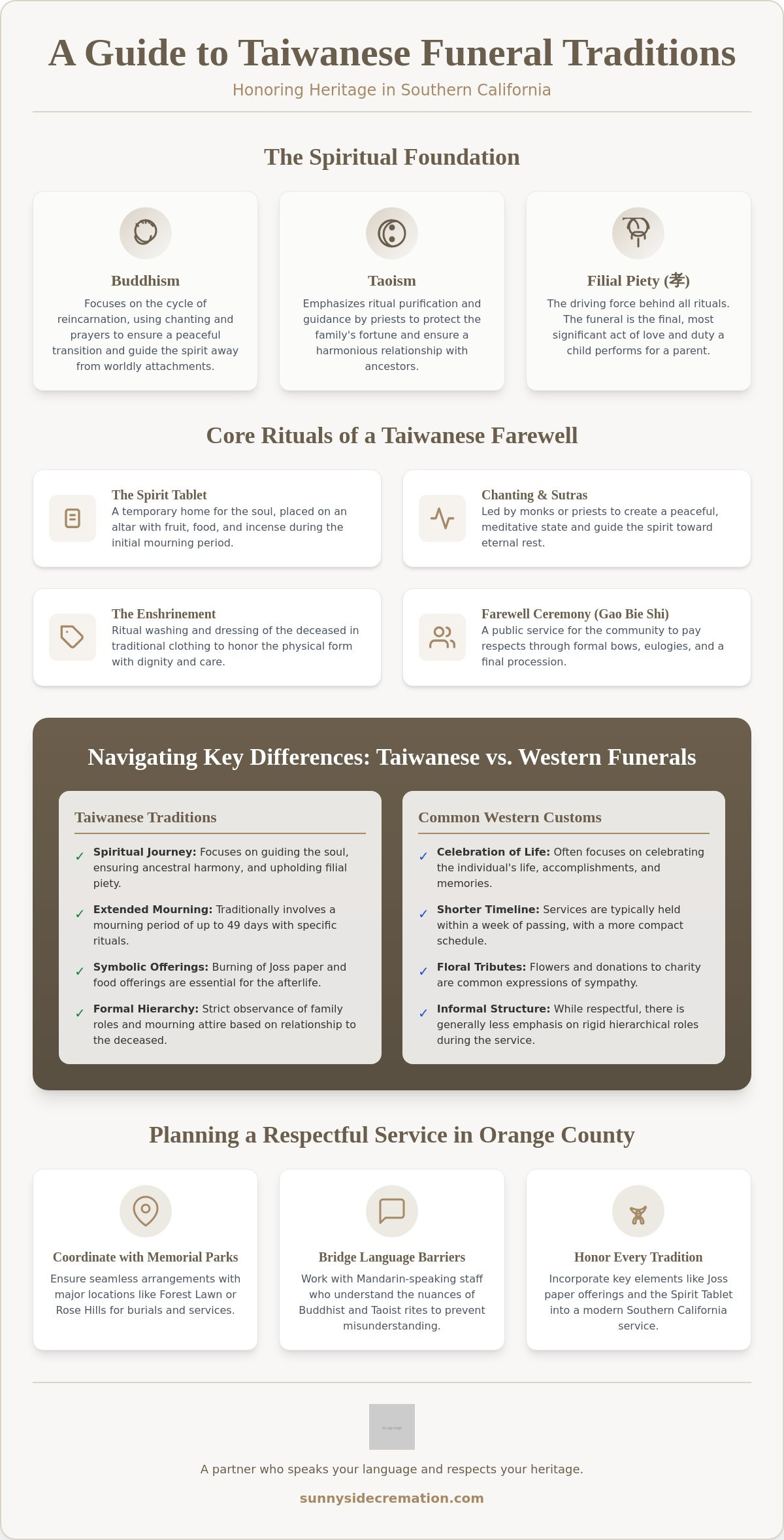
A Taiwanese funeral is much more than a simple goodbye. It's a complex, beautiful synthesis of Buddhist, Taoist, and Confucian values that have evolved over centuries. At its heart, the ceremony is built on the foundation of filial piety, the ultimate expression of love and duty toward one's parents. Unlike some traditions found in mainland China, Taiwanese rites are deeply influenced by local folk religions. This creates a unique spiritual atmosphere that feels both ancient and intimately personal to those raised with these customs.
The core philosophy of these rites is dual-natured. First, the family seeks to ensure the loved one makes a smooth, peaceful transition into the afterlife. Second, the rituals are designed to protect the family's future fortune by maintaining a harmonious relationship with the ancestors. This often involves vibrant, symbolic processions meant to clear the path for the soul. In traditional settings, this might include The Soul Guiding Array; a ritual performance that combines music and movement to guide the spirit safely through the transition. While we adapt these traditions for the modern landscape of Southern California, the underlying intent remains the same. The "Farewell Ceremony" serves as a vital public display of legacy and profound respect.
The Role of Religion: Buddhism vs. Taoism
Many families choose a hybrid ceremony to honor their diverse spiritual roots. The Buddhist approach focuses on the cycle of reincarnation, utilizing rhythmic chanting and prayers to facilitate a calm departure. Conversely, Taoist elements emphasize ritual purification and the use of specialized priests to guide the soul while offering ancestral protection. By blending these paths, we help you create a service that feels complete and spiritually secure for everyone involved.
The Concept of Filial Piety (Xiao)
Within the context of a Taiwanese funeral, the concept of filial piety, or *Xiao*, is the driving force behind every decision. The funeral is often viewed as the final and most significant act of service a child can perform for a parent. This value drives the need for meticulous accuracy in every ritual. Family hierarchy is strictly observed through mourning grades, which determine the specific attire and roles each relative holds during the service. Following these traditional structures isn't just about protocol; it's a way to demonstrate that the family's bond remains unbroken, even in death.
Core Rituals and Traditions of a Taiwanese Farewell
The process begins with the setting of the Spirit Tablet. This serves as a vital focal point during the initial mourning period. It acts as a temporary home for the soul until the final transition is complete. Beside it, we help families arrange a temporary altar adorned with fresh fruit, favorite foods, and steady incense. The soft glow of candles and the scent of incense create a space for quiet reflection and connection. It's a place where family members can speak to their loved one, sharing thoughts and prayers in a familiar, intimate setting.
The 'Enshrinement' ritual is a moment of deep reverence and meticulous care. We ensure the body is prepared with the utmost dignity, often involving a ritual washing before dressing. The deceased is dressed in specific traditional clothing reflecting their life and status. This step is about more than just appearance; it's about honoring the physical form that carried their spirit. Every fold of the fabric and every placement of a personal item is handled with a gentle, professional touch.
Chanting and sutra recitation are essential components of a Taiwanese funeral. Monks or priests lead these sessions to create a peaceful, meditative environment. These sacred sounds help guide the spirit away from worldly attachments toward a state of eternal rest. The rhythmic nature of the chanting provides a soothing backdrop, transforming the heavy atmosphere into one of spiritual hope. It allows the family to focus on the spiritual journey ahead rather than just the immediate pain of loss.
The Farewell Ceremony (Gao Bie Shi)
The public service, or Gao Bie Shi, follows a carefully structured sequence of formal bows, eulogies, and a final procession. It's a time for the community to gather and share in the family's loss. You'll notice a heavy use of white and yellow colors in the floral arrangements and decorative banners. These colors represent purity and the transition to the afterlife. The ceremony allows friends and distant relatives to pay their respects through a series of coordinated bows, acknowledging the legacy of the person who has passed.
Mourning attire is equally significant and carries deep meaning. Family members wear specific colors and fabrics based on their relationship to the deceased, creating a visual map of the family tree. This hierarchy is a silent testament to the family's structure and enduring respect. While modern Taiwanese funeral customs continue to evolve, these core visual cues remain a steady comfort for many in Orange County. Families often find peace knowing their traditions are respected during Rose Hills funeral coordination in California.
Ritual Offerings and Joss Paper
Providing for a loved one's needs in the afterlife is a core duty during a Taiwanese funeral. Families use different types of Joss paper for specific purposes. Gold paper is typically reserved for deities, while silver paper is offered to the ancestors. The act of burning this paper is a symbolic way of transferring wealth and resources to the spirit world, ensuring they're well-cared for on their journey.
Beyond traditional paper money, we often see elaborate paper replicas. These include detailed models of houses, luxury cars, and even modern electronics like smartphones or computers. These offerings are tactical tools for the soul's comfort in the next world. By providing these items, the family demonstrates their ongoing care and desire for their loved one to enjoy the same comforts they had in life. It's a tangible way to express filial piety through symbolic generosity.
Taiwanese vs. Western Funerals: Navigating the Differences
Organizing a Taiwanese funeral in Southern California often feels like a delicate balancing act. While Western services typically conclude within a single week, traditional Taiwanese customs observe a 49-day mourning period. This extended timeline allows for specific rituals on seventh-day cycles, which can be difficult to coordinate with standard US business schedules. We help you bridge this gap by creating a hybrid timeline that respects these ancient rhythms while managing the realities of modern life. It's about finding a pace that feels right for your family's grief.
Etiquette also differs significantly between these two worlds. In a Western viewing, visitors might offer a quiet word or a handshake. At a Taiwanese service, the focus is on formal bowing and the offering of incense at the temporary altar. This physical act of reverence is a cornerstone of the ceremony. It requires a funeral director who acts as a cultural guide rather than just a logistical manager. They ensure every guest understands the flow of the service and the deep significance of these gestures. This guidance provides a sense of security when traditions feel unfamiliar to younger generations.
Balancing Tradition with Modern Logistics
California funeral chapels have strict fire codes and set operational hours. We work closely with families to incorporate incense and chanting within these modern facilities safely. This might mean using specialized ventilation or scheduling sutra recitations during specific windows that honor both the ritual and the facility rules. Adapting the funeral procession to fit local traffic laws in Garden Grove or Anaheim requires careful planning. We find a middle ground between traditional 24-hour vigils and standard mortuary hours, ensuring the spirit is honored without creating unnecessary stress for the living.
The White Envelope Etiquette (Bai Jin)
The custom of Bai Jin, or the white envelope, remains a vital part of the community fabric in Southern California. Guests provide these monetary gifts to help the family manage the costs of the ceremony. It's a practical expression of communal support. In return, the family provides a small "return gift," usually a towel or a piece of candy. The towel symbolizes wiping away tears, while the candy represents the return of sweetness to life after a period of bitterness. These small exchanges maintain the social bonds and shared heritage that define the Taiwanese-American experience.
Planning a Taiwanese Funeral in Southern California
Organizing a Taiwanese funeral in a Western environment requires a steady hand and a deep respect for tradition. The first and most critical step is selecting a mortuary with Mandarin-speaking staff who possess genuine cultural experience. This ensures that every conversation, from the initial intake to the final service, is handled with the nuance and sensitivity your family deserves. Without this linguistic bridge, the fine details of ritual accuracy can often be lost in translation, adding unnecessary stress to an already difficult time.
Once you have a supportive team in place, the focus shifts to logistical harmony. This involves Rose Hills funeral coordination California families can rely on to manage the intricate requirements of traditional rites. Coordinating with major memorial parks requires a partner who understands how to secure the necessary permits for incense or chanting. They act as your advocate, ensuring that the facility rules accommodate your spiritual needs without compromise.
Choosing the right timing is another vital element of the process. Most families consult a Feng Shui master or a Buddhist monk to select an auspicious date and time for the viewing and burial. This ensures the soul departs under the most favorable conditions, a practice that honors the deceased while bringing peace of mind to the living. Following this, we help you arrange for essential ritual items. This includes sourcing specific types of incense, Joss paper, and floral displays that utilize traditional colors like white and yellow to signify purity and mourning.
Local Cemetery Coordination
When it comes to the final resting place, Forest Lawn burial arrangements often involve specific considerations for plot orientation. Traditional beliefs emphasize the importance of the grave's direction and its relationship to the surrounding landscape. Navigating the rules of major parks like Rose Hills or Forest Lawn for traditional Taiwanese rites becomes much simpler when your funeral director has established relationships with their staff. We help you select a location that aligns with your family’s spiritual values and long-term legacy.
Language and Communication
Communication is the heart of a meaningful service. Our Mandarin funeral home Orange County services are critical for elder family members who may feel isolated by language barriers. We ensure that every eulogy, program, and ritual explanation is translated with absolute respect and accuracy. Bilingual staff do more than just translate words; they bridge the gap between generations, ensuring that younger family members understand the "why" behind every tradition. This shared understanding creates a cohesive, healing experience for the entire family.
If you are looking for a partner to help you navigate these cultural details, our Taiwanese funeral home specialists are here to offer the steady, compassionate support you need during this transition.
Why Sunnyside Cremation and Funeral is the Trusted Choice
Choosing a partner for a Taiwanese funeral is about more than finding a service provider; it's about finding a steward for your family's legacy. We understand that the nuances of these ceremonies are deeply personal. Our team possesses a profound understanding of the unique cultural threads that bind the Taiwanese-American community together. We don't just facilitate a service. We act as a steady, compassionate presence that honors every tradition with the reverence it deserves. This commitment to cultural integrity ensures that your family's final act of service is handled with absolute dignity.
Our direct experience coordinating with local Buddhist temples and Taoist priests allows us to manage the spiritual flow of the day with ease. We understand the specific requirements for ritual purification and soul-guiding ceremonies. To simplify this journey, we offer specialized Taiwanese funeral packages designed specifically for families in Garden Grove and Buena Park. These packages provide a clear framework, allowing you to focus on your grief and your family while we handle the intricate details of the ceremony. As a family-owned and operated business, we treat your heritage as if it were our own.
Dedicated Support for Orange County Families
We take great pride in serving the vibrant communities of Cerritos, Irvine, and Anaheim with localized, empathetic care. Our team is always here to provide a calm hand during a period of emotional vulnerability. Beyond immediate needs, we also offer specialized assistance with funeral pre-planning for Asian families. This proactive approach allows you to secure your cultural traditions in advance, providing peace of mind for future generations. We're committed to maintaining the solemnity and beauty of your customs, ensuring they remain a vibrant part of your family story.
Seamless Professional Coordination
The administrative burden during a time of loss can be overwhelming. We manage all the necessary paperwork, including death certificates and cemetery permits, so you don't have to. Our role is to be a quiet, efficient force in the background, handling the logistics while you honor your loved one. Every ritual detail is managed with meticulous care, including:
- Sourcing and arranging specific incense and traditional floral displays.
- Ensuring proper facilities are available for Joss paper offerings.
- Coordinating with priests to align sutra recitations with cemetery schedules.
- Providing Mandarin-speaking staff to support elder family members throughout the day.
By providing a steady hand through complex decision-making processes, we aim to reduce your cognitive load. We believe that a well-coordinated ceremony is a vital part of the healing process. When you work with us, you aren't just planning a service; you're ensuring that your loved one's transition is as peaceful and respectful as possible.
Honoring Your Heritage with a Meaningful Farewell
Honoring a life through the lens of tradition is a profound responsibility that brings comfort to the living and dignity to the departed. We've explored how blending ancient rites with modern Southern California arrangements allows you to fulfill your duties of filial piety without compromise. From managing the delicate timeline of a traditional mourning period to ensuring every incense offering is handled with reverence, the right support makes all the difference.
A Taiwanese funeral should be a bridge to your heritage, not a source of logistical stress. Our family-owned team is here to act as your steady guide, offering Mandarin-speaking support and expert coordination with memorial parks like Forest Lawn and Rose Hills. We take care of every detail, from death certificates to ritual accuracy, so you can focus on what truly matters: honoring your loved one's legacy.
Plan a Respectful Taiwanese Farewell with Sunnyside Cremation and Funeral
You don't have to navigate this path alone. We are here to walk beside you, ensuring your family's traditions are preserved with the kindness and respect they deserve.
Frequently Asked Questions
What should I wear to a Taiwanese funeral in California?
Guests should wear dark, somber colors such as black, navy blue, or charcoal grey to show respect. It's essential to avoid bright colors, especially red, which is traditionally associated with celebrations and joy. Immediate family members will often wear specific mourning attire provided by the funeral home, but for friends and extended relatives, conservative and modest clothing is the most appropriate choice.
How long does a traditional Taiwanese funeral ceremony typically last?
A public farewell ceremony usually lasts between one and two hours, though the entire process can take half a day when including the procession. This timeframe covers the formal bowing, sutra chanting, and eulogies. If you plan to attend the graveside service or the cremation ritual, you should expect to spend an additional two to three hours for travel and final prayers.
Can we perform Joss paper burning at a California cemetery?
Yes, many local cemeteries allow Joss paper burning, but it must be done in designated areas to comply with California fire codes. Facilities like Rose Hills and Forest Lawn have specific regulations and often provide specialized burners for this purpose. We coordinate directly with the cemetery staff to ensure your Taiwanese funeral rituals are performed safely and in full accordance with their current policies.
Is it customary to bring money to a Taiwanese funeral?
It's a long-standing custom to bring a monetary gift in a white envelope, known as Bai Jin, to support the grieving family. This gesture helps cover the costs of the services and serves as a practical expression of community support. The amount is typically an odd number, and in return, the family will provide a small gift like a towel or candy to thank you for your presence.
What is the significance of the 49th-day ceremony?
The 49th day marks the completion of the soul's transition and the conclusion of the most intensive mourning period. In Buddhist tradition, this is the final opportunity for the living to influence the deceased's rebirth through prayers and chanting. Many families in Orange County hold a special service on this day to ensure their loved one has found peace and to begin their own journey toward healing.
Do I need a Mandarin-speaking funeral director?
A Mandarin-speaking funeral director is vital for families who want to ensure that every cultural nuance is captured and respected. They serve as a bridge between the elder generation and the modern funeral facility, preventing stressful misunderstandings during a vulnerable time. This specialized support ensures that complex instructions regarding rituals, timings, and traditional items are executed with absolute accuracy and care.
Are there specific flowers that should be avoided at a Taiwanese service?
You should strictly avoid red flowers, as the color red symbolizes happiness and is considered inappropriate for a time of loss. White and yellow chrysanthemums or lilies are the traditional choices, representing purity and the solemnity of the occasion. We work with local florists to ensure your arrangements follow these cultural guidelines, providing a serene and respectful backdrop for the farewell ceremony.
How do we coordinate with a Buddhist monk for the chanting ceremony?
We take care of the entire coordination process with local temples and monks to ensure the chanting ceremony is seamless. This includes scheduling the sutra recitations, preparing the altar with the necessary offerings, and managing the logistical needs of the clergy. By handling these spiritual arrangements, we allow your family to participate fully in the prayers without worrying about the underlying organizational details.


