

A family in Garden Grove recently gathered in their living room, speaking in hushed tones about how to properly organize a Cambodia funeral that honors their grandmother's deep Buddhist faith. It's natural to feel a heavy sense of responsibility to get every detail right, from the specific chants of the monks to the delicate timing of the offerings. You want to honor your heritage with absolute sincerity, but the pressure of balancing ancient seven-day traditions with the fast pace of life in Southern California can leave any family feeling uncertain.
We understand that these rituals are more than just customs; they're a spiritual bridge ensuring a peaceful transition for the person you lost. This guide is designed to provide you with the clarity and comfort you need to coordinate a traditional service that remains faithful to Theravada Buddhist rites. We'll explore the nuances of mourning etiquette, provide a clear timeline for the rituals, and explain how a local partner can help manage the cultural coordination so you can focus on your family's healing.
Key Takeaways
- Learn how Cambodian Buddhist beliefs view death as a vital transition and why the soul requires specific prayers to find its way.
- Understand the role of monks and how to adapt the traditional seven-day Cambodia funeral timeline to fit a modern schedule.
- Discover essential mourning etiquette, including traditional attire choices and how to perform the respectful prostration known as the Krab.
- Get practical guidance on navigating California laws for cremation while ensuring your loved one's spiritual needs are honored.
- Find out how to select a local partner who provides empathetic, culturally specific care for families in Garden Grove and Westminster.
Understanding Cambodian Buddhist Funeral Beliefs
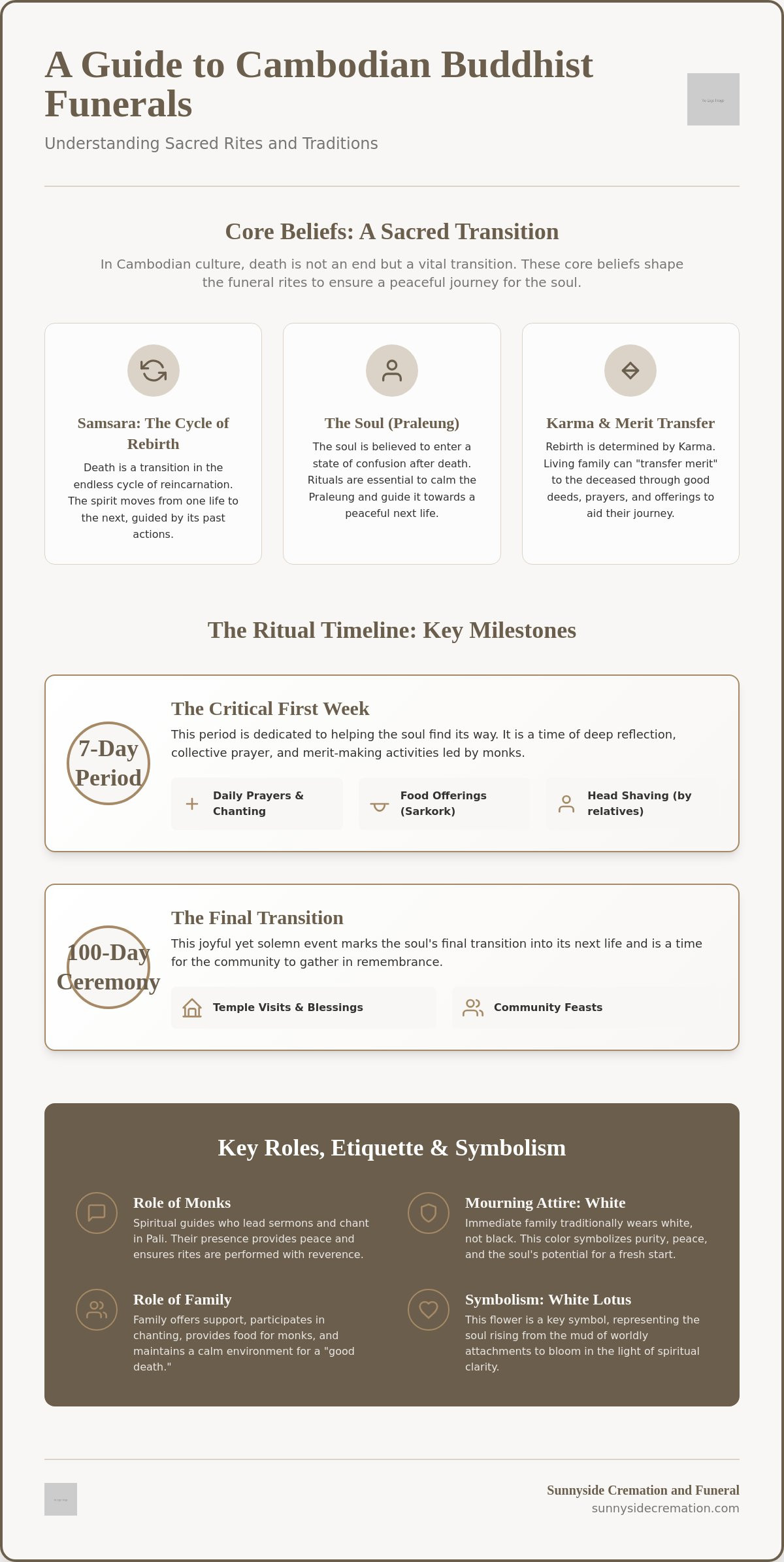
In Cambodian culture, death is not viewed as a finality. It is a sacred transition within the cycle of reincarnation, known as Samsara, where the spirit moves from one physical form to the next. For many families in our community, the period immediately following a loss is a time of both deep sorrow and intense spiritual activity. The soul, or Praleung, is believed to enter a state of profound confusion once it leaves the body. It doesn't always realize its earthly journey has ended, which creates a delicate window where the family's actions matter most.
Without the steadying presence of family and the guidance of ancient rituals, there is a traditional concern that the soul could become a wandering spirit, unable to find its way to the next life. This is why a Cambodia funeral is so much more than a memorial service. It is a series of intentional acts designed to calm the Praleung and provide it with the merit needed for a favorable rebirth. To symbolize this journey toward purity and peace, immediate family members traditionally wear white. This stark, clean color contrasts with the black often seen in Western mourning, serving as a visual reminder of the soul's potential for a fresh start.
The Concept of Rebirth and Karma
Rebirth is never seen as a random event. It is deeply tied to Karma, the spiritual ledger of a person's thoughts and actions throughout their life. While a person's own history is the primary factor, Cambodian tradition places a beautiful emphasis on the role of the living. Family members can "transfer merit" to their loved one by performing good deeds, offering food to monks, and participating in chanting. This collective effort helps ease the soul's path. We often encourage families to maintain a calm, quiet environment during the final moments and the days that follow, as a peaceful atmosphere is essential for a "good death."
Theravada Buddhism in Cambodian Rites
These rites are distinct because they are rooted in Theravada Buddhism. During the ceremonies, monks often chant in Pali, an ancient language whose rhythmic vibrations are believed to reach the spirit world. These Cambodian funeral customs are unique in their specific focus on the White Lotus. You will often see this flower throughout the service; it represents the soul rising from the mud of worldly attachments to bloom in the light of spiritual clarity. By following these specific traditions, families provide their loved ones with a final, compassionate gift of guidance.
The Role of Monks and the 7-Day Ritual Timeline
In the heart of a Cambodia funeral, monks serve as the essential spiritual bridge between the living and the deceased. They aren't merely officiants; they're guides who lead sermons and chanting to settle the Praleung (soul) as it begins its transition. Their presence provides a sense of peace for the family, offering blessings that are believed to ease the weight of grief. In our local community, having monks lead these rites ensures that the spiritual requirements of Theravada Buddhism are met with the reverence they deserve.
The first seven days after a loss are considered a critical milestone. This period is dedicated to helping the soul find its way while allowing the family to gather and offer support to one another. It's a time of deep reflection where collective prayer and merit-making take center stage. Understanding the nuances of Cambodian Buddhist funeral beliefs helps families appreciate why these specific timelines are so vital for a peaceful rebirth.
The 7-Day Mourning Period
Traditionally, the seven-day period involves daily prayers and the preparation of Sarkork, which are sacred food offerings presented to the monks. In Orange County, we see families adapt these traditions in various ways. Some choose to host these gatherings entirely at home, while others prefer the quiet, dedicated space of a mortuary that can accommodate monk-led services. A particularly moving aspect of this period is when close relatives shave their heads. This act of renunciation is a profound sign of filial piety and deep grief, symbolizing a temporary withdrawal from worldly vanity to honor the loved one's memory.
For many families in Southern California, balancing a full seven-day ritual with modern work schedules can be challenging. We often help families consolidate these rites into a more manageable one or two-day service that still preserves the spiritual integrity of the tradition. This flexibility allows you to honor your heritage without the added stress of logistical complications.
The 100-Day Memorial Ceremony
While the funeral services handle the immediate departure, the 100-day ceremony marks the final transition of the soul. It's a joyful yet solemn event where the community gathers for temple visits, large feasts, and alms-giving. This ceremony is the final major merit-making event for the deceased, ensuring they are well-positioned for their next life. Because this event requires significant coordination, many families begin discussing these plans while the initial funeral arrangements are being made. If you're feeling uncertain about how to structure these multi-stage rituals, our compassionate team can help you navigate the planning process with grace and cultural sensitivity.
Cambodian Funeral Etiquette and Symbolism
Participating in a Cambodia funeral requires a thoughtful understanding of how physical actions translate into spiritual respect. Every gesture, from the way you stand to the colors you wear, serves as a silent prayer for the deceased's journey. For many in our Garden Grove community, these traditions are a way to maintain a connection to their heritage while navigating the profound emotions of loss. Etiquette here isn't about rigid rules; it's about creating a collective field of merit that supports the soul's transition.
One of the most visible forms of respect is the Krab, or prostration. This involves kneeling and bowing until your forehead touches the floor or your hands. It is customary to perform this three times before the monks and the deceased. This physical act of humility acknowledges the spiritual authority of the monks and the sacred nature of the transition taking place. If you're attending as a guest, you aren't always expected to perform the full prostration, but a deep, respectful bow with your hands pressed together in a prayer-like position (Sampeah) is always appreciated.
Practical support is also a hallmark of Cambodian mourning. It's traditional for guests to bring financial contributions, usually placed in white envelopes, to help the family manage the costs of the multi-day services. These gifts are a form of merit-making for the giver and a vital act of community stewardship for the grieving family. Additionally, bringing fruit, flowers, or pre-prepared vegetarian dishes to the family home during the mourning period provides immediate comfort and allows the family to focus on their spiritual duties.
Dress Code and Conduct for Guests
While immediate family members traditionally wear white to symbolize purity and mourning, guests in the United States often choose dark, somber colors like charcoal gray or navy blue. It's vital to avoid bright colors, especially red. In Cambodian culture, red is the color of joy and celebration, making it deeply inappropriate for a funeral setting. We suggest dressing modestly, ensuring shoulders and knees are covered, to maintain the solemnity of the temple or mortuary environment. During the chanting, a stoic and quiet demeanor is best, as it reflects the calm environment required for the soul's peace.
The Procession and the Casket
The movement of the casket is rich with symbolism. Before the cremation or burial, the casket is often walked around the funeral home or crematorium three times. This procession moves in a counter-clockwise direction. This specific movement symbolizes the reversal of the life cycle and the soul's detachment from the physical world. During this time, family members may place symbolic items inside the casket, such as small coins to pay the "spiritual toll" or grains of rice to ensure the soul is nourished on its journey. These small, tangible acts provide a sense of agency and peace during a difficult day.
Planning a Cambodian Service in Southern California
Organizing a Cambodia funeral in Southern California involves merging sacred traditions with specific state regulations. California law requires a signed death certificate and a burial-transit permit before any final disposition can occur. This administrative process can sometimes feel at odds with the spiritual urgency of a Buddhist transition. Working with a funeral home that understands these timelines is essential. We help families navigate these requirements while ensuring that the spiritual timeline remains the priority.
A vital part of the planning process is selecting a facility that facilitates monk-led witnessed cremation. In the Theravada tradition, being present as the body returns to the elements is a powerful moment of reflection on impermanence. Not all mortuaries are equipped to host these ceremonies or provide the space needed for monks to lead final sermons. We prioritize finding a setting that feels like a sanctuary, where your family can perform these rites without feeling rushed by clinical schedules.
Communication is often the biggest hurdle for families during a time of grief. We recognize that elders in the community may feel more comfortable speaking Khmer or Mandarin to ensure their wishes are perfectly understood. Having staff who can bridge this language gap ensures that no detail of the ritual is lost in translation. Whether you are coordinating a burial at Rose Hills or Forest Lawn, having a partner who speaks your language and understands your heart makes the process much more manageable.
Local Resources in Orange County
Garden Grove and Anaheim are home to vibrant Buddhist temples that are central to these ceremonies. Balancing the requirements of a modern memorial park with traditional food offerings and chanting requires a steady hand and local expertise. You can find more detailed guidance on Buddhist Funeral Services in Orange County to help you choose the right spiritual partners for your service.
Pre-Planning for Cultural Preservation
One of the most compassionate things you can do for your family is to set your wishes in stone before they are needed. Pre-planning ensures that specific Theravada Buddhist rites are followed exactly as you intend, removing the guesswork for your children during a period of high emotion. It also secures current costs, protecting your loved ones from future financial burdens. Our Funeral Pre-Planning for Asian Families guide offers a step-by-step approach to preserving these vital customs for the next generation.
If you're ready to begin this journey of preservation, reach out to our compassionate team for a gentle conversation about your family's needs.
Culturally Respectful Care with Sunnyside Cremation
At Sunnyside Cremation and Funeral, we believe that every Cambodia funeral is a sacred duty that requires more than just professional logistics. As a family-owned business, we don't view these services as simple procedures; we see them as a final act of stewardship for a soul in transition. Our team provides a calm, steady presence during a time when your family is at its most vulnerable. We understand the weight of these rituals and the precision required to honor Theravada Buddhist rites within the modern landscape of Southern California.
Our commitment to the Cambodian community is rooted in a deep sense of empathy and reverence. We recognize that you aren't just looking for a service provider; you're looking for a partner who understands the spiritual significance of every chant and offering. We pride ourselves on being a compassionate advocate for your family, ensuring that the dignity of your loved one is preserved from the moment they enter our care until their final transition is complete.
Our Experience with Buddhist Traditions
We have spent years refining our approach to specialized Buddhist ceremonies to ensure they meet the highest standards of cultural accuracy. Facilitating a monk-led sermon requires a specific kind of environment, one that prioritizes quiet reverence and spiritual focus. Our facilities are designed to accommodate these spiritual leaders, providing the necessary space for traditional chanting and family prayers. For those who choose cremation, we facilitate witnessed cremations, allowing the family to remain present during this vital moment of release.
Our expertise in these customs is a cornerstone of our identity. We often find that the values we uphold for Cambodian families mirror the dedicated care we provide as a Vietnamese Funeral Home in Orange County. This shared foundation of Buddhist values allows us to navigate the nuances of Asian funeral customs with ease. Additionally, our long-standing relationships with major memorial parks like Forest Lawn and Rose Hills mean we can handle all the complex coordination for graveside burials or niche placements, acting as a reliable guide through every step of the process.
A Supportive Environment for Grieving Families
We know that no two families are exactly alike, and your needs might change as you navigate the mourning period. We offer flexible service packages that we can tailor to your family's specific cultural and financial requirements. Our multilingual support ensures that communication is never a barrier. We want every member of your family, especially the elders who may prefer speaking Khmer or Mandarin, to feel completely comfortable and heard. Whether you are seeking guidance in Buena Park or Garden Grove, our doors are open to provide the support you deserve.
If you are currently facing a loss or wish to discuss how to preserve your family's traditions for the future, we invite you to reach out. Please contact Sunnyside Cremation and Funeral for a respectful consultation and let us help you honor your loved one with the dignity they deserve.
Honoring Your Heritage with Gentle Guidance
Providing a peaceful transition for your loved one is one of the most profound acts of love your family can perform. By understanding the spiritual depth of the soul's journey and the critical role monks play in the traditional ritual timeline, you ensure that every custom is observed with absolute sincerity. Whether it's choosing the correct mourning attire or coordinating a witnessed cremation, these intentional steps honor a lifetime of merit and faith. Planning a Cambodia funeral in Southern California doesn't have to be a source of stress when you have a partner who understands the nuances of your culture.
Sunnyside Cremation and Funeral is a family-owned and operated firm in Orange County, specializing in the specific needs of Buddhist and Asian families. We handle every detail of coordination with major memorial parks like Forest Lawn and Rose Hills, allowing you to focus on your family's healing and reflection. Our team is here to act as your steady guide, ensuring your customs are preserved with dignity and reverence. You don't have to navigate this path alone. Plan a Respectful Cambodian Service with Sunnyside Cremation and Funeral today, and let us provide the calm, supportive presence your family deserves during this sacred time.
Frequently Asked Questions
What is the traditional mourning color for a Cambodian funeral?
White is the traditional color of mourning in Cambodian culture, representing purity and the soul's transition to its next form. While immediate family members typically wear white, guests in Southern California often choose dark, somber colors like charcoal or navy. It's essential to avoid wearing red, as it symbolizes happiness and celebration, which is inappropriate for the solemnity of a Cambodia funeral.
Why do Cambodian family members shave their heads after a death?
Close relatives, particularly children or grandchildren, shave their heads as a profound act of filial piety and a visible sign of deep grief. This practice symbolizes a temporary renunciation of worldly vanity to focus entirely on the spiritual well-being of the deceased. It is a traditional way to show respect and devotion while earning merit for the loved one's journey to the next life.
How many days does a traditional Cambodian funeral last?
A traditional service typically spans seven days, though many families in Garden Grove adapt this timeline to fit modern schedules. In the United States, it's common to consolidate the main rituals into a one or two-day service followed by smaller home prayers. This flexibility allows families to maintain the spiritual integrity of the rites while managing practical logistics in a respectful way.
Is cremation or burial more common in Cambodian culture?
Cremation is the most common choice because it aligns with Buddhist beliefs about releasing the soul from the physical body. By returning the form to the elements, families help the Praleung transition more easily into the next stage of reincarnation. While burial is an option at memorial parks like Rose Hills, cremation remains the preferred method for ensuring a peaceful spiritual passage.
What should I bring to a Cambodian funeral service as a guest?
Guests typically bring a financial contribution placed inside a white envelope to assist the family with service costs. This gesture is considered a form of merit-making for the giver and a supportive act for the grieving family. You might also consider bringing fresh fruit or vegetarian food to the family's home during the mourning period to provide immediate comfort and sustenance.
How do I find a monk for a Cambodian funeral in Orange County?
You can coordinate with local Buddhist temples in Garden Grove and Anaheim or ask your funeral director for assistance. Many families work with spiritual leaders from their own congregations to lead the necessary chanting and sermons. A funeral home with experience in Asian traditions can often help bridge the communication gap and ensure a monk is available for the service.
What is the significance of the 100-day ceremony in Buddhism?
The 100-day ceremony marks the final milestone in the soul's transition and serves as a major merit-making event. Family and community members gather to offer food to monks and participate in prayers to ensure the deceased is well-positioned for a favorable rebirth. It's a time of both reflection and community connection, marking the end of the formal mourning period.
Can Sunnyside Cremation and Funeral help with a witnessed cremation for a Buddhist service?
Yes, at Sunnyside Cremation and Funeral, we specialize in facilitating witnessed cremations that allow families to be present during this sacred moment of release. We understand that being nearby as the body returns to the elements is a vital part of the healing process for many Buddhist families. Our team ensures that the environment remains calm and reverent, providing the space needed for final prayers and monk-led blessings.


