
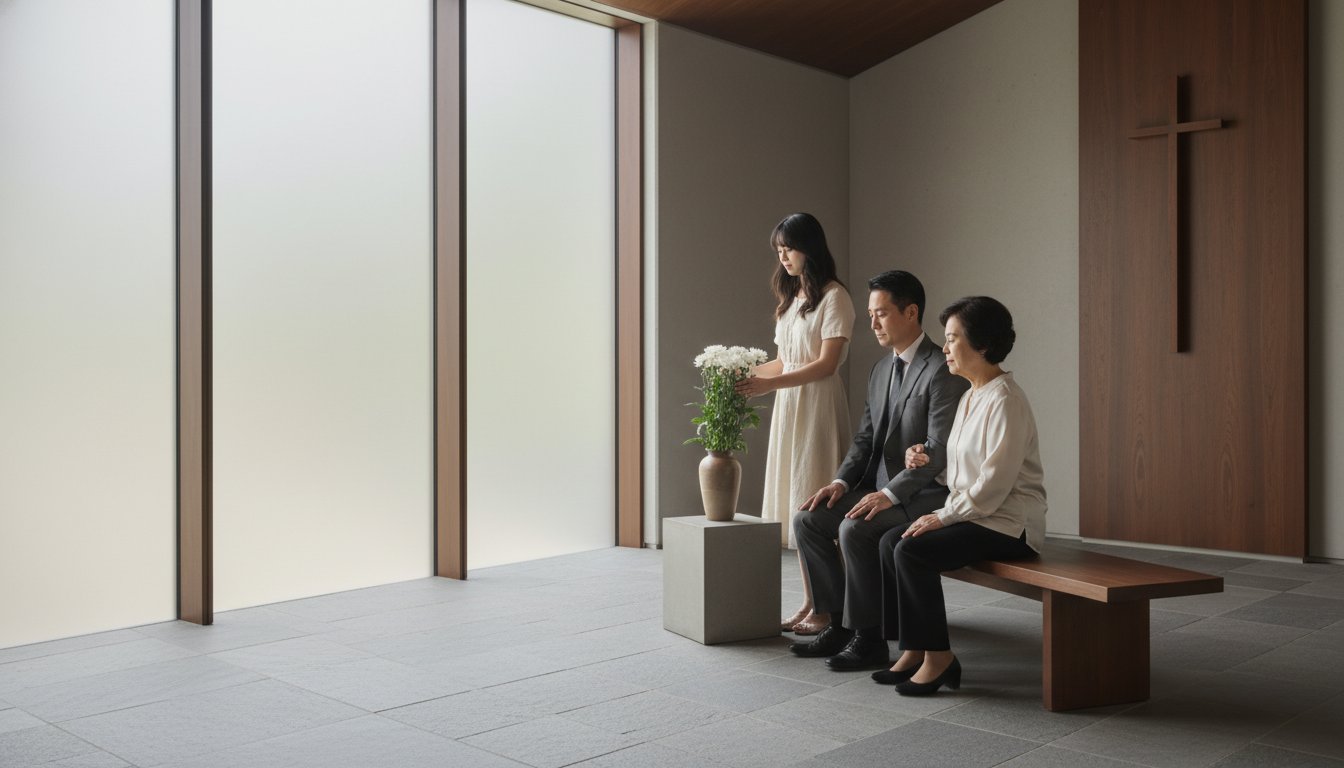
How do you ensure a parent's final journey honors centuries of tradition when the logistics are managed in a modern Southern California funeral home? It's a heavy responsibility to shoulder, especially when you're balancing the expectations of elders with the complexities of local regulations. You want to fulfill every ritual of filial piety without the fear that a language barrier or a missed step might disrupt the peace of your ancestors. We understand that funeral planning for Chinese families involves much more than just paperwork; it's a sacred act of stewardship and love.
You deserve a partner who speaks your language and respects the delicate balance of your heritage. This guide will help you bridge the gap between ancient customs and modern requirements, ensuring your loved one receives a dignified farewell at respected locations like Rose Hills or Forest Lawn. We'll walk through the nuances of Mandarin and Cantonese communication, the choice between traditional burial and cremation, and how to coordinate seamless arrangements that bring your family a sense of quiet security and closure.
Key Takeaways
- Understand how the core principle of filial piety shapes every ritual and decision throughout the funeral process.
- Learn the vital symbolism of mourning colors and household preparations to honor your heritage with complete confidence.
- Simplify funeral planning for Chinese families by discovering how to coordinate cultural traditions with local cemeteries like Forest Lawn or Rose Hills.
- Identify the benefits of working with Mandarin or Cantonese speaking staff who can bridge language gaps between generations.
- Explore how specialized Chinese funeral packages can help you manage modern logistics while preserving sacred ancestral customs.
Understanding the Foundation of Chinese Funeral Planning
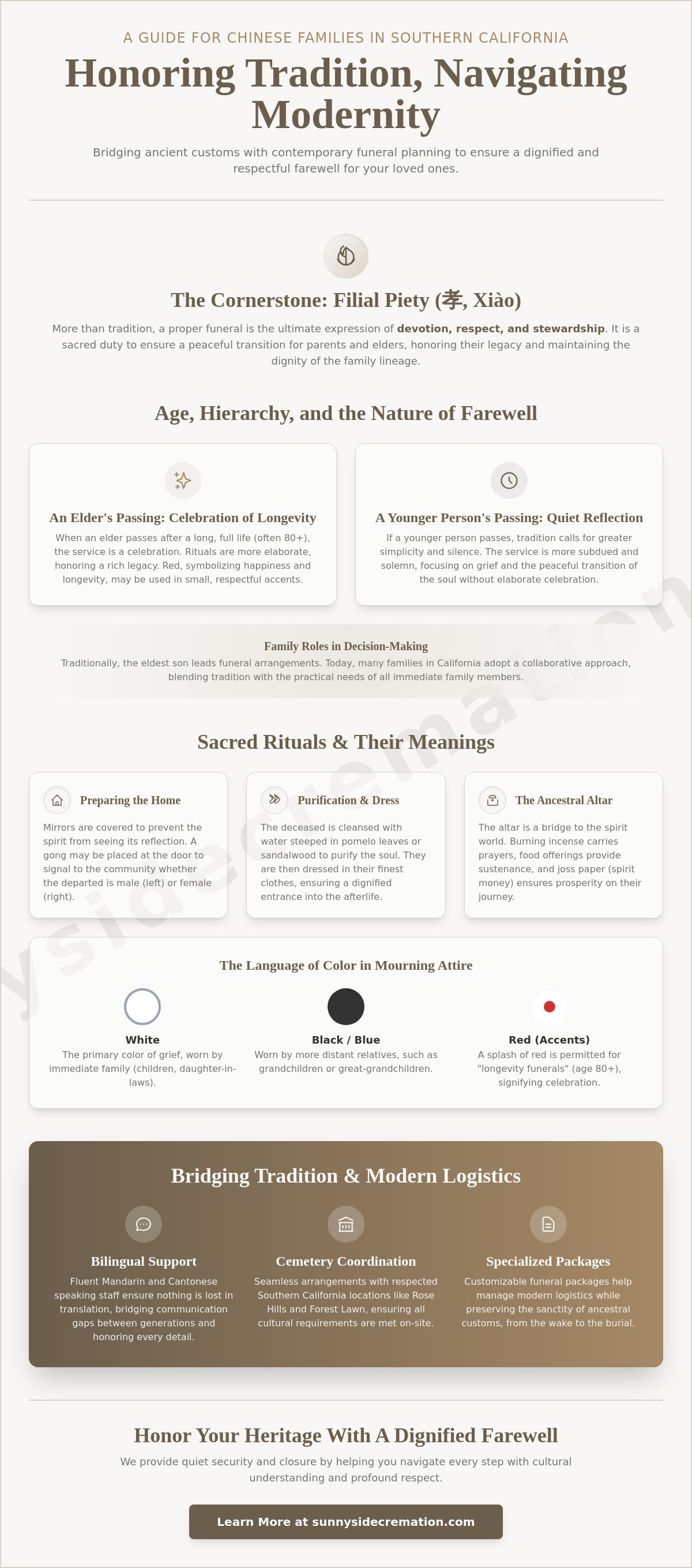
When you begin the process of funeral planning for Chinese families, you aren't just arranging a service; you're fulfilling a sacred duty. This responsibility is rooted in deep cultural values that have guided generations for centuries. It's about providing a peaceful transition for the deceased while maintaining the dignity of the family lineage. You're acting as a bridge between the physical world and the ancestral realm, ensuring that every detail reflects a lifetime of respect.
The Significance of Filial Piety (Xiao)
Filial Piety is the cornerstone of Chinese funeral rites. This concept, known as Xiao, dictates that children must show unwavering respect and care for their parents, even after they've passed. A grand funeral isn't merely for show. Instead, it's a final, profound act of devotion. In many communities, the scale and detail of the ceremony reflect the family's respect for their elder. This "giving of face" ensures the community sees the family's commitment to their heritage. Unlike some perspectives that focus on the fear of bad luck, we view these Chinese funeral rituals as a beautiful expression of stewardship and love.
Navigating Age and Social Standing
Hierarchy and age play pivotal roles in how a service is structured. When an elder passes after a long, full life, the funeral is often seen as a celebration of longevity. These services are elaborate, filled with specific rites to honor a legacy well-lived. Conversely, traditional customs usually call for more simplicity and silence if a younger person passes. The manner of death also guides the rituals chosen. For instance, families may choose specific Buddhist or Taoist prayers to help guide the soul based on the circumstances of the passing.
The family hierarchy also dictates who leads these efforts. Traditionally, the eldest son carries the heaviest mantle in decision-making. He often leads the rituals and serves as the primary point of contact for the funeral home. However, modern funeral planning for Chinese families in California often involves a collaborative approach. We see families blending these traditional hierarchies with the practical needs of siblings and spouses. Whether you're following strict Taoist protocols or integrating Western elements, the goal remains the same: a dignified farewell that honors the ancestor's unique journey. Balancing these ancient beliefs with modern family preferences requires patience and a steady hand, ensuring everyone feels heard during a vulnerable time.
Essential Rituals and Symbolism in the Chinese Tradition
When funeral planning for Chinese families, the physical environment undergoes a profound transformation. In the home, mirrors are often covered with white cloth or paper to prevent the deceased's spirit from seeing its own reflection, which is believed to cause further grief. Outside, a gong might be placed to the left or right of the entrance, signaling the gender of the departed to the community. These small but significant actions create a space of reverence and safety. To maintain this tranquility throughout the household, some families utilize professional support like Mission Cats In-Home Care to ensure their pets remain calm and cared for amidst these changes. Before the service, the deceased is washed with water steeped in pomelo leaves or sandalwood, a ritual meant to cleanse the soul of earthly burdens. They are then dressed in their finest attire, sometimes traditional burial robes or a favorite suit, ensuring they enter the afterlife with dignity.
Color Symbolism and Mourning Attire
Color serves as a silent language during the mourning period. While Western cultures often favor black, traditional Chinese customs center on white as the primary color of grief. Family members may wear white robes or headbands to signify their relationship to the deceased. As generations move further from the immediate lineage, colors like blue or black are introduced. A unique exception occurs for those who lived past the age of 80. In these cases, a splash of red is permitted on the altar or in the attire. This signifies a "longevity funeral," celebrating a life that was both long and blessed. Small armbands or patches are also worn; the placement on the left or right sleeve indicates whether the loss was on the father’s or mother’s side of the family.
Incense, Offerings, and Joss Paper
The altar serves as the focal point for communication between the living and the dead. Burning incense is not just a sensory experience; it's believed to carry prayers and messages to the spirit world. Alongside the incense, families place offerings of fruit, chicken, and rice to provide sustenance for the ancestor’s journey. One of the most recognizable traditions is the burning of spirit money or paper replicas of modern comforts. Understanding the cultural significance of burning joss paper helps families find meaning in this act of provision, ensuring their loved one lacks nothing in the afterlife.
These rituals are not just about tradition; they are about providing comfort to the living through the act of serving the departed. If you feel overwhelmed by these intricate details, choosing a specialized Chinese funeral package can provide the structured support needed to honor every tradition correctly. By focusing on these symbolic gestures, you ensure that the legacy of your loved one is preserved with the highest level of respect and care. This attention to detail is what makes funeral planning for Chinese families such a deeply personal and significant journey.
Navigating Logistics: Chinese Funerals in Southern California
Transitioning from sacred rituals to modern logistics requires a steady hand and a deep understanding of local requirements. In Southern California, funeral planning for Chinese families involves a unique blend of ancient wisdom and contemporary coordination. One of the most critical logistical steps is the selection of an auspicious date and time for the service. Many families consult a Chinese almanac or a spiritual leader to ensure the ceremony occurs under favorable conditions, which is believed to bring peace to the deceased and protection to the living. This timing influences everything from the viewing to the final procession.
The visitation or viewing is a time for the community to pay their respects. During this period, the "passing of the casket" is a significant moment where family members and guests offer their final bows. Managing these crowds while coordinating the burning of Joss Paper requires a facility that understands these specific needs. It isn't just about space; it's about providing an environment where these traditions can be practiced without restriction or misunderstanding. This logistical harmony allows the family to focus on their emotional journey rather than administrative hurdles.
Cremation vs. Burial: A Modern Perspective
Choosing between burial and cremation is a deeply personal decision that often reflects the family's religious leanings. In California, 7 out of 10 residents now choose cremation. For Buddhist families, this choice often symbolizes the impermanence of the physical body and the release of the soul. We offer a specialized Chinese Funeral Package that includes options for witnessed cremation, allowing the family to be present during this final transition. Conversely, those who adhere to traditional Taoist beliefs may prefer burial to maintain the "wholeness" of the physical form. Both paths are handled with equal reverence, ensuring the family's preferences are honored with clarity and grace.
Local Memorial Park Coordination
Southern California is home to world-renowned memorial parks like Rose Hills and Forest Lawn in Cypress. Coordinating with these large parks can feel overwhelming during a time of grief. We act as your advocate, managing the intricate details of plot selection and service scheduling. For many Chinese families, Feng Shui is a primary consideration when choosing a final resting place. We help you navigate these choices, looking for auspicious locations on hillsides or away from the direct shade of trees. Our team ensures the transition from the funeral home to the graveside is seamless, maintaining the solemnity of the procession and the dignity of your loved one's legacy.
A Step-by-Step Planning Checklist for Chinese Families
Organizing a meaningful tribute requires balancing immediate logistical needs with long-held traditions. The first step in funeral planning for Chinese families is often the most vital: securing a partner who understands your language and values. Contacting a Mandarine Funeral home ensures that elders can communicate their wishes directly, removing the stress of translation during a period of grief. Once communication is established, focus shifts to several essential items that ensure a respectful farewell. You'll need to select a casket or urn that reflects the status of your loved one and organize the altar setup with specific offerings. Sending out invitations is also a priority; these are traditionally sent in white envelopes, and guests often respond with monetary gifts to support the family. Coordination with monks or priests for chanting and prayers is the final piece of the initial planning phase.
- Altar Essentials: Arrange a central portrait, incense burners, and offerings of fruit and rice.
- Traditional Attire: Secure white mourning clothes for the immediate family and appropriate armbands.
- Ceremony Rituals: Schedule specific times for chanting, prayers, and the delivery of the eulogy.
- Red Envelopes: Prepare small red packets with a coin and candy for each attendee.
The Service and Visitation
The chapel setup is a visual representation of your family's devotion. A large portrait of the deceased is placed at the front, flanked by candles and fresh fruit. As guests arrive, etiquette dictates a series of three bows before the altar. Family members often stand nearby to acknowledge these gestures. To thank guests, the family distributes red envelopes containing a single coin and a piece of candy to ensure they carry no lingering sorrow home.
The Journey to the Resting Place
The procession to the cemetery is a solemn march, often accompanied by music to announce the passage of the spirit. At the graveside, after the final prayers, guests traditionally turn away as the casket is lowered to prevent the spirit from being tethered to the living. Upon returning home, family members perform cleansing rituals before attending a "Longevity Banquet." If you need assistance with these detailed arrangements, our Chinese Funeral Package provides a structured path for funeral planning for Chinese families with grace.
Honoring Your Heritage with Sunnyside Cremation and Funeral
At Sunnyside Cremation and Funeral, we believe that every final farewell should be a true reflection of a life well-lived. We understand that funeral planning for Chinese families requires more than just logistical oversight; it demands a deep, intuitive respect for cultural nuances. Our team serves as a compassionate advocate, ensuring that your traditions are preserved with accuracy and warmth. Because we're family-owned, we treat your ancestors with the same reverence we would our own, providing a steady hand through every decision. We're here to ensure that your family feels supported, heard, and respected throughout this sacred journey.
Communication is the foundation of trust during such a vulnerable time. We provide Mandarin and Cantonese speaking staff to ensure that every detail, from the altar setup to the ritual washing, is handled correctly. This clarity is especially important when coordinating with local memorial parks. We maintain close working relationships with Rose Hills and Forest Lawn, allowing us to manage the complex paperwork and site logistics on your behalf. You can focus on your family while we handle the methodical coordination required for a dignified service at these respected locations.
Cultural Stewardship in Orange County
Our presence in the Garden Grove and Buena Park areas allows us to serve the local community with specialized expertise. We offer a Chinese Funeral Package that incorporates the specific Buddhist or Taoist rites essential to your heritage. For those looking to secure their legacy and ease the burden on their loved ones, our Pre-Planning Funeral Contracts allow you to lock in your cultural preferences today. This proactive step provides your children with a clear roadmap, ensuring your wishes are met with precision while relieving them of difficult decisions during their period of grief.
Personalized Ceremonies
Every family has its own unique rhythm and regional customs. We customize each ceremony to honor these differences, whether you require the specific expertise of a Taiwanese funeral home or a traditional Cantonese service. Our staff acts as a bridge between the expectations of traditional elders and the practical needs of the younger generation. By blending these worlds with kindness and professionalism, we create a space where every family member feels included. Speak with our Mandarin-speaking staff to begin planning a tribute that truly honors your heritage and provides a sense of lasting peace.
Honoring Your Legacy with Peace and Clarity
Honoring the life of a loved one is a sacred journey that requires both cultural sensitivity and practical expertise. By grounding your decisions in the principle of filial piety, you ensure that every ritual, from the selection of symbolic offerings to the final graveside service, reflects a lifetime of devotion. You don't have to manage these intricate details alone. Whether you're navigating the complexities of cemetery coordination at Rose Hills or Forest Lawn or seeking a service that respects specific Buddhist traditions, a steady hand is available to guide you.
We are here to provide the clarity and security you need during this emotional time. With Mandarin-speaking staff and specialized Chinese funeral packages, we ensure your family’s voice is heard and your heritage is honored without compromise. Successful funeral planning for Chinese families shouldn't be a source of stress, but a meaningful path toward closure and peace. Download our Cultural Funeral Planning Guide or speak with a counselor today.
You have the strength to lead your family through this transition, and we are honored to walk beside you every step of the way.
Frequently Asked Questions
What is the traditional color for a Chinese funeral?
White is the traditional color of mourning in Chinese culture, representing purity and the transition of the soul. Family members typically wear white robes or headbands during the service to signify their grief. If the deceased lived a long life past the age of 80, touches of red are often included to celebrate their longevity and a life well-lived.
Why do Chinese families burn paper money at funerals?
Burning joss paper, often called spirit money, is a ritual performed to provide for the deceased in the afterlife. This act ensures that the ancestor has the financial resources and comforts they need in the spirit world. It's a profound expression of filial piety that brings peace to the family, knowing their relative is well-cared for in their next journey.
Can we choose cremation if we want a traditional Chinese funeral?
You can absolutely choose cremation while still honoring every traditional Chinese ritual. Many families find that cremation aligns with Buddhist beliefs regarding the impermanence of the physical body. We offer specialized packages that allow for a traditional viewing and ceremony before the cremation takes place, ensuring all cultural expectations are met with reverence.
What should I expect at a Buddhist funeral ceremony?
You should expect to see a central altar featuring a portrait of the deceased, incense burners, and offerings of fresh fruit and rice. The ceremony usually involves rhythmic chanting led by a monk to guide the soul toward peace. Guests are typically invited to offer incense and perform three bows as a final sign of respect for the departed.
How do we choose an auspicious date for the funeral service?
Selecting an auspicious date involves consulting the Chinese almanac or a spiritual advisor to find a day that harmonizes with the deceased’s birth sign. This careful timing is a vital part of funeral planning for Chinese families, as it's believed to ensure a smooth transition for the spirit and bring protection to the surviving family members.
What is the significance of the red envelope given at the funeral?
The red envelope is a gift from the grieving family to thank guests for their presence and support. It typically contains a single coin and a piece of candy, which is meant to take away the "bitterness" of the occasion. This tradition ensures that guests return to their homes with good fortune and that the sorrow of the day doesn't linger.
Do you provide Mandarin or Cantonese speaking funeral directors?
We provide staff fluent in both Mandarin and Cantonese to ensure that every detail of your family’s wishes is communicated clearly. Having a director who speaks your language removes the stress of translation during a period of emotional vulnerability. Our team acts as a bridge between generations, making sure that traditional customs are respected by all involved.
How do you coordinate with cemeteries like Forest Lawn or Rose Hills?
We manage all the logistical details, scheduling, and paperwork required to work with major Southern California memorial parks like Rose Hills and Forest Lawn. Our team understands the unique requirements of these locations and ensures that your chosen plot and service time align with your family's needs. This seamless coordination is a core part of funeral planning for Chinese families, providing you with a steady hand through the complex decision-making process.


