
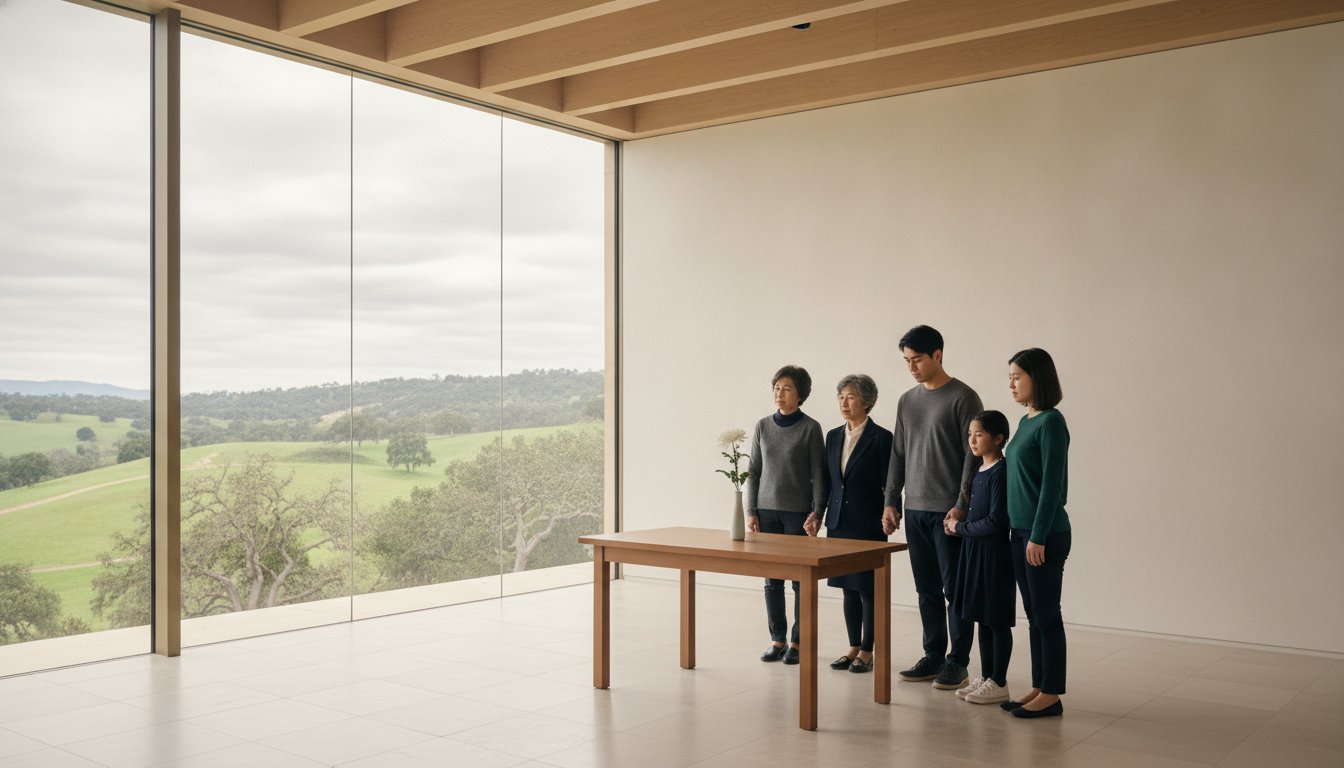
Honoring a loved one with a traditional Cantonese funeral is more than a ceremony; it's a vital bridge that connects the living with their ancestors while ensuring the soul finds a peaceful path forward. You likely feel a deep responsibility to observe every ritual correctly, yet the pressure of avoiding cultural taboos while managing California's strict fire regulations can feel overwhelming. It's natural to worry about language barriers or whether your family's specific traditions will be respected by local providers during such a sensitive time.
We understand that these moments require a delicate touch and a steady, supportive hand. You'll learn how to balance timeless traditions with practical local logistics to create a meaningful, respectful farewell in the Garden Grove and Anaheim area. This guide provides a clear path through the essential symbolic offerings, the nuances of traditional burning ceremonies, and the steps to coordinate seamlessly with Southern California landmarks like Forest Lawn and Rose Hills. By the end, you'll have the clarity needed to ensure a peaceful transition for your loved one and a sense of unity for your entire family.
Key Takeaways
- Learn how the pillars of filial piety and ancestral honor form the foundation of a respectful and traditional farewell.
- Discover the meaning behind symbolic offerings, including the "Lucky Money" tradition and the proper use of ancestral tablets.
- Understand the considerations for burial and cremation, including how to maintain traditional Feng Shui practices within Southern California.
- Gain a clear roadmap for planning a Cantonese funeral that involves seamless coordination with local landmarks like Forest Lawn or Rose Hills.
- See why choosing a family-owned funeral home with dedicated cultural support ensures your traditions are honored without language barriers.
Understanding the Essence of a Cantonese Funeral
A Cantonese funeral is a series of deeply intentional rites. It's a sacred journey designed to ensure the peaceful transition of the soul while shielding living descendants from misfortune. These traditions aren't merely for show; they serve as a spiritual roadmap for the deceased. When a family gathers in Garden Grove or Anaheim to say goodbye, they are participating in a lineage of care that spans centuries. The rites provide a structured way to process grief, offering a sense of order during a time that often feels chaotic and overwhelming.
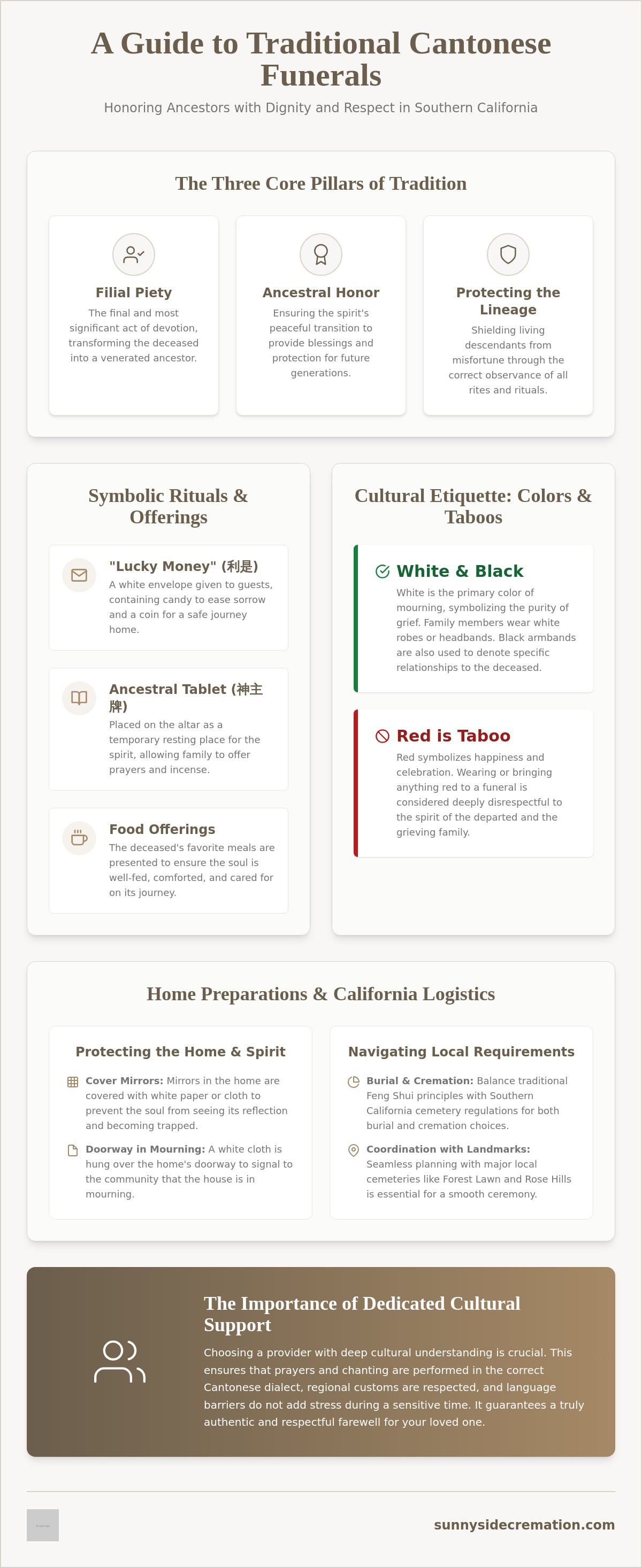
These traditions are built upon three core pillars: filial piety, ancestral honor, and the protection of the family lineage. Filial piety is the cornerstone of the entire process. It represents the final, most significant act of devotion a child can show a parent. By performing these rituals correctly, the family transforms the deceased into a venerated ancestor. This transition is vital because an honored ancestor is believed to provide blessings and protection to the generations that follow. For a broader perspective on how these beliefs integrate with various faiths, Understanding Chinese Funeral Rituals offers a helpful overview of the religious influences involved.
One aspect that sets a Cantonese funeral apart is the linguistic and regional precision required. It's not enough to simply follow general customs. The chanting and prayers should ideally be performed in the Cantonese dialect. This linguistic connection is believed to be the only way the spirit can truly hear and follow the guidance provided by the monks or priests. Regional Southern Chinese nuances, such as specific ways of handling incense or arranging the altar, are also essential. These details ensure the ceremony feels authentic and respectful to the specific heritage of the family.
The family structure dictates every step of the mourning period. Hierarchy is strictly observed. The eldest son typically takes the lead, carrying the incense or the portrait of the deceased. Every family member has specific responsibilities based on their relationship to the departed. This clear division of roles helps prevent confusion and ensures that every necessary rite is completed with the proper level of reverence.
The Cultural Significance of White and Black
White is the traditional color of mourning in Cantonese culture. It represents the purity of the family's grief and the solemnity of the transition. You'll see family members wearing white robes or headbands during the service. Black armbands or hairpins are also used to denote exactly how a person was related to the deceased. It's vital to remember that red is a strict taboo. In our tradition, red symbolizes happiness and celebration. Bringing any red into the funeral space is considered deeply disrespectful to the spirit of the departed.
Protecting the Home and the Spirit
Rituals often begin in the home long before the family arrives at the chapel. We often suggest covering mirrors with white paper or cloth. There's a traditional belief that if the soul sees its own reflection, it might become confused or trapped in the physical world. A white cloth is also placed over the doorway to signal to the community that the house is in mourning. These small but significant steps create a quiet, protected environment for the spirit as it prepares for its final journey, allowing the family to maintain a peaceful connection during the initial days of loss.
Traditional Cantonese Rituals and Symbolic Offerings
A Cantonese funeral is defined by tangible acts of love and provision. These rituals are designed to care for the soul as it transitions, ensuring it has everything required for the journey ahead. One of the most recognizable traditions involves the distribution of "Lucky Money" to every guest. When you attend the service, you'll likely receive a small white envelope containing a single piece of candy and a coin. The candy is meant to dissolve the bitterness of the day, while the coin ensures you have the means to travel home safely. It's a gentle gesture that reflects the community's desire to protect one another during a time of deep sorrow.
During the service, an ancestral tablet is often placed prominently on the altar. This tablet serves as a temporary resting place for the spirit, allowing family members to offer prayers and incense directly to their loved one. Alongside this, food offerings are presented with great care. We often encourage families to bring the deceased's favorite meals one last time. This act of hospitality ensures the soul is well-fed and comforted, mirroring the way we care for our elders during their lives. If you are unsure which rituals best fit your family's specific needs, exploring a Chinese Funeral Package can help provide a structured and respectful starting point for your planning.
Incense and chanting play a vital role in purifying the atmosphere. The rhythmic sound of the chants, ideally performed in the Cantonese dialect, creates a path for the soul to follow. The smoke from the incense carries the family's prayers upward, acting as a bridge between the physical and spiritual worlds. This sensory experience helps ground the mourners, providing a steady rhythm to the grieving process.
Burning Joss Paper and Hell Bank Notes
The tradition of burning "spirit money" and paper replicas is a way to provide for the deceased in the afterlife. Families often burn paper cars, houses, and even modern technology like paper iPhones to ensure their loved one enjoys comfort and status. In Garden Grove and Anaheim, we must balance these sacred traditions with Southern California's strict fire regulations. We work closely with families to perform these burning rituals in designated, safe areas. This allows you to honor your customs fully while remaining respectful of local safety codes.
The Funeral Procession and Service Flow
The service follows a precise and respectful flow. It typically begins with an initial viewing, followed by tributes and traditional music. Gongs or funeral marches are often used to signal the importance of the event and to guide the spirit. The final goodbye is perhaps the most emotional moment. Family members approach the casket one last time, bowing three times to show their ultimate respect. This structured farewell provides a sense of closure, ensuring the departed is sent off with the highest honors the family can provide.
Burial vs. Cremation: Navigating Cantonese Traditions in California
Choosing between burial and cremation is one of the most personal decisions a family makes during the planning process. Traditionally, a Cantonese funeral centers on burial. This preference is rooted in the belief that a physical gravesite serves as a permanent home for the ancestor and a vital focal point for family worship. The concept of "Feng Shui" is central here; the alignment of the grave with natural elements like hills or water is thought to directly influence the health and prosperity of future generations. Maintaining this physical site ensures that the lineage remains anchored and protected.
Preferences in Southern California are shifting as families weigh tradition against modern realities. Research shows that approximately 71% of California residents now choose cremation, a trend that is also reflected within the Cantonese community. This choice is often driven by land scarcity or the desire for more flexible memorialization options. It's important to know that choosing cremation doesn't mean sacrificing ritual integrity. Modern families are finding beautiful ways to weave traditional rites into the cremation process, ensuring the soul is honored with the same level of reverence. For more detail, see our cultural guide to navigating these options.
Witnessed Cremation in Orange County
Witnessed cremation has become a meaningful bridge for Cantonese families who want to maintain the tradition of being present for their loved one's final transition. This service allows you to gather at the crematory for the start of the process, providing a level of closure that a standard cremation might lack. You can integrate prayer, chanting, and the lighting of incense right at the facility. Being present ensures that the body is handled with the dignity required by our customs, offering peace of mind that the spirit's journey is being properly guided by those who care for them most.
Selecting a Permanent Resting Place
Whether you opt for a traditional grave or a niche in a columbarium, the location serves as a sacred space for ancestral connection. In the Garden Grove area, we help families evaluate the orientation of sites to ensure they align with cultural expectations. A permanent resting place is essential for "Ching Ming," or Tomb Sweeping Day. This annual tradition is a time for the family to gather, clean the site, and offer food and incense. Whether it's a hillside grave or a serene niche, having a dedicated place for these visits keeps the bond between the living and the ancestors strong for years to come.
Planning Logistics: Coordination with Forest Lawn and Rose Hills
Organizing a Cantonese funeral in Southern California requires a thoughtful balance between ancient customs and modern administrative requirements. The process involves several layers of coordination, from spiritual guidance to local permits. Breaking these tasks into clear, manageable steps helps reduce the emotional weight on your family. Our role is to act as your steady guide, ensuring every detail is handled with the reverence it deserves.
- Step 1: Secure a mortuary that specializes in Cantonese customs. This is the most critical foundation. You need a team that speaks the language and understands the specific nuances of Southern Chinese traditions without requiring constant explanation.
- Step 2: Coordinate with major parks. We work closely with local landmarks like Forest Lawn or Rose Hills to help you select a plot or niche that meets your family's needs.
- Step 3: Arrange for Cantonese-speaking clergy. Finding a ritual master or monk who can perform chants in the proper dialect is essential for the spiritual integrity of the ceremony.
- Step 4: Finalize your service details. Selecting a comprehensive Chinese Funeral Package ensures you have all necessary symbolic items, from ancestral tablets to incense, ready for the day of the service.
- Step 5: Manage administrative filings. This includes securing death certificates and the necessary burial or cremation permits from Orange County health authorities.
Navigating Forest Lawn and Rose Hills
Major memorial parks in Southern California have long histories of serving the Asian community. Rose Hills, for example, features the Hua Yuan Ceremonial Complex, which was specifically designed to accommodate traditional rituals. Forest Lawn also provides services tailored to our community, including a General Price List available in Chinese. Our team specializes in Chinese funeral planning with Forest Lawn and Rose Hills, acting as a liaison to ensure your cultural requirements are met within their facility guidelines. If you are feeling overwhelmed by these choices, we invite you to view our Chinese Funeral Package options to see how we can simplify this coordination for you.
Local Support in Garden Grove and Anaheim
The logistics extend beyond the funeral home and cemetery. In the Garden Grove and Anaheim area, we can help you find Cantonese-speaking caterers for the "Longevity Meal," the traditional post-funeral banquet that thanks guests for their support. It's also important to coordinate floral arrangements that strictly follow traditional color schemes, avoiding red while focusing on white and yellow chrysanthemums. For families requiring specific religious rites, we can facilitate Buddhist funeral services in Orange County, ensuring that the spiritual atmosphere is authentic and comforting for all generations present.
Dignified Cantonese Care with Sunnyside Cremation and Funeral
Arranging a farewell is a profound act of stewardship. Our family-owned and operated home in the Garden Grove and Buena Park area serves as a sanctuary where your heritage is protected and your grief is met with understanding. We provide a calm, steady presence during what's often a period of intense emotional vulnerability. Our goal is to ensure that every Cantonese funeral we oversee is a true reflection of the life lived, handled with the gentle professionalism your family deserves. We're here to carry the weight of the logistics so you don't have to.
Language should never be a barrier to honoring your ancestors. Our dedicated staff understands the deep nuances of Cantonese traditions and speaks the language fluently. This cultural fluency allows us to guide you through complex decisions without the frustration of miscommunication. Whether you're looking for a traditional burial at Rose Hills or an affordable cremation service, we offer comprehensive packages tailored to your needs. Our Chinese Funeral Package includes the specific symbolic items and ritual guidance necessary to maintain the integrity of your family's customs.
A Compassionate Advocate for Your Family
We see ourselves as partners in your journey. Our team manages the intricate details of coordination with local cemeteries like Forest Lawn, ensuring that every permit is filed and every ritual master is scheduled. This level of care allows you to focus entirely on mourning and supporting your loved ones. We take pride in our inclusivity and our deep respect for all regional variations within the Southern Chinese community. You can read about our Korean funeral home Orange County services to see how our multicultural expertise extends across diverse traditions in the region.
Securing the Legacy of Your Loved One
Documenting your wishes in advance is a powerful gift to your descendants. There are significant long-term benefits to funeral pre-planning for Asian families, as it ensures that your specific cultural and spiritual requirements are both understood and funded. Starting the conversation with elders about Cantonese funeral traditions can be a delicate process, but it's a vital step in preserving your family's legacy. It removes the guesswork for future generations and provides a clear roadmap for a respectful transition. Contact Sunnyside today for a gentle, no-obligation consultation to discuss how we can help you protect your family's traditions for years to come.
Honoring Your Heritage with Peace and Clarity
Ensuring a respectful transition for your loved one is a profound responsibility that blends ancient tradition with modern care. By understanding the essential rituals and coordinating effectively with local landmarks like Forest Lawn or Rose Hills, you can create a farewell that truly honors your family's lineage. Whether you choose a traditional burial or a modern witnessed cremation, the focus remains on filial piety and the peaceful journey of the soul.
You don't have to manage these intricate details alone. As a family-owned home in Orange County, we're dedicated to providing a calm, supportive presence. Our specialized Cantonese and Mandarin speaking staff ensures that every nuance of your Cantonese funeral is respected without language barriers. We're proud to offer preferred coordination with major memorial parks to simplify the logistics during your time of loss. We invite you to Plan a Respectful Cantonese Funeral with Sunnyside and find the peace of mind that comes from expert, compassionate guidance. Your family's legacy is in safe hands, and we're here to help you every step of the way.
Frequently Asked Questions
What is the most important ritual in a Cantonese funeral?
Filial piety is the most important ritual and guiding principle in a Cantonese funeral. It represents the final, most significant act of devotion a child shows their parent. This is often expressed through the "three bows" and the careful performance of rites to ensure the spirit's peaceful transition. These acts protect the family lineage and transform the deceased into a venerated ancestor who provides blessings to living descendants.
Why do Cantonese families burn paper items during the funeral?
Cantonese families burn paper items to provide for their loved ones in the afterlife. Known as "spirit money" or joss paper, these replicas represent currency, houses, cars, and modern electronics. The belief is that the smoke carries these offerings to the spiritual world. In Southern California, we help families perform these rituals safely within local fire codes to ensure tradition is honored without any unnecessary safety risks.
Is cremation acceptable in Cantonese culture?
Cremation is increasingly acceptable and common among modern Cantonese families in California. While burial was traditionally preferred for Feng Shui reasons, approximately 71% of California residents now choose cremation. Many families find that witnessed cremation allows them to maintain traditional prayers and incense offerings while selecting a niche in a columbarium for long-term ancestral visits. It's a practical choice that still respects the core values of the ceremony.
What should I wear to a Cantonese funeral as a guest?
Guests should wear dark, muted colors like black, navy, or charcoal to show respect. It's essential to avoid red at all costs, as it symbolizes celebration and happiness in our culture. White is traditionally reserved for the immediate family in mourning. If you're unsure, choosing a conservative, dark-colored suit or dress is the safest way to honor the family and the solemnity of the occasion.
How much does a traditional Cantonese funeral cost in Orange County?
Traditional costs for a Cantonese funeral in Orange County depend on whether you select burial or cremation. California ranks as an expensive state for these services, with costs for plots and ceremonies often reflecting the high demand in our region. Your final expenses will depend on the symbolic offerings, the choice of a memorial park, and the specific rites you wish to include. We focus on providing transparent options that honor your heritage.
Can we coordinate a Cantonese service at Rose Hills or Forest Lawn?
You can absolutely coordinate a Cantonese service at major Southern California parks like Rose Hills or Forest Lawn. These locations are well-equipped to handle traditional rituals. Rose Hills even features the Hua Yuan Ceremonial Complex specifically for Asian customs. We act as your advocate and liaison, managing the logistics with these parks so your family can focus on honoring your loved one's memory in a culturally correct way.
What is the "Lucky Money" given at Cantonese funerals?
"Lucky Money" is a small white envelope containing a single coin and a piece of candy given to funeral guests. The candy helps take away the bitterness of the mourning process, while the coin is a symbolic gift to ensure you travel home safely. It's a thoughtful tradition that shows the family's gratitude for your presence and their desire to protect the community from the lingering sadness of the day.
How do we find a Cantonese-speaking monk or priest in Southern California?
You can find a Cantonese-speaking monk or priest through our network of local religious leaders in Orange County. It's essential that the chanting is performed in the proper dialect so the spirit can follow the prayers. We coordinate with local temples to ensure your Cantonese funeral is led by an experienced practitioner who understands your specific family traditions. This specialized support ensures the ceremony remains spiritually authentic and comforting.


