

What if the first call after a death didn’t have to settle every decision? If you’re searching for a “funeral director on call near me” in Orange County, you may simply need a calm person to help you understand what happens next. It’s understandable to feel unsure about what to say, what information to gather, or how to make sure your loved one’s wishes are respected.
The first conversation is usually about sharing essential details, such as your loved one’s name and location, and learning about immediate next steps. You don’t need to have every funeral or cremation decision made before you reach out. A funeral director can help organize what needs attention now and guide your family through the arrangements that follow.
In this guide, you’ll learn what to have ready for an initial conversation, what a funeral director can help coordinate, and how family, cultural, and religious traditions can shape arrangements. Sunnyside Cremation and Funeral is a family-owned Orange County mortuary offering guidance for families with a range of traditions, including Korean, Chinese, Taiwanese, Vietnamese, and Hindu arrangements, as well as Buddhist funeral guidance.
Key Takeaways
- If you’re searching for a “funeral director on call near me,” identify what needs attention first before making the initial call.
- Use the first conversation to understand what the funeral director can coordinate and which decisions remain yours to make.
- Consider practical needs such as language, service type, and cemetery coordination when looking for respectful support.
- Write down your preferred language, family traditions, and immediate questions to help guide the conversation.
- Learn how Sunnyside can help your family consider direct cremation, a traditional funeral, or graveside burial arrangements.
Need a funeral director on call near you? Start with these immediate steps
Searching for a “funeral director on call near me” after someone has died can feel like one more difficult task in a moment already filled with emotion. You don’t need to make every decision now. Pause, take a breath, and focus on the next practical step: identify what your family needs help with, then contact a funeral director to talk it through.
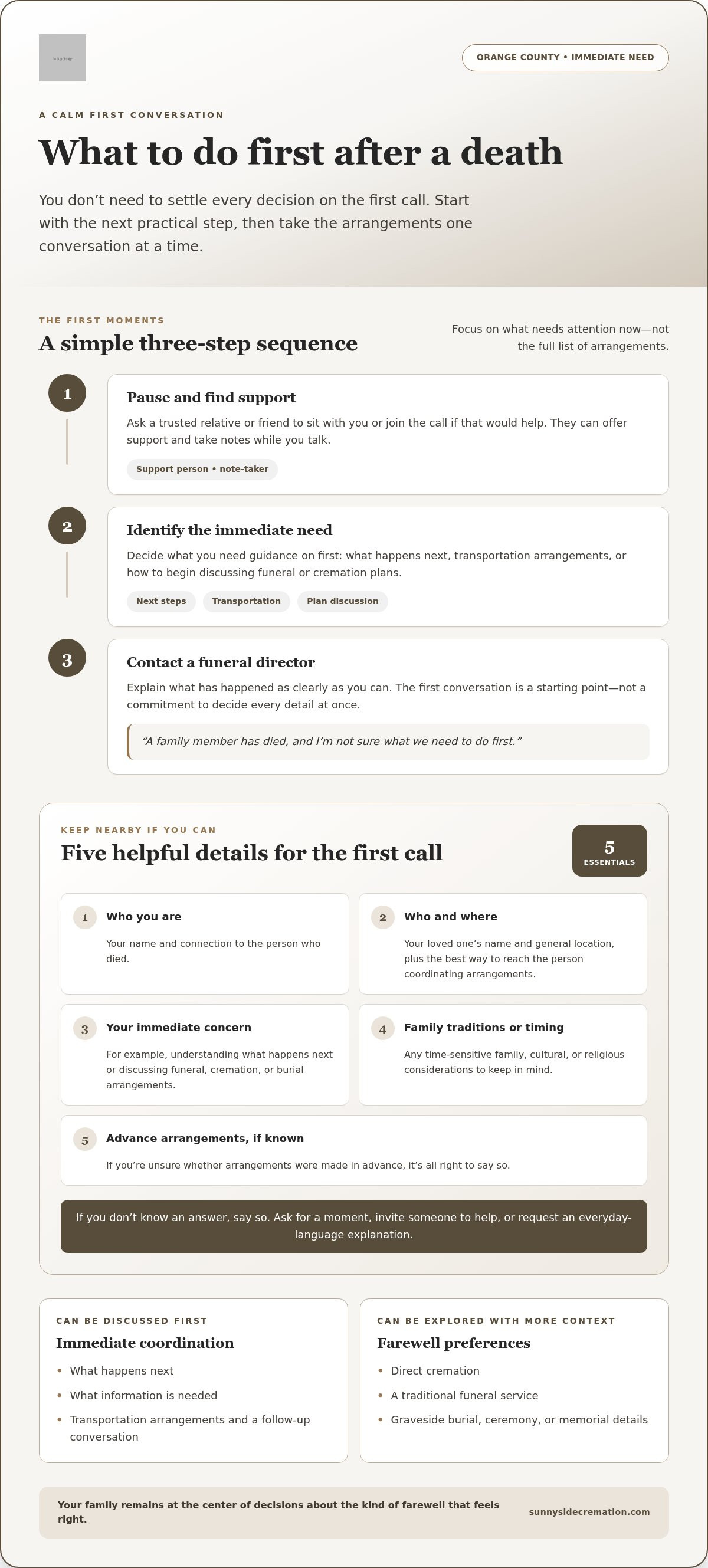
A simple sequence can make the first moments feel more manageable:
- Pause and find support. Ask a trusted relative or friend to sit with you or join the call if that would help. They can offer support and take notes while you talk.
- Identify the immediate need. Consider what you need guidance on first, such as what happens next, transportation arrangements, or how to begin discussing funeral or cremation plans.
- Contact a funeral director. Explain what has happened as clearly as you can. The first conversation is a starting point, not a commitment to decide every detail at once.
What should you do first after a death?
Begin with the next practical step, not the full list of arrangements. You might say, “A family member has died, and I’m not sure what we need to do first.” A funeral director can listen, ask for basic details, and explain what needs attention now. If someone is with you, invite them to take notes or help describe your family’s needs. There’s no need to have the words perfectly prepared.
A funeral director can help organize arrangements and explain the paths available to a family. The general responsibilities of a funeral director can vary, but the conversation should help you understand the next steps in plain language. Your family remains at the center of decisions about the kind of farewell that feels right.
What information helps during the first conversation?
You don’t need a folder of paperwork before making an initial call. A few basic details can help the director understand the situation and guide the conversation. If you don’t know an answer, say so. You can ask for a moment, invite someone else to help, or request that unfamiliar terms be explained in everyday language.
- Your name and connection to the person who died, so the director knows who they’re speaking with.
- Your loved one’s name and general location, along with the best way to reach the person coordinating arrangements.
- Your immediate concern, such as understanding what happens next or discussing funeral, cremation, or burial arrangements.
- Any time-sensitive family, cultural, or religious considerations that would be important to keep in mind as arrangements are discussed.
- Whether arrangements were made in advance, if you know. If you’re unsure, simply say so.
It’s all right to ask, “What does that mean?” or “What should I focus on first?” Clear explanations can make a difficult conversation easier to follow. Share only what you can manage in the moment; the details can be discussed step by step.
What a funeral director can coordinate during an immediate-need call
An immediate-need funeral director helps a family organize practical arrangements after a death and understand the available choices. During the first conversation, the director can gather essential information, discuss transportation arrangements, and plan a follow-up conversation for more detailed decisions. The goal is to bring structure to the next steps, not to ask your family to decide everything at once.
Think of the director as a guide and coordinator. They can explain what needs attention, describe possible service paths, and help organize arrangements around the information and wishes your family shares. Your family decides what kind of farewell feels appropriate. You can take time to discuss preferences, include relatives, and consider cultural or religious traditions before making choices.
Which arrangements may need to be discussed?
The options can look different from one family to another. A conversation may include direct cremation, a traditional funeral service, or graveside burial. These are distinct possibilities, not decisions you need to make before asking for guidance. The right path depends on your loved one’s wishes, your family’s preferences, and the circumstances you’re working through.
For example, one family may want to focus first on cremation arrangements, while another may be considering a gathering for relatives or a graveside farewell. If religious or cultural practices matter to your family, bring them into the conversation early. Sharing those considerations helps the director understand what should guide the arrangements and what questions may need attention as plans take shape.
What decisions can wait until the family has guidance?
The first call can focus on immediate practical questions: what happens next, what information is needed, and how arrangements will be discussed. Ceremony and memorial preferences, such as the format of a gathering or personal elements that would honor your loved one, can be explored later with more context. You don’t have to arrive with a complete plan.
If a term or option feels unfamiliar, ask for it to be explained in plain language. You might say, “Could you walk me through what that involves?” or “What do we need to decide now, and what can we discuss later?” These questions help separate immediate coordination from choices that deserve more thought. A clear explanation gives family members space to understand the options and share their views without feeling pushed toward a particular service.
If you’re looking for a funeral director on call near me, remember that the first conversation is a beginning, not a test of how much you already understand. Sunnyside’s family-owned team guides Orange County families through direct cremation, traditional funeral services, and graveside burial arrangements. You can learn about Sunnyside’s funeral guidance as you consider what support may help your family take the next step.
How to assess funeral support near you without feeling rushed
In an urgent situation, it can be hard to compare funeral support while caring for family members and processing a loss. Focus on what makes the conversation useful: clear explanations, respectful listening, and help coordinating the arrangements your family is considering. You can ask questions to understand your options without committing to every detail.
A good first conversation should clarify your options, not add pressure. Notice whether the person you speak with listens to your priorities, explains unfamiliar terms plainly, and distinguishes what needs attention now from decisions you can discuss later. If you need time to talk with relatives, say so.
| Support need | What to look for in the conversation | Sunnyside guidance |
|---|---|---|
| Language | Can you explain your needs comfortably and understand the information shared? | Mandarin-speaking staff can support families who prefer to discuss arrangements in Mandarin. |
| Service type | Are the choices explained in a way that relates to your family’s wishes? | Guidance can include direct cremation, traditional funeral services, and graveside burial. |
| Traditions | Are cultural or religious considerations welcomed as part of planning? | Arrangements include support for Korean, Chinese, Taiwanese, Vietnamese, and Hindu families, along with Buddhist funeral guidance. |
| Cemetery coordination | Can the practical coordination connected with your plans be explained? | Sunnyside coordinates with Forest Lawn and Rose Hills. |
What questions can help you feel informed?
You don’t need a long checklist. A few direct questions can help you understand whether the conversation addresses your family’s needs. Ask which service paths may fit the wishes you’ve shared, how cultural or religious practices can be included, and what the next practical step is. If an answer feels unclear, ask for it to be explained another way.
- “Based on what we’ve told you, which arrangements should we consider?”
- “How can our family’s traditions or religious practices shape the plans?”
- “What is the next practical step, and what can wait?”
Why local and cultural understanding can matter
Families in Garden Grove, Buena Park, and Anaheim may bring different languages, traditions, and family preferences to an arrangements conversation. These details can influence how relatives communicate, which customs they want to honor, and what kind of farewell feels appropriate. Mentioning them early gives the discussion a more personal starting point. Families exploring Chinese traditions can learn more about Sunnyside’s Chinese funeral services.
Sunnyside’s culturally specific services help families keep tradition in view while practical details are discussed. The aim is to help you understand the options and decide what feels right for your loved one, without rushing the decision.
Prepare for the Call: Orange County Family Checklist
A few notes can make an initial conversation easier, especially when several relatives are sharing information or decisions. They don’t need to be complete. If you’re searching for a funeral director on call near me, use this checklist as a guide, not a requirement. It’s fine to begin with only the details you know and add information as it becomes available.
A short checklist to make the conversation easier
Before contacting Sunnyside, jot down anything you’d like the funeral director to understand or explain. A trusted relative can help make notes, but you can also keep the conversation simple and share one concern at a time.
- Your immediate concern: Write down the question that feels most important right now, such as what the next practical step is or what arrangements your family needs to discuss.
- Time-sensitive considerations: Note any family circumstances or traditions that may affect when or how arrangements are discussed.
- Preferred language: Share the language in which you feel most comfortable discussing important details. Sunnyside has Mandarin-speaking staff for families who prefer to speak Mandarin.
- Traditions and faith: Make a note of religious customs, cultural practices, or family preferences you’d like included in the conversation.
- People to include: Identify relatives or others who should be part of discussions, whether they’ll join the call or need information afterward.
- Questions you want answered: You might ask what can be discussed now, what can wait, and how the family can understand the available choices.
You don’t need to gather every document or resolve differences among relatives before reaching out. A short list, a note on your phone, or a few thoughts you can share aloud is enough to begin. If you’re not sure how to describe something, explain what matters to your family in your own words.
How to explain cultural or religious wishes
There isn’t one way to describe a tradition. Explain who in the family should be involved, which practices are meaningful, or what you hope the farewell will reflect. Focus on your own family’s wishes rather than feeling you need to speak for an entire culture or faith. Sunnyside offers Buddhist funeral guidance, and Mandarin-speaking staff can help Mandarin-speaking families discuss arrangements.
Sunnyside serves Orange County communities including Fullerton, Westminster, and Irvine. If arrangements were made in advance, mention that during the conversation; you can share what you know without having every document in hand. This context can help shape the next discussion around your family’s circumstances and wishes.
When you feel ready, connect with Sunnyside for funeral guidance and share what would help your family feel heard. You can begin with a single question and take the conversation one step at a time.
Sunnyside Cremation and Funeral: compassionate local guidance when you need it
Finding a funeral director on call near me can be one of the first steps in a difficult time. Sunnyside Cremation and Funeral is a family-owned California mortuary serving Orange County families. The team helps families understand arrangements and talk through practical next steps with care and respect for their wishes.
Families may be considering different ways to honor someone they love. Sunnyside provides direct cremation, traditional funeral services, and graveside burial options. The right path is personal. Your family can share what matters most, ask for clear explanations, and consider the choices at a pace that feels manageable.
Traditions and faith can also shape what feels meaningful. Sunnyside provides culturally specific arrangements for Korean, Chinese, Taiwanese, Vietnamese, and Hindu families. Sharing the details that matter to your family can inform the conversation, whether you have specific customs in mind or are still gathering relatives’ wishes.
Support shaped around family wishes and traditions
Families who prefer to discuss arrangements in Mandarin can speak with Mandarin-speaking staff. Sunnyside also offers Buddhist funeral guidance for families considering spiritual customs as part of a farewell. This support makes room for each family’s own practices and preferences rather than assuming every family follows the same traditions.
For families planning a graveside service, Sunnyside coordinates with Forest Lawn and Rose Hills. This is useful when cemetery arrangements are part of your plans. If Buddhist practices are important to your loved one or relatives, bring those wishes into the conversation so the team can help you discuss how they may shape the arrangements.
A gentle next step for families seeking help
You don’t need to have a complete plan before speaking with the team. Begin by explaining your immediate concern, sharing any cultural or religious wishes you want considered, and asking what the next practical step is. If a term or option feels unfamiliar, ask for a plain-language explanation. It’s also all right to say that you need time to speak with family members before deciding.
Every family’s circumstances are different. Some may want to discuss cremation arrangements first; others may be considering a traditional service, graveside burial, or a farewell that reflects particular spiritual and cultural practices. A calm conversation can help you understand the available paths while keeping what matters to your family in view.
When you’re ready, contact Sunnyside through the official website and share what would help your family feel supported. You can start with one question and let the conversation unfold step by step.
Take the Next Step at Your Own Pace
After a loss, you don’t have to map out every decision before asking for help. If you’re searching for a funeral director on call near me, begin with what feels most immediate: a question, a concern, or a wish you want your family’s arrangements to honor. The conversation can help you find a clearer way forward, one decision at a time.
Think of this first step as opening a door, not committing to a complete plan. You can explain what matters to your family, ask for unfamiliar details to be put in plain language, and take time to consider what feels right. Your next step can be small.
Sunnyside’s family-owned team can guide you as you consider arrangements and family traditions, including coordination with Forest Lawn or Rose Hills. Contact Sunnyside Cremation and Funeral for guidance when you’re ready to talk. You don’t need to have all the answers before reaching out. With a caring guide beside you, the next step can feel more manageable.
Frequently Asked Questions
How do I find a funeral director on call near me in Orange County?
Contact a local mortuary serving your community and explain that your family needs guidance after a death. Sunnyside serves families in Orange County, including Garden Grove, Anaheim, Fullerton, and Irvine. Visit the official website for contact information, then share where your family is located and what kind of support you’re seeking. You can begin with a question rather than a complete plan.
What should I say when I call a funeral home after someone dies?
Start with a simple statement, such as, “My family member has died, and I need help understanding what to do next.” Share your loved one’s name, where they are, and your name and contact details. If you know that arrangements were made in advance, mention that too. You can ask the funeral director to explain unfamiliar terms or next steps in plain language.
Can a funeral director help arrange cremation or burial?
Yes. A funeral director can help organize cremation or burial arrangements and explain the service options relevant to your family’s wishes. Sunnyside provides direct cremation, traditional funeral services, and graveside burial options. For instance, if relatives are considering a gathering alongside a burial, raise that preference as part of the planning conversation. The director can help your family understand how the arrangements fit together.
What happens during the first call with a funeral director?
The first call is generally an initial conversation, not a meeting where every detail must be settled. The director gathers basic information, listens to your immediate concern, and helps clarify what practical arrangements need attention. You can also discuss whether plans were made in advance. More detailed decisions, such as ceremony preferences, can be explored later as your family considers its wishes.
Can a funeral home accommodate cultural or religious funeral traditions?
Yes. Sunnyside arranges services for Korean, Chinese, Taiwanese, Vietnamese, and Hindu families, and offers Buddhist funeral guidance. Traditions and preferences differ between families, so describe the practices that matter to your loved ones rather than assuming a standard approach. For example, explain which relatives should be involved or what spiritual customs you hope to include as arrangements are discussed.
Does Sunnyside Cremation and Funeral serve families outside Garden Grove?
Yes. Sunnyside serves families across Orange County, including Buena Park, La Mirada, Cerritos, Anaheim, La Habra, Fullerton, Norwalk, Cypress, Artesia, Stanton, Tustin, Orange, Los Alamitos, Westminster, and Irvine. If you’re in one of these communities, share your location when discussing arrangements so the team understands your family’s situation.
Can a funeral director coordinate arrangements with Forest Lawn or Rose Hills?
Yes. Sunnyside coordinates with Forest Lawn and Rose Hills when those cemeteries are part of a family’s plans. If your relatives have already chosen one of them, mention that early in the arrangements conversation. This gives the funeral director context for your plans and helps connect cemetery coordination with the broader funeral or graveside arrangements.


