
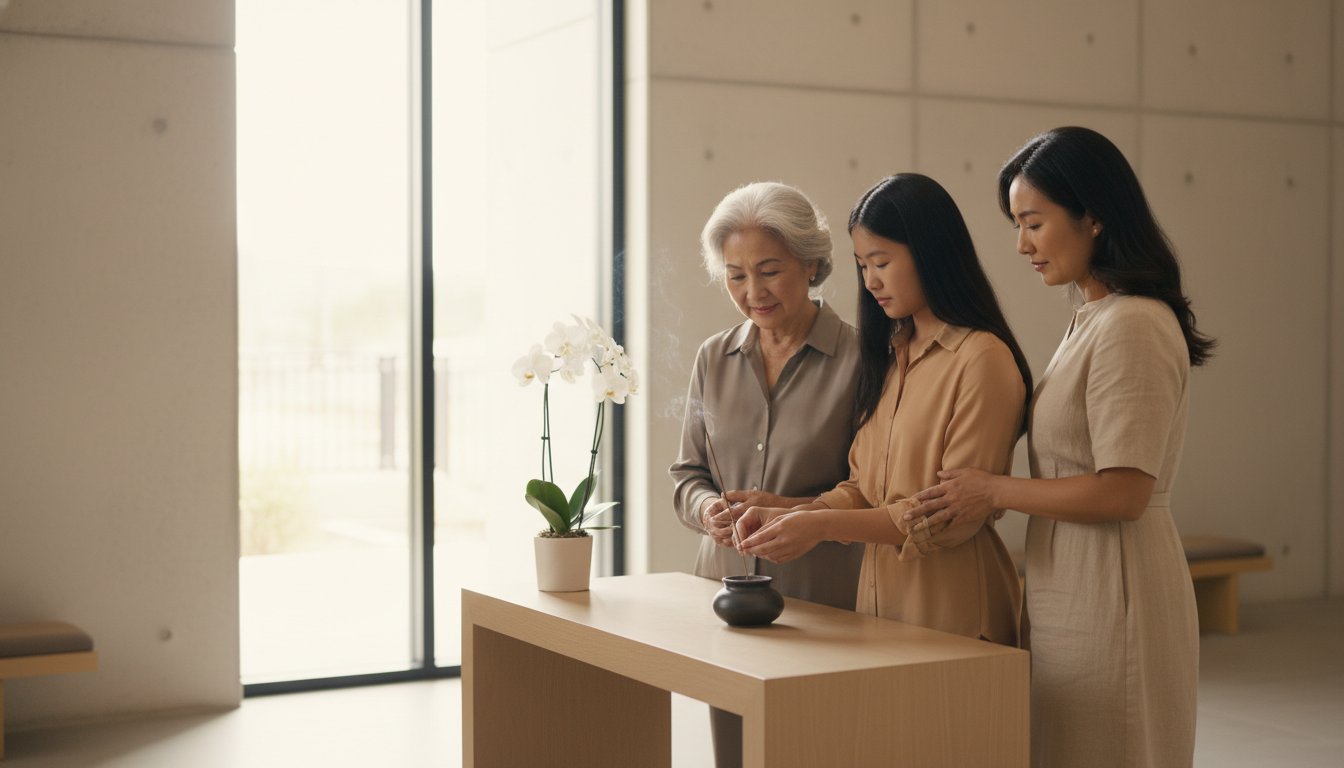
When your family gathers in the quiet heart of Orange County to honor a life, the weight of a thousand-year-old legacy often meets the stress of modern logistics. You want to ensure every ritual for your parent or grandparent is performed with perfect filial piety, yet the pressure of organizing multi-day ceremonies can feel daunting. It's common to feel a sense of unease about language barriers at a mortuary or the technicalities of California law. You aren't alone in wanting a farewell that is both culturally flawless and deeply peaceful.
This guide serves as a compassionate resource for funeral planning for Vietnamese families, helping you bridge the gap between ancestral traditions and local requirements. We'll walk through the multi-day timeline of traditional rites, from the initial prayers to the final procession. You'll learn how to coordinate these sacred moments with respected local cemeteries like Rose Hills or Forest Lawn. By understanding the steps ahead, you can move from a place of uncertainty toward a meaningful tribute that honors your loved one's journey with dignity and grace.
Key Takeaways
- Understand how the concept of "Hieu" or filial piety transforms the memorial process into a final, sacred act of devotion for your parents.
- Learn the deep symbolism of traditional mourning clothes and the proper etiquette for offering incense to ensure a respectful farewell.
- Master the essential timeline of funeral planning for Vietnamese families, including how to select auspicious dates and coordinate the encoffinment ceremony.
- Gain clarity on navigating local logistics at memorial parks like Forest Lawn or Rose Hills while ensuring cultural and language needs are fully supported.
- Discover how to honor both Buddhist and Catholic traditions through a customizable Vietnamese funeral package that respects every delicate detail.
Understanding the Core Values of Vietnamese Funeral Traditions
For many, the process of funeral planning for Vietnamese families is far more than a logistical arrangement. It's a sacred bridge between the living and the ancestors, built on a foundation of respect that spans generations. These traditions are rooted in a deep reverence for the cycle of life and the enduring bond of the family. In the quiet moments of planning, we recognize that every detail serves to honor a legacy that will continue to guide the family for years to come.
The Significance of Filial Piety (Hieu)
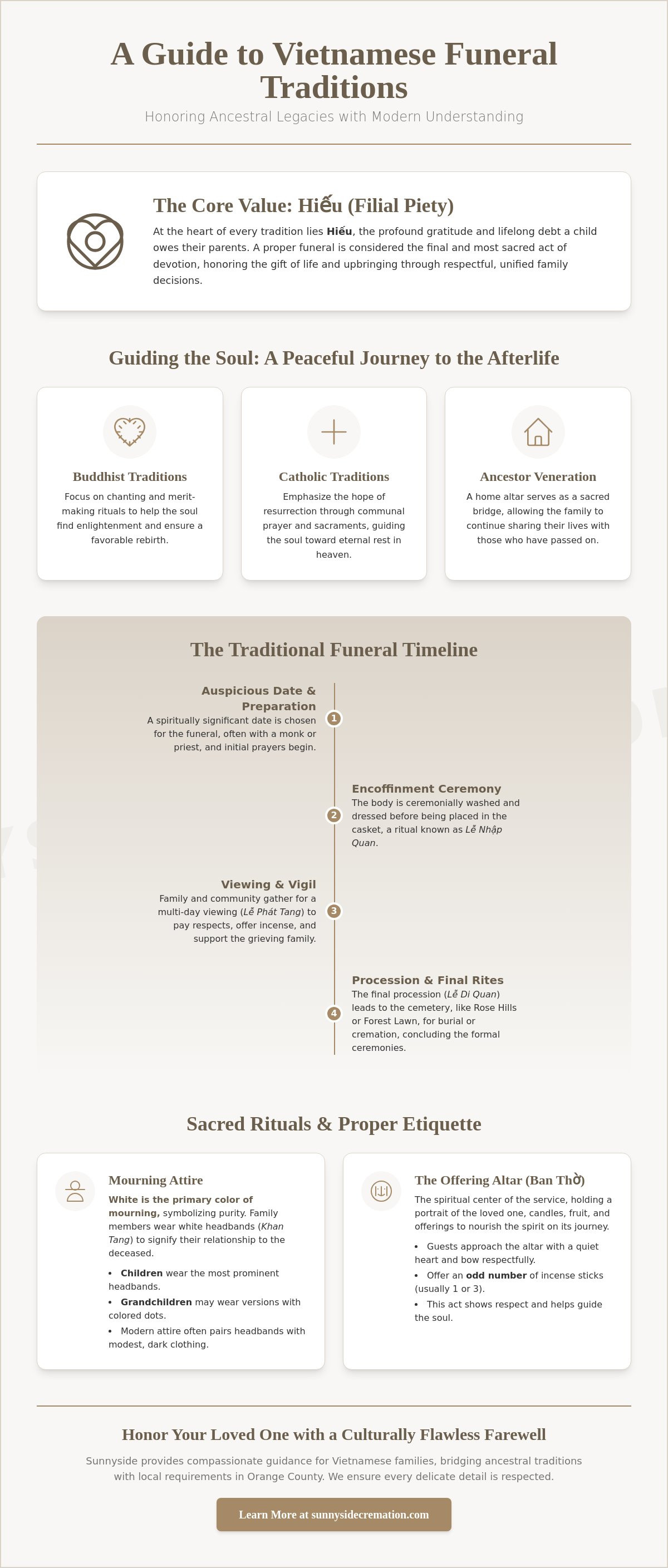
At the heart of every ritual is the concept of Hieu, or filial piety. Hieu is the moral foundation of Vietnamese mourning, representing a child's profound gratitude and lifelong debt to their parents. Every bow, every prayer, and every selection made during the planning process is viewed as a way of "paying back" the gift of life and upbringing. A proper funeral is considered the final, most important duty a child performs for a parent. Decisions aren't made in isolation; they require a gentle consensus among family members to ensure the spirit is honored correctly and with full devotion.
Spiritual Beliefs: Life After Death
The transition into the afterlife is guided by the belief in "Three Souls and Seven Spirits" for men, or "Nine Spirits" for women. This spiritual framework dictates the care and reverence shown to the body. While specific Vietnamese funeral traditions vary between Buddhist, Catholic, and Caodaist families, the underlying goal remains the same: ensuring a peaceful journey to the next world.
- Buddhist traditions often focus on chanting and merit-making to help the soul find enlightenment and a favorable rebirth.
- Catholic families emphasize the hope of the resurrection and the power of communal prayer to guide the soul toward eternal rest.
- Ancestor Altars serve as a focal point in the home long after the service, acting as a place where the family continues to share their lives with those who have passed.
The size and complexity of the ceremony often reflect the loved one's social status and their impact on the community. In the vibrant neighborhoods of Southern California, a large turnout is a testament to a life well-lived. This community involvement provides a collective embrace for the grieving family, reminding them they don't walk this path alone. When approaching funeral planning for Vietnamese families, focusing on these spiritual nuances ensures that casket selection and ritual timing align perfectly with these sacred beliefs.
Rituals and Etiquette: What to Expect During the Service
Walking into a Vietnamese funeral service, you'll immediately notice a profound atmosphere of solemnity. The air is thick with the scent of sandalwood incense and the rhythmic sounds of traditional instruments. These elements aren't just for show; they're essential components of Vietnamese death rituals that guide the soul and provide comfort to the living. When you're managing funeral planning for Vietnamese families, understanding these sensory details helps ensure the environment feels familiar and respectful for the community.
Mourning Attire and Symbolic Colors
In many Western cultures, black is the standard for grief. However, in Vietnamese tradition, white is the primary color of mourning. It represents purity and the start of a new spiritual cycle. Family members wear white headbands, known as Khan Tang, which signify their relationship to the deceased. The style of these bands follows a specific hierarchy. Children wear the most prominent headbands, while grandchildren might wear versions with colored dots to indicate their specific lineage. While traditional coarse gauze robes were once common, many families in Orange County now opt for white headbands paired with modest, dark modern clothing to balance heritage with comfort.
The Offering Altar (Ban Tho)
The Ban Tho, or offering altar, is the spiritual center of the service. It usually holds a large portrait of the loved one, flanked by candles and fresh fruit. A central part of the ritual involves "offering rice" (Cung Com), where a small bowl of rice and tea is placed on the altar. This act ensures the spirit is nourished on its journey. Guests should approach the altar with a quiet heart. It's customary to take an odd number of incense sticks, usually one or three, light them, and bow three times toward the portrait. This gesture is a silent conversation, a way to offer a final greeting and show respect to the ancestors.
The multi-day visitation, or Tham Vieng, allows the community to gather, share stories, and support the bereaved over several days. During these sessions, a ritual master or a Buddhist monk often leads prayers. Their rhythmic chanting provides a steady pulse to the grieving process, helping to calm the hearts of those present. This communal support is vital. It reminds the family that their burden is shared by many. If you're looking for support in organizing these intricate details, exploring a dedicated Vietnamese funeral package can provide the cultural expertise needed to honor every tradition correctly.
Step-by-Step Planning Timeline for Vietnamese Families
The first few hours after a loss can feel like a blur of emotion and responsibility. In the Vietnamese tradition, the timeline for a farewell is rarely fixed by a standard calendar. Instead, the journey begins with Xem Ngay, the practice of consulting a spiritual leader to find auspicious dates and times. This ensures that every stage of the service, from the initial prayers to the final committal, aligns with the spiritual needs of the loved one. When you begin funeral planning for Vietnamese families, having a clear roadmap helps transform a complex process into a series of manageable, sacred milestones.
Initial Arrangements and Encoffinment
Once an auspicious time is identified, the family moves toward the Le Nhap Lien, or the encoffinment ceremony. This is a deeply intimate ritual where the family gathers to prepare the body and place the loved one in the casket. It's common to include small, symbolic items like rice or a piece of silver to assist the spirit on its journey. It's vital to partner with a mortuary that understands these specific dressing and preparation rituals. Coordinating the arrival of a monk or priest for this ceremony is a priority, as their prayers provide the necessary spiritual guidance during this first major transition. This careful timing is a core part of the traditional Vietnamese funeral timeline, ensuring the spirit is never left without support.
The Procession and Committal
The final day of the service is marked by the funeral procession, a visible act of community honor. In Southern California, this often involves a slow, respectful drive to local memorial parks such as Rose Hills or Forest Lawn. Families today often weigh the choice between traditional graveside burial and witnessed cremation. While burial has been the standard for generations, witnessed cremation is an increasingly respected option in California. This practice allows the family to remain present as the cremation begins, providing a similar sense of closure to a traditional burial site. Whether you choose a graveside committal or a specialized Vietnamese funeral package that includes a cremation viewing, the focus remains on that final "last goodbye" ritual.
The journey of remembrance continues long after the procession ends. The 49-day (Chung That) and 100-day (Tot Khoc) milestones are essential dates for the family to gather again. These moments of prayer and shared meals help the family transition through their grief while ensuring the loved one's spirit is continuously honored. By following this structured path, you can fulfill your duties with a sense of peace, knowing every detail of the funeral planning for Vietnamese families has been handled with reverence.
Navigating Local Logistics in Orange County and Little Saigon
Orange County is home to the largest Vietnamese community outside of Vietnam, with an estimated population of over 200,000 people. This vibrant presence means that funeral planning for Vietnamese families in our area is supported by a wealth of local resources, yet it also requires a deep understanding of local geography. From the bustling streets of Westminster to the quiet chapels in Garden Grove, the logistics of a multi-day service require careful coordination to ensure every guest feels welcomed and every ritual is respected. We understand that your focus should be on your loved one, not on parking permits or paperwork.
Serving the Little Saigon Community
Our work often takes us into the heart of Westminster and Garden Grove, where the community's needs are specific and deeply felt. Traditional services often draw large crowds of extended family, friends, and fellow congregants. We help manage these large attendances by selecting chapels with the right capacity and ensuring there's ample space for the traditional food offerings that nourish both the spirit and the mourners. We also bridge the language gap, providing Vietnamese-speaking staff who can translate complex California regulations into clear, supportive guidance. This ensures that every family member, regardless of their primary language, feels fully included in the decision-making process.
Cemetery Coordination
When it comes to the final resting place, we maintain close relationships with premier local memorial parks. Whether you're coordinating a burial at Rose Hills or Forest Lawn, we handle the intricate details of the graveside service. For many families, the orientation of the plot is vital for proper Feng Shui, and we assist in securing locations that align with these spiritual requirements. Additionally, we navigate the specific logistics of witnessed cremation for those choosing this path, ensuring the facility is prepared for the family's presence during the start of the process.
California law requires that a death be registered within eight days, and a disposition permit must be obtained before any burial or cremation can take place. If your family's wish is for international repatriation to Vietnam, these legal requirements become even more complex. We manage the filing of death certificates and coordinate with consulates to ensure a smooth transition. To begin organizing these details with a partner who understands your heritage, you can explore our specialized Vietnamese funeral package for dedicated support.
How Sunnyside Cremation and Funeral Honors Your Heritage
At Sunnyside Cremation and Funeral, we believe every farewell should be a true reflection of a life well-lived. We don't just provide a service; we act as a steady hand through a time of deep emotional transition. Our approach to funeral planning for Vietnamese families is built on a foundation of empathy and a profound respect for the rituals that define your heritage. We understand that these traditions aren't just ceremonies. They're sacred duties that honor the bond between parents and children.
Our Cultural Expertise
We specialize in creating a Vietnamese funeral package that feels both authentic and peaceful. This includes providing the dedicated time and space required for traditional dressing and encoffinment rituals. We understand these moments are sacred and require a gentle, patient touch. Our team is familiar with the necessary altar setups and ensures that ritual items are handled with the highest level of respect. We also recognize that time is a spiritual element. If a spiritual leader identifies a specific auspicious window for a ceremony, we work diligently to accommodate those scheduling needs. This ensures the spirit's journey begins at the exact moment tradition dictates.
Whether your family follows Buddhist chants or Catholic liturgy, we provide a supportive environment that honors your faith. We coordinate seamlessly with local temples and churches to ensure the religious flow of the service is uninterrupted. Our experience extends to the grounds of major Southern California memorial parks, including Rose Hills and Forest Lawn. We handle the logistical communication with these parks so you can focus on being present with your family. This partnership allows us to manage the complex details of a Vietnamese funeral while you focus on the healing process.
Pre-Planning for Peace of Mind
One of the kindest gifts you can leave for your children is a clear roadmap for the future. Through our Pre-Planning Funeral Contracts, you can ensure that your specific cultural traditions are documented and secured. This process removes the weight of difficult decision-making from your loved ones during their time of grief. It also provides a sense of security, knowing that your legacy will be honored exactly as you intended. By choosing a Vietnamese funeral package in advance, you lock in your wishes and provide a clear path for your family to follow. We're here to help you navigate every step of funeral planning for Vietnamese families with dignity and transparent guidance.
You can view our specialized Vietnamese funeral packages to see how we can help you create a culturally accurate and meaningful tribute that honors your family's history.
A Path Toward Peace and Lasting Remembrance
Honoring a parent or grandparent through traditional rites is one of the most profound acts of love a child can perform. By weaving together the deep values of filial piety with a clear understanding of modern logistics, you create a farewell that truly reflects a life well-lived. Whether you're managing the specific encoffinment rituals or coordinating a final committal at Forest Lawn or Rose Hills, your dedication ensures a sacred transition for your loved one.
Effective funeral planning for Vietnamese families requires more than just paperwork; it needs a partner who understands the weight of your heritage. Our family-owned team offers specialized Vietnamese funeral packages and local Orange County expertise to guide you through every step with empathy and reverence. You can Plan a Culturally Respectful Farewell with Sunnyside today. We're here to be your steady hand, ensuring every detail is handled with the kindness and dignity your family deserves. May you find comfort in the strength of your traditions and the peace of a beautiful tribute.
Frequently Asked Questions
How long does a traditional Vietnamese funeral usually last?
In Southern California, services typically span two to three days, though traditional rites in Vietnam can last longer. This timeframe usually includes one or two days of visitation followed by the funeral procession and burial or cremation. We work with you to ensure this schedule respects both your spiritual needs and the availability of local chapels in Orange County.
What is the appropriate color to wear to a Vietnamese funeral?
Guests should wear modest, dark colors such as black, navy, or charcoal to show respect. While the immediate family wears white mourning clothes, it's customary for attendees to avoid bright or vibrant colors. This simple gesture of solidarity helps maintain the solemn and reverent atmosphere of the memorial service during this difficult time.
Is cremation acceptable in Vietnamese Buddhist traditions?
Yes, cremation is widely accepted and increasingly popular within Vietnamese Buddhist traditions in California. Many families choose to have a traditional viewing and prayer service before the cremation takes place. We offer a specialized Vietnamese funeral package that can include a witnessed cremation, allowing the family to remain present during the start of the final transition.
What is the significance of the 49-day and 100-day ceremonies?
These milestones mark the soul's transition and the family's gradual return to daily life. The 49th day is believed to be when the soul is reborn into its next life, while the 100th day signifies the end of the initial, most intense mourning period. These are essential moments in funeral planning for Vietnamese families, often involving gathered prayers and shared meals.
Should I bring a gift or money to a Vietnamese funeral service?
Offering a monetary gift, known as Phung Dieu, is a traditional and deeply appreciated way to support the grieving family. These contributions help defray the costs of the multi-day ceremonies and are usually placed in a designated box or handed to a family representative. It's a practical expression of community care that has been a cornerstone of these traditions for generations.
Can Sunnyside help coordinate services at Forest Lawn or Rose Hills?
We provide expert coordination for services and burials at both Forest Lawn and Rose Hills memorial parks. Our team handles the logistical details with these facilities, ensuring that your cultural requirements are met within their specific guidelines. This allows you to focus on the spiritual aspects of the day while we manage the professional communication with the cemetery staff.
Do you have staff who understand Vietnamese Buddhist rituals?
Our staff is deeply familiar with the nuances of Vietnamese Buddhist and Catholic rituals, providing a bridge between tradition and modern logistics. We understand the importance of altar placement, incense etiquette, and the role of the ritual master. This cultural fluency is a core part of our commitment to providing a supportive and knowledgeable environment for every family we serve.
What is the purpose of the white headband worn by the family?
The white headband, or Khan Tang, is a visible symbol of a family member's grief and their specific relationship to the deceased. Children wear the most prominent bands, while other relatives wear styles that indicate their place in the family hierarchy. This tradition is a central part of funeral planning for Vietnamese families, serving as a silent testament to the enduring bond of filial piety.


