

What if celebrating a life memorial service began not with choosing a venue, but with remembering what made your loved one feel most like themselves? The gathering does not need to follow a set script. It can reflect the stories, traditions, and quiet gestures that matter to your family.
It is understandable to feel unsure about what happens at a celebration of life or how to balance different family preferences while grieving. Start by deciding what you want guests to experience, then choose a format and a few meaningful details. This guide explains how a memorial service differs from a funeral or celebration of life, and how to plan a gathering that feels personal and welcoming.
You will also find practical ways to consider cultural and spiritual wishes, choose meaningful tributes, and organize the arrangements. For families in Orange County, Sunnyside Cremation and Funeral provides funeral and cremation arrangements, with culturally tailored guidance for families whose traditions shape how they wish to honor a loved one. Start with what feels true to your family, then let the details take shape around it.
Key Takeaways
- A celebration of life can take many forms, with or without the deceased’s body present, and need not follow a specific religious or formal structure.
- Choose a few personal details that reflect your loved one’s stories, relationships, values, and wishes rather than filling the gathering with activities.
- Celebrating a life memorial service can blend a relaxed, personal tone with meaningful religious or cultural traditions. The terms do not have to represent opposing choices.
- Plan at a manageable pace by identifying family priorities first, then shaping the gathering details and guest communication around them.
- In Orange County, Sunnyside can help families coordinate funeral or cremation arrangements, cultural guidance, and cemetery arrangements with Forest Lawn or Rose Hills.
What Is a Celebration of Life Memorial Service, and How Does It Differ?
A celebration of life is a gathering to remember someone through their stories, relationships, values, and the ways they shaped the lives around them. The phrase describes the gathering’s purpose and tone, not a required religious practice or formal ceremony. A family may include prayers, readings, or other traditions, or keep the gathering informal and focused on shared memories.
The format can vary, too. Some families hold a ceremony with the deceased’s body present; others gather after cremation or burial arrangements, without the body there. Neither choice is inherently more respectful. Timing and format can reflect the person’s wishes, family traditions, and practical needs, including when relatives can come together.
Memorial service, funeral, and celebration of life: what changes?
These terms are often used flexibly, so they do not always describe separate, fixed types of ceremony. A memorial service generally honors someone without their body present, while a funeral often includes the body. A celebration of life can overlap with either, depending on the family’s choices.
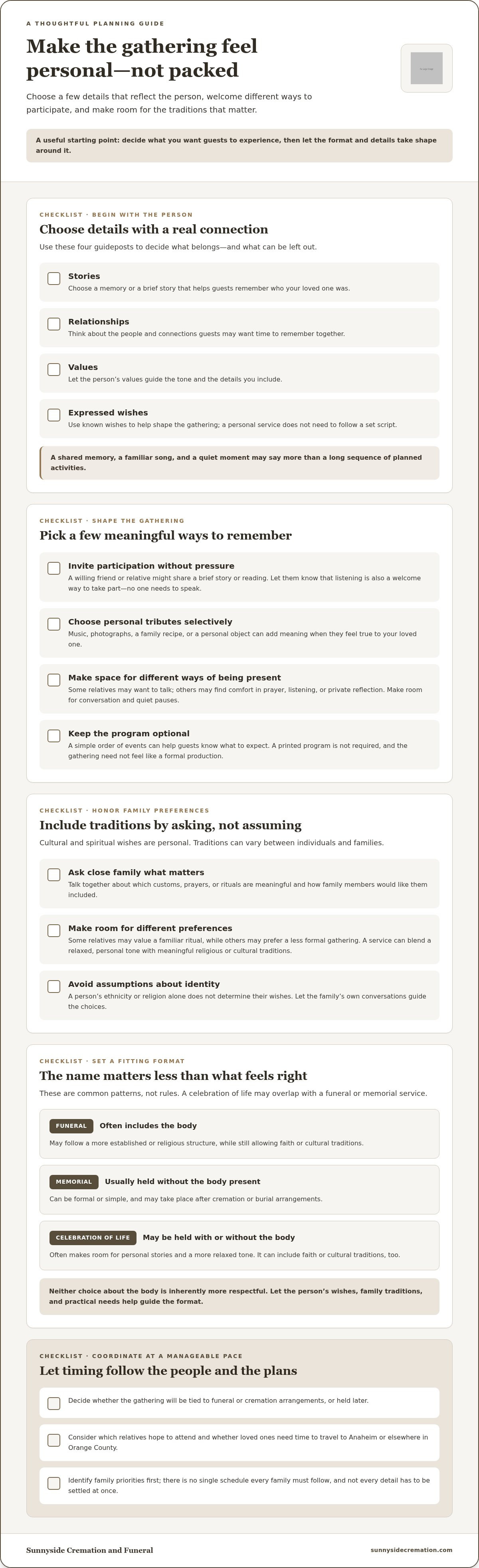
Use these common patterns as a starting point, not as rules:
- Whether the body is present: A funeral often includes the body. A memorial service usually takes place without it. A celebration of life may be held with or without the body present.
- Tone and structure: A funeral may follow a more established or religious structure. A memorial can be formal or simple, while a celebration of life often makes room for personal stories and a more relaxed tone. Any of these gatherings can include faith or cultural traditions.
- Planning flexibility: A service connected to funeral arrangements may follow those arrangements. A memorial or celebration held later may give relatives more time to coordinate travel and shape the gathering around family wishes.
A family might describe an informal gathering after cremation as both a memorial service and a celebration of life. The name matters less than choosing a format that feels fitting and comfortable for those attending.
When might an Orange County family hold a memorial?
A memorial may take place after cremation or burial arrangements, allowing family and friends to gather at a time that works for them. This can help when loved ones need time to travel to Anaheim or elsewhere in Orange County, or when relatives want to participate in planning. There is no single schedule every family must follow.
Consider three decisions together: whether the gathering will be tied to funeral or cremation arrangements, which relatives hope to attend, and what traditions or spiritual practices the family wants to include. These choices can guide timing and format without requiring every detail to be settled at once. Families arranging a funeral or cremation can shape the memorial around their wishes, rather than treating one ceremony style as the only proper way to honor someone.
Which Memorial Service Choices Make the Gathering Feel Personal?
A gathering feels personal when its details point back to the person being remembered, not when it follows a packed schedule. Begin with four guideposts: their stories, relationships, values, and expressed wishes. Use them to decide what belongs and what can be left out. One shared memory, a familiar song, and a quiet moment may say more than a long sequence of planned activities.
Ask relatives what they most hope guests will remember or experience. Some may want time to talk; others may find comfort in prayer, listening, or private reflection. Make room for different ways to participate. No one needs to speak, and a simple gathering can be deeply meaningful.
Choose tributes, music, readings, and keepsakes
Invite a willing friend or relative to share a brief story or reading, and let them know that listening is also a welcome way to take part. Choose music, photographs, a family recipe, or a personal object only if it feels true to your loved one. For broader context about memorial practices, the National Funeral Directors Association offers information about the funeral profession.
A printed program is optional. If guests would benefit from knowing what to expect, a simple order of events can offer gentle guidance without turning the gathering into a formal production. Keep the plan easy to follow, and leave room for conversation or a pause.
Make room for cultural and spiritual preferences
Ask close family members which customs, prayers, or rituals matter to them and how they would like those elements included. A person’s ethnicity or religion alone does not determine their wishes; traditions vary between individuals and families. Some relatives may value a familiar ritual, while others may prefer a less formal gathering. Discussing these preferences together can help make the service respectful and welcoming.
For families who want Buddhist funeral guidance, Sunnyside can help incorporate spiritual preferences into related funeral arrangements. The right choices depend on the family and the person being remembered, rather than assumptions about what everyone from a particular background observes.
As you plan, consider whether each idea adds meaning or simply adds another task. If relatives have different preferences, choose a few shared elements and let guests participate in their own way. That can make celebrating a life memorial service feel personal without asking the family to create an elaborate program while grieving.
Families in Anaheim and across Orange County can also draw on Sunnyside’s support with funeral and cremation arrangements as they consider how those plans relate to a memorial. Learn about funeral and cremation arrangements as part of shaping a gathering around your family’s wishes.
Celebration of Life vs. Memorial Service: How Can You Choose?
The names can sound like a choice between two very different ceremonies, but the distinction is often less strict in practice. A memorial service describes a gathering to remember someone, while “celebration of life” often signals a more personal or relaxed tone. Either can include formal readings, prayer, shared memories, or a blend of these elements.
A memorial service describes the gathering; a celebration of life often describes its tone, and families can shape one service to be both.
To choose, start with what the person wanted, if their wishes are known, and what feels comfortable for close relatives. The phrase “celebrating a life memorial service” can describe a gathering that brings a reflective ceremony and personal tributes together.
Match the format to the family’s priorities
Think about how you want guests to take part. A more structured ceremony can make space for planned readings, prayers, or remarks in a clear order. A flexible gathering may give guests more time to talk and share memories. Families can combine both, such as opening with a short ceremony and leaving time afterward for conversation.
A traditional funeral remains an option for families who prefer a familiar structure or want the ceremony connected with funeral arrangements. The best fit is not determined by a label. Consider which approach would feel meaningful to the person being honored and manageable for those closest to them.
- Structure: Would a planned sequence feel comforting, or would a looser gathering better suit your family?
- Participation: Would relatives prefer prepared remarks, open conversation, quiet reflection, or the choice to simply attend?
- Tone: Should the service feel solemn, warmly conversational, or a thoughtful mix of both?
Keep cultural and spiritual choices family-led
Personal tributes and religious customs can belong in the same ceremony. A family might include a prayer or ritual alongside a favorite song or stories from loved ones. The important question is what has meaning for this person and family. Background can inform the conversation, but it should not dictate assumptions about which practices relatives follow or want included.
For tradition-specific planning, discuss preferences among the relatives guiding the arrangements. Within Chinese, Korean, Taiwanese, Vietnamese, Hindu, or Buddhist families, beliefs and observances may differ from one person or household to another. Ask which customs matter, who should help guide them, and how they can be included in a way that feels comfortable to those gathered. No family needs to include a practice simply because others expect it.
If close relatives have different preferences, look for a shared starting point: a familiar reading, a moment of prayer, or time for guests to remember the person in their own way. Sunnyside’s culturally tailored funeral arrangements and Buddhist funeral guidance can help families in Orange County consider personal wishes alongside spiritual or cultural preferences. Choose the format that gives your family room to honor the person with care, without feeling bound by a label.
How to Plan a Celebration of Life in Orange County, Step by Step
Planning can feel less daunting when you make one decision at a time. There is no single schedule or venue every family needs to follow. Begin with the people and priorities involved, then let those choices guide the practical details. If cremation is part of the arrangements, the family can plan a separate memorial gathering that reflects their wishes; cremation itself does not automatically include a ceremony.
Set the purpose, people, and practical format
Before choosing details, agree on who will help make decisions and what you hope guests will experience. A quiet time for reflection, a chance to share stories, or a ceremony grounded in family traditions can each guide the plan. Keep the conversation focused on what matters most rather than trying to meet every preference at once.
- Gather the decision-makers. Identify the close relatives or trusted friends who will help shape the gathering. Share any known wishes of the person being remembered and discuss the family’s priorities.
- Consider the guests. Make a general estimate of who may attend, including relatives traveling to Anaheim or elsewhere in Orange County. Think about accessibility needs and how easy it will be for guests to reach the location.
- Choose a format. Decide whether a planned ceremony, a reception, an informal gathering, or a combination feels right. Let the family’s goals and guests’ needs guide this choice, not an assumed standard.
- Coordinate related arrangements. If the family is choosing a cemetery memorial, coordination with Forest Lawn or Rose Hills may be part of planning. Sunnyside coordinates with both memorial parks, helping families consider cemetery arrangements alongside their other plans.
Prepare the program and communicate with guests
Once the broad format feels settled, outline the gathering in simple terms. Adjust the outline as family members share ideas or practical needs become clearer. Keep it useful, not elaborate.
- Draft a simple sequence. Consider a welcome, one or more tributes, a moment for reflection, and a closing. Add a prayer, reading, or time for conversation if it suits the family. A printed program is optional; a clear plan for participants may be enough.
- Share essential details. Tell guests where and when to gather, and explain what participation will look like. For example, let them know if a few people will speak or if there will be an opportunity to share memories.
- Offer manageable roles. Ask willing people to help with a specific task, such as welcoming guests or sharing a reading. Make participation optional, and avoid placing responsibilities on someone who may prefer to attend quietly.
These steps can stay flexible. Families in Anaheim planning a memorial alongside funeral or cremation arrangements can turn to Sunnyside for support coordinating those practical decisions. Plan funeral or cremation arrangements with guidance shaped around your family’s wishes.
How Sunnyside Supports a Meaningful Memorial and Next Steps
A memorial gathering is one part of honoring someone. Funeral or cremation arrangements are separate decisions, though the family may want them to fit together in a way that feels coherent and respectful. Sunnyside helps Orange County families consider their priorities alongside practical arrangements, so the ceremony can reflect the person being remembered without adding pressure to make every choice at once.
For families celebrating a life memorial service in Anaheim, that might mean first deciding whether they want a gathering after cremation, a traditional funeral, or graveside burial arrangements. A memorial ceremony can be planned in relation to those choices, but direct cremation does not automatically include a service. Families can decide what kind of gathering, if any, they want and how it should reflect their wishes.
Coordinate the memorial with funeral or cremation arrangements
Sunnyside provides funeral and cremation arrangements, including direct cremation, traditional funeral services, and graveside burial options. The family’s preferred way of honoring their loved one can inform how these arrangements and a memorial gathering relate to one another. Consider the ceremony’s format, family traditions, and cemetery plans together, while keeping each decision clear and manageable.
For families choosing Forest Lawn or Rose Hills, Sunnyside coordinates with both memorial parks. Cemetery coordination can connect burial arrangements with the family’s plans for gathering and remembrance. The details depend on the family’s choices and arrangements; there is no single sequence every family must follow.
Some families also want to think ahead for themselves or their loved ones. Pre-planning can give you a way to record preferences and make decisions in advance. Those plans can help family members understand your wishes when the time comes, while leaving room for a memorial gathering that reflects your values.
Get compassionate guidance for your family’s next steps
You do not need to have every decision settled before seeking guidance. A conversation can begin with what the family knows: the person’s wishes, the traditions that matter, and the practical arrangements still to consider. Sunnyside is a family-owned mortuary serving Orange County, with culturally tailored funeral and cremation arrangements for Korean, Chinese, Taiwanese, Vietnamese, and Hindu families.
Families can also draw on Mandarin-speaking staff and guidance for Buddhist funeral traditions. These supports take account of each family’s beliefs and preferences, rather than assumptions about what a person or community must observe. The aim is to help families bring personal, spiritual, and practical considerations together at a manageable pace.
If you are ready to talk through funeral, cremation, or memorial arrangements, speak with Sunnyside about thoughtful funeral and memorial arrangements. You can begin with the questions your family has now and take the next steps from there.
Let Your Family’s Next Step Be a Conversation
You do not need to have every detail settled before moving forward. Begin with one question: what would help your family feel supported as you honor this person? The answer can guide the decisions ahead, whether you are ready to make arrangements now or simply want to talk through what matters.
Sunnyside is a family-owned mortuary offering culturally tailored funeral and cremation arrangements for families in Orange County, including Buddhist funeral guidance. The team also coordinates with Forest Lawn and Rose Hills. Each family’s wishes can shape the conversation, including how a memorial gathering relates to other arrangements.
There is no single way of celebrating a life memorial service. The most meaningful next step is one that feels manageable and true to the person you are remembering. Speak with Sunnyside about thoughtful funeral and memorial arrangements when you are ready to discuss your family’s needs. You can take the planning one step at a time.
Frequently Asked Questions
Can a celebration of life be held before cremation?
Yes, families may choose to gather before cremation, though timing depends on their wishes and related arrangements. A celebration of life is a gathering, not automatically a ceremony included with a cremation service. Consider whether you want guests to say goodbye together beforehand, remember the person later, or do both. Clarifying the gathering’s purpose can help you decide how it fits with the arrangements being made.
How long should a celebration of life memorial service last?
There is no required duration. What families may call a “celebrating a life memorial service” can be brief or more leisurely, depending on the format, number of tributes, and time set aside for guests to connect. A few prepared remarks may call for a simpler schedule, while a reception can leave more room for conversation. Share an expected schedule with guests and keep the program manageable.
What should I wear to a celebration of life?
Follow the family’s invitation guidance first, since it may request a particular style or traditional attire. If no guidance is provided, neat, respectful clothing is a considerate choice. Think of what you might wear to a meaningful family gathering, while avoiding anything that could distract from the occasion. Expectations differ, so do not assume one color or level of formality suits every service.
Do guests bring flowers or gifts to a celebration of life?
Let the family’s invitation or stated preference guide you. Some families appreciate flowers; others may prefer a donation, a written memory, or simply your presence. There is no universal requirement to bring a gift. If the invitation does not say, a brief message of sympathy is a thoughtful option. You might share a memory privately rather than bringing an item the family may need to carry home.
What should an invitation to a celebration of life say?
Include the honoree’s name, date, start time, location, and practical details guests may need, such as whom to notify about attendance. A short note can describe the gathering’s tone and say whether guests are welcome to share a story or bring a photograph. Include any dress or participation guidance. Keep personal details within the family’s comfort level, and make the invitation clear and easy to follow.
Who can lead a celebration of life memorial service?
A family member, friend, clergy member, celebrant, or funeral professional may lead, depending on the family’s wishes and the gathering’s character. The leader does not need to speak throughout the service. A host can welcome guests and introduce others sharing tributes. Choose someone who understands the tone the family wants and can help participants know when to speak, while leaving room for quiet moments.


