

Imagine standing at the entrance of a quiet chapel in Garden Grove, holding a white envelope and wondering if your choice of clothing might accidentally disrespect the grieving family. You want to honor your friend's legacy, yet the fear of making a cultural misstep feels heavy. It's entirely normal to feel uncertain when you're invited to participate in Vietnamese funeral etiquette for the first time. These traditions are not just rules. They are a profound language of duty and love that connects the living to those who have passed.
We understand that you want your presence to be a source of comfort rather than a cause for concern. This guide provides the clarity you need to move through these sacred spaces with a peaceful heart. You'll learn the specific meanings behind the colors of mourning, the step by step process for offering incense, and the subtle customs surrounding sympathy envelopes. Whether you're visiting a service at Rose Hills or a local family home, you'll gain the knowledge to participate in these beautiful rituals with dignity and sincere compassion.
Key Takeaways
- Understand how the core value of filial piety shapes these traditions, viewing the funeral as a vital transition that requires the family's dedicated support and care.
- Choose your attire with intention by wearing dark, conservative colors like black or grey, while reserving white clothing for the immediate family in mourning.
- Learn the graceful sequence of Vietnamese funeral etiquette, from the proper way to hold incense to performing the correct number of bows at the altar.
- Navigate the tradition of "Phong Bì" with ease by understanding how to prepare a sympathy envelope that offers practical support to the family.
- Discover the importance of coordinating with local landmarks like Rose Hills and Forest Lawn to ensure traditional rituals are performed respectfully within modern park guidelines.
The Spiritual Significance of Vietnamese Funeral Rites
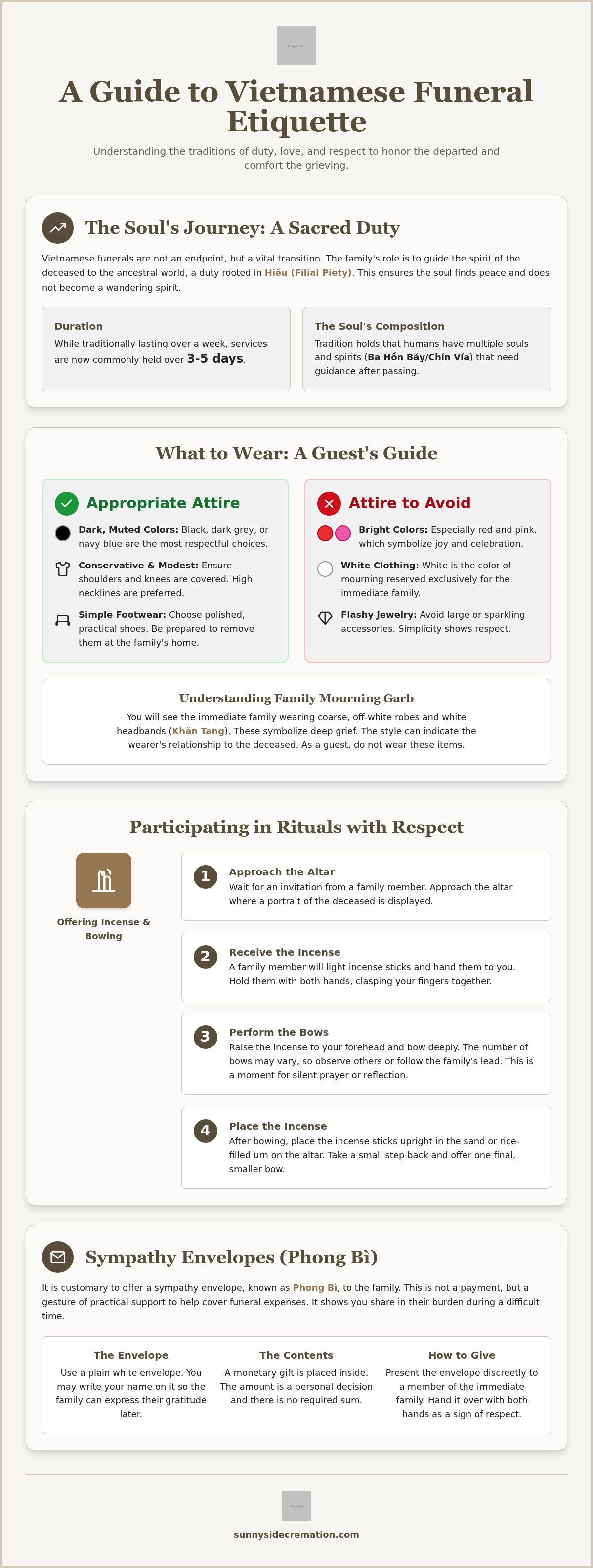
In the quiet moments following a loss, Vietnamese families view death not as a door closing, but as a journey beginning. This perspective transforms the funeral from a simple goodbye into a vital mission. The family acts as a guide for the spirit, ensuring it finds its way to the ancestral world. Understanding the spiritual roots of Vietnamese funeral etiquette helps guests appreciate why every gesture, from the lighting of a candle to the depth of a bow, holds such weight. This duty is anchored in "Hiếu," or filial piety, which serves as the moral compass for the entire service. It's a child's final act of devotion to their parent, ensuring the transition is handled with the highest level of dignity.
By the year 2026, many families in areas like Garden Grove and Westminster have found a balance between these ancient requirements and modern American life. While traditional rites could once last over a week, many now choose a more manageable three to five day period. Regardless of the length, the goal remains the same: to prevent the soul from becoming a "wandering ghost" that lacks a home. Proper Vietnamese funeral ceremonies provide the spirit with the recognition and offerings it needs to rest in peace.
The Concept of the Soul's Journey
Vietnamese tradition teaches that humans possess "Ba Hồn Bảy Vía," which translates to three souls and seven spirits for men. Women are believed to have nine spirits. When a person passes, these elements can become disoriented. Rituals performed during the service act as a map for the spirit's path. The home altar becomes a central anchor during this time. By placing a portrait of the deceased alongside offerings of rice and incense, the family creates a familiar space where the spirit can feel welcomed and honored during its transition.
Ancestral Harmony and Family Duty
The bond between the living and the dead is never truly severed. A family's conduct during the mourning period directly influences the spirit's standing in the afterlife. It's a collective effort. Relatives often gather for multiple days to pray and offer food, maintaining a constant presence that reassures the deceased. This enduring connection reminds us that our ancestors remain a part of our daily lives, watching over the generations that follow. By fulfilling these duties, the family ensures that harmony is maintained between the earthly realm and the spirit world.
What to Wear: A Guest's Guide to Funeral Attire
Choosing what to wear is more than a simple fashion choice; it's a silent message of deep sympathy. In Vietnamese funeral etiquette, color carries heavy spiritual symbolism that can't be overlooked. While Westerners often associate white with weddings or purity, in Vietnamese culture, it's the primary color of mourning reserved strictly for the immediate family. Guests should stick to black, dark grey, or navy blue. It's vital to avoid bright colors at all costs, especially red and pink. These shades symbolize joy, luck, and celebration. Wearing them to a funeral can be seen as a grave insult, suggesting that you're celebrating the passing rather than mourning it.
Even in the warmth of a Southern California summer, modesty remains a non-negotiable priority. Ensure your shoulders and knees are always covered. Conservative, high-necked tops and knee-length skirts or slacks are the standard. This choice shows the family that your focus is entirely on honoring their loved one's memory rather than your own personal comfort.
Attire for Non-Family Guests
A simple black suit or a dark, modest dress is always the safest and most respectful option. For footwear, choose conservative shoes that are polished yet practical. In 2026, many services still involve transitions between funeral homes and private residences. You'll likely be invited into a family home for a meal or a prayer service, where it's customary to remove shoes at the door. Wearing shoes that are easy to slip off and on will make this transition smoother for you and the family. Minimal jewelry is best. Flashy watches, sparkling diamonds, or large necklaces can seem out of place in an environment focused on humility, legacy, and loss.
Decoding the Family's Mourning Garb
You will immediately notice the family wearing coarse, off-white gauze robes and white headbands known as Khăn Tang. These garments represent a state of deep grief and a temporary withdrawal from worldly vanity. The specific style of the headband or robe often indicates the person's relationship to the deceased, such as a child, grandchild, or sibling. Guests should never wear white headbands unless specifically instructed by the family. Understanding these visual cues helps you identify the primary mourners so you can offer your condolences directly. If you're feeling unsure about your role or need help arranging a Vietnamese funeral package that honors these traditions, we're here to help.
Rituals and Participation: Bowing, Incense, and Altars
Participating in the traditional rituals of a Vietnamese service can feel intimidating at first, but the family deeply appreciates the effort of guests to join in their mourning. Mastering the basics of Vietnamese funeral etiquette ensures you can offer your respects with confidence. When you approach the altar, you'll likely be handed one or three sticks of incense, known as Nhang. Hold the incense between your palms at forehead level, take a moment for a silent prayer or reflection, and then place the sticks upright in the sand-filled burner. This act is a physical bridge between our world and the spirit of the departed.
The "Vái" gesture, or bowing, is the most common way to show reverence. Traditionally, you should perform two deep bows from the waist toward the deceased while they are lying in state. After paying your respects to the departed, it's customary to turn and perform two bows to the grieving family as a sign of shared sorrow. You might also notice a bowl of rice with upright chopsticks and a variety of dishes on the altar. This "last meal" represents the family's desire to nourish the soul one last time before it continues its journey.
If your own faith or personal comfort level prevents you from bowing or offering incense, don't feel pressured to do so. It's perfectly acceptable to stand in front of the altar for a moment of silent, bowed-head reflection. The family values your presence and your heart more than the perfect execution of a physical ritual.
Navigating the Buddhist Ceremony
During a Buddhist service, monks often lead the congregation in rhythmic chanting accompanied by the steady, hollow pulse of the Mõ, or wooden bell. This sound is intended to clear the mind and focus the spirit on the transition at hand. You may witness the family circling the casket three times, a gesture that symbolizes the cycle of life, death, and rebirth. The lotus flower is often featured prominently, representing purity rising from the earth. Our team is dedicated to supporting Buddhist funeral services in Orange County by providing the space and specialized equipment needed for these sacred traditions.
Nuances of the Vietnamese Catholic Service
Vietnamese Catholic services offer a beautiful blend of cultural heritage and religious liturgy. While the service follows the structure of a standard Catholic Mass, traditional elements like the funeral altar remain central. You'll see the Cross placed prominently alongside the portrait of the deceased. Prayer vigils often center around the Rosary, creating a communal atmosphere of peace. Even within the church, the act of bowing remains a vital sign of respect, seamlessly weaving together the family's Catholic faith and their Vietnamese roots.
Sympathy Envelopes (Phong Bì) and Gifts
One of the most common points of concern for guests involves the tradition of "Phong Bì," or sympathy envelopes. While Western customs often focus on sending flowers or food, Vietnamese funeral etiquette prioritizes practical financial support for the grieving family. This is not viewed as transactional or cold. It's a deeply respected gesture of communal care, helping the family manage the significant expenses of multi-day ceremonies and memorial feasts. By offering a gift of money, you're providing a tangible way to lighten the family's burden during their time of loss.
Deciding on an appropriate amount can feel uncertain, but there are general guidelines to follow in 2026. For coworkers or acquaintances, a contribution between $50 and $100 is standard. Close friends or long-term business partners typically offer between $100 and $200. When writing on the envelope, you can use simple English phrases like "Deepest Sympathy." If you'd like to include a traditional Vietnamese sentiment, "Thành Kính Phân Ưu" is a beautiful choice that translates to "sincere condolences" or "a respectful sharing of your grief."
The Etiquette of Giving Money
When you arrive at the service, look for a designated box near the guest book or the altar. This is where you should quietly place your envelope. It's vital to use a plain white or neutral-colored envelope. You must never use a red envelope, known as "Lì Xì," because red is strictly reserved for joyous occasions like weddings or the Lunar New Year. Using the wrong color can be seen as a painful oversight. These funds are often used by the family to offset the costs of the elaborate rituals and the food served to guests throughout the mourning period, making your contribution a vital part of the community's support system.
Alternative Sympathy Gifts
While money is the most common gift, other offerings are also appreciated. Fruit baskets are a traditional choice and are often placed on a secondary altar or in the family's home. If you're representing a large organization or were exceptionally close to the deceased, you might consider a "Bức Trướng," which is a large funeral banner inscribed with poetic verses of mourning. If you choose to send flowers, white lilies and chrysanthemums are the most appropriate blooms. They symbolize the purity of the transition and the solemnity of the occasion. Avoid any arrangements with bright colors, especially red or pink. If the family requests "In Lieu of Flowers," it's best to honor that wish by increasing your contribution to the sympathy envelope or donating to their chosen charity. If you're helping a family plan these details, we can guide you through our specialized Vietnamese funeral package options to ensure every tradition is honored.
Organizing a Respectful Service in Orange County
Planning a final farewell within the heart of Little Saigon requires a partner who understands the intricate layers of local tradition. For families in Garden Grove and Westminster, Vietnamese funeral etiquette is woven into the very fabric of the community. It's not just about finding a facility; it's about finding a sanctuary where multi-day vigils and specific spiritual rites are welcomed without hesitation. We specialize in bridging the gap between ancient customs and the practicalities of Southern California life. This often involves close coordination with major memorial parks like Rose Hills and Forest Lawn to ensure that burial or cremation arrangements respect both cemetery regulations and ancestral requirements.
Language is perhaps the most vital tool during the planning process. We prioritize language-first care to ensure that elder family members feel heard, respected, and fully included in every decision. Whether you're arranging a traditional burial or an affordable cremation, we help you incorporate essential elements like the placement of the altar and the timing of prayer services. This steady guidance provides a sense of security, allowing the family to focus on their emotional journey while we manage the complex logistics of the service.
Local Logistics in Garden Grove and Westminster
The geography of Orange County offers unique opportunities for traditional processions, but it also requires careful planning. Selecting a venue that can accommodate the burning of incense and large gatherings of mourners is essential. We also assist families in managing the "Cáo Phó," or formal death announcement, within local Vietnamese newspapers and media outlets to ensure the community is properly informed. Our Vietnamese funeral home in Orange County simplifies these steps by handling the specific permits and cultural nuances that local services demand.
Pre-Planning for Cultural Preservation
In 2026, a growing number of families are choosing funeral pre-planning to ensure their cultural legacy remains intact. By securing traditional rites in advance, you relieve the next generation of the heavy burden of making complex decisions during a time of intense grief. This process allows you to legally document your specific wishes, whether they involve Buddhist chanting or a Catholic Mass. Taking these steps today ensures that your values are honored and that your family is provided with a clear, peaceful path forward when the time eventually comes.
Honoring a Lifetime of Tradition
Participating in these sacred rituals is a powerful way to show your love and respect for a family in mourning. By choosing the right attire and understanding the physical gestures of the "Vái" or the offering of incense, you provide a sense of comfort that transcends words. These acts of devotion, combined with the practical support of the "Phong Bì" tradition, ensure that the deceased's transition is handled with the highest level of dignity. Mastering the nuances of Vietnamese funeral etiquette allows you to be a steady, supportive presence for those navigating their deepest grief.
As a family-owned and operated team in Orange County, we are here to act as your compassionate guide. We offer dedicated Vietnamese funeral packages that honor both Buddhist and Catholic rites, ensuring every detail is managed with reverence. From expert coordination with Rose Hills and Forest Lawn to navigating specific local traditions in Garden Grove and Westminster, we provide the steady hand you need. If you're ready to plan a service that preserves your cultural heritage, please Contact Sunnyside for Compassionate Vietnamese Funeral Care. You don't have to walk this path alone; we are here to guide you with kindness and expertise.
Frequently Asked Questions
What is the proper color to wear to a Vietnamese funeral?
Guests should wear black, dark grey, or navy blue to show their respect. These subdued colors reflect the solemnity of the occasion and your shared grief. You must strictly avoid bright colors, especially red and pink, as these represent joy and celebration in Vietnamese culture. Wearing such shades would be considered a painful oversight for a family in Westminster or Garden Grove. Immediate family members will be wearing white, which is the traditional color of mourning.
How much money should I put in a Vietnamese funeral envelope?
A common contribution for coworkers or acquaintances is between $50 and $100. Close friends or long-term business partners often provide between $100 and $200. This gift, known as "Phong Bì," helps the family cover the costs of multi-day services and traditional memorial feasts. Place your contribution in a plain white envelope and leave it in the designated box near the guest book. This practical support is a cornerstone of Vietnamese funeral etiquette in 2026.
Do I have to bow if I am not Buddhist?
You are not required to bow if it conflicts with your personal faith or comfort level. While bowing is a traditional way to show reverence, standing in silent reflection with your head bowed is a perfectly acceptable alternative. The family values your presence and your sincere heart above the perfect execution of physical rituals. If you choose to participate, a simple bow from the waist toward the altar and the family is a deeply appreciated gesture of sympathy.
Why do family members wear white headbands at the funeral?
White headbands, called "Khăn Tang," are worn by immediate family members to signify their state of deep mourning. These garments represent a temporary withdrawal from the vanity of the world to focus on the spirit's journey. The specific style or length of the headband often indicates the wearer's relationship to the deceased, such as a child or grandchild. Guests should never wear these headbands unless they are specifically invited by the family to join the inner circle of mourners.
Are children allowed to attend Vietnamese funeral services?
Children are absolutely welcome and frequently attend Vietnamese funeral services in Orange County. These ceremonies are viewed as multi-generational events where the entire community gathers to honor a legacy. It's common to see children participating in rituals alongside their parents, which helps them understand the value of filial piety and ancestral respect. We ensure our facilities in the Garden Grove area are welcoming to families of all sizes during these important periods of transition and reflection.
Is it okay to bring food as a sympathy gift?
Bringing food is a thoughtful gesture, particularly fruit baskets which are often placed on secondary altars. However, money remains the most practical and traditional sympathy gift because it directly assists the family with funeral expenses. If you are invited to stay for a meal after the service, it's considered respectful to accept. Sharing a meal with the family is an integral part of the mourning process and helps provide comfort through communal support and shared stories.
What happens during the funeral procession to the cemetery?
The funeral procession is a solemn journey from the chapel or family home to the final resting place, such as Rose Hills or Forest Lawn. It typically includes a lead vehicle followed by the hearse and the family's cars. In some traditional services, a band might play mournful music to guide the spirit and announce the passage. We coordinate these logistics carefully to ensure the procession moves safely through local streets while maintaining the dignity required by Vietnamese funeral etiquette.
How long does a traditional Vietnamese mourning period last?
A traditional mourning period involves several stages beyond the initial three to seven day funeral service. Families often observe significant memorial rites on the 49th and 100th days after the passing. These milestones, along with the annual anniversary of the death, are times for the family to gather, offer food, and burn incense at the home altar. This ongoing cycle of remembrance ensures that the connection between the living and their ancestors remains strong, vibrant, and filled with love.


