
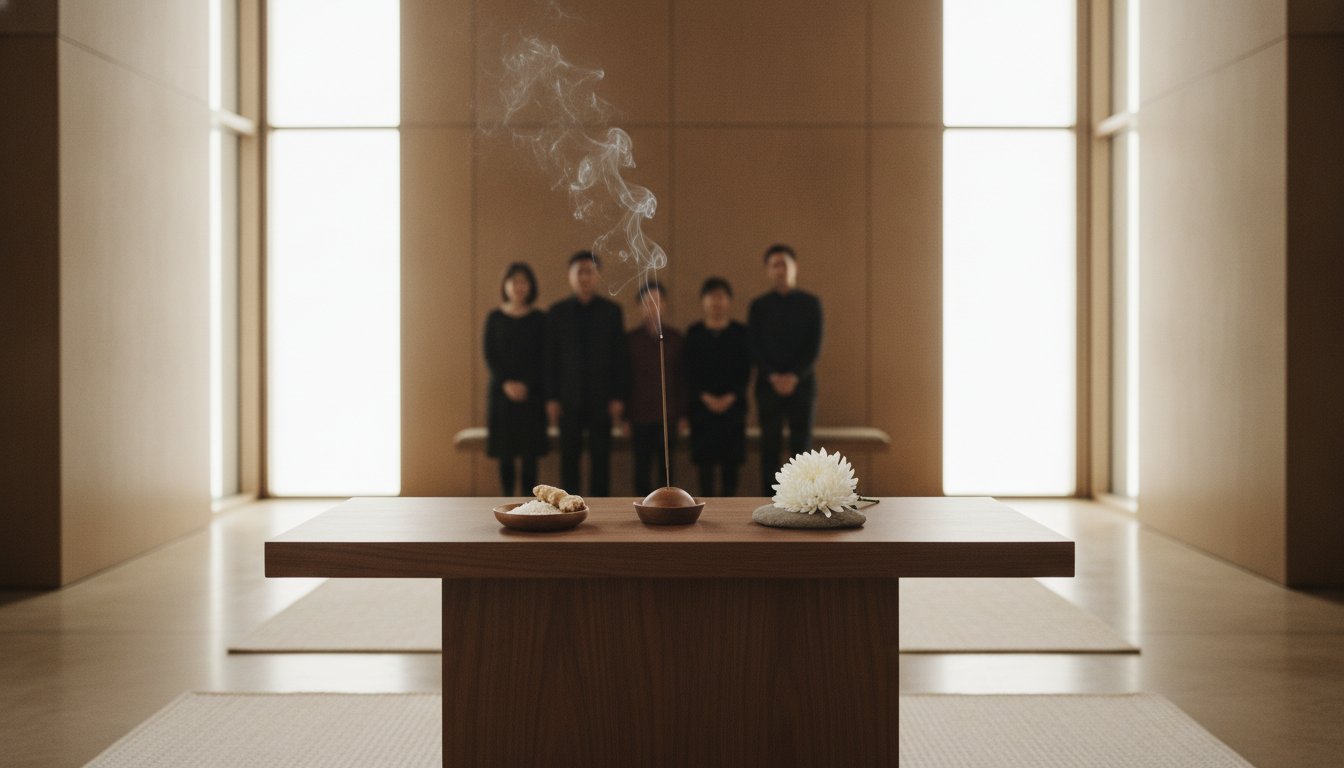
For many families in Southern California, the quietest yet heaviest burden during a time of loss is the fear of missing a vital ritual. You want to honor your parents or grandparents with the same filial piety they showed their own ancestors, but the distance between ancient traditions and modern life can feel vast. Finding a Chinese funeral home Orange County families rely on means finding a guide who understands that every detail, from the scent of incense to the specific timing of the chants, carries the weight of generations.
It's natural to feel overwhelmed by the subtle differences between Buddhist and Taoist rites or the logistical requirements at local landmarks like Forest Lawn and Rose Hills. We believe that honoring your heritage shouldn't be a source of stress, but a path toward healing and peace. This guide will help you understand the profound symbolism behind traditional customs and provide practical steps for planning a service that honors your family legacy. You'll learn how to navigate modern arrangements while maintaining sacred traditions, ensuring your loved one is honored with the dignity and reverence they deserve.
Key Takeaways
- Understand how the traditional funeral serves as a final act of filial piety, ensuring the soul’s peaceful transition and the family’s continued prosperity.
- Learn the sacred significance of the "Encoffining" ceremony and why selecting the right longevity suit is a vital step in honoring your loved one’s journey.
- Discover the specific meanings behind funeral symbols, including the essential use of joss paper and why red is strictly avoided in favor of white and yellow.
- Explore the evolving views on burial and cremation within the Chinese community and how to maintain traditional values of "wholeness" in a modern setting.
- Find out how partnering with an experienced Chinese funeral home Orange County families trust can help bridge the gap between ancient customs and local cemetery requirements.
Understanding the Heart of Traditional Chinese Funeral Customs
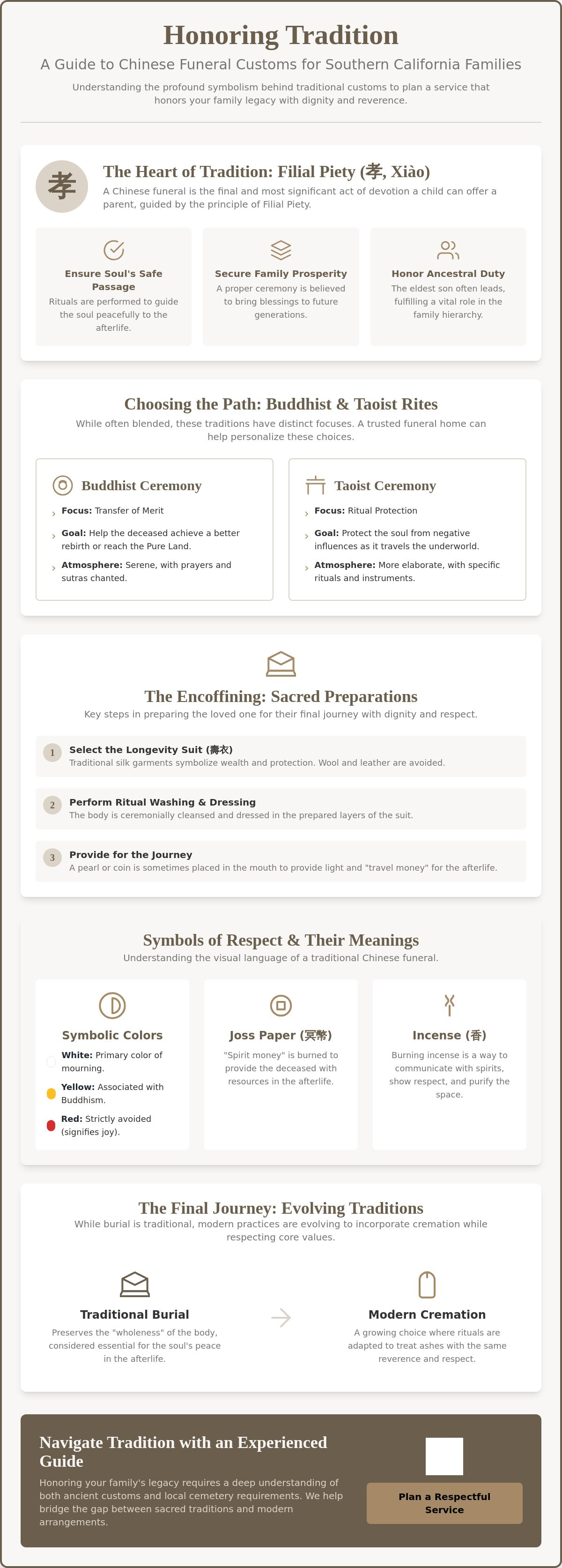
A traditional Chinese funeral is far more than a simple goodbye. It represents the final, most significant act of devotion a child can offer a parent. This deep sense of duty is what drives families in cities like Irvine and Cerritos to seek out specific rituals that have been passed down for centuries. When searching for a Chinese funeral home Orange County residents often look for more than just a facility; they look for a partner who understands the deep spiritual stakes involved in these ceremonies. Every chant, every offering, and every bow is designed with two core objectives in mind: ensuring the soul’s safe passage to the afterlife and securing the ongoing prosperity of the surviving family members.
These rites are deeply rooted in Traditional Chinese Funeral Rituals, which provide a structured way to process grief while maintaining a connection to one's ancestors. While the specific details might change depending on whether a family is Buddhist, Taoist, or secular, the underlying intention remains the same. It's about creating a bridge between the physical world and the spiritual realm, ensuring that the deceased is never forgotten and always honored.
The Concept of Filial Piety (Xiao) in End-of-Life Care
At the center of every decision is the concept of Xiao, or Filial Piety. This principle is the moral foundation of Chinese ancestral worship, emphasizing the duty of children to honor their parents in both life and death. A proper funeral is seen as a way to repay the "debt of life" and acknowledge the decades of sacrifice a parent made for their children. Within this framework, the family hierarchy plays a vital role. The eldest son typically takes the lead in ritual leadership, acting as the primary representative of the family before the ancestors. This structure provides a sense of order and security during a chaotic time, allowing the family to move through their grief with a clear sense of purpose.
Buddhist vs. Taoist Traditions: Choosing the Right Path
Deciding between Buddhist and Taoist traditions is a personal choice that shapes the atmosphere of the service. In a Buddhist ceremony, the focus often rests on the "transfer of merit," where prayers and sutras are chanted to help the deceased achieve a better rebirth or reach the Pure Land. The altar is typically serene, often featuring a statue of the Buddha alongside the loved one's portrait.
Taoist services, by contrast, may involve more elaborate rituals intended to protect the soul from negative influences as it travels through the underworld. You might see different altar setups involving specific tablets and traditional instruments. For many modern families in Southern California, these paths aren't always rigid. It's common to blend elements of both traditions to respect the wishes of elders while accommodating the needs of younger, English-speaking generations. A dedicated Chinese funeral home Orange County families trust will help facilitate these nuances, ensuring that the service feels both authentic and deeply personal.
Preparation and the Wake: Setting the Sacred Space
The transition from the moment of passing to the formal wake is a time of quiet, focused activity. It's during these hours that the physical space is transformed into a sanctuary of memory. For many families, the wake serves as a vital community gathering where friends and relatives offer support, ensuring the grieving family doesn't feel alone in their sorrow. Choosing a Chinese funeral home Orange County families trust ensures that these preparations are handled with the specific cultural nuance required to set this sacred stage.
The Ritual of Dressing and Preparation
The "Encoffining" ceremony is a deeply personal ritual that involves the ritual washing and dressing of the loved one. Central to this process is the selection of the "Longevity Suit." These traditional burial garments are often made of high-quality silk; it's customary to avoid materials like wool or leather. The suit usually consists of several layers, symbolizing wealth and protection in the afterlife. Some families choose to place a pearl or a coin in the loved one's mouth, a gesture intended to provide light and "travel money" for the spiritual journey ahead.
While many families adhere strictly to these ancient customs, we also see a rise in Modern Chinese Funeral Practices where traditional robes are blended with Western business attire. This balance allows the family to honor heritage while reflecting the person's life in Southern California. If you're feeling unsure about which garments are most appropriate, our team can help you select a Chinese Funeral Package that includes guidance on these essential items.
Altar Essentials and Symbolic Offerings
The altar is the spiritual focal point of the wake. At its center sits the "Spirit Tablet" (Ling Wei) alongside a recent photograph of the deceased. The arrangement is never accidental. Every item placed on the altar carries a specific meaning intended to nourish the soul and show respect. You'll typically find:
- Incense and Candles: These represent the family's prayers and provide a path for the spirit.
- Odd Numbers of Fruit: Placements of three or five oranges or apples are preferred, as odd numbers are associated with the positive energy of the living.
- Chrysanthemums: White or yellow flowers are the standard choice, symbolizing grief and the virtuous life of the departed.
Setting up this space in local Orange County mortuaries requires a steady hand and an eye for detail. It's about more than just aesthetics; it's about creating an environment where the family feels a sense of peace and continuity. By carefully arranging these symbolic offerings, we help you build a bridge between the physical world and the legacy your loved one leaves behind.
Symbols of Respect: Colors, Joss Paper, and Incense
In the quiet halls of a Chinese funeral home Orange County families trust, the visual symbols tell a story before a single word is spoken. These symbols aren't merely decorative; they're a complex language used to communicate respect, lineage, and hope for the afterlife. From the specific hue of a flower to the rising smoke of incense, every detail serves as a bridge between the physical world and the spiritual realm. Understanding these cues helps ensure that the environment remains sacred and that every gesture aligns with the deep values of filial piety.
Navigating the Color Palette of Mourning
The most immediate visual cue at a traditional service is the absence of red. While red is celebrated as the color of happiness and vitality in everyday Chinese life, it's strictly avoided at funerals because it's considered a direct affront to the somber nature of the occasion. Instead, white and yellow dominate the space. White serves as the primary color of grief and purity, representing the family's mourning and the soul's transition. You'll often see yellow or gold used prominently in Buddhist rites, symbolizing the divine and the path toward enlightenment.
Family members also use color to denote their specific relationship to the deceased. This is often seen through the use of colored armbands or headbands. Children of the deceased typically wear white, while grandchildren might wear blue or green, and great-grandchildren may even wear a touch of red or pink to signify the "blessing" of a long life. This visual hierarchy allows the community to recognize and support the family in their specific roles during the mourning process.
The Practice of Burning Joss Paper and Effigies
One of the most distinctive rituals involves the burning of Joss paper, often referred to as "spirit money," along with elaborate paper effigies. Families may offer paper versions of houses, cars, and even modern electronics to ensure their loved one lacks nothing in the next life. Burning Joss paper provides the soul with financial security and comfort in the spiritual realm. It's a tangible way for the living to continue their care for the deceased, proving that the bond of family isn't broken by death.
When planning a service, it's important to consider local logistics. Many cemeteries and facilities in Southern California, such as Forest Lawn or Rose Hills, have specific fire regulations regarding the burning of paper goods. A knowledgeable Chinese funeral home Orange County provider will guide you through these rules, often providing dedicated burning bins or designated areas where these rituals can be performed safely and legally. This ensures that tradition is upheld without compromising the safety of the community or the beauty of the grounds.
Finally, incense serves as the primary medium of communication. The three sticks of incense typically offered represent the three treasures of Buddhism or the connection between heaven, earth, and humanity. As the smoke rises, it carries the prayers and messages of the living directly to the ancestors, creating a sensory link that transcends the physical boundaries of the room.
The Final Journey: Burial vs. Cremation Traditions
Choosing a final resting place is a decision that ripples through generations. In the Chinese community, this choice often centers on the concept of "Ground Peace," or burial, which honors the belief that maintaining the body's wholeness is essential for the soul's tranquility. However, the landscape of tradition is evolving. Working with a Chinese funeral home Orange County families rely on helps clarify the nuances of cremation vs burial Chinese tradition in a modern context. Whether you choose burial or cremation, the focus remains on Feng Shui. The orientation of the site, the view, and the surrounding terrain are all carefully considered to ensure the ancestors remain at peace and the living family continues to prosper.
Managing these intricate details requires close coordination with major local memorial parks like Forest Lawn and Rose Hills. These locations understand the specific needs of the Chinese community, but having a dedicated guide helps bridge the gap between their standard procedures and your family's specific requirements. If you're ready to discuss these options, our Chinese Funeral and cremation services provide a compassionate path forward.
The Graveside Service and Burial Rites
Logistics for these services in Orange County can be complex, especially with large family processions. We coordinate every detail, from the transportation of the family to the specific timing of the graveside rituals, ensuring that the transition from the chapel to the garden is seamless and respectful.
Cremation and Urn Placement
While burial remains a deeply held tradition, cremation is increasingly accepted, particularly among Buddhist families who view it as a spiritual release. The fire is seen as a way to free the soul from its physical form, allowing it to move toward its next journey. When choosing cremation, many families opt for witnessed cremation Orange County, which allows immediate family to be present for the start of the process, providing a sense of closure and immediate respect.
The placement of the urn is just as significant as a traditional burial plot. Families often select niches in columbariums that are easily accessible for future ancestral visits, such as the Qingming Festival. This ensures that the tradition of "Tomb Sweeping" and honoring the ancestors continues, even in a more modern, space-efficient format. By selecting a niche with good Feng Shui and ample space for offerings, you maintain the same level of filial piety that a ground burial provides.
Planning a Culturally Respectful Service in Orange County
Planning a service that honors centuries of tradition while meeting the legal requirements of California requires a steady, experienced hand. For many families, the greatest challenge isn't just the logistics, but the emotional weight of ensuring every detail is correct. Choosing a Chinese funeral home Orange County residents trust means you don't have to carry that weight alone. It's about finding a partner who understands that a funeral is a sacred duty, a final act of love that deserves perfect execution. We focus on providing a calm, supportive environment where your family's heritage is the priority.
At Sunnyside Cremation and Funeral, we specialize in Chinese funeral services Southern California families depend on to bridge the gap between ancient customs and modern life. We also encourage families to explore funeral pre-planning for Asian families. This proactive step allows you to document specific cultural wishes in advance, ensuring that your legacy is preserved exactly as you intended while relieving your children of difficult decision-making during their time of grief.
Bridging Language and Cultural Gaps
The presence of Mandarin and Cantonese-speaking staff is often the most significant comfort for grieving elders. When a family is in shock, being able to communicate in their native tongue reduces the cognitive load and provides a sense of security. A Mandarin funeral home Orange County provider ensures that every ritual, from the encoffining to the final graveside prayer, is explained clearly to every generation. Professional coordination prevents technical errors in the rituals that could cause spiritual distress. As a family-owned mortuary, we prioritize this personalized care, treating your family with the same reverence we would show our own.
Next Steps for Your Family
When a loss occurs, the first 24 hours can feel like a blur. Taking small, methodical steps can help you maintain a sense of order. Here is a brief guide to help you begin the process of honoring your loved one:
- Immediate Notification: Contact your chosen Chinese funeral home Orange County provider to begin the transfer of your loved one into our care.
- Gather Documentation: You'll need the deceased's legal name, social security number, and birth information. In California, a death certificate must be filed with the local registrar within eight calendar days of death.
- Prepare for Certificates: Be aware that certified copies of death certificates cost $26 each as of January 1, 2026. We can help you manage these filings to ensure everything is compliant with local rules.
- Consult with a Guide: Reach out to Sunnyside for a tradition-first consultation. We'll help you navigate the differences between Buddhist and Taoist rites, coordinate with parks like Forest Lawn or Rose Hills, and ensure your loved one is honored with dignity.
We're here to be your steady presence during this storm, offering the authority of experience with the humility of a dedicated community servant. Our goal is to provide a clear path forward through a landscape of uncertainty, ensuring your family feels supported every step of the way.
Honoring Your Family Legacy with Confidence
Honoring your heritage is a journey of love that transcends generations. By embracing the deep roots of filial piety and the sacred language of symbols like joss paper and incense, you ensure your loved one’s transition is handled with the highest reverence. Navigating these ancient customs alongside the modern requirements of Southern California cemeteries requires a steady hand and a heart that truly understands the culture. It's about more than following a checklist; it's about providing a peaceful final passage that brings comfort to the living and honor to the ancestors.
Just as we preserve our heritage for future generations, we also prioritize their well-being in the present; for families looking to support their children's health, it's a great time to explore Pediatric Dental Exams as a way to keep the youngest members of the family healthy.
As a family-owned and operated Chinese funeral home Orange County families rely on, we are here to walk beside you through every step. Our specialized Mandarin-speaking staff provides clear, gentle communication for every generation, while our expert coordination with Forest Lawn and Rose Hills ensures a seamless experience. You deserve a partner who values your traditions as much as you do. Contact our compassionate team for a culturally respectful Chinese funeral consultation. We are ready to help you create a service that reflects the dignity and lasting legacy of your family.
Frequently Asked Questions
Why do people wear white instead of black at a traditional Chinese funeral?
White is the traditional color of mourning in Chinese culture because it symbolizes purity and the soul's transition to the afterlife. While black is common in Western traditions, it isn't the standard for Chinese funerals. Family members often wear white headbands or robes to show their specific relationship to the deceased. This visual distinction helps the community recognize those in immediate mourning and offer appropriate support.
Is it disrespectful to choose cremation over burial in Chinese culture?
Choosing cremation is not disrespectful and has become a common practice for many modern families in Southern California. While traditional "Ground Peace" burial is still valued for its emphasis on bodily wholeness, Buddhist traditions often view cremation as a spiritual release for the soul. Many families find peace in selecting a beautiful niche at local memorial parks, ensuring the tradition of honoring ancestors continues in a modern way.
What is the "candy and a coin" tradition after a Chinese funeral service?
The "candy and a coin" tradition is a gesture of gratitude and protection for guests who attend the burial service. The candy is meant to "sweeten" the bitterness of the sorrow felt during the day, while the coin represents a wish for continued good fortune and prosperity for those who came to pay their respects. Guests are typically encouraged to eat the candy and spend the coin before they reach their own homes.
How long does a traditional Chinese funeral service typically last?
A traditional Chinese funeral service typically spans one to three days, including the initial wake and the final burial or cremation rites. However, the formal mourning period often extends for 49 to 100 days after the passing. During this time, the family may perform specific prayers and offerings at regular intervals to ensure the soul’s peaceful journey. The exact duration often depends on the specific religious traditions the family follows.
Can we hold a Buddhist ceremony at a non-Buddhist funeral home in Orange County?
You can certainly hold a Buddhist ceremony at any full-service facility, provided the staff understands how to arrange the sacred space. When working with a Chinese funeral home Orange County families trust, the team will coordinate the setup of the altar, including the Buddha statue, spirit tablet, and specific fruit offerings. This flexibility allows you to choose a convenient location while still maintaining the spiritual integrity of the traditional rites.
What should I avoid doing or wearing when attending a Chinese funeral?
You should strictly avoid wearing red, as it is the color of happiness and is considered highly disrespectful at a funeral. It's best to wear somber, dark colors or white if you are a close family member. Additionally, avoid taking home any leftover food or ritual items from the altar. Respecting these boundaries ensures that you are supporting the family in their grief without causing accidental offense to traditional values.
Why is Joss paper burned during the ceremony, and is it allowed in California?
Joss paper is burned to provide the deceased with financial security and comfort in the afterlife. While California has strict fire regulations, many local cemeteries and mortuaries provide designated burning bins or outdoor areas specifically for these rituals. An experienced Chinese funeral home Orange County provider will help you navigate these safety rules, ensuring your offerings are made legally and respectfully without compromising the safety of the grounds.
How can I find a Mandarin-speaking funeral director in the Garden Grove area?
Finding a Mandarin-speaking funeral director in the Garden Grove area is best accomplished by looking for family-owned providers who specialize in cultural care. Staff who speak the language can bridge the communication gap for grieving elders and ensure that complex rituals are explained clearly. We pride ourselves on offering these specialized services to help families navigate their loss with a sense of peace and professional guidance.


