

When an eldest child sits down to arrange a traditional Chinese burial ceremony, they often find themselves caught between two worlds. On one side are elder relatives holding deep ancestral expectations. On the other are local cemetery schedules, language barriers, and unfamiliar Western mortuary guidelines.
You want nothing more than to express genuine filial piety and show reverent respect. Still, the fear of unintentionally dishonoring your loved one through an incorrect ritual, conflicting mourning colors, or overlooked etiquette can weigh heavily during an already painful time. It's completely natural to feel uncertain when balancing generational traditions with strict logistical rules.
In this guide, you will discover the sacred customs, ritual stages, and practical steps needed to coordinate an authentic service with complete peace of mind. We'll walk through the sequence of rites, symbolic offerings, and generational roles, helping your family honor your loved one's legacy with gentle confidence.
Key Takeaways
- Understand how filial piety anchors every stage of a traditional Chinese burial ceremony, ensuring a dignified transition and spiritual harmony.
- Learn the multi-day ritual progression, from dressing your loved one in sacred longevity robes to conducting the vigil and graveside committal.
- Discover how auspicious dates and cemetery Feng Shui principles align to bring peace to the deceased and protection to future generations.
- Clarify generational mourning roles and dress codes, knowing exactly which colors and customs honor the family lineage appropriately.
- Gain confidence coordinating complex ancestral rites with local cemetery policies through thoughtful, bilingual communication.
What Is a Traditional Chinese Burial Ceremony? Core Values and Meaning
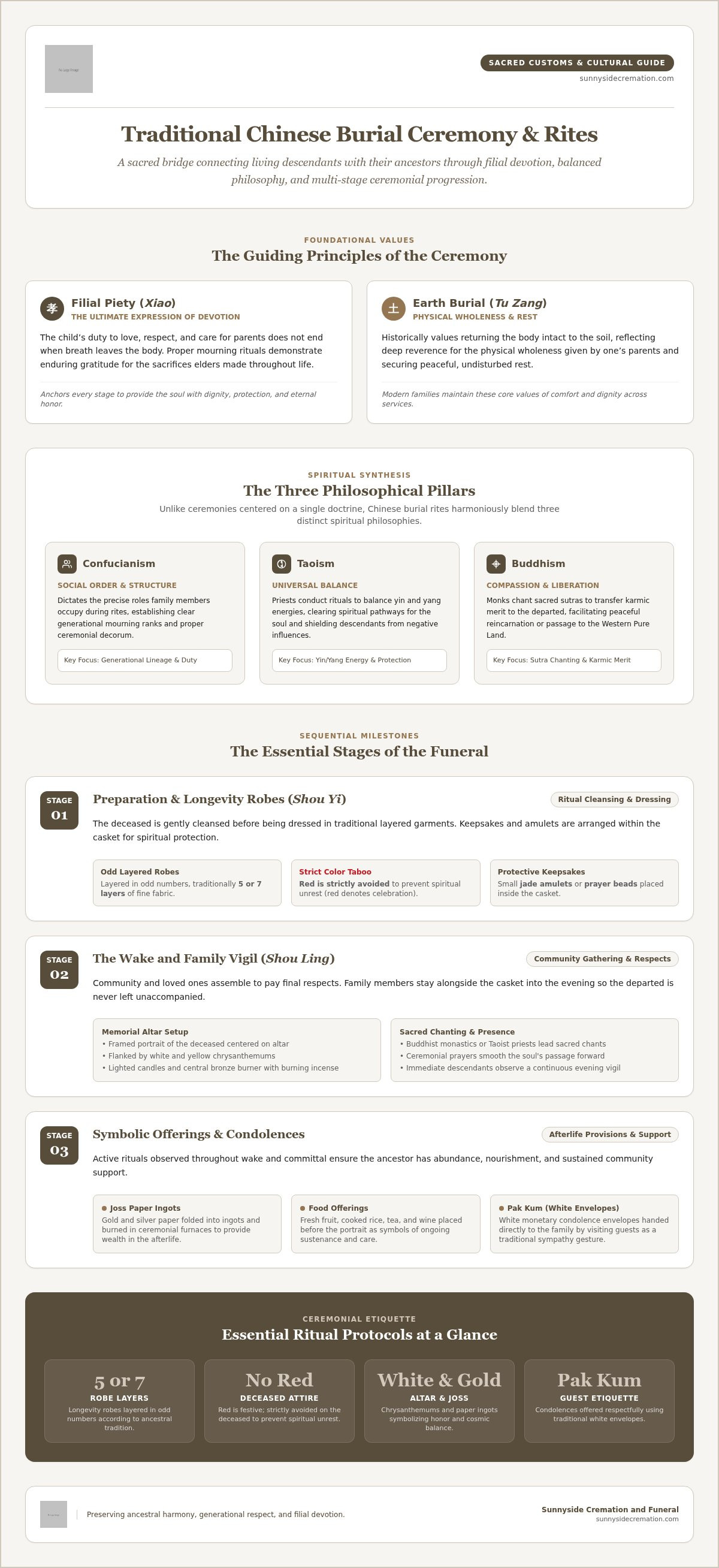
A traditional Chinese burial ceremony is far more than a solemn farewell; it is a sacred bridge connecting living descendants with their ancestors. Rooted in millennia of custom, the service honors the soul's journey into the afterlife while preserving family harmony across generations. A traditional Chinese burial ceremony is rooted in filial piety, ensuring a peaceful transition.
Historically, Chinese tradition has placed profound value on earth burial, known as tu zang. Returning the body intact to the soil reflects the reverence for physical wholeness given by one's parents. While modern families sometimes integrate cremation due to practical considerations, the underlying desire remains unchanged: providing the departed with dignity, comfort, and undisturbed rest.
The Guiding Principle of Filial Piety (Xiao)
At the center of every traditional funeral lies xiao, or filial piety. This moral duty teaches that a child's obligation to love, respect, and care for their parents does not end when breath leaves the body. In fact, funeral rites represent the ultimate expression of this devotion. By observing proper mourning customs, descendants demonstrate enduring gratitude for the sacrifices their elders made throughout life.
The Philosophical Blend: Confucianism, Taoism, and Buddhism
Unlike Western ceremonies centered around a single doctrine, traditional Chinese funeral rituals blend three distinct spiritual philosophies into a cohesive tapestry of remembrance:
- Confucianism: Provides social order and structure. It dictates the precise roles family members occupy during the rites, establishing clear generational mourning ranks and decorum.
- Taoism: Emphasizes universal balance. Taoist priests perform ceremonies to harmonize yin and yang energies, clearing spiritual paths and shielding the family from negative influences.
- Buddhism: Focuses on compassion and liberation. Monks chant sacred sutras to transfer karmic merit to the departed, helping guide the soul toward peaceful reincarnation or the Western Pure Land.
Together, these traditions transform grief into purposeful action. Each gesture, bow, and prayer reassures the family that their loved one is moving forward surrounded by protection, honor, and everlasting care.
The Essential Stages of the Funeral: From Wake to Procession
A traditional Chinese burial ceremony follows a structured, multi-day progression designed to comfort the living and honor the departed. Each ritual milestone provides family members with a tangible way to express grief and show devotion through deliberate, sacred actions.
Preparation and the Longevity Robes (Shou Yi)
The journey begins with the ritual cleansing and dressing of the deceased. Mortuary caretakers or family members gently bathe the body before clothing them in special longevity garments known as shou yi. These robes are often layered in traditional cuts of fine fabric, traditionally in odd numbers such as five or seven layers. Red clothing is strictly avoided during dressing; red represents celebration, and tradition holds that dressing the departed in red could lead to spiritual unrest. Simple keepsakes, prayer beads, or small jade amulets are often placed inside the casket to provide spiritual protection and comfort on the journey ahead.
The Wake and Vigil (Shou Ling)
The wake, or shou ling, serves as the community gathering where family and friends pay their final respects. At the front of the room, an altar is arranged with care. It holds a framed portrait of the deceased, flanked by white or yellow chrysanthemums, candles, and a central bronze burner filled with burning incense. During this stage, immediate family members observe a vigil, often staying alongside the casket into the evening so their loved one is never left alone. Spiritual leaders, such as Buddhist monastics or Taoist priests, lead ceremonial chanting to smooth the soul's passage forward.
Symbolic Offerings: Joss Paper, Food, and White Envelopes (Pak Kum)
Offerings play an active role throughout the wake and committal. Families fold gold and silver joss paper into traditional ingots to burn in ceremonial furnaces, ensuring their ancestor has abundant resources in the afterlife. Fresh offerings of fruit, cooked rice, tea, and wine rest before the portrait as signs of continued nourishment.
Visiting guests participate through the tradition of pak kum. These are white envelopes containing monetary condolences, handed directly to the family to help offset arrangements and show communal solidarity. Navigating these layered steps can feel complex, which is why many families lean on the compassionate guidance of an experienced Chinese funeral provider to ensure every ritual is handled with grace.
The Graveside Burial Service: Feng Shui and Committal Rites
The graveside committal represents the sacred culmination of a traditional Chinese burial ceremony. At the cemetery, ancient geomantic principles blend with intimate ancestral rites as your loved one is gently entrusted back to the earth.
Auspicious Timing and Feng Shui Site Selection
Interment rarely happens at random. Families often consult the Chinese lunar calendar (Tung Shing) or a respected Feng Shui master to choose an auspicious day and specific hour for the burial. Selecting the right moment prevents negative spiritual clashes and ensures lasting peace for living descendants.
Site orientation, known as kanyu, evaluates natural contours, wind direction, and sunlight. In Southern California, renowned memorial parks like Rose Hills and Forest Lawn offer terraced hillside plots that capture balanced energy flow (qi), facing valleys or natural water sources in harmony with ancient traditions.
Rituals at the Graveside and Final Committal
The committal itself incorporates intentional customs designed to shield the living and ease the soul's transition:
- Turning away: When cemetery staff lower the casket into the ground, all family members and guests intentionally turn their backs. Traditional belief holds that watching the descent can pull a living soul into the earth or disturb the spirit's departure.
- Committal offerings: After the casket settles, relatives turn back. The eldest son steps forward first, followed by remaining family in generational order, each tossing a handful of earth or a single white flower into the grave.
- Red thread and sweets: Before leaving the cemetery, attendees receive a small red packet or tray containing sweet hard candies and a red thread. Eating the candy softens the bitter taste of sorrow, while the red thread protects the traveler from wandering spirits on their drive home.
Navigating Cemetery Regulations in Southern California
Honoring ancestral traditions alongside modern Southern California cemetery rules requires thoughtful coordination. Local fire safety guidelines generally restrict open-flame burning at open gravesites. Major memorial grounds often provide designated ceremonial burners or outdoor furnaces where families can safely ignite joss paper and incense without running afoul of groundskeeping codes.
To avoid unexpected hurdles on the day of the service, working with coordinators familiar with local park protocols is essential. If you are exploring regional memorial parks, reading our practical guide on Chinese funeral planning with Forest Lawn helps demystify scheduling, transit permits, and cultural burning permissions.
Ceremony Etiquette: Mourning Attire, Colors, and Family Conduct
Every gesture and garment in a traditional Chinese burial ceremony communicates quiet reverence for the deceased. Because customs reflect generational hierarchy and family ties, knowing what to wear and how to behave provides comfort to both the grieving family and their guests.
Generational Mourning Attire and Color Codes
Mourning attire visually maps the family tree. The closer the blood relationship, the deeper the expression of grief:
- Children and spouses: Immediate family traditionally wear white garments or simple hemp sackcloth. White is the universal color of deep sorrow in Chinese tradition.
- Grandchildren: Grandchildren often wear blue or dark green clothing, marking the third generation and the continuous renewal of family life.
- Great-grandchildren: In large extended families, great-grandchildren may wear light blue or pale pink.
- Attending guests: Visitors should dress in solemn, subdued shades such as black, charcoal, or dark navy.
Red is strictly forbidden during mourning because it symbolizes joy and festive celebration. There is one rare exception: if your loved one lived a complete, prosperous life beyond eighty years old, the passing is celebrated as a "white-and-red" funeral (xi sang). In this joyful circumstance, subtle pink or soft red accents may be worn to celebrate exceptional longevity.
Guest Etiquette, Bowing Protocols, and Condolences
When attending a service, approach the central altar with calm presence. Mortuary attendants will hand you incense. Hold the burning sticks between both hands at eye level, bow toward the portrait three times, and place the incense upright in the communal burner. Turn toward the family, offer a single slight bow of condolence, and allow them to bow back in silent appreciation.
Before you depart, the family will offer you a red packet containing a coin and a sweet candy. Eat the candy right away to sweeten your sorrow, and spend the coin before heading home so lingering sadness does not follow you inside.
Post-Burial Observances and the 49-Day Cycle
Grief does not conclude at the cemetery. Ancient customs outline a transitional 49-day cycle divided into seven-day intervals. Every seventh day, family members gather to offer fresh prayers, fruit, and joss paper to guide the soul across spiritual realms.
Immediately after the burial, family members often wash their faces with pomelo leaf water before entering the home, leaving cemetery shadows outside. In the years that follow, descendants return each spring during the Qingming Festival to sweep the gravesite and remember their roots. If you are coordinating these meaningful steps for an elder, explore our Chinese Funeral Package options to ensure every custom is met with profound care.
Arranging a Chinese Burial in Southern California: Support and Coordination
Planning a traditional Chinese burial ceremony while living in Southern California brings distinct challenges. Families must navigate multi-generational expectations alongside modern administrative processes. Finding a mortuary partner who understands both worlds lifts an immense weight during an emotionally tender time.
The Importance of Mandarin-Speaking Funeral Directors
Clear communication bridges generations. When arranging rites, elder relatives often feel most comfortable speaking in their native dialect, expressing nuanced spiritual requests that second- or third-generation children might struggle to articulate in English. Dedicated Mandarin-speaking funeral directors ensure every elder is heard with absolute dignity. They handle local transit permits, California death certificates, and mortuary paperwork without miscommunication. To learn more about regional resources, review our comprehensive guide on Chinese funeral services Southern California.
Seamless Memorial Park Coordination in Orange County
A successful ceremony requires synchronizing every step with your chosen resting place. An experienced team coordinates closely with premier regional memorial grounds like Rose Hills and Forest Lawn, ensuring staff respect auspicious time windows and designated burning procedures. As a family-owned Southern California provider, Sunnyside Cremation and Funeral offers calm, personalized guidance to communities throughout Orange County and neighboring areas, including:
- Garden Grove
- Buena Park
- Cerritos
- Anaheim
- Fullerton
By handling logistics directly with cemetery staff, we protect your family's space, letting you focus entirely on remembrance.
Pre-Planning to Preserve Cultural Heritage
One of the kindest gifts an elder can offer their family is clarifying their wishes beforehand. Initiating conversations about longevity robes, Buddhist or Taoist chanting preferences, and cemetery lot orientation removes immense emotional stress from surviving children. Advance arrangements guarantee that personal customs receive faithful execution without hurried compromises during acute grief.
Documenting these desires early also locks in essential services smoothly. For deeper guidance on starting these gentle conversations with aging parents, read our resource on funeral pre-planning for Asian families. Approaching these sacred arrangements with patience and experienced cultural support turns a complicated obligation into a lasting act of filial devotion.
Honoring Your Loved One's Legacy with Reverence and Peace
Arranging a traditional Chinese burial ceremony is one of the most profound expressions of filial piety and lasting love. From dressing your elder in sacred longevity garments to completing the committal rites, each deliberate ritual brings peace to the departed while keeping ancestral ties strong.
You don't have to navigate these nuanced customs and cemetery logistics alone. As a family-owned mortuary serving Orange County, Sunnyside Cremation & Funeral offers a steady, caring presence. Our dedicated Mandarin-speaking staff ensures clear communication across generations, while our close coordination with premier memorial parks like Rose Hills and Forest Lawn keeps every detail running smoothly.
When you're ready, contact our compassionate team for culturally respectful funeral guidance. We are here to walk beside your family with patience and understanding, ensuring your loved one's final transition is honored with dignity, reverence, and grace.
Frequently Asked Questions
Why is red clothing generally prohibited at a traditional Chinese funeral?
Red represents joy, vitality, and celebration in Chinese culture, which directly conflicts with the somber reality of mourning. Wearing red can be seen as celebrating a loss, unintentionally disrespecting the family and ancestors. Subdued shades like black, white, or navy are customary. The only exception occurs when honoring an elder who lived past eighty, where subtle red accents are welcomed to celebrate a complete life.
What is the meaning of the white envelope (Pak Kum) given at Chinese funerals?
The white envelope, known as pak kum, is a traditional monetary gift offered to comfort the bereaved family and assist with mortuary expenses. Guests present it upon arrival at the wake or chapel service. Unlike the red envelopes given during joyful occasions, white symbolizes sorrow and solemn respect. Offering an odd-numbered amount is customary, as odd numbers are traditionally associated with funeral rites and single events.
Can a traditional Chinese burial ceremony accommodate Buddhist or Taoist monks?
Yes, integrating monastics is a common and meaningful element of a traditional Chinese burial ceremony. Buddhist monks lead sutra chanting to help liberate the soul, while Taoist priests perform ritual cleansing to harmonize spiritual energy. Experienced Southern California funeral directors regularly coordinate directly with local temples across Orange County, providing the proper altar setups, time allocations, and ceremonial instruments needed for authentic monastic participation.
Why do attendees turn their backs when the casket is lowered into the grave?
Turning away while the casket descends into the earth is a protective committal ritual. Traditional beliefs hold that watching the physical lowering may inadvertently invite a living person's spirit to follow the deceased into the ground. It also gives the departed soul spiritual privacy during its transition from this world. After cemetery staff fully settle the casket, family members turn back to offer personal prayers and handfuls of earth.
What should guests do with the red thread and candy given at the service?
Guests should unwrap and eat the sweet hard candy immediately to cleanse the bitter taste of grief from their mouths. The accompanying red thread serves as a protective amulet against lingering wandering spirits and can be tied around a finger or placed in a pocket. Traditional etiquette advises discarding the thread or untying it before you enter your home, ensuring cemetery grief remains outside your personal living space.
How do modern cemeteries handle traditional joss paper and incense burning?
Because local fire regulations prohibit open flames near gravesites, major memorial parks in Southern California provide designated burning areas. Premier cemeteries like Rose Hills and Forest Lawn feature outdoor furnaces and stone burners specifically built for joss paper, paper offerings, and incense sticks. A knowledgeable funeral team coordinates these permissions in advance so families can complete these sacred offerings safely and legally without disruption.
What is the significance of the 49 days of mourning following the burial?
In Buddhist and traditional Chinese beliefs, a departed soul spends forty-nine days navigating the transitional realm (the bardo) before entering its next reincarnation or resting place. This duration is divided into seven cycles of seven days. Family members often hold memorial prayers or burn offerings every seventh day, accumulating spiritual merit that helps ease their ancestor's passage and guarantees lasting ancestral peace.


