

The most meaningful farewells often have nothing to do with a pulpit or a prayer book. As more families in Orange County choose to honor their loved ones through secular memorials, you might find yourself wondering how to navigate these less traditional spaces. It’s natural to feel a bit of anxiety about funeral etiquette for a non-religious service, especially when the lines between a solemn goodbye and a vibrant celebration of life seem to blur. You want to show up with the right level of respect without feeling out of place or accidentally saying the wrong thing.
We understand that these moments require a delicate balance of grace and authenticity. This guide will help you navigate secular memorials with confidence, ensuring you feel emotionally prepared to support the grieving family. We’ll explore the flow of a modern service, clarify confusing dress codes, and help you find words of comfort that resonate without relying on religious clichés. Whether the gathering is at a local park or a dedicated space like Rose Hills, you’ll have a steady hand to guide you through every detail with peace and security.
Key Takeaways
- Discover how secular services shift the focus from traditional rituals to honoring a unique human legacy and personal story.
- Navigate modern dress codes with ease, whether the invitation calls for respectful business casual or a specific celebratory color.
- Master the essential funeral etiquette for a non-religious service to ensure your presence provides steady support and comfort to the family.
- Find meaningful ways to express sympathy and offer support through human-centric language that honors the deceased's values and memory.
- Learn how expert coordination at Orange County landmarks like Forest Lawn or Rose Hills helps create a seamless and personalized secular memorial.
What is a Non-Religious Funeral or Celebration of Life?
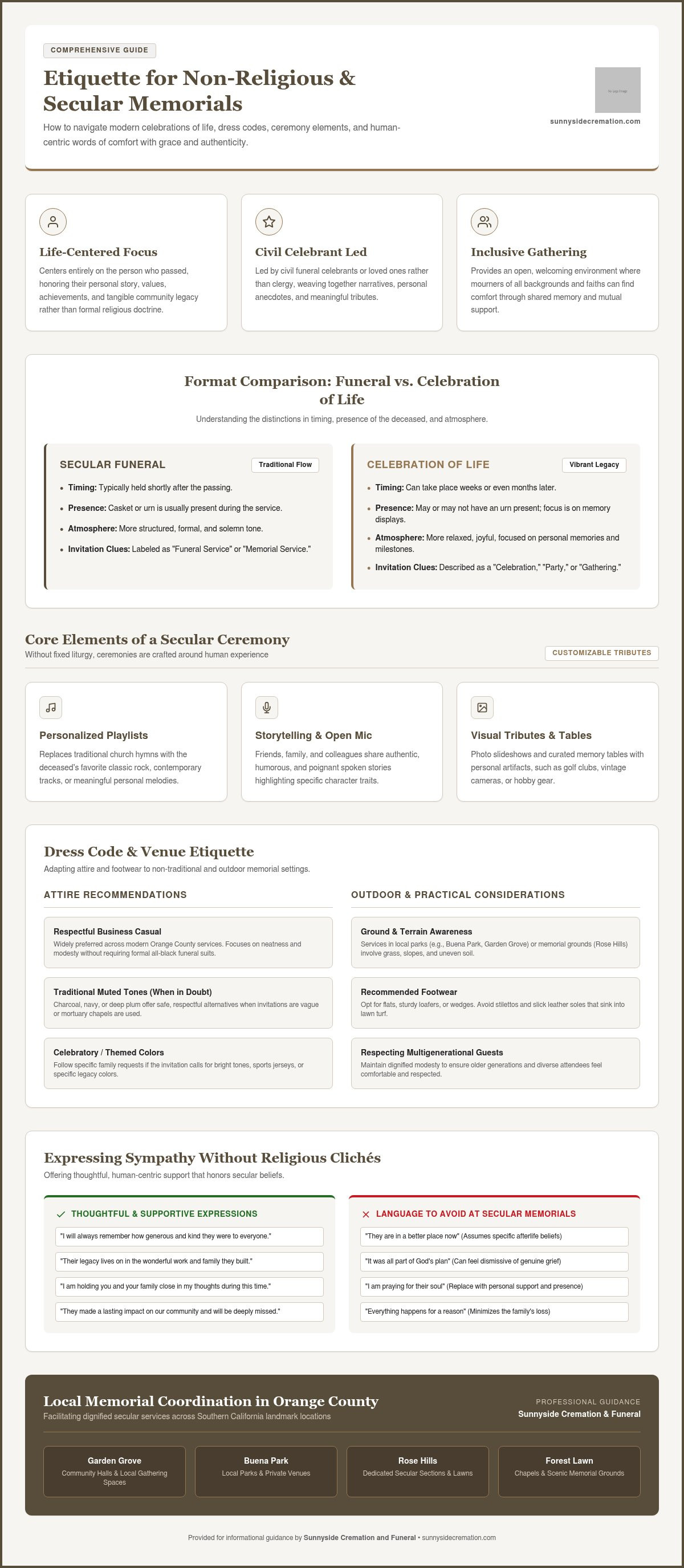
A secular or humanist service marks a departure from traditional liturgy. It centers entirely on the person who has passed, focusing on their unique character, achievements, and the impact they left on their community. Families often choose this path because it offers a more authentic reflection of a loved one's non-religious beliefs. Understanding the nuances of funeral etiquette for a non-religious service begins with recognizing that the focus is on the life lived rather than an afterlife. It’s a time for shared memories, providing a space that feels inclusive for a diverse group of mourners regardless of their personal faith.
The person leading the service is usually a key difference. While a member of the clergy follows a specific religious rite, civil funeral celebrants act as steady guides who help families weave together a narrative of a life well-lived. These ceremonies can take place anywhere that feels right. In Southern California, we often facilitate these gatherings at community halls in Garden Grove, local parks in Buena Park, or even dedicated secular sections at Rose Hills and Forest Lawn. This flexibility allows the ceremony to mirror the personality of the individual being honored.
The Difference Between a Funeral and a Celebration of Life
The distinction often lies in the timing and the presence of the deceased. A traditional secular funeral usually occurs shortly after the passing, with a casket or urn present, maintaining a more formal and somber atmosphere. A celebration of life might take place weeks or even months later. These events tend to be more relaxed and focus on the joy of the person's legacy. Reading the invitation carefully is the best way to grasp the expected funeral etiquette for a non-religious service, as the wording usually hints at the desired mood. If the invitation mentions a "party" or "gathering," the tone will likely be more casual than a "memorial service."
Common Elements of a Secular Ceremony
Without a fixed religious script, these services are highly personalized. You can expect to see:
- Personalized Playlists: Music often ranges from the deceased's favorite classic rock to contemporary hits rather than traditional hymns.
- Storytelling: Many services include an open-mic portion where friends and colleagues share humorous or poignant memories.
- Visual Tributes: Expect to see photo slideshows or memory tables filled with hobby-related items, such as a well-worn set of golf clubs or a collection of vintage cameras.
These elements create a warm, human-centric environment that honors the individual's spirit with dignity and grace. By focusing on the tangible impact of a life, these services offer a unique form of closure that resonates deeply with everyone in attendance. It's about finding peace through shared history and the enduring legacy of a loved one's character.
Dress Code: What to Wear to a Secular Service
The visual landscape of mourning is changing. While black once served as the universal language of loss, many modern families in Orange County now prefer "respectful business casual" for secular memorials. This shift reflects a desire to focus on the vibrancy of the life lived rather than the darkness of its end. However, even in a relaxed setting, modesty and neatness remain the foundation of respect. Your clothing should never distract from the purpose of the gathering. Understanding these subtle shifts is a key part of funeral etiquette for a non-religious service.
Footwear is a practical consideration often overlooked in Southern California. If the service is held at a park in Garden Grove or a graveside plot at Rose Hills, you will likely encounter grass or uneven soil. Stilettos or polished dress shoes with slick soles can be difficult to manage in these environments. Opting for wedges, flats, or sturdy loafers ensures you can move with grace and focus on supporting those around you. If you are helping a family organize these details, our team at Sunnyside Cremation and Funeral can provide gentle guidance on setting expectations for guests.
When to Stick with Traditional Black
The location of the service is often your best clue. A service held in a formal mortuary chapel usually calls for more conservative attire than a gathering in a private backyard. It's also important to consider the feelings of the older generation. While the service may be secular, many elders still find comfort in the solemnity of dark, muted tones. When the invitation is vague, adhering to traditional funeral etiquette guidelines by choosing charcoal, navy, or deep plum is a safe and thoughtful choice. This shows reverence for the family’s grief without requiring a strictly religious context.
Navigating 'Theme' or Color Requests
It's becoming increasingly common for families to request that guests wear a specific color or style to honor a loved one's passions. You might be asked to wear "something bright" or the deceased's favorite sports team colors. These requests are deeply personal tributes to a unique personality. If you feel uneasy about wearing bold colors to a funeral, remember that your participation is a gift of empathy to the family. Balance your personal style with the family's specific request by incorporating the chosen color into a standard respectful outfit, such as a bright tie or a colorful scarf. This allows you to honor the family’s wishes while maintaining a level of personal comfort and decorum. Following these small cues is an essential part of funeral etiquette for a non-religious service, as it demonstrates that you are truly present for the family's journey.
Conduct and Participation: How to Act During the Service
Arriving on time is the most fundamental way to show respect. In secular gatherings, which can sometimes feel more like a social reunion than a formal ceremony, it's easy to lose track of time. However, punctuality remains a cornerstone of funeral etiquette for a non-religious service. Aim to arrive at least 15 minutes early. This gives you time to sign the guest book and find a seat without disrupting the flow of the program. If you happen to arrive late, enter quietly through a side or back door and take the nearest available seat to minimize distraction.
Seating usually follows a traditional pattern even in modern or outdoor settings. Leave the first two or three rows for immediate family and close relatives. This ensures those most impacted by the loss have a clear view and easy access to the celebrant. Regarding technology, keep your smartphone silenced and out of sight. While some families might encourage capturing a moment during a festive celebration of life, it's best to wait for a specific invitation before taking photos. The Federal Trade Commission provides a helpful overview of different types of funeral and memorial services, which can help you understand the general structure and expectations of the event you're attending.
Sharing a Memory or Eulogy
Secular services often include an "open mic" or informal sharing portion. If you choose to speak, keep your contribution brief and focused on the deceased. Your goal is to honor their legacy, not to center the story on yourself. Adhering to a three-minute rule ensures that everyone who wishes to speak has the opportunity. If you find yourself becoming too emotional to continue, it's perfectly acceptable to pause, take a breath, or simply say, "I'm sorry, I'm a bit overwhelmed," and return to your seat. The audience will offer nothing but grace and empathy in that moment.
Participating in Interactive Elements
You may encounter unique rituals designed to symbolize connection and legacy. Common examples include lighting a candle, placing a stone in a communal bowl, or participating in a bubble release. These moments are meant to be inclusive and soothing. Follow the lead of the celebrant or the immediate family. If a particular ritual feels outside your comfort zone, you don't have to participate. Simply remaining in your seat with a respectful, quiet presence is a valid way to show your support. Your presence is the most important gift you can offer the family as they navigate their grief.
Sympathy and Support Without Religious Language
Finding the right words can feel daunting when you're accustomed to traditional scripts. Many people worry that secular condolences might lack depth, but human-centric language is often more deeply moving because it focuses on the tangible bond you shared. Instead of saying "they're in a better place" or "I'm praying for you," try "I am holding space for you in my heart" or "I am keeping you in my thoughts." These phrases acknowledge the weight of the loss without imposing a specific belief system. Shifting your focus toward the individual's legacy and the family's current reality is a vital part of funeral etiquette for a non-religious service.
Flowers remain a beautiful gesture of support, but they aren't always the most appropriate choice. Always check the obituary or invitation for the phrase "in lieu of flowers." This is a direct invitation to honor the deceased's values through a philanthropic gift. Following this request respects the family's desire to create a lasting, positive impact in their loved one's name, whether that's a donation to a local Garden Grove charity or a national research foundation. If you do send flowers, having them delivered to the family home or the service location is a thoughtful way to show you care.
What to Write in a Secular Sympathy Card
A handwritten note provides a sense of peace that digital tributes often lack. Focus on the legacy the person left behind by writing something like, "Their impact on my life was profound, and I'll always cherish the humor they brought to every room." When offering support, be as specific as possible. Replace the vague "let me know if you need anything" with a practical offer, such as, "I'll bring dinner over next Tuesday at 6:00 PM." This reduces the mental load on the family during a period of emotional vulnerability.
Alternative Sympathy Gifts
If you want to provide a lasting tribute, consider gifts that grow or endure. A memorial tree for the garden or a framed photo of a happy shared memory can offer immediate reassurance and long-term comfort. For families who are looking to secure their own secular legacy and ensure their wishes are respected, we often suggest looking into funeral pre-planning for Asian families as a way to provide clarity for future generations. Support shouldn't end when the service does. Reaching out weeks later, when the initial crowd of mourners has thinned, shows the family that their loved one's memory remains a steady presence in your life. At Sunnyside Cremation & Funeral, we believe these small, human acts of kindness are what truly help a community heal.
Planning a Personalized Farewell in Orange County
Creating a ceremony that truly reflects a loved one's values requires a steady hand and a deep understanding of local resources. At Sunnyside Cremation & Funeral, we specialize in helping families design meaningful tributes while providing gentle guidance on funeral etiquette for a non-religious service. We serve as a compassionate advocate, ensuring that every detail, from the choice of music to the flow of the program, aligns with the deceased's secular worldview. Our local expertise allows us to coordinate seamlessly with major Orange County landmarks, including facilitating secular graveside services at Forest Lawn and Rose Hills.
Documenting your wishes through pre-planning is the most effective way to ensure your legacy is honored exactly as you envision. Without a religious framework to default to, specific instructions regarding your preferences become essential for your family. Pre-planning provides them with a clear path forward, reducing their cognitive load during a period of emotional vulnerability. For families who wish to blend secular elements with specific cultural traditions, we offer specialized guidance, such as our resource on Buddhist Funeral Services in Orange County. This ensures that every facet of a person's identity is respected with dignity and grace.
Tailoring the Service to the Individual
Our approach is grounded in the belief that every life is unique and deserves a personalized farewell. We take the time to listen to your stories, helping you identify the themes and rituals that will provide the most comfort to your community. It's especially important in multicultural settings where families may want to honor their heritage while maintaining a non-religious tone. Whether you are looking for a complex celebration of life or affordable cremation in Orange County, we provide the same level of gentle professionalism and reverence. We manage the intricate logistics so you can focus on the emotional journey of saying goodbye.
Next Steps: Getting Support Today
If you are currently navigating a loss or looking to secure your future wishes, our dedicated teams in Garden Grove and Buena Park are here to help. We offer a calm presence in the storm, providing the information and support you need to make manageable decisions. Requesting a consultation for a celebration of life is a simple first step toward creating a lasting tribute that reflects a life well-lived. Please contact Sunnyside Cremation and Funeral today for compassionate, personalized care that honors your unique story with stewardship and integrity.
Creating a Lasting Legacy of Love and Respect
Navigating a secular memorial doesn't have to be a source of anxiety. By focusing on authentic storytelling and a respectful presence, you honor the deceased in a way that feels deeply personal and true to their values. Whether you are adapting to a modern dress code or finding the right words of comfort without religious clichés, mastering the funeral etiquette for a non-religious service allows you to focus on the human connection at the heart of the gathering. It's about showing up with empathy and grace for the family during their time of need.
As a family-owned and operated team in Orange County, Sunnyside Cremation & Funeral serves as a steady guide for those navigating multicultural and secular coordination. We are proud to be a trusted partner for arrangements at Forest Lawn and Rose Hills, helping families facilitate highly personalized farewells. If you are ready to Plan a Respectful Farewell with Sunnyside Cremation and Funeral, we are here to support you with every detail. You can move forward with confidence, knowing you are in capable, compassionate hands.
Frequently Asked Questions
What do I say instead of 'they are in a better place' at a non-religious funeral?
Focus on human-centric language that honors the individual's character and your shared history. Phrases like "I will always cherish the kindness they showed me" or "Their legacy will live on through the lives they touched" are deeply meaningful. These secular expressions provide comfort without imposing religious beliefs. It's about acknowledging the weight of the loss while celebrating the tangible impact the person had on the Garden Grove community.
Is it okay to wear bright colors to a celebration of life?
You should follow the specific request of the family as stated in the invitation or obituary. Many secular services in Buena Park or Anaheim now encourage bright colors to celebrate a vibrant life. If no specific request is made, sticking to respectful business casual in muted tones remains a safe choice. Proper funeral etiquette for a non-religious service means prioritizing the family's vision for the day over traditional mourning customs.
How long does a non-religious funeral service usually last?
Most secular memorial services last between 30 and 60 minutes, though the duration can vary based on the number of speakers. Unlike liturgical rites, these programs are highly flexible and focus on personal tributes, music, and slideshows. If the event is a celebration of life held at a local Garden Grove park, it might be more open-ended. We always recommend arriving early to ensure you are seated before the formal program begins.
Should I still send flowers if there is no religious service?
Flowers are a universal symbol of sympathy and are generally appropriate for secular services unless the family requests otherwise. Check for instructions such as "in lieu of flowers, please donate to charity." If you choose to send an arrangement, having it delivered to the family home in Fullerton or the service venue is a thoughtful gesture. It shows you are holding the family in your thoughts during their period of emotional vulnerability.
Can I mention God or my own faith when speaking at a secular service?
It's best to respect the secular nature of the service by keeping your public remarks focused on the life and legacy of the deceased. While your personal faith is important, a non-religious ceremony is designed to honor the specific worldview of the person who passed. If you are asked to speak, focus on shared memories and the individual's character. Private prayer or silent reflection is always an appropriate way to honor your own beliefs.
What happens at a graveside service if there is no prayer?
At a secular graveside service in Rose Hills or Forest Lawn, the focus shifts to a final personal tribute or a moment of reflection. A celebrant might read a favorite poem, share a brief eulogy, or play a meaningful song. Some families include a ritual like placing a flower on the casket or a moment of silence. These elements provide a sense of closure and reverence without the need for traditional religious liturgy.
Is it appropriate to bring children to a non-religious celebration of life?
Children are generally welcome at celebrations of life, especially since these events often have a more relaxed and inclusive atmosphere. It can be a healthy way for them to learn about honoring a legacy and supporting friends in Garden Grove. However, consider the child's age and the specific venue. If you aren't sure, it's perfectly acceptable to ask the family or the organizer if the environment is suitable for younger guests.
Do I need to bring a gift to a celebration of life?
Bringing a physical gift isn't required, but a handwritten sympathy card is always appreciated. Many families prefer that you honor their loved one's memory through a donation to a cause they cared about. If you feel led to bring something, a small memorial plant or a framed photo can be a comforting gesture. Understanding funeral etiquette for a non-religious service helps you provide support that feels both deeply personal and highly respectful.


