

Imagine standing before a vibrant display of flowers, heart full of sympathy, only to pause with a sudden worry that your choice might unintentionally offend a grieving family. It's a common anxiety when attending traditional Chinese or Taiwanese services, where every petal and hue carries a specific cultural meaning. You want to provide a sense of peace, yet the fear of selecting the wrong color or mistiming a delivery to a Buddhist or Taoist ceremony can feel like a heavy burden to carry during an already difficult time.
We believe that honoring a legacy should be a source of comfort, not confusion. By mastering the nuances of Chinese funeral flowers etiquette, you can send a respectful, culturally appropriate tribute that honors your loved one with dignity. Our team at Sunnyside Cremation and Funeral often helps families navigate these delicate details at local venues like Rose Hills and Forest Lawn. This guide will walk you through the symbolism of white and yellow blooms, the correct way to phrase traditional banner inscriptions, and the precise timing needed to ensure your gift arrives at the right moment. You'll find the clarity you need to express your condolences with grace and cultural sensitivity.
Key Takeaways
- Learn how floral tributes act as a bridge to honor ancestors and demonstrate the vital cultural concept of filial piety.
- Understand the specific rules of Chinese funeral flowers etiquette to choose between white for purity or yellow for spiritual peace while avoiding colors that might cause offense.
- Discover why vertical standing wreaths are the preferred tribute for colleagues and friends to show proper reverence.
- Master the logistics of delivery timing for Southern California memorial sites like Rose Hills or Forest Lawn to ensure your gift arrives before the first viewing.
- Find out how professional guidance from Mandarin-speaking staff can help you navigate the specific requirements of Buddhist and Taoist ceremonies.
The Cultural Significance of Flowers in Chinese Funerals
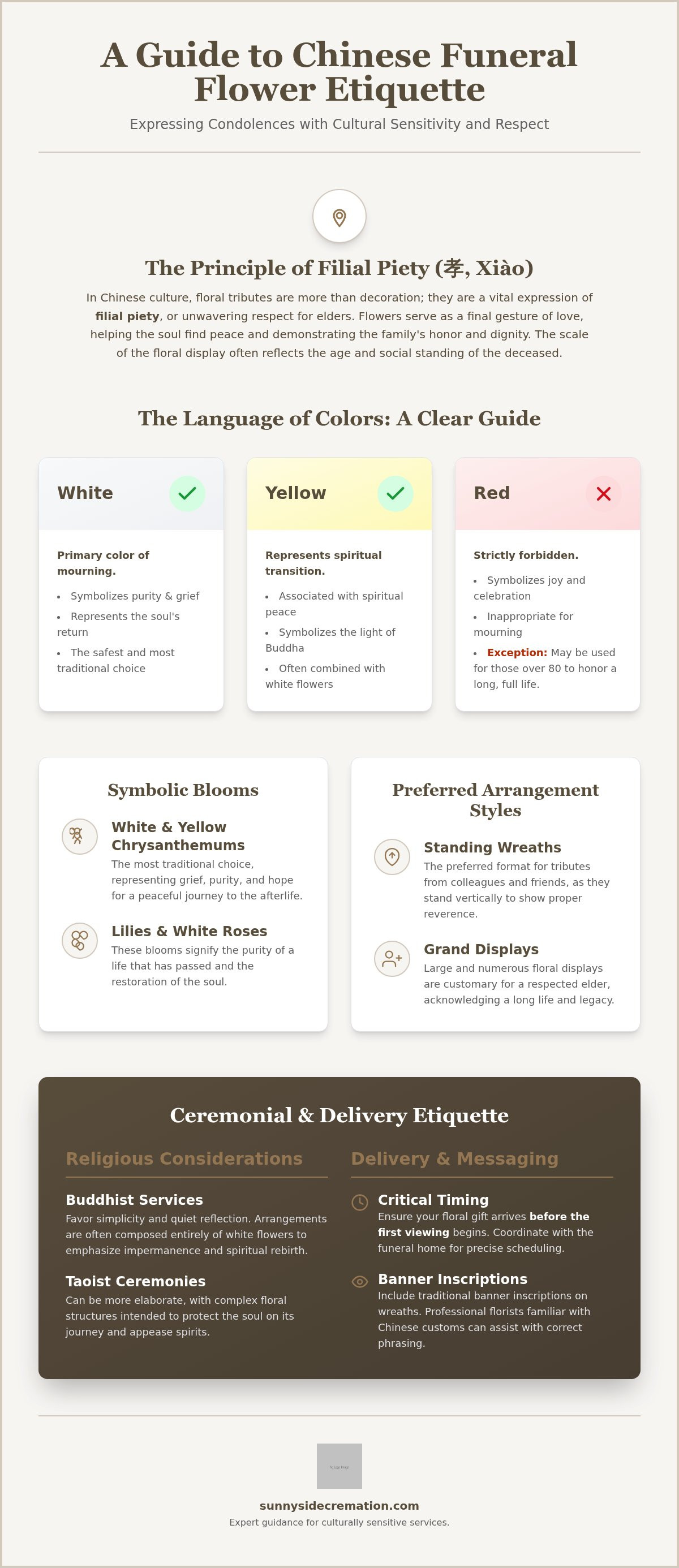
Flowers aren't just decorations. They represent a vital bridge between the living world and the realm of the ancestors, acting as a final gesture of love and stewardship. In traditional ceremonies, following proper Chinese funeral flowers etiquette is a way to uphold Xiao, or filial piety. This core value dictates that children and relatives must show unwavering respect to their elders, even after they've passed. A thoughtful floral tribute serves as a visible prayer, helping the soul find peace as it transitions to the next life.
The scale of these arrangements often communicates the social standing and the age of the deceased. For a respected elder who lived a long, full life, the floral displays are typically grand and numerous. This isn't about vanity; it's a communal acknowledgment of a legacy well-honored. Conversely, the absence of flowers can be deeply felt by the family. In Chinese culture, an empty space where tributes should be might be interpreted as a lack of respect or a failure of filial duty. This makes the act of sending flowers a powerful way to support the family's dignity during their time of grief.
Symbolism and the "Language of Flowers"
Every bloom carries a specific weight in the language of mourning. Understanding these meanings helps you choose a tribute that speaks with clarity and kindness. Consider these traditional choices:
- White Chrysanthemums: These are the primary symbol of mourning and grief. Their stark, clean appearance represents the purity of the heart and the void left behind by the departed.
- Yellow Chrysanthemums: Often associated with the light of the Buddha, these flowers represent the hope for a peaceful, illuminated journey into the afterlife.
- Lilies and White Roses: These blooms signify the restoration of the soul and the quiet purity of a life that has returned to its source.
Buddhist vs. Taoist Floral Perspectives
While both traditions value floral tributes, their approaches reflect different spiritual goals. Buddhist services often favor simplicity. You'll frequently see arrangements consisting entirely of white flowers, emphasizing the impermanence of physical life and the focus on spiritual rebirth. The atmosphere is one of quiet reflection and meditative peace.
Taoist ceremonies can be more elaborate. These displays might include more complex structures intended to appease spirits and provide a protective guard for the soul's journey. In both types of services, the scent of fresh flowers mingles with the aroma of burning incense. The smoke from the incense is believed to carry the fragrance of the flowers and the prayers of the living up to the heavens. Our Mandarin-speaking staff at Sunnyside Cremation and Funeral understands these subtle distinctions. We coordinate directly with locations like Forest Lawn and Rose Hills to ensure your floral tributes align perfectly with the specific religious requirements of the service.
Choosing the Right Colors: The Rule of White, Yellow, and Red
Color carries immense weight in Chinese tradition. It's often the first thing a family notices when they enter a viewing room. Understanding the specific palette of mourning is a core part of Chinese funeral flowers etiquette. While Western arrangements often feature a variety of soft pastels, Chinese tributes focus on specific hues that communicate deep reverence and spiritual peace. Choosing the right shade isn't just about aesthetics; it's about speaking a silent language of respect that the family will deeply appreciate.
White is the universal color of mourning in Chinese culture, symbolizing purity and the "void" or the return to the beginning of the life cycle. Yellow is also highly respected, as it's often associated with the light of the Buddha and the spiritual path. Conversely, red is strictly forbidden for most funerals because it symbolizes joy and celebration. Using red inappropriately can cause significant distress to a grieving family. Red is only permissible for those over 80 as an exception to honor a long and full life, marking a transition from grief to a celebration of longevity.
The White and Yellow Standard
White chrysanthemums are the "gold standard" for Chinese sympathy. Their structured petals and clean appearance offer a sense of order and dignity. Many people choose to combine white and yellow blooms to create a balanced, respectful display that feels both traditional and comforting. This combination honors both the mourning process and the hope for a peaceful journey for the soul. It's best to avoid bright pinks, oranges, or multi-colored "celebration" bouquets. These vibrant colors are usually reserved for weddings and birthdays, and their presence at a funeral can inadvertently signal a lack of solemnity.
The "Red" Exception for Centenarians
There's a beautiful concept in Chinese culture known as the "Happy Funeral" or Xi Sang. This occurs when a loved one passes away after living a remarkably long and prosperous life, typically reaching the age of 80 or older. In these cases, the family focuses on celebrating a legacy of longevity rather than only dwelling on the sorrow of loss. When this tradition is observed, red or pink flowers may be used to decorate the service. These colors serve as a tribute to a life that was truly "full." Because this tradition is specific to the individual's age and the family's wishes, you must confirm the age of the deceased before choosing red accents. If you're coordinating a tribute for a service at Rose Hills or Forest Lawn, our Mandarin-speaking staff can help you verify these details so your gift feels perfectly appropriate.
Traditional Arrangement Styles and Floral Displays
The visual landscape of a Chinese funeral is often defined by its verticality. High-standing arrangements create an atmosphere of grandeur and respect, reflecting the importance of the individual's life. Following proper Chinese funeral flowers etiquette often means selecting displays that emphasize height rather than low, horizontal spreads. This vertical focus draws the eyes upward, symbolizing the ascent of the soul and the high regard in which the deceased was held.
Standing wreaths, or Huahuan, serve as the standard tribute from friends, business partners, and community members. These are placed on tall wire stands and arranged along the perimeter of the chapel. The most prominent displays, however, are reserved for the immediate family. Large, intricate floral pieces from children and grandchildren are placed directly adjacent to the casket. This positioning serves as a public testament to the family's deep bond and commitment to their elder's legacy.
Traditional Chinese Banners (Lian)
A unique and deeply significant element of Chinese floral displays is the use of Lian, or vertical funeral banners. These are long scrolls, typically in white or blue, featuring elegant calligraphic inscriptions. These banners are often integrated directly into the floral backdrop, draped alongside the wreaths. They carry messages of sympathy, praise for the deceased's character, or prayers for their journey. While organizations might send banners with formal, standardized text, family banners often contain more personal expressions of grief and love. Our Mandarin-speaking staff can assist in ensuring these inscriptions are both accurate and respectful.
Wreaths vs. Baskets
Circular wreaths are the preferred choice for mortuary services because their shape symbolizes the eternal cycle of life and rebirth. They offer a sense of completion and continuity that is central to both Buddhist and Taoist beliefs. Many of these wreaths include evergreen accents like pine or cypress, which represent the endurance of the spirit and a legacy that remains green even in the winter of loss. While floral baskets are a kind gesture for a family's home, they are less common at the funeral home itself. For services at Rose Hills or Forest Lawn, standing wreaths remain the most respectful way to contribute to the ceremonial atmosphere. We understand how these small details provide a sense of peace and security for those who are mourning.
Flower Delivery and Card Etiquette for Southern California Services
Understanding Chinese funeral flowers etiquette involves more than just picking the right blooms; it's about the timing and the message you leave behind. To truly support the family, your tribute should arrive before the first viewing or "Visitation" begins. This early arrival allows the funeral directors to arrange the room properly, creating a serene environment for the family before they even step through the doors. It's a quiet gesture that says you're standing with them from the very first moment of their public mourning.
The sympathy card attached to your flowers is just as important as the arrangement itself. It serves as a lasting record for the family, who may be too overwhelmed to notice every sender during the service. Ensure you include the full name of the deceased and clearly state your relationship to them or the family. This clarity helps the family organize their thank-you notes later, reducing their emotional load during a difficult time. A well-organized card ensures your presence is felt even when words are hard to find.
What to Write on the Sympathy Card
In Chinese culture, addressing elders with formal titles is a sign of deep respect. If you're writing in English, phrases like "Deepest Sympathy," "Rest in Peace," or "In Loving Memory" are always appropriate. For those who wish to include Mandarin inscriptions, traditional four-character idioms are common. These might translate to "Eternal Memory" or "Peaceful Rest." It's best to avoid casual language or sentiments that feel misplaced in a solemn setting. If you're unsure about the correct wording, our team can help you select a message that feels both personal and culturally dignified, ensuring your tribute is received with the reverence it deserves.
Logistics for Orange County Memorial Parks
When you're coordinating deliveries to sprawling venues like Rose Hills Memorial Park in Whittier or Forest Lawn locations in Covina Hills and Glendale, specific details are essential. These parks host multiple services simultaneously across various chapels. Always provide your florist with the exact "Service Date" and "Chapel Name." Without this information, your flowers might end up in the wrong location, causing unnecessary stress for both you and the grieving family. We regularly coordinate with these local memorial parks to ensure every tribute is placed exactly where it needs to be. If you need assistance planning a Chinese funeral or cremation service, our experienced staff can handle these intricate logistical details for you, providing a steady hand through the planning process.
Honoring Your Loved One with Sunnyside Cremation and Funeral
Honoring a loved one's heritage requires a balance of logistical precision and emotional depth. We understand that Chinese funeral flowers etiquette is just one part of a much larger, sacred process. Our Mandarin-speaking staff is here to ensure that every detail, from the color of the chrysanthemums to the calligraphy on the funeral banners, reflects your family's values without compromise. We serve as a steady hand for families in Garden Grove, Buena Park, and throughout Orange County, providing the cultural bridge needed during these sensitive times.
Our team specializes in the intricate coordination required for services at major Southern California locations. Because we regularly work with Rose Hills and Forest Lawn, we're intimately familiar with their specific delivery protocols and chapel layouts. This local expertise means you don't have to worry about whether your floral tribute will find its way to the correct viewing room. We handle the communication and the timing, allowing you to focus on what truly matters: honoring the life and legacy of your loved one.
A Partner in Cultural Preservation
Trust is built through a commitment to empathy and reverence. Families choose Sunnyside Cremation and Funeral because we prioritize the preservation of tradition as much as they do. Whether you're arranging an immediate need service or looking into pre-planning funeral contracts, we approach every conversation with gentle professionalism. Pre-planning allows you to document specific cultural wishes in advance, ensuring that future floral tributes and ceremonies align perfectly with your heritage. It's a gift of peace for your children and grandchildren, removing the guesswork from a difficult day. You're welcome to contact us for a quiet, supportive consultation whenever you're ready.
Next Steps for Your Tribute
Ensuring your floral gift aligns with the family's specific wishes is the ultimate sign of respect. If you're still uncertain about the specific requirements for a Buddhist or Taoist service, we're here to offer guidance. You can also find deeper insights in our Chinese funeral services Southern California guide, which covers a broader range of traditions beyond floral etiquette. Expressing your sympathy is a beautiful act of kindness. Reach out to us for cultural guidance to ensure your gesture provides the comfort and dignity your loved one deserves.
Honoring Tradition with Confidence and Grace
Sending flowers is a profound gesture of sympathy that bridges the gap between the living and the ancestors. By following the nuances of Chinese funeral flowers etiquette, you ensure your tribute provides comfort rather than confusion. Whether you're selecting white chrysanthemums to symbolize purity or coordinating a vertical wreath to honor an elder's legacy, your attention to these cultural details speaks volumes about your respect for the family's journey. These small acts of kindness help create a peaceful environment for collective mourning.
As a family-owned Orange County mortuary, Sunnyside Cremation and Funeral is here to serve as your reliable guide. Our Mandarin-speaking staff provides the specialized expertise needed to handle intricate details, including direct coordination with Forest Lawn and Rose Hills. We take pride in our role as community stewards, helping you understand these traditions with a sense of peace and security. We invite you to Plan a Culturally Respectful Chinese Funeral with Sunnyside today. You don't have to walk this path alone; we're here to support you in creating a tribute that truly honors a life well-lived.
Frequently Asked Questions
Is it okay to send red flowers to a Chinese funeral?
Red flowers are strictly avoided at most services because they symbolize celebration and joy. However, if the deceased lived past 80, red can be used to honor a "Happy Funeral" or centenarian legacy. Always confirm the person's age with the family before choosing red accents. This nuance is a key part of Chinese funeral flowers etiquette that our Mandarin-speaking staff helps local families in Garden Grove and Buena Park navigate with care.
What are the best flowers to send for a traditional Chinese service?
White and yellow chrysanthemums are the most traditional and respectful choices for a memorial. White signifies purity and mourning, while yellow represents spiritual peace and the light of the Buddha. You might also consider white lilies or roses, which symbolize the restoration of the soul. These blooms are staples for ceremonies at Rose Hills and Forest Lawn, where we ensure every arrangement meets the specific needs of Buddhist or Taoist traditions.
Where should I send the flowers-the home or the funeral home?
It's usually best to send large standing wreaths directly to the funeral home or mortuary for the viewing. Baskets or smaller arrangements are more appropriate for the family's home in Anaheim or Irvine. For services coordinated by Sunnyside Cremation and Funeral, we recommend delivering wreaths at least two hours before the first visitation. This ensures the chapel is fully prepared to provide a sense of peace for arriving guests before the service begins.
Do I need to include a Chinese translation on the sympathy card?
While a Mandarin translation isn't strictly required, it's a thoughtful gesture that shows deep respect for the family's heritage. If the family elders primarily speak Mandarin, a traditional four-character inscription can be very meaningful. Our team can assist you with proper wording and formal titles to ensure your card is culturally appropriate. This attention to detail helps provide a sense of security for grieving families during an emotional time in Fullerton or Cypress.
How much should I spend on a funeral wreath for a colleague?
Instead of focusing on a specific dollar amount, consider the type of arrangement that best honors your professional relationship. A standing wreath is the standard tribute for colleagues and business partners in Southern California. These displays provide the verticality and presence required for traditional chapels. Choosing a dignified, well-constructed wreath is a reliable way to show respect for the deceased's professional legacy and support for their family in Norwalk or Cerritos.
Can I send flowers if the family requests "in lieu of flowers" donations?
You should always respect the family's specific request if they ask for donations in lieu of flowers. This request often means the family prefers support for a specific charity or assistance with funeral costs. In these cases, sending a thoughtful sympathy card to their home in La Habra or Stanton is a kind alternative. Our staff can help you confirm the family's preferences to ensure your gesture aligns perfectly with their wishes and cultural needs.
Are there specific flowers that are considered unlucky in Chinese culture?
Red flowers are considered unlucky or inappropriate for most funerals because they're associated with weddings and birthdays. You should also avoid multi-colored "celebration" bouquets or flowers with prominent thorns, like un-stripped roses, which can symbolize pain. Sticking to white and yellow blooms ensures your tribute remains a source of comfort. Understanding these preferences is a vital part of Chinese funeral flowers etiquette for anyone attending a local service in Orange County.
What happens to the flowers after the burial or cremation ceremony?
After a burial service at Rose Hills or Forest Lawn, flowers are typically left at the graveside as a final tribute. For cremation services, the family may choose to take a few significant blooms home or have the mortuary dispose of the arrangements respectfully. Our team handles these transitions with gentle professionalism, ensuring that every floral gift is treated with reverence until the very end of the ceremony in Westminster or Los Alamitos.


