
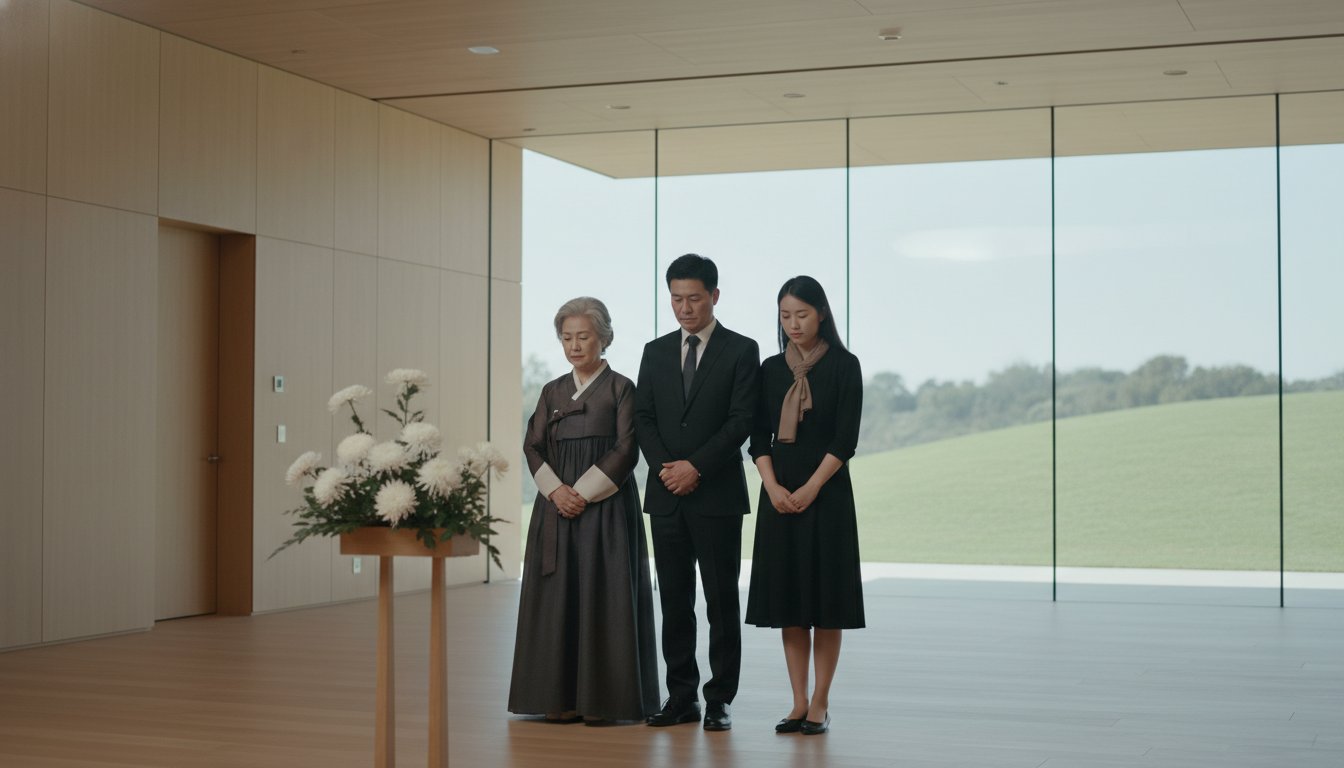
What if the most meaningful way to say goodbye isn't found in a single moment, but through a patient, three-day journey of shared memory and ancient respect? It's natural to feel a heavy sense of responsibility when you're tasked with honoring both a unique life and a deep cultural heritage. You might worry about the small details of etiquette or how to balance traditional rites with your own modern faith. Finding the right Korean funeral services Buena Park offers means looking for a partner who understands that these rituals are more than just procedures; they're a bridge to your ancestors and a path toward healing.
We're here to help you move through this time with confidence and quiet strength. This guide will show you how to honor your loved one with cultural reverence while managing the practical logistics required here in Southern California. You'll gain a clear understanding of the traditional three-day timeline, learn the appropriate ways to offer condolences, and find peace of mind knowing your family's heritage is being preserved with dignity. We'll explore everything from choosing the right attire to understanding the sacred symbolism behind every gesture, providing a steady hand as you plan a service that truly reflects a life well-lived.
Key Takeaways
- Understand the core philosophy of filial piety (Hyo) that serves as the heart of all traditional Korean funeral ceremonies.
- Navigate the traditional three-day Sam-il-jang timeline with a clear, step-by-step understanding of each ritual and mourning period.
- Gain confidence in funeral etiquette by learning the specifics of dark, conservative attire and the traditional ritual of bowing to show respect.
- Learn how to coordinate with providers of Korean funeral services Buena Park families rely on to manage logistics at major memorial parks like Forest Lawn or Rose Hills.
- Discover the deep symbolism behind altar arrangements and food offerings that provide a meaningful way to honor your loved one's spirit.
Understanding the Essence of Korean Funeral Rites (Jangrye)
Jangrye represents the collective heartbeat of Korean mourning. It's a term that encompasses every ritual, from the moment of passing to the final burial or cremation. These traditions aren't merely procedures; they're an expression of the soul's journey and the family's enduring love. For those seeking Korean funeral services Buena Park providers offer, understanding these roots helps create a bridge between the past and the present. The historical influence of Confucianism provides the structure of the rites, while Shamanistic roots often color the emotional and spiritual understanding of the transition. Every gesture in Korean traditional funeral rites serves as a final act of devotion to the deceased.
The Role of Filial Piety in Korean Culture
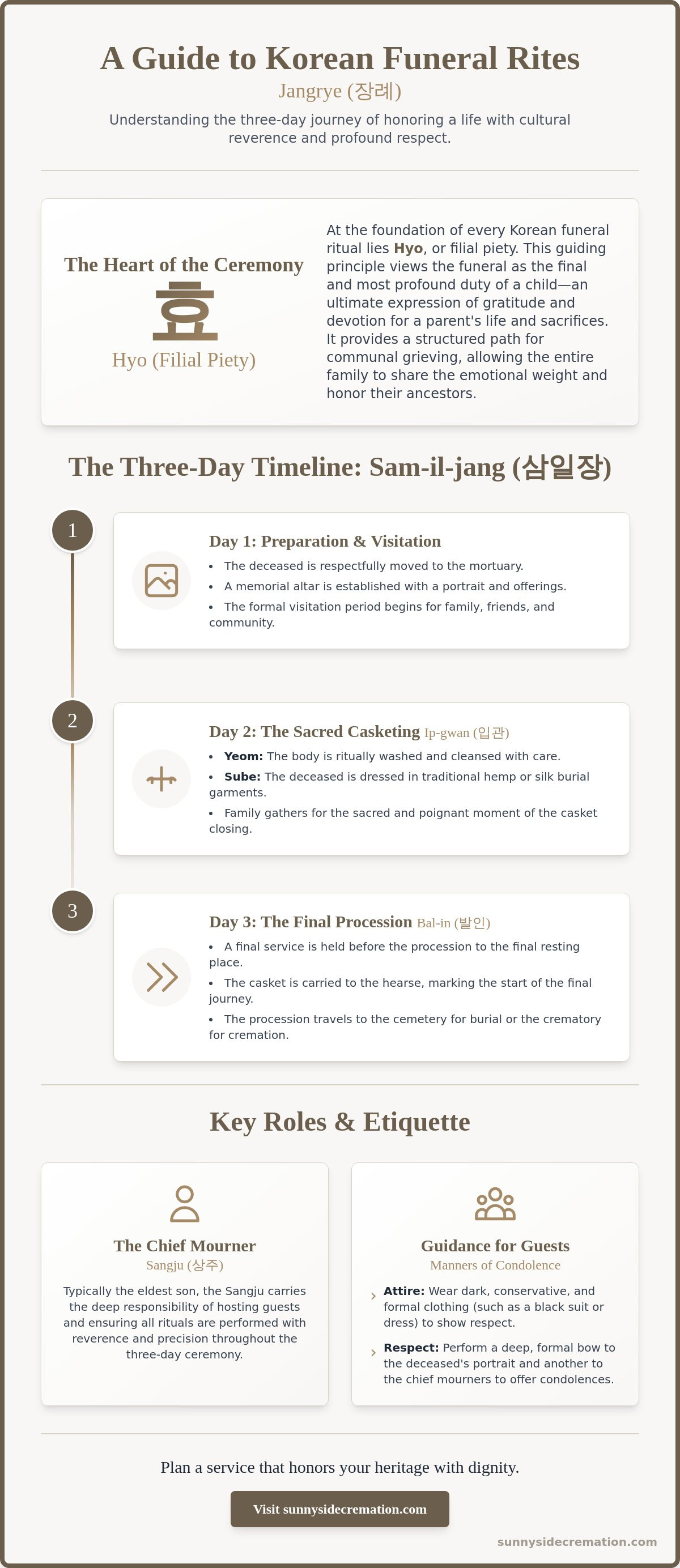
At the foundation of every ritual lies Hyo, or filial piety. In Korean culture, providing a dignified and meticulous funeral is seen as the ultimate duty of a child. It's the final opportunity to show gratitude for a parent's life and sacrifices. These rites aren't solitary; they provide a structured path for communal grieving, allowing the entire family and social circle to share the emotional weight. Traditionally, the concept of pungsu-jiri, or geomancy, guided the placement of the final resting place to ensure the deceased's life-energy remained in harmony with nature. While modern logistics have changed how we choose locations, the desire for harmony and peace remains a central focus for families today.
Traditional vs. Contemporary Korean Funerals
In the past, these ceremonies were village-wide events held at the family home, often lasting three to seven days. Today, most families in Orange County utilize professional mortuary spaces to manage the practical details. Even in this fast-paced environment, the core elements of the Jangrye remain essential. The sincerity of the bowing, the presence of the family altar, and the specific attire for the chief mourners continue to be preserved. Families in Buena Park, Fullerton, and Garden Grove often find that modern Korean funeral services Buena Park families choose allow them to focus on the emotional significance of the day. A steady guide manages the complex cultural and legal requirements of Southern California while keeping the family's heritage at the center of the service.
The Three-Day Funeral Timeline: Rituals and Procedures
The Sam-il-jang, or three-day funeral, remains the standard for mourning in Korean culture. It provides a structured space for the family to move from the initial shock of loss toward a place of peaceful farewell. On the first day, the focus is on immediate preparation. The body is moved to the mortuary, and the memorial altar is established with care. This marks the start of the visitation period, where the community gathers to share the family's burden of grief. Choosing the right Korean funeral services Buena Park offers ensures that these initial steps are handled with the quiet efficiency and respect they deserve.
The second day is often the most emotionally significant, centered around the formal casketing and continued visitation. Finally, the third day concludes with the Bal-in, or the funeral procession. This is the journey to the final resting place, whether that involves a burial at a local memorial park or a service at a crematory. Each day serves a specific purpose in helping the living honor the dead while finding their own path toward healing.
The Ip-gwan: The Sacred Casketing Ceremony
The Ip-gwan is a profound ritual that requires a gentle, experienced hand. It begins with the Yeom, which is the ritual washing of the deceased. Afterward, the loved one is dressed in Sube, traditional burial garments made of fine hemp. These garments represent a return to nature and a dignified transition to the next life. Witnessing the final closing of the casket is a heavy, sacred moment for the family. It's an essential step for closure. When you work with Korean funeral services Buena Park families rely on, the staff provides the professional care needed to facilitate this rite with absolute reverence and sensitivity.
The Role of the Sangju (Chief Mourner)
The Sangju, or chief mourner, is typically the eldest son. His role is one of stewardship and deep responsibility. He is the primary host for the three days, ensuring every guest is greeted and every ritual is performed correctly. Historically, the importance of these duties was so great that it influenced the architecture of the Royal Tombs of the Joseon Dynasty, which reflect the Confucian values of filial honor.
The Sangju is often identified by specific mourning attire, such as a hemp hat or a traditional armband. Women in the family may wear a small white ribbon in their hair as a sign of their loss. While the Sangju leads the rites, the entire family supports him by hosting visitors and managing the altar offerings. If you're feeling overwhelmed by these cultural expectations, choosing a Korean Funeral Package can provide the steady guidance and logistical support your family needs to focus on your loved one's legacy.
Korean Funeral Etiquette for Guests and Visitors
Attending a funeral is a profound act of community support. It's natural to feel a bit of anxiety about doing the right thing, especially when you're unfamiliar with specific cultural customs. When visiting Korean funeral services Buena Park families host, the most important thing to bring is your sincere presence. Your arrival tells the grieving family they aren't walking this path alone. Following established etiquette provides a sense of order and shows deep respect for the legacy of the person who has passed. Providers of Korean funeral services Buena Park residents trust understand that these social nuances matter and help create a space of shared comfort.
Start with your appearance. Dark, conservative clothing is the standard. While black is the preferred choice for both men and women, navy or dark grey are acceptable alternatives. The goal is to remain inconspicuous, ensuring the focus stays entirely on the memorial. When you enter the funeral hall, keep your voice low. If you speak with the Sangju, keep your words of comfort brief. A simple expression of sympathy is often more powerful than a long conversation during such an emotionally taxing time. Every gesture in the funeral hall is a quiet conversation between the community and the bereaved.
The Bowing Ritual: Step-by-Step
The Jeol, or traditional deep bow, is a cornerstone of Korean mourning. When you approach the altar, you'll first offer incense or a white chrysanthemum. If you're offering incense, light a single stick and place it in the burner. Don't blow it out with your breath; instead, gently wave your hand to extinguish the flame. Afterward, you'll perform two full bows toward the portrait of the deceased. These are deep bows where you kneel and bring your forehead toward the floor. After these two bows, you'll stand and perform a single half-bow toward the family. This distinguishes the reverence given to the departed from the respect shown to the living.
It's helpful to know that historical funerary figures and rituals often blend various spiritual traditions, including Confucian and Buddhist influences. If your own faith or personal beliefs prevent you from bowing, it's perfectly acceptable to stand in a moment of silent prayer or a respectful head bow instead. The family will appreciate the sincerity of your gesture regardless of the specific form it takes. Sincerity is the heart of the ritual.
Offering Condolence Money (Jo-uigeum)
Providing Jo-uigeum is a practical way to show solidarity. This gift helps the family manage the significant costs of the three-day service. When choosing an amount, it's customary to select a number that starts with an odd digit, such as $50, $70, or $100. Odd numbers are traditionally seen as auspicious and balanced in this context. Place the cash in a plain white envelope. Write your name clearly on the back, usually vertically on the left side, so the family can keep accurate records of who visited. You'll typically find a small desk or a collection box near the entrance of the funeral suite. Place your envelope there before entering to greet the family.
The Altar, Food Offerings, and Modern Religious Variations
The memorial altar serves as the visual and spiritual anchor during the three days of mourning. It's a space designed to bridge the gap between the physical world and the legacy of the person who has passed. Typically, a large portrait of the deceased is placed at the center, surrounded by a delicate arrangement of white chrysanthemums. In Korean culture, these flowers are the primary symbol of grief and purity. For those coordinating Korean funeral services Buena Park families rely on, this altar becomes the focal point where visitors offer their final respects. It's a place of quiet reflection where the family's devotion is most visible.
While the visual elements remain fairly consistent, the spiritual rituals performed at the altar often reflect a family's specific religious path. Many modern Korean-American families navigate a unique "hybrid" experience. They might maintain the traditional Confucian structure of the service while infusing it with Christian, Catholic, or Buddhist beliefs. This blend allows families to honor their cultural heritage without compromising their personal faith. Every detail, from the incense used to the prayers spoken, is a reflection of this delicate balance.
The Jesa Table: Symbols and Meaning
The practice of Jesa, or traditional food offerings, is a profound way to show filial honor. The table is carefully prepared with specific items that carry deep symbolic weight. You'll often see bowls of rice, seasonal fruits like pears or apples, and dried fish. It's also common to include the favorite foods of the loved one as a personal tribute. The ritual of pouring liquor or tea is an act of deep respect, symbolizing the "feeding" of the spirit.
In many Christian and Catholic Korean households, these food rituals are subtly adapted. Instead of a literal offering to the spirit, the food is often shared among guests as a fellowship meal. This transition turns the ritual into a communal celebration of life and shared memory. If you're looking for guidance on how to best represent your family's traditions, exploring a Korean Funeral Package can help you understand the various ways these offerings can be personalized.
Navigating Religious Differences
Faith often dictates the rhythm of the funeral service. In Buddhist rites, the focus is on the peaceful transition of the soul, often featuring sutra chanting led by a monk and rituals centered on the concept of reincarnation. Christian and Catholic services, however, emphasize the hope of heaven through scripture readings, hymns, and sermons. These services focus on the comfort of the living and the promise of eternal peace.
We believe that spiritual accuracy is essential for true peace of mind. Our team maintains close relationships with local pastors, priests, and monks throughout Orange County to ensure every ritual is performed correctly. Whether you're planning a traditional Buddhist ceremony or a modern Christian service, we provide the steady guidance needed to coordinate with spiritual leaders. This ensures that the Korean funeral services Buena Park residents choose are both culturally resonant and spiritually fulfilling.
Planning a Korean Funeral Service in Buena Park and Orange County
Choosing the right partner for Korean funeral services Buena Park families trust means finding a guide who understands the specific geography of our community. Families in Buena Park, Fullerton, and Garden Grove often face the challenge of coordinating intricate cultural rituals within the modern landscape of Southern California. Local expertise isn't just about knowing the roads; it's about understanding the specific needs of the local Korean-American community. A family-owned mortuary brings a level of empathy and personal attention that larger corporations often miss. We act as a steady presence, ensuring that every detail of your loved one's heritage is honored with precision and grace.
Planning these services requires a delicate balance of logistics and legacy. It's about more than just a single day; it's about creating a series of moments that allow for communal healing. By focusing on the unique needs of our local families, we provide a sense of security during a time of emotional vulnerability. You don't have to manage these complexities alone. With the right support, you can focus on what truly matters: honoring the life and memory of your loved one.
Coordinating with Forest Lawn and Rose Hills
Many families in Orange County choose final resting places at major memorial parks like Forest Lawn or Rose Hills. These locations are beautiful and offer specific sections tailored to the needs of Korean families, often designed with favorable geomancy in mind. However, moving from a traditional three-day service to a graveside burial at these expansive parks requires meticulous professional coordination. We manage the logistics of the funeral procession and the transition to the cemetery, reducing the physical and emotional stress on the chief mourners. This seamless coordination ensures that the final journey is as dignified and peaceful as the rituals that preceded it.
Preserving Heritage for the Next Generation
One of the most meaningful gifts you can leave for your family is a clear roadmap for the future. We often encourage the value of funeral pre-planning for Asian families as a vital tool for cultural preservation. By documenting your wishes today, you ensure that specific traditions, religious preferences, and family rites are carried out exactly as intended. It removes the burden of difficult decision-making from your children during their time of grief, providing them with a clear path forward.
If you're currently in the process of organizing a service, you can find detailed guidance in our resource on how to plan a Korean funeral in California. This step-by-step guide helps you navigate the legal and cultural requirements specific to our state. Sunnyside stands as a reliable partner in a landscape that can often feel uncertain. We invite you to start a compassionate consultation for Korean funeral services Buena Park families rely on, allowing us to provide the gentle professionalism your family deserves during this sacred time.
Honoring a Legacy with Cultural Reverence
Preserving the profound meaning of Korean funeral rites is a beautiful way to express your love and gratitude. By understanding the three-day Sam-il-jang timeline and the quiet power of rituals like the Jeol bow, you can navigate this difficult time with confidence. These traditions provide a bridge between generations, ensuring that your loved one's spirit is honored with the dignity it deserves. Finding the right Korean funeral services Buena Park families can rely on means choosing a partner who values these traditions as much as you do.
As a family-owned and operated mortuary, we bring a deep sense of empathy to every service. We offer specialized Korean Funeral Packages and provide experienced coordination with local memorial parks like Rose Hills and Forest Lawn. Our goal is to serve as a steady guide, managing every logistical detail so you can focus on your family's healing. Please contact Sunnyside Cremation and Funeral for compassionate guidance on Korean funeral rites. We're here to help you create a farewell that truly reflects your heritage and your heart. You aren't alone on this journey.
Frequently Asked Questions
What is the significance of white chrysanthemums at a Korean funeral?
White chrysanthemums are the traditional symbol of grief, purity, and the cycle of life. You'll see them arranged delicately around the portrait of the deceased on the memorial altar. These flowers represent the sincerity of the family's mourning and provide a serene, respectful atmosphere for all who visit. Guests often place a single flower on the altar as a quiet, meaningful gesture of farewell and respect for the life that was lived.
How long does a traditional Korean funeral service last in the US?
A traditional service typically follows the three-day Sam-il-jang timeline, though many families in Southern California now choose a condensed one or two-day schedule. The three-day structure allows for a distinct period of preparation, visitation, and the final procession. Choosing Korean funeral services Buena Park families trust ensures that regardless of the duration, the essential rituals are preserved with dignity, care, and absolute cultural reverence.
Can I choose cremation if I want to follow Korean funeral rites?
Yes, cremation is a very common choice for Korean families today and is fully compatible with traditional rites. In California, 7 out of 10 people choose cremation, and this preference is widely reflected within the Korean-American community. The rituals of the three-day mourning period, the altar offerings, and the final procession can all be beautifully adapted to a cremation service, providing the same level of honor and respect.
What should I say to the family at a Korean funeral service?
A simple, sincere expression of sympathy is most appropriate. You might say, "I am so sorry for your loss," or use the traditional Korean phrase "Samga-go-in-ui-myeong-bogeul-bimnida," which translates to a wish for the deceased's peaceful transition. Keep your words brief and gentle. Your presence alone is the most powerful comfort you can offer to the Sangju and the grieving family during this difficult and emotionally heavy time.
Why do mourners wear a white ribbon or hemp clothing?
These items are traditional markers of the family's mourning status. Women often wear a small white ribbon in their hair, while men wear a specific armband or a hemp hat. Traditionally, hemp clothing was worn to represent a return to nature and the humility of the bereaved. These symbols help guests identify the chief mourners and serve as a visual testament to the family's devotion and shared grief throughout the entire three-day service.
Is it okay to attend a Korean funeral if I am not Korean or religious?
Yes, your attendance is a welcomed and deeply appreciated sign of support. You don't need to be Korean or share the family's religious beliefs to show respect. If you feel uncomfortable with specific rituals like bowing, a simple moment of silent reflection is a perfectly acceptable alternative. The family values your sincerity and the effort you've made to share in their loss, as your presence helps to lighten their heavy burden.
What happens during the Bal-in (funeral procession)?
The Bal-in is the formal departure from the funeral hall toward the final resting place. This procession marks the end of the mourning period and the start of the journey to the cemetery or crematory. It's a solemn moment where the casket is moved with great care. When coordinating Korean funeral services Buena Park families rely on, this transition is managed with quiet precision to ensure a peaceful and dignified final journey.


