

A father's eulogy isn't a chronological list of dates and achievements; it's a bridge built from small, quiet moments that connect his legacy to your family's future. It's natural to feel overwhelmed by the pressure of summarizing a lifetime in a few minutes, especially when you don't consider yourself a writer or fear your voice might falter. You want to represent the whole family fairly while navigating the deep, personal waves of your own loss. Learning how to write a eulogy for a father can feel like an impossible task when you're also managing the weight of your own grief.
We understand that this moment requires both strength and sensitivity. Our goal is to help you transform those cherished memories into a meaningful tribute that honors his unique cultural heritage and personality. By focusing on the stories that truly defined him, you can create a speech that feels both deeply personal and highly respectful. This step by step guide provides a clear path forward, helping you decide what to include and how to find a sense of closure through the writing process. You'll move from a place of uncertainty to a completed, respectful speech you can be proud to deliver.
Key Takeaways
- Shift your perspective from writing a dry biography to creating a "gift of remembrance" that captures your father's true spirit.
- Use the 15-minute "Memory Dump" technique to gather heartfelt stories without the pressure of initial self-editing or perfect grammar.
- Discover how to write a eulogy for a father that weaves in cultural traditions and honors his unique journey as a pillar of your community.
- Apply the "Rule of Three" to organize your tribute around a few core traits, ensuring the speech is structured, dignified, and easy to follow.
- Master practical delivery tools, such as specific note formatting and breathing techniques, to help you speak with calm confidence during the service.
Understanding the Heart of a Father's Eulogy
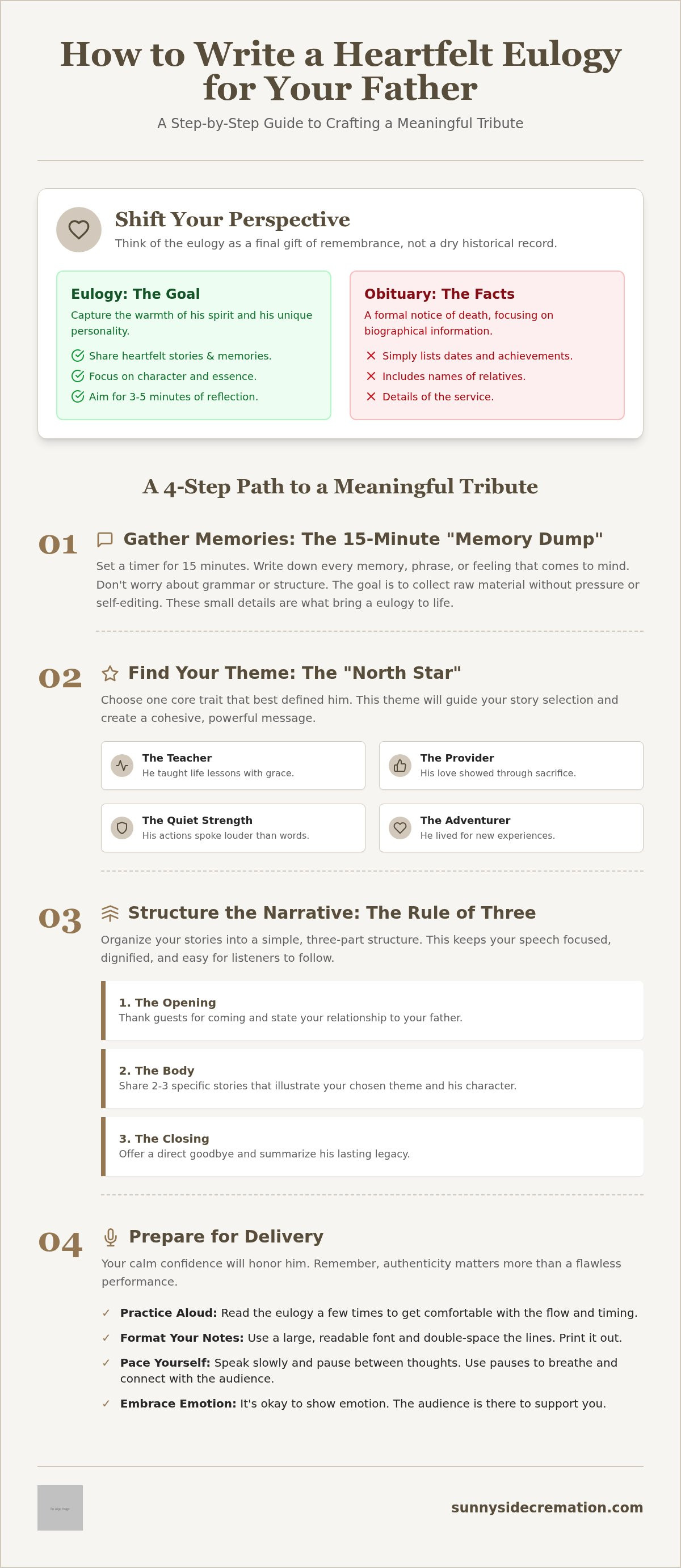
Being asked to speak at your father’s service is a profound honor, yet it often arrives during your most vulnerable moments. You might feel the weight of his entire legacy resting on your shoulders. It's helpful to remember that a eulogy isn't a formal performance or a historical record. Instead, think of it as a gift of remembrance offered to those who loved him. While an obituary focuses on the cold facts of a life, such as dates and titles, the eulogy captures the warmth of his spirit. Your goal isn't to be perfect. Aim for three to five minutes of focused, heartfelt reflection that brings his essence back into the room for one last, collective embrace.
The Role of the Eulogist
As the person chosen to speak, you're acting as the family's collective voice. This doesn't mean you have to mention every single cousin or coworker. It means you're sharing a perspective that resonates with the love everyone felt for him. You don't need professional oratory skills or a perfectly polished script to be effective. Authenticity always carries more weight than a flawless delivery. Remember that every person in the audience is rooting for you and wants you to succeed because they share in your loss.
Finding Your Primary Theme
When you're figuring out how to write a eulogy for a father, the most effective approach is to identify a single "north star" or theme. This core character trait acts as a guide, helping you decide which stories to keep and which to set aside. If you try to cover everything, the message can become scattered. Instead, choose one trait that defined him best. This theme provides a steady hand as you navigate your memories.
Consider these common themes to help structure your thoughts:
- The Teacher: He showed you how to fix a car, how to treat others with kindness, or how to face hardship with grace.
- The Provider: His love was expressed through decades of hard work, quiet sacrifice, and a steady, reliable presence.
- The Adventurer: He lived for the open road, new experiences, and the infectious joy of discovery.
- The Quiet Strength: He didn't say much, but his actions spoke volumes about his integrity and devotion.
Focusing on one theme ensures your tribute feels cohesive and meaningful for everyone gathered in Garden Grove to honor him. It allows you to transform a vast lifetime into a poignant, manageable narrative that truly reflects the man you knew.
Gathering Memories and Structuring the Narrative
The first step in learning how to write a eulogy for a father is often the most daunting: staring at a blank page. To overcome this, try the "Memory Dump" technique. Set a timer for 15 minutes and write down every memory, phrase, or image that comes to mind. Don't worry about grammar, spelling, or flow. Just let the thoughts pour out. You might remember the specific way he brewed his morning coffee, the worn texture of his favorite recliner, or a catchphrase he used whenever he was proud of you. These small, seemingly insignificant details are often what make a tribute feel most alive.
Once you have your initial thoughts, reach out to siblings, cousins, or long time friends. They might offer a perspective on his early career or childhood that you never knew. These conversations can fill in the gaps and ensure you're representing his full journey. When it comes to organizing these pieces, you have two main options. A chronological approach works well for a man whose life followed a very clear, storied path. However, a thematic structure often feels more personal. If he was known for his resilience, you can group different life events from various decades around that single trait to show its consistency. While you focus on these personal reflections, our team can handle the professional funeral coordination so you have the quiet space needed to write.
The Three-Part Structure
A simple three part structure keeps your thoughts organized and prevents the speech from wandering. Start with an opening that briefly thanks guests for attending and clearly states your relationship to your father. The middle section is the heart of the eulogy, where you share two or three specific stories that illustrate your chosen theme. Finally, use the closing to offer a direct goodbye to your father and summarize the lasting legacy he leaves behind for your family.
Using Sensory Details
Sensory details act as a bridge for the audience, helping them see the man you knew. Instead of simply saying he was a hard worker, describe the sight of his calloused hands or the faint smell of old spice and peppermint that always followed him. If he was a craftsman, mention the sound of his saw in the garage. When you link these specific details to a lesson he taught you, like the value of a day's labor or the importance of patience, the memory becomes a meaningful teaching moment for everyone present.
Writing Techniques for a Sincere and Dignified Tribute
Choosing the right tone is a delicate balance. Many people wonder if a service should be strictly solemn or a celebration of life. Often, the most moving tributes are a thoughtful blend of both. You're acknowledging a profound loss while honoring the vibrant personality that existed. When considering how to write a eulogy for a father, remember the "Rule of Three." This technique suggests that grouping your thoughts into three core traits or three specific stories creates a natural rhythm. It provides a structure that feels complete without becoming overwhelming for you to deliver. Finding the right words for how to write a eulogy for a father becomes easier when you prioritize sincerity over perfection.
Not every father-child relationship is simple, and it's okay to acknowledge that reality with grace. If your relationship was strained, you don't need to invent a fairy tale or feel pressured to present a perfect image. Instead, focus on his humanity, his hard work, or the shared experiences that shaped your life. You can speak about his complexities with dignity, choosing words that honor the man he was without compromising your own truth. This approach provides a sense of peace for you and respects the diverse experiences of everyone in the room.
Balancing Humor and Pathos
Laughter is a form of healing in a funeral setting. Including a classic "Dad joke" or a story about his legendary stubbornness can provide a much needed moment of connection for the family. These lighthearted moments make the tribute feel authentic and human. However, it's vital to pivot back to the emotional weight of the occasion. Use humor as a brief window into his personality before returning to the core message of his legacy and the love he left behind.
Writing for the Ear, Not the Eye
A eulogy is meant to be heard, not just read. Use short sentences that are easy to breathe through when you're feeling emotional. Avoid complex words that might be hard to pronounce if your voice wavers under stress. The most important step is reading your draft aloud several times. This helps you find any trip-up points where the phrasing feels unnatural or the sentences are too long. If you can't say a sentence in one steady breath, it's a sign you should break it into two smaller ones.
Cultural Nuance: Honoring Traditions in Orange County
Orange County is home to vibrant, diverse communities where tradition and modern life frequently intersect. When you're learning how to write a eulogy for a father who lived as a bridge between two worlds, the task takes on a deeper layer of meaning. You aren't just reflecting on a parent; you're often honoring a pioneer who navigated an immigrant journey or served as a pillar for a specific community in Southern California. In many Chinese funeral services, for example, the concept of filial piety is central. Your words should reflect this deep rooted respect for lineage and the sacrifices he made to establish your family's foundation here.
Addressing a multi-generational audience requires a thoughtful balance. In Garden Grove and surrounding areas, services often include elders who prefer Mandarin, Korean, or Vietnamese, alongside younger family members who primarily speak English. You might consider including a few key phrases or a traditional proverb in his native tongue. This small gesture ensures that every attendee feels the emotional weight of your tribute, regardless of their primary language. It respects his roots while ensuring his legacy is understood by the next generation.
The Father as a Cultural Bridge
Many fathers in our community took great pride in preserving their heritage. You can highlight his role in this preservation by mentioning specific cultural rites he valued or his involvement in local Orange County community groups. Whether he was active in a local temple, a language school, or a neighborhood association, these details illustrate his commitment to his identity. If you need assistance balancing these traditions with modern arrangements, our staff provides specialized multicultural funeral guidance to support your family.
Addressing Diverse Faiths
Faith often provides the framework for a dignified farewell. If your father was devout, incorporating brief prayers, mantras, or scriptures that were significant to him can be very healing. For those following Buddhist funeral traditions, you might focus on themes of transition and merit. Similarly, navigating the eulogy within a Hindu cremation service requires an understanding of sacred rites and the soul's journey. It's always a good idea to coordinate with your religious leader on the timing of your speech to ensure it fits harmoniously within the traditional liturgy. This collaboration ensures the service remains a seamless, respectful tribute to his life and beliefs.
Preparation and Delivery with Confidence
Once the words are on paper, your focus shifts from composition to the physical act of speaking. Preparing how to write a eulogy for a father involves more than just selecting the right stories; it requires setting yourself up for success on the day of the service. Start with the physical format of your notes. Print your speech in a large, 14 point or 16 point font to make it legible even if your eyes tear up. Double-spacing the lines ensures you don't lose your place when you look up to acknowledge the audience. Only use one side of the paper to avoid the distracting sound of rustling pages during a quiet, reflective moment.
Managing your emotions during the delivery is a common concern. The "Pause and Breathe" technique is your most reliable tool. If a wave of emotion hits, simply stop. Take a slow, deep breath and wait for the feeling to settle. The audience expects you to be moved, and these pauses often add a layer of sincere gravity to your tribute. It's also wise to have a backup reader ready, perhaps a sibling or close friend, who can step in if you find you cannot finish. Providing a printed copy of the speech for the funeral program is another thoughtful way to ensure your message is shared with everyone present.
Practicing Your Delivery
Apply the 3-time rule to build your confidence: practice once to get comfortable with the content, once to check your timing, and a final time to navigate the emotional peaks. Recording yourself on a phone can reveal if you're speaking too quickly, which is a common reaction to nerves. During the actual service, identify one "friendly face" in the front row. Locking eyes with someone supportive can ground you when the room feels overwhelming, helping you maintain a steady, conversational pace.
Coordinating with the Venue
Logistics play a vital role in your peace of mind. If the service is held at a local chapel or a memorial park like Forest Lawn, check the microphone setup in advance to ensure your voice carries clearly. Our Sunnyside Cremation and Funeral team can help you confirm your specific time slot and ensure your speech fits harmoniously within the overall ritual flow. Proper coordination with your funeral pre-planning director helps eliminate technical surprises, leaving you free to focus entirely on honoring your father's unique legacy.
Honoring His Legacy with Peace and Clarity
Writing a final tribute is a journey of both reflection and healing. By focusing on the unique spirit of your father rather than a dry list of facts, you create a gift that resonates with everyone who loved him. Remember to lean on a central theme and the "Rule of Three" to keep your thoughts organized and impactful. While the process of learning how to write a eulogy for a father can feel daunting, your sincerity and love will always be the most important elements of the speech.
You don't have to navigate these difficult moments alone. As a family owned and operated provider in Orange County, we specialize in multicultural traditions and offer compassionate coordination with memorial parks like Rose Hills and Forest Lawn. Our team is here to manage the intricate details so you can focus on what matters most: honoring your father's memory. Let Sunnyside Cremation and Funeral support your family through this journey. Trust in your voice and the stories you share; they are the lasting legacy he leaves behind.
Frequently Asked Questions
How long should a eulogy for a father be?
Most tributes should last between three and five minutes, which typically equates to 500 to 1,000 written words. This duration provides enough time to share meaningful stories without disrupting the overall flow of the service. If you are coordinating with our team in Garden Grove, we can help you understand the specific timing required for the ritual. Keeping your speech focused ensures that his core legacy remains the clear highlight for everyone attending.
Is it okay to cry while delivering a eulogy?
It is completely natural and acceptable to show emotion while speaking at a funeral. Crying is a sincere expression of your love and the weight of your loss. If you feel overwhelmed, simply pause and take a steady breath before continuing. The audience is there to support you and understands the difficulty of learning how to write a eulogy for a father while navigating your own personal grief. Having a glass of water nearby can also help you regain your composure.
Can two siblings share the delivery of a eulogy?
Sharing the tribute is a beautiful way to represent the collective voice of the family. You might choose to alternate stories or have one sibling handle the introduction while the other provides the closing remarks. This collaborative approach reduces the pressure on a single speaker and highlights the different facets of your father's life. It's a common and respected practice in the multicultural services we coordinate across Orange County, from Anaheim to Westminster.
What if I had a difficult or estranged relationship with my father?
You can still deliver a dignified tribute by focusing on his broader humanity and the impact he had on the community. You aren't required to present a perfect image of your relationship; instead, speak about his heritage, his professional hard work, or the resilience he showed. Honoring his legacy with grace provides a sense of closure for you and the family. Our staff can offer gentle guidance on maintaining a respectful tone during these complex situations.
Should I include "inside jokes" in the speech?
Inside jokes are welcome if they are briefly explained so the wider audience feels included in the memory. A touch of humor often brings a sense of warmth and authenticity to the service, making the tribute feel more personal. However, ensure the joke reflects his character and doesn't diminish the solemnity of the occasion. Use these moments as brief windows into his unique personality, allowing everyone present to share in a smile as they remember him.
Can I use a poem or a song lyric in the eulogy?
Incorporating a poem or a meaningful lyric is a thoughtful way to express feelings that are sometimes hard to put into your own words. Choose a piece that resonates with his values or his favorite cultural traditions. This technique is particularly effective when learning how to write a eulogy for a father that honors a specific heritage or faith. Ensure the selection is brief and clearly linked to the primary theme of your reflection to maintain clarity.
What should I wear to deliver the eulogy at a multicultural service?
Attire often depends on the specific traditions being observed, such as Korean, Chinese, or Hindu rites. While conservative, dark clothing is a standard sign of respect in many settings, some cultures have specific mourning colors or garments. We recommend checking with our Mandarin speaking staff or your family elders to ensure your choice aligns with the customs of the service in Garden Grove. Dressing with reverence honors both your father and your family heritage.
How do I start the first sentence of the eulogy?
Start by acknowledging the people gathered and clearly stating your relationship to your father. A simple opening like, "Thank you all for being here today to honor my father," is both clear and respectful. You might also choose to open with a brief, defining quote or a very short story that immediately introduces his character. This sets a steady tone for the rest of your tribute and helps you find your rhythm as you begin to speak.


