
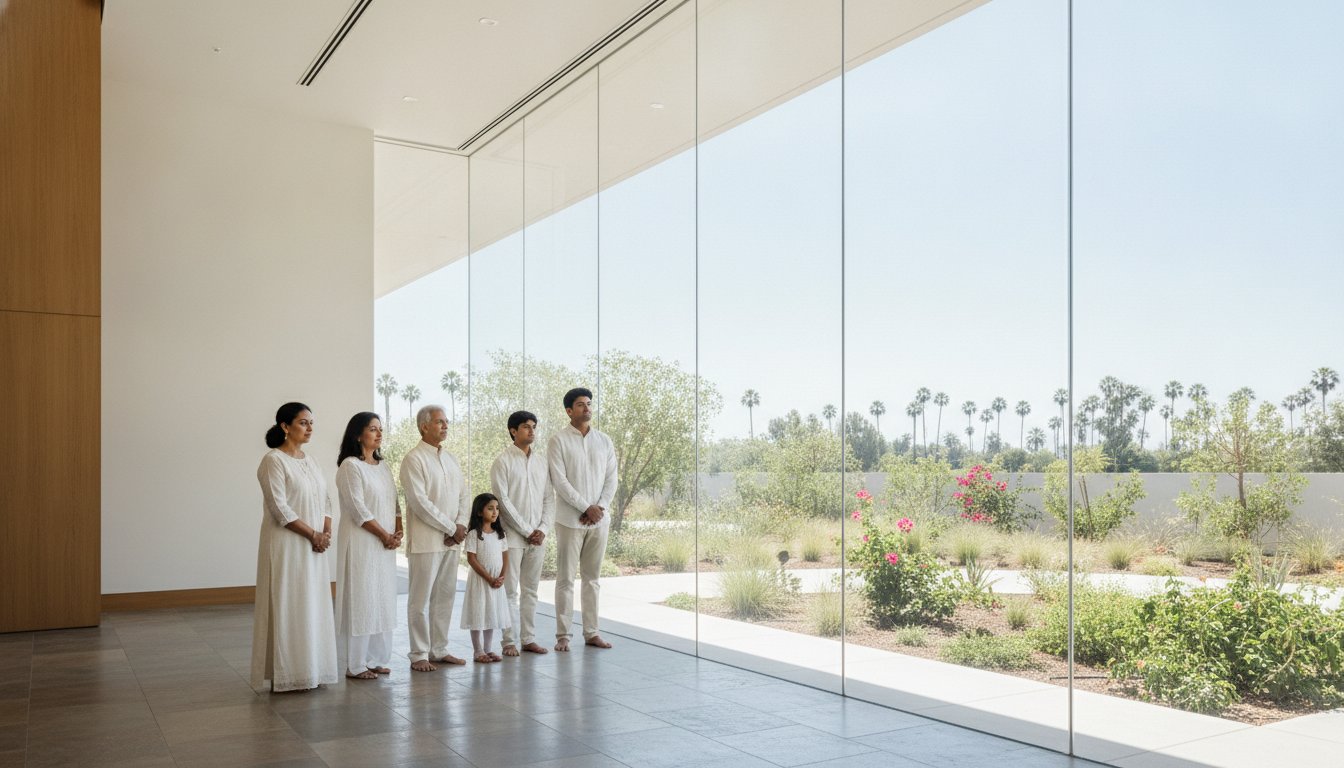
Imagine the weight of trying to honor the traditional 24-hour timeline for Antyesti while facing the reality of California's administrative delays. It's a deeply personal moment where sacred duties can sometimes feel at odds with modern state regulations. Learning how to plan a Hindu funeral in California requires a delicate balance of spiritual devotion and proactive legal coordination. You deserve a supportive hand to ensure that the Mukhagni is not just a procedure, but a vital and respected step in the soul's journey.
We understand the anxiety that arises when searching for a crematory that welcomes family participation or when questioning the rules for scattering ashes at sea. It's natural to feel overwhelmed by health codes and permit requirements during such a vulnerable time. This guide provides a clear, steady path forward. We'll help you navigate the logistical complexities of the Pacific coastline and California health departments while maintaining the sanctity of Vedic traditions. From coordinating with a priest to managing death certificate timelines, we'll ensure your loved one's transition is handled with the reverence it deserves.
Key Takeaways
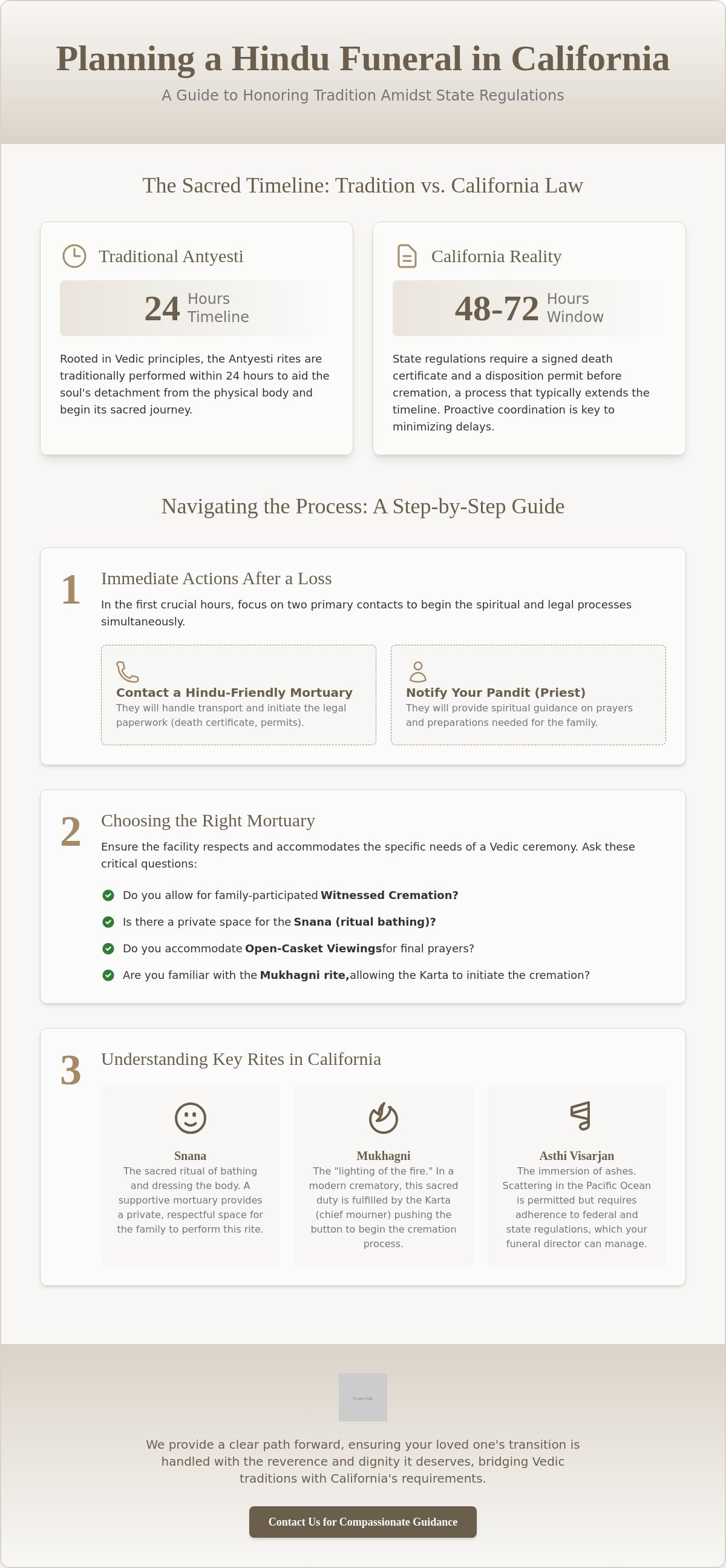
- Understand the balance between the traditional 24-hour Antyesti timeline and the practical 48-72 hour window required for California legal filings.
- Learn the essential steps for how to plan a Hindu funeral in California, including selecting a mortuary that honors witnessed cremation and open-casket viewings.
- Discover the legal protocols for the Mukhagni ceremony to ensure the Karta can lead the sacred rite in compliance with state health and safety codes.
- Clarify the specific regulations for Asthi Visarjan to ensure your ash scattering ceremony in the Pacific Ocean meets federal and state requirements.
- Gain a clear roadmap for coordinating between your Pandit and the funeral home to ensure every sacred ritual is performed with dignity and grace.
Understanding the Sacred Timeline: Antyesti in California
The passing of a loved one is a sacred transition, marking the final stage of the soul's journey on earth. In the Hindu tradition, life is a series of meaningful sacraments, or Samskaras. The final of these is the Antyesti funeral rites, a ceremony designed to help the soul detach from the physical body and begin its journey toward the ancestors. This process is deeply rooted in the belief that the physical form is temporary, while the soul is eternal. Central to this belief is the requirement for a prompt cremation, traditionally occurring within 24 hours of passing.
When you are learning how to plan a Hindu funeral in California, you'll quickly find that state regulations often introduce a different pace. While the desire to honor the 24-hour window is strong, California law requires a certified death certificate and a disposition permit before any cremation can take place. This administrative process usually extends the timeline to 48 or 72 hours. During this period, the Karta, or chief mourner, acts as the spiritual steward for the family. It's a time for the "last look" and the Snana, the ritual bathing and preparation of the body, which must be conducted with the utmost dignity in a peaceful environment.
The Conflict of Tradition and Regulation
California’s health codes are strict. A doctor or medical examiner must sign the death certificate electronically before the county issues a permit for cremation. This is often the primary cause of delay. To help move things along, keep your loved one’s primary physician's name and contact information easily accessible. Providing this to your funeral director immediately can save precious hours. A mortuary experienced in Hindu traditions understands this urgency. They act as a bridge, working tirelessly with medical offices to secure signatures as quickly as possible while ensuring the body is cared for in accordance with Vedic principles.
Initial Steps After a Loss
The first few hours are often the most difficult. Your priority should be contacting a mortuary that specializes in Hindu services. They will handle the transport of your loved one and begin the legal paperwork. Simultaneously, notify your Pandit or priest. They will guide you through the specific prayers and preparations needed before the body leaves the home or arrives at the facility. If you plan to have an initial viewing at home, clear a quiet space where family can gather in prayer. This early coordination ensures that the logistical requirements of the state don't overshadow the spiritual needs of your family.
How to Choose a Hindu-Friendly Mortuary in Southern California
Finding a partner who understands the spiritual weight of your traditions is the most critical step in learning how to plan a Hindu funeral in California. Not every funeral home is equipped to handle the specific requirements of a Vedic ceremony. You need a space that feels like a sanctuary, where the staff treats your loved one with the same reverence you do. It's about finding a guide who recognizes that these rituals are not just procedures, but essential steps in the soul's eternal journey.
A primary consideration is whether the facility allows for witnessed cremation. In many standard crematories, the process happens behind closed doors. For a Hindu family, being present for the start of the cremation is a vital part of the soul's release. You should also ensure the mortuary is comfortable with open-casket viewings. This allows for the final prayers and the offering of flowers or rice. Staff should be intimately familiar with the Mukhagni, the ritual lighting of the funeral pyre. In a modern setting, this often involves the Karta pressing the button to begin the process. This moment requires patience and profound respect from the technicians involved.
Finally, ask about the Snana. Traditional rites often involve the family washing and dressing the body in simple, dignified clothing. A truly supportive mortuary will provide a private, respectful environment for this ritual, offering guidance without intruding on the family's sacred duties.
Essential Facility Requirements
The physical space matters deeply. Look for a location that provides a gathering area for family members to perform final rites together. Because Hindu ceremonies often involve incense or small lamps, the facility must have safety protocols and ventilation that accommodate these elements without disruption. Proximity is also a practical concern. Choosing a location near major Southern California hubs like Garden Grove, Anaheim, or Irvine can ease the burden on grieving family members who are traveling to participate in the services.
Cultural Sensitivity and Language
Working with a family-owned mortuary often provides a level of multicultural understanding that larger corporations may lack. You want a team that respects the specific chanting required or the periods of profound silence that mark the ceremony. At Sunnyside Cremation and Funeral, we specialize in offering a dedicated Hindu Cremation Package that honors these nuances. Our goal is to serve as a calm presence, ensuring that every detail aligns with your family's values. If you are feeling uncertain about the next steps, exploring our pre-planning funeral contracts can offer a sense of peace and security for the future.
Step-by-Step Logistics for the Funeral Service
Organizing the final rites for a loved one involves a blend of ancient tradition and modern administrative requirements. While your heart is focused on the spiritual transition, there are practical milestones that must be met to ensure the ceremony proceeds without interruption. Navigating the logistics of how to plan a Hindu funeral in California requires a steady hand and a clear checklist to manage the details with grace and precision.
- Step 1: Secure Legal Documentation. Before any service can take place, the state requires a signed death certificate and a burial or transit permit. Your funeral director will handle the filing, but having the deceased's social security number and doctor's information ready will help avoid delays.
- Step 2: Align the Schedule. Coordinate with your Pandit to find an auspicious time for the ceremony. Once the timing is set, confirm the availability of both the mortuary chapel and the crematory's witnessing room.
- Step 3: Gather Ritual Items. Prepare the Puja Samagri well in advance. This includes items like sandalwood paste, ghee, incense, and fresh garlands.
- Step 4: Organize Transport. If you've chosen a service at a memorial park followed by cremation at a separate facility, ensure transportation is arranged for both the deceased and the immediate family.
- Step 5: Facilitate the Mukhagni. The final step of the service takes place at the crematory, where the Karta performs the final rites before the cremation begins.
Coordinating with Local Memorial Parks
Southern California is home to beautiful memorial grounds like Rose Hills and Forest Lawn. Many families choose these locations for a traditional viewing or a graveside prayer service. It's vital to distinguish between booking a chapel for the funeral and booking the crematory for the Mukhagni. Some parks have on-site crematories that allow for witnessing, while others may require transport to a specialized facility. Our team manages the coordination with Forest Lawn and Rose Hills to ensure your family can focus on the prayers rather than the paperwork. We help you bridge the gap between the large memorial park setting and the intimate needs of a Hindu ceremony.
The Puja Checklist
The spiritual purity of the ceremony depends on having the correct items ready for the Pandit. You'll need Gangajal (Ganges water), Tulsi leaves, honey, and yogurt for the final anointing. Traditionally, the deceased is dressed in simple white clothing, and mourners are also encouraged to wear white as a sign of respect and purity. In our modern world, we often help families arrange for livestreaming services. This allows relatives in India or other states to participate in the prayers in real-time, ensuring the entire community can offer their blessings for the soul's journey.
Witnessed Cremation: Honoring the Mukhagni in California
The Mukhagni represents the final act of love and duty a family performs for their loved one. It's the sacred moment when the soul is truly released from its earthly vessel, allowing it to continue its journey toward the ancestors. When you are learning how to plan a Hindu funeral in California, it's vital to know that the state's legal framework actually supports your right to be present for this transition. Specifically, California Health and Safety Code regulations allow crematories to host family members during the initiation of the process, provided the facility maintains specific safety and insurance standards. This legal protection ensures that your spiritual requirements aren't sidelined by administrative policies.
Many families worry that an industrial crematory will feel cold or clinical. However, a specialized facility transforms this space into a temporary temple for those final, precious minutes. There’s a common misconception that only the Karta, or chief mourner, is allowed to enter the room. In reality, most modern California crematories accommodate a small group of immediate family. This collective presence provides a sense of communal support that is essential for the grieving process. Choosing a witnessed cremation in Orange County offers the privacy and reverence needed for a dignified farewell.
What to Expect During a Witnessed Cremation
The transition from the chapel ceremony to the crematory floor is handled with a steady, quiet efficiency. Once the family arrives at the crematory, the staff provides a brief safety orientation to ensure everyone remains at a respectful distance from the equipment. The witnessed portion typically lasts between 15 and 30 minutes. During this time, the mortuary team acts as a silent guardian, ensuring the technical aspects are managed perfectly so the family can focus entirely on their prayers and the ritual of release.
Mukhagni: The Final Act of Devotion
In a modern setting, the Karta symbolizes the lighting of the pyre by pressing the button that starts the cremation unit. This act is performed with the guidance of the Pandit, who leads the family in specific mantras and prayers. While tradition often places the eldest son in this role, modern facilities are inclusive, allowing female family members and children to be present in the viewing area. This ensures that every person who loved the deceased can offer their final blessings. If you need assistance coordinating these sacred moments, our Hindu Cremation Package is designed to manage every detail with the utmost reverence.
Post-Cremation: Ash Scattering and Pre-Planning
The journey of the soul doesn't end at the crematory. In the Hindu tradition, the ritual of Asthi Visarjan, or the immersion of ashes in a moving body of water, is a profound final act of devotion. It symbolizes the return of the physical elements to nature and the liberation of the spirit. When considering how to plan a Hindu funeral in California, many families find peace in the vastness of the Pacific Ocean. While some still choose to ship cremated remains back to the sacred waters of the Ganges in India, the local coastline offers a dignified and accessible alternative that fulfills the spiritual requirement for immersion in a flowing body of water.
Following the cremation, the Karta usually collects the remains in a simple urn. This transition period is a time for quiet reflection and preparation for the final farewell. Whether you choose the shores of Southern California or a journey abroad, the focus remains on ensuring the soul's path is cleared with respect and adherence to Vedic principles. It's a delicate time that requires both spiritual focus and an understanding of local environmental protocols.
Legal Ash Scattering in California
California has specific regulations to protect its coastal waters. Federal law, enforced by the EPA, requires that all ash scattering in the ocean takes place at least three nautical miles from the nearest shoreline. It's important to remember that scattering ashes directly on California beaches is illegal. To ensure compliance, most families work with professional boat charters off the coast of Orange County or Los Angeles. These captains are familiar with the 3-mile limit and can provide the necessary coordinates for the required report that must be filed with the local registrar after the ceremony. These charters provide a serene, private environment where the Pandit can lead the final prayers as the ashes are committed to the sea.
Securing the Legacy through Pre-Planning
The complexity of coordinating traditional rites within a modern legal framework can be a heavy burden for grieving children. This is why funeral pre-planning for Asian families has become an essential practice in California. By establishing pre-planning funeral contracts, you ensure that your specific cultural instructions are documented and that the necessary funds are set aside. This clarity prevents confusion during an emotional time and ensures the next generation understands the nuances of the Mukhagni and Asthi Visarjan. If you'd like to explore these options, please contact Sunnyside Cremation and Funeral for a compassionate consultation on our Hindu funeral packages. We are here to act as your steady guide, ensuring every sacred rite is honored with the dignity it deserves.
A Sacred Path Forward for Your Family
Navigating the intersection of ancient tradition and modern state law is a profound responsibility. You've learned about balancing the 24-hour goal of Antyesti with California's administrative requirements, the spiritual significance of the Mukhagni ceremony, and the legal guidelines for scattering ashes in the Pacific. These steps ensure your loved one's transition is handled with the reverence it demands while staying fully compliant with local health codes. Understanding how to plan a Hindu funeral in California allows you to focus on what matters most: the spiritual peace of your family and the soul's liberation.
At Sunnyside Cremation and Funeral, we act as your compassionate advocate and steady guide. Our family-owned service brings specialized experience in Vedic last rites to the communities of Garden Grove, Anaheim, and Irvine. With bilingual staff and dedicated cultural advocates, we'll ensure every detail of your tradition is respected. Explore our dedicated Hindu Cremation Packages in Orange County to find the support you need during this vulnerable time. We're here to provide a calm presence in the storm, ensuring your loved one's legacy is honored with integrity and grace.
Frequently Asked Questions
Is embalming required for a Hindu funeral in California?
No, California law does not require embalming. In fact, most Hindu families choose to avoid this process as it doesn't align with the tradition of returning the body to the elements as naturally as possible. Instead, we use professional refrigeration to maintain the dignity of your loved one until the time of the service and cremation.
Can we perform the ritual washing (Snana) at the funeral home?
Yes, specialized mortuaries provide private, respectful facilities where the family can perform the Snana. This sacred act of washing and dressing the body in traditional white attire is a vital part of the final rites. We ensure you have a quiet, supportive environment to fulfill this duty with the reverence it deserves.
How much does a Hindu cremation package typically cost in Orange County?
The cost of a service depends on the specific options your family chooses, such as the use of a chapel or a private charter for scattering. It's best to review a General Price List to understand the different packages available. Factors like weekend service fees or additional permits will also influence the final arrangements for your loved one.
Can we take the ashes back to India immediately?
Yes, you can transport cremated remains to India once you have the necessary legal documentation. You'll need a certified copy of the death certificate and a burial/transit permit. It's also important to check with your airline and the Indian Consulate for specific requirements regarding urn types and additional transit paperwork to ensure a smooth journey.
Does California law allow for an open casket during a Hindu service?
Yes, California health codes allow for open-casket viewings during the funeral ceremony. This is a central part of how to plan a Hindu funeral in California, as it allows family members to offer their final prayers, flowers, and rice. We prepare the viewing area to ensure this moment is peaceful and deeply respectful for all mourners.
How do I find a Hindu priest in the Anaheim or Garden Grove area?
Most families find a Pandit by contacting local temples within the Orange County and North County areas. Many spiritual leaders in Anaheim and Garden Grove are very familiar with local mortuary facilities. We can often provide a list of local priests who have experience coordinating with our team to help you manage the spiritual aspects of the service.
What is the "Witnessed Cremation" process exactly?
Witnessed cremation allows the family to be present at the crematory facility to observe the beginning of the cremation process. This is the modern way to perform the Mukhagni, where the Karta initiates the cremation. It's a brief but profound ceremony that provides emotional closure while ensuring the soul's transition follows sacred Vedic traditions.
Are there specific days or times when Hindu funerals cannot be held?
While there are no legal restrictions, your Pandit may advise against certain days based on the Hindu calendar and Vedic astrology. When considering how to plan a Hindu funeral in California, you should also account for facility availability. Most mortuaries are open for services daily, though many charge additional fees for ceremonies held on weekends or public holidays.


