

Honoring a loved one through the sacred rites of Antyesti shouldn't feel like a compromise between your deep-rooted faith and the practical logistics of Hindu funeral customs California families navigate. You deserve a space where the final journey of the soul is treated with the same reverence as it would be in the most holy of cities. We understand the quiet weight of responsibility you carry, especially the worry that local facilities might not accommodate the traditional rituals your family has practiced for generations. It's vital to have a partner who understands that these moments are not just procedures, but sacred duties.
This comprehensive guide helps you navigate the transition with grace, ensuring every step from the initial bathing to the final immersion remains dignified and culturally accurate. We'll walk you through the modern process of witnessed cremation, explain the specific 2026 regulations for scattering ashes off the coast, and provide a clear roadmap for coordinating with local landmarks like Forest Lawn or Rose Hills. By bridging the gap between ancient Vedic scripture and local requirements, you can find the peace of mind needed to focus on your loved one’s legacy and spiritual transition.
Key Takeaways
- Understand the spiritual significance of Antyesti as the final sacrifice that aids the soul's transition through the cycle of Samsara.
- Learn how ritual purification, including the sacred bathing and dressing of your loved one, can be respectfully performed within a professional mortuary setting.
- Discover how witnessed cremation serves as a modern, dignified alternative to the traditional open-air pyre, fulfilling essential Hindu funeral customs California families observe.
- Gain clarity on the specific legal distance requirements and permits needed for a sacred Asthi Visarjan ceremony in California’s coastal waters.
- Find out how to seamlessly coordinate religious rites with major local cemeteries like Forest Lawn and Rose Hills through specialized cultural expertise.
The Spiritual Foundation of Hindu Funerals (Antyesti)
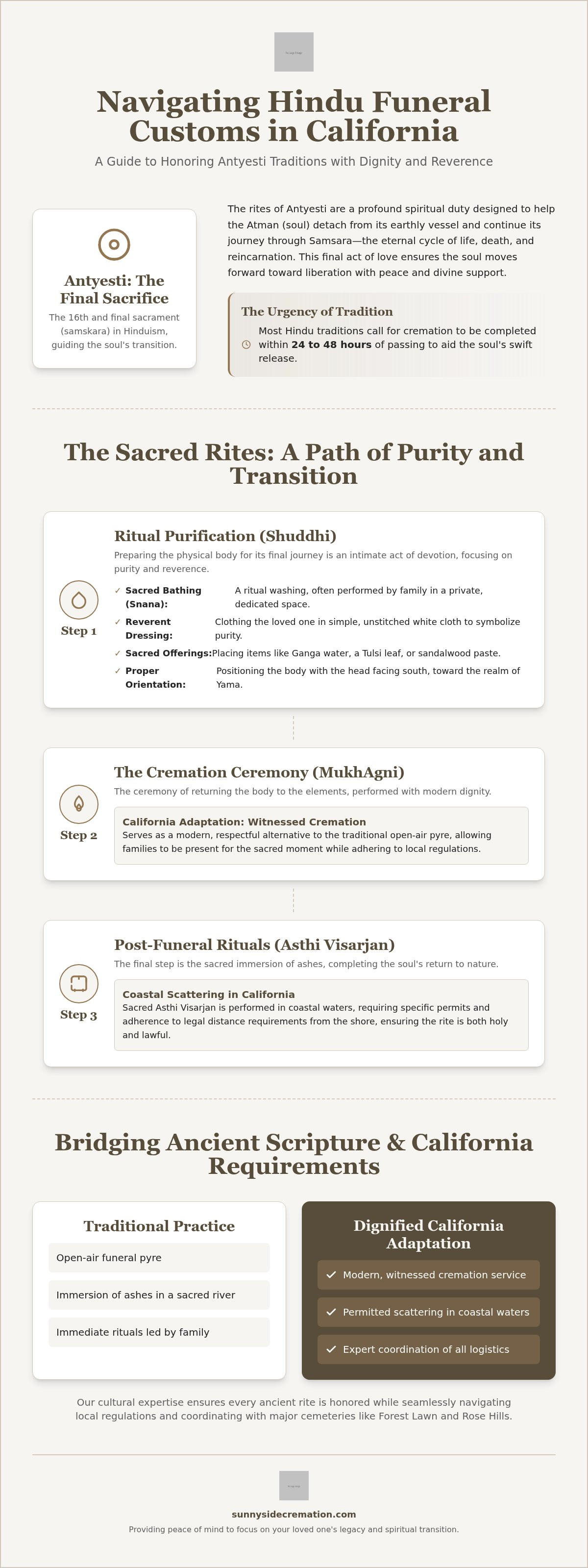
The passing of a loved one is a sacred transition, a moment where the physical journey ends and the spiritual one begins. In the Hindu faith, this transition is guided by the rites of Antyesti (last sacrifice), the sixteenth and final sacrament of a person's life. These rituals aren't merely a way to say goodbye; they're a profound spiritual duty designed to help the Atman, or soul, detach from its earthly vessel and find peace. It's a final act of love and stewardship that ensures the soul continues its journey with dignity and divine support.
Time is of the essence in these traditions. Most families seek to complete the cremation within 24 to 48 hours of passing, a practice rooted in the belief that a swift return to the elements aids the soul's release. While California’s regulatory requirements for death certificates and permits can sometimes feel like a hurdle, honoring the Hindu funeral customs California families rely on requires a mortuary that moves with both speed and sensitivity. We understand the unique landscape of Hindu funeral customs California, and our Hindu Cremation Package is designed to prioritize these rapid arrangements, ensuring that spiritual timelines are honored while we handle the necessary logistics with a steady, experienced hand.
Understanding the Cycle of Rebirth
Samsara is the eternal cycle of life, death, and reincarnation that every soul traverses in its quest for liberation. Within this cycle, Karma serves as the governing force, where the actions and intentions of one’s life shape the soul's next destination. The final rites are specifically intended to break the soul’s lingering attachments to its physical form. By performing these rituals correctly, the family provides the spiritual momentum necessary for the soul to move forward toward its next stage of existence without confusion or delay.
The Role of the Family in Sacred Rites
The family serves as the primary stewards of this sacred transition. Traditionally, the Karta, or chief mourner, takes the lead in performing the final rites. This role usually falls to the eldest son, though modern adaptations allow for other close relatives to step forward with equal devotion. The responsibilities of the family include:
- Ensuring a serene and prayerful environment that reflects the sanctity of the soul's departure.
- Coordinating with a Pujari to ensure all Vedic mantras are recited with precision.
- Maintaining a focus on peace and detachment to help the soul let go of worldly bonds.
It's a time of deep reflection and communal support. By maintaining a calm presence, the family creates a bridge of peace for the departed, honoring a legacy that transcends the physical world. This spiritual focus allows the family to transform their grief into a powerful act of devotion.
Traditional Preparation and US Adaptations
Preparing the physical body for its final sacrifice is a deeply intimate process. It centers on the concept of Shuddhi, or ritual purification. While ancient texts provide the blueprint, practicing Hindu funeral customs California families follow requires a delicate balance with modern health and safety standards. Most California mortuaries don't require embalming if the cremation occurs quickly, which aligns perfectly with the desire for natural purity. This preparation reflects core Hindu beliefs regarding the sanctity of the body as a temporary temple for the soul.
During this stage, sacred items play a vital role in the transition. A drop of Ganga water or a Tulsi leaf may be placed in the mouth. Sandalwood paste is often applied to the forehead, and fresh flower garlands are draped over the deceased. These elements aren't just symbolic; they're offerings that honor the life lived and the transition ahead. We ensure these items are handled with the utmost reverence, maintaining the sanctity of the ritual within a professional setting.
Ritual Washing and Dressing
At Sunnyside, we provide dedicated, private spaces where families can perform the Snana, or ritual bath, themselves. This hands-on involvement is a vital part of the grieving process for many. After the washing, the deceased is typically dressed in simple, unstitched white clothing. White represents purity and the shedding of worldly status. We ensure the body is positioned traditionally, with the head facing south toward the realm of Yama. This orientation is a crucial detail that many corporate facilities might overlook, but it remains a cornerstone of the Hindu funeral customs California community members hold dear.
The Viewing and Public Service
The viewing serves as a time for the community to offer their final respects through darshan. Unlike some Western traditions, the atmosphere is one of solemn prayer and reflection. Vedic chants and bhajans often fill the room, creating a meditative environment that supports the soul's departure. This collective prayer provides a sense of peace for the grieving family and a dignified farewell for the departed.
If you're inviting non-Hindu friends or colleagues to a service in Orange County, it's helpful to provide gentle guidance. Guests should wear modest, light-colored clothing; white is traditional, while black is generally avoided. We often suggest that guests simply stand or sit quietly, observing the rituals with a respectful heart. If you're feeling overwhelmed by these details, our Hindu Cremation Package includes guidance to help you manage these cultural nuances with ease.
The Cremation Ceremony (MukhAgni) in California
The pinnacle of the Antyesti ritual is MukhAgni, the lighting of the funeral fire. In traditional settings, this takes place on an open-air pyre, but modern Hindu funeral customs California families observe have transitioned into the controlled environment of a crematory. This shift doesn't diminish the sanctity of the rite. Instead, it offers a focused, private setting where the family can fulfill their spiritual obligations with dignity. We act as your steady guide through this process, ensuring that the transition from the chapel to the cremation chamber is handled with the highest level of reverence.
Witnessed cremation has become the standard modern equivalent of the traditional pyre. It allows the family to remain present for the final moments, providing the soul with the support of their prayers and presence. This practice is essential for many who feel that a "direct cremation" without family involvement would leave the ritual incomplete. By participating in these final steps, you're not just following a procedure; you're performing a sacred duty that has been passed down through millennia.
The Witnessed Cremation Process
During a witnessed cremation, the family gathers in a specialized viewing room adjacent to the cremation chamber. The Karta, usually the eldest son, takes the lead in this final act of devotion. Before the process begins, it's customary for the family to circulate the casket three times, often while chanting or reciting prayers. This symbolic movement honors the life lived and prepares the soul for its release. Our specialized witnessed cremation Orange County services provide the space and time needed for the Karta to initiate the process safely, ensuring that the spiritual "spark" is provided by the family in accordance with Vedic tradition.
Sacred Offerings and Local Rules
While tradition calls for various offerings to be placed in the fire, California health and safety regulations require some practical adaptations. We work closely with families to ensure their offerings are both spiritually significant and legally compliant. Traditional items like ghee, small amounts of grains, and sandalwood are typically permitted within the casket. However, certain materials are prohibited to protect the crematory equipment and the environment:
- Natural items: Small amounts of flowers, ghee, and sacred wood are generally encouraged.
- Restricted materials: Plastics, synthetic fabrics, and heavy metals must be avoided to comply with air quality standards.
- Religious exemptions: We help navigate specific requests for traditional items, acting as a bridge between your priest’s requirements and the facility's safety protocols.
Our role is to manage these logistical details so you can remain in a prayerful state. By coordinating these specifics ahead of time, we ensure the ceremony remains uninterrupted and respectful, allowing you to focus entirely on the spiritual liberation of your loved one.
Post-Funeral Rituals and Handling of Ashes (Asthi Visarjan)
The conclusion of the cremation ceremony marks the beginning of a profound period of mourning and purification known as the Pretasamskara. Over the next thirteen days, the family performs specific rites to assist the soul’s journey and provide comfort to those left behind. Collecting the cremated remains, or Asthi, is the first step in fulfilling the sacred duty of Asthi Visarjan. While many families dream of returning these remains to the Ganges, many find peace by performing this ritual in the Pacific waters of Southern California. Honoring the Hindu funeral customs California families observe means understanding that these local waters can serve as a sacred substitute when handled with the proper legal and spiritual care.
This period is defined by simplicity and reflection. The family typically observes a restricted diet and avoids celebrations, focusing instead on prayers that aid the soul's transition. It's a time of stewardship, where the living ensure the departed soul feels supported and loved. By the thirteenth day, the transition from mourning to remembrance begins, marking the soul’s successful journey beyond the physical realm.
Scattering Ashes in California Waters
California law requires that cremated remains be scattered at least 500 yards from the shore in inland navigable waters, while ocean scattering must occur at least three nautical miles out to sea. Obtaining the necessary permits is a critical step to avoid legal complications, as unauthorized scattering can lead to fines of up to $500 as of 2026. We assist families in Orange County by securing the required disposition permit and coordinating with local boat charters in cities like Newport Beach or Huntington Beach. Our team ensures that your ceremony is both legally compliant and spiritually resonant, providing a steady hand through the logistical requirements.
The Final Farewell: Shraddha
The tenth and thirteenth days after passing are significant milestones in the Hindu tradition. These ceremonies, often referred to as Shraddha, involve offering prayers and food to the departed soul and the ancestors. It's a time for the family to transition from the initial weight of mourning toward a sense of peaceful remembrance. Charitable acts, such as donating food or supporting local community efforts, are often performed in the name of the deceased to generate positive karma for their soul's journey.
For families who prefer a permanent place of reflection, we also provide expert coordination with local landmarks like Forest Lawn and Rose Hills. These facilities offer beautiful niches and memorial gardens where remains can be placed if ocean scattering isn't the chosen path. Whether you're planning a traditional water immersion or a local memorialization, our Hindu Cremation Package offers the comprehensive support you need to honor your loved one’s legacy with dignity. By managing the permits and local coordination, we allow you to focus on the spiritual significance of these final rites.
Coordinating Hindu Services in Orange County
Choosing a funeral home is one of the most personal decisions a family will ever make, especially when balancing ancient traditions with modern logistics. While corporate providers often follow a one-size-fits-all approach, a family-owned mortuary provides a level of empathy and cultural nuance that is essential during such a vulnerable time. In cities like Garden Grove, navigating Hindu funeral customs California families rely on requires a partner who understands the local landscape and the specific needs of the community. We pride ourselves on being that steady hand, acting as both an experienced professional and a dedicated community servant.
One way to ensure your family's wishes are met without added stress is through funeral pre-planning for Asian families. By documenting your specific requirements for witnessed cremation or ritual bathing ahead of time, you lock in the cultural rites that matter most. This foresight provides your loved ones with a clear path forward, allowing them to focus on the spiritual significance of the transition rather than the burden of complex decision-making.
Working with Forest Lawn and Rose Hills
Many families in Southern California choose prestigious memorial parks like Forest Lawn or Rose Hills for their final resting place or niche placement. While these locations offer beautiful grounds, coordinating the specific religious requirements of a Hindu service within their corporate structure can be challenging. We act as your primary advocate, managing the logistics between our mortuary and the memorial park to ensure every traditional rite is respected. From streamlining the paperwork and disposition permits to ensuring the priest has the necessary space for final prayers at the graveside, we handle the intricate details so you don't have to.
The Sunnyside Difference
Our Hindu cremation services Orange County package is built on a foundation of reverence and specialized knowledge. We understand that Hindu funeral customs California are not just a set of tasks, but a sacred duty to the soul. Our staff is specifically trained in multicultural traditions, ensuring that every interaction is filtered through a lens of kindness and respect. We don't just provide a service; we offer a partnership that prioritizes your family's peace of mind and your loved one’s dignity.
If you are currently facing a loss or wish to discuss future arrangements, we are here to support you with a gentle and professional hand. Please Contact Sunnyside Cremation and Funeral for a respectful consultation to learn how we can help you honor your sacred traditions with the care they deserve.
Honoring a Sacred Legacy with Peace and Certainty
Providing a dignified transition for your loved one is a final act of devotion that requires both spiritual focus and practical expertise. We've explored how ancient Vedic traditions like the MukhAgni ritual and Asthi Visarjan can be seamlessly integrated into the local landscape. By understanding the specific legal requirements for scattering remains and the nuances of Hindu funeral customs California families observe, you can ensure that every rite is performed with absolute reverence. Whether you are navigating the immediate needs of a loss or looking toward the future, having a steady guide makes all the difference.
As a family-owned mortuary in Orange County, we specialize in the Hindu Cremation Package and maintain seamless coordination with local landmarks like Rose Hills and Forest Lawn. Our team is dedicated to acting as your advocate, ensuring that your cultural traditions are respected at every turn. We invite you to Secure a Culturally Respectful Hindu Funeral Plan Today to find the peace of mind that comes from professional, empathy-led care. Your family's journey is unique, and it's our honor to help you navigate it with grace and quiet efficiency.
Frequently Asked Questions
Can we perform a witnessed cremation in Orange County?
Yes, witnessed cremation is a core part of our services in Orange County. We provide private viewing rooms where the Karta can initiate the process, honoring the MukhAgni ritual. This allows families to stay present for the final moments of the soul's physical journey. Our staff is specifically trained to support these sacred duties with the reverence they deserve, ensuring a peaceful environment for all family members.
What is the traditional attire for a Hindu funeral in California?
White is the traditional color for Hindu funerals as it symbolizes purity and the shedding of worldly attachments. Guests should choose modest, light-colored clothing and generally avoid wearing black. While traditional Indian attire like a white kurta or sari is common, any respectful white clothing is acceptable. This simple choice honors the solemnity of the occasion and respects the spiritual focus on the soul’s transition rather than earthly status.
How quickly can a Hindu cremation be arranged in Buena Park?
We prioritize rapid arrangements for families in Buena Park to honor the traditional timeline of 24 to 48 hours. While California law requires specific paperwork like death certificates and disposition permits, our team works diligently to streamline these logistics. We understand the spiritual urgency of Hindu funeral customs California families observe. By handling the administrative details with quiet efficiency, we help you fulfill your religious obligations without unnecessary delays.
Is it legal to scatter ashes in the Pacific Ocean off the California coast?
Yes, it is legal to scatter remains in the Pacific Ocean, provided you follow specific regulations. For ocean scattering, the remains must be released at least three nautical miles from land. If you choose inland navigable waters, the distance is at least 500 yards from the shore. You must also obtain a disposition permit and notify the EPA within 30 days. We help secure these permits to ensure your Asthi Visarjan ceremony is compliant.
Do California funeral homes allow the lighting of a ritual fire?
Open-air pyres are not permitted under California's environmental and safety laws. However, we facilitate the MukhAgni ritual through witnessed cremation in a controlled setting. This allows the Karta to symbolically light the fire by initiating the equipment. We ensure the priest has the necessary space for mantras and traditional offerings, ensuring that Hindu funeral customs California families value are respected while adhering to all modern safety protocols.
What happens during the 13 days of Hindu mourning?
The 13 day period, known as Pretasamskara, is a time of purification and prayer. Family members often observe a simplified diet and focus on rituals that aid the soul's detachment from the physical world. On the 10th and 13th days, the Shraddha ceremony is performed to honor ancestors and provide spiritual momentum for the soul. This period concludes the formal mourning, transitioning the family toward a path of peaceful remembrance and charitable celebration.
How does Sunnyside coordinate with Forest Lawn for Hindu services?
We act as your dedicated bridge between our mortuary and the memorial park. Our team manages all the logistical details, from filing the necessary burial permits to ensuring the grounds crew understands the specific needs of a Hindu graveside service. We advocate for your family, making sure that your priest has the time and space required for final prayers. This coordination allows you to use prestigious locations like Forest Lawn while maintaining your cultural traditions.
Can daughters or wives perform the last rites in modern US practice?
Modern practice in the United States increasingly welcomes daughters, wives, and other close female relatives to serve as the Karta. While tradition often points to the eldest son, the primary goal is to ensure the rites are performed with love and devotion. We support any family member who steps forward to lead these sacred duties. Our staff provides a supportive environment where all relatives can participate in the bathing, dressing, and final ceremonies.


