

Imagine the weight of the 13-day mourning period compounded by the fear that a local crematory won't allow your family to perform the sacred rite of Mukhagni. In the heart of Southern California, many families find themselves caught between ancient Vedic traditions and rigid local regulations. It's understandable to feel overwhelmed when researching Hindu funeral costs California while also trying to ensure every ritual is handled with proper reverence. You deserve a farewell that honors the soul's transition without the added stress of hidden fees or cultural misunderstandings in cities like Garden Grove and Anaheim.
We understand that this is a time of deep emotional vulnerability, and you need a steady hand to guide you through these complex decisions. This comprehensive 2026 guide simplifies the planning process by bridging the gap between sacred customs and modern California laws. You'll gain clarity on what a specialized Hindu Cremation Package includes, the legalities of scattering ashes at sea, and the latest 2026 requirements for filing death certificates. This roadmap ensures you can provide your loved one with a dignified, traditional ceremony that respects both your heritage and your peace of mind.
Key Takeaways
- Understand the sacred significance of Antyesti and how witnessed cremation honors the soul's transition through the five elements.
- Learn the essential steps for coordinating with a local mortuary and a Pandit to ensure every ritual is performed at the most auspicious time.
- Navigate the financial logistics with a clear understanding of Hindu funeral costs California, including professional services and specialized cremation packages.
- Find out how modern facilities in Garden Grove and Anaheim support the Mukhagni ritual, providing a safe and reverent space for the Karta to lead.
- Explore the benefits of pre-planning to secure your cultural traditions and reduce the emotional weight on your loved ones during the 13-day mourning period.
Understanding Antyesti: The Spiritual Foundation of Hindu Funeral Rites
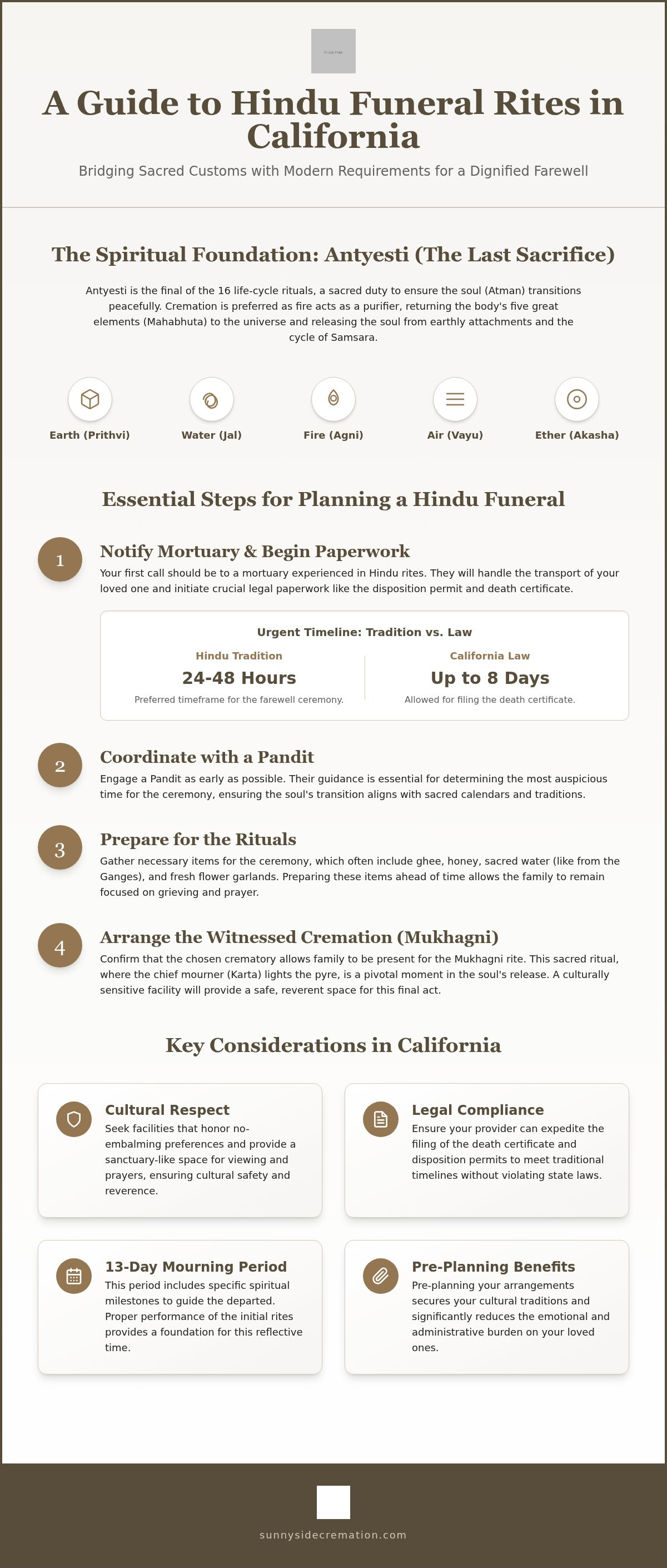
Antyesti represents the "last sacrifice" a person makes on this earth. It's a sacred duty performed by the living to ensure the Atman, or soul, can transition peacefully from the physical body. In the Hindu tradition, the body is a temporary vessel composed of the Mahabhuta, or five great elements: earth, water, fire, air, and ether. Cremation is the preferred method because fire acts as a purifier. It swiftly returns these elements to the universe and releases the soul from its earthly attachments. When families begin weighing the factors of Hindu funeral costs California, they often prioritize finding a partner who understands that these rituals are more than just logistics; they're the final act of love for a departing soul.
Understanding Antyesti: The Spiritual Foundation of Hindu Funeral Rites helps families navigate the emotional landscape of loss with a sense of purpose. The role of the family is central to this process. By facilitating the body's return to the elements, the family actively assists the soul in its journey toward the next realm. This connection to tradition provides a profound sense of continuity for those living in the Southern California diaspora, bridging the gap between ancient Vedic wisdom and modern life in Orange County.
Samsara and the Transition of the Soul
The funeral rites serve a specific purpose within the cycle of Samsara, helping the soul break free from the perpetual cycle of birth and death. This journey is supported by the family through a 13-day mourning period. This time includes specific spiritual milestones intended to guide the departed toward their next state of being. Antyesti is the final of the 16 life-cycle rituals in Hinduism. By performing these rites correctly, the family provides the steady hand needed to facilitate a graceful exit from the physical realm.
Preserving Sacred Traditions in a Western Context
Maintaining these ancient customs can feel daunting within a Western funeral industry that often defaults to practices like embalming. Many Hindu families in Garden Grove and Anaheim specifically seek out facilities that respect no-embalming preferences. Keeping the body in its natural state is vital for the purity of the ritual. Finding a sanctuary-like environment for the initial viewing and prayers is essential for cultural safety. It allows the family to grieve and pray in a space that feels like a sacred temple rather than a clinical office.
Because Hindu funeral costs California can involve specialized facility needs and coordination with memorial parks like Forest Lawn or Rose Hills, working with a culturally sensitive provider ensures that tradition isn't sacrificed for convenience. Having access to a dedicated Hindu Cremation Package helps bundle these specific ritual requirements with the necessary legal permits. This approach provides clarity and comfort, ensuring that the 13-day mourning period remains focused on spiritual reflection rather than administrative stress.
Essential Steps for Planning a Hindu Funeral in California
The moments immediately following a loss are often a blur of grief and responsibility. Your first priority is notifying a mortuary that understands the profound nature of Hindu funeral rites (Antyesti). This initial contact begins the process of transporting your loved one and, crucially, starting the legal paperwork. In California, a disposition permit must be obtained before cremation can occur. While the state allows up to eight days for filing a death certificate, Hindu traditions often call for a farewell within 24 to 48 hours. A culturally aware partner will prioritize these filings to honor your timeline. As you begin this journey, reviewing a specialized Hindu Cremation Package can provide a clear structure for the days ahead.
Planning requires a balance between spiritual requirements and local logistics. Engaging a Pandit early is essential to determine the most auspicious timing for the ceremony. This ensures the transition aligns with sacred calendars. You'll also need to gather specific ritual items like ghee, honey, sacred water, and fresh flower garlands. Having these ready allows the family to remain present in their grief. Understanding the various components of Hindu funeral costs California helps you focus on what truly matters: a dignified and spiritually correct farewell for your loved one.
Coordinating with the Pandit and Mortuary Staff
Once you've engaged a Pandit, you'll need to align their ritual schedule with the availability of the funeral home. It's helpful to find local priests in areas like Anaheim or Cerritos who are familiar with Southern California mortuary rules. They can help bridge the gap between spiritual needs and logistical realities. You should discuss the use of incense or small ritual fires (diyas) early in the process. While modern crematories have strict safety codes, a supportive facility will find ways to accommodate these essential elements of the prayer service safely and respectfully.
Ritual Preparation of the Body (Snana)
The Snana, or ritual washing, is a deeply personal act of stewardship performed by the family. This preparation usually involves anointing the body with a mixture of yogurt, ghee, honey, and sandalwood paste. It's a time for quiet reflection and final service. During this process, families often place Tulsi leaves in the mouth and sacred soil on the forehead. Choosing a mortuary that provides a private, respectful space for this preparation is vital. It ensures the family can perform these acts without feeling rushed. Most Hindu families seek a rapid cremation, typically within 24 to 48 hours. A provider who respects this cultural requirement will work diligently to secure the necessary California permits to meet this goal. When you evaluate Hindu funeral costs California, ensure the facility use for these private rituals is included in your plan.
Witnessed Cremation and the Mukhagni Ritual
The moment of Mukhagni is perhaps the most significant stage of the entire Antyesti process. It's the final act of the Karta, usually the eldest son or a close male relative, to initiate the return of the physical body to the elements. In a traditional setting, this involves lighting the funeral pyre. In California, where open-air pyres aren't permitted, modern facilities have adapted to honor this sacred requirement through "witnessed cremation." This service provides the family with a private, reverent space to gather and perform final prayers before the body enters the cremation chamber. When families analyze Hindu funeral costs California, they often find that the inclusion of a witnessed service is a non-negotiable priority for spiritual closure.
Facilities in Garden Grove and Buena Park often feature dedicated viewing rooms designed specifically for this purpose. These rooms allow the family to remain present as the body is placed into the retort, ensuring that the transition is handled with the dignity it deserves. It's a moment of profound stewardship. By being physically present, the family fulfills their duty to the Atman, ensuring the soul isn't left alone during its final earthly transition. A transparent Hindu funeral costs California breakdown should clearly outline any additional fees for priority scheduling or extended facility use for these rites.
Performing Mukhagni in a Modern Crematory
Performing the Mukhagni in a modern crematory is a safe and symbolic adaptation of ancient tradition. The Karta, guided by the crematory operator, may be invited to initiate the cremation process by pressing a button or engaging a control. This act serves as the modern equivalent of lighting the pyre. It's a powerful moment of release that allows the family to participate in the initiation of the transition safely. Witnessed cremation fulfills the Vedic requirement for the family to see the body return to fire, providing a sense of completion that isn't possible with a standard, unattended cremation.
Finding a Facility That Accommodates Large Families
Not all crematories are equipped to handle the size of a traditional Hindu gathering. When speaking with a mortuary, it's essential to ask about their crematory’s witness capacity. Some facilities only allow two or three people, while others can accommodate larger groups of ten or more. Choosing a provider with deep roots in Hindu cremation services in Orange County ensures you're working with staff who understand the need for a respectful, private atmosphere. They'll ensure that your family isn't rushed and that the final moments are spent in prayer and reflection rather than logistical confusion. This cultural expertise is a steady hand that guides you through the technicalities of the process with grace and empathy.
Navigating Logistics: Costs, Permits, and Memorial Parks
Planning a traditional farewell involves balancing spiritual needs with California's regulatory framework. When families look at Hindu funeral costs California, they're often seeing a combination of professional services, facility use for rituals, and mandatory state permits. A major part of this process is the timely acquisition of a death certificate from the local registrar, such as the Orange County Health Care Agency. This document must be filed within eight calendar days of passing and is required before any cremation can proceed. A dedicated partner manages this timeline so you can focus on the 13-day mourning period without administrative worry.
Transparency is essential during such a vulnerable time. A clear breakdown of Hindu funeral costs California typically includes the professional service fee, transportation of your loved one, and the necessary permits for disposition. By bundling these elements into a single plan, you avoid the stress of managing individual fees during a period of reflection. To simplify these logistics, you might consider a specialized Hindu Cremation Package that bundles ritual needs with necessary legal permits.
Coordination with Forest Lawn and Rose Hills
Many families in our community choose iconic Southern California locations like Forest Lawn or Rose Hills for the final placement of remains. A knowledgeable mortuary acts as the bridge between your family and these large memorial parks. They handle the transportation and ensure that the park staff respects the specific requirements of Hindu rites. Whether you're planning a niche placement or a small graveside prayer service after the cremation, having a coordinator who understands the internal paperwork of these parks is a steady hand in a complex process.
Ash Collection and Sea Scattering Regulations
The collection of the "flowers," or the cremated remains, typically happens within a 24 to 48 hour window after the cremation is complete. For those performing Asthi Visarjan, California law has specific rules that must be followed. Scattering must take place at least 500 yards offshore. Most families arrange a private charter boat from Newport Beach or San Pedro to reach these waters legally. This ensures the final immersion rites are performed with the privacy and sanctity they require, following the state requirement to file a report with the local health department after the scattering is complete.
- Timeline: Remains are usually ready for collection within two days.
- Location: Newport Beach and San Pedro are the primary hubs for sea immersion charters.
- Regulations: Ensure your charter captain is familiar with the 500-yard offshore rule.
The Value of Hindu Funeral Pre-Planning in California
Choosing to plan ahead is a profound act of stewardship for your family. It ensures your specific cultural and religious preferences are legally documented, leaving no room for doubt during a time of grief. In communities like Irvine and Tustin, the pace of life is fast, but the 13-day mourning period requires a slow, intentional focus. By making these decisions now, you significantly reduce the emotional and financial burden on the next generation. They won't have to guess which Pandit you prefer or which crematory facility aligns with your spiritual needs; they'll simply follow the roadmap you've lovingly prepared.
Protecting your family against the rising costs of funeral services is another practical advantage. California's funeral industry sees regular price adjustments, but a guaranteed contract locks in today's rates for the future. This foresight provides a shield against inflation and ensures that your legacy is preserved without unexpected financial strain. When you evaluate Hindu funeral costs California, pre-planning emerges as the most effective way to manage the financial landscape while prioritizing the sanctity of the Antyesti rites. It grants you the peace of mind that comes from knowing every detail, from the Snana to the Mukhagni, is already settled.
Securing Your Legacy with a Specialized Contract
The distinction between "at-need" and "pre-need" arrangements is vital for Hindu families to understand. An at-need arrangement occurs at the time of passing, often requiring the family to make complex decisions within hours. Conversely, a pre-need arrangement, often facilitated through Pre-Planning Funeral Contracts, allows for a methodical and calm approach. Sunnyside’s specialized expertise in funeral pre-planning for Asian families ensures that your specific traditions are protected and legally recognized. Furthermore, California law provides robust legal safeguards for pre-paid funeral funds, ensuring your investment is held securely until it's needed.
Starting the Conversation with Empathy
If you're ready to ensure your traditions are honored with the reverence they deserve, please Contact Sunnyside Cremation and Funeral for a respectful and private consultation on your Hindu funeral needs.
Honoring the Sacred Journey with Confidence and Peace
Our family-owned team in Orange County is here to provide that compassionate support. We offer a dedicated Hindu Cremation Package and specialized coordination with Rose Hills and Forest Lawn memorial parks to ensure every ritual is respected. We understand the weight of these moments and are committed to serving your family with the highest level of reverence. You deserve a partner who values your heritage as much as you do.
Plan a respectful Hindu farewell for your loved one today.
You aren't alone in this journey. We're honored to help you preserve your sacred traditions with dignity and peace.
Frequently Asked Questions
What is the average timeline for a Hindu funeral in California?
The traditional farewell usually takes place within 24 to 48 hours of passing. While California law allows up to eight days to file a death certificate, culturally sensitive providers prioritize this paperwork to honor the Vedic requirement for a rapid cremation. This initial ceremony is followed by a 13 day mourning period, which includes specific spiritual milestones and prayers for the soul's peaceful transition.
Can we perform the ritual washing (Snana) at your facility in Orange County?
Yes, we provide a private and respectful space for the family led Snana at our facilities. We understand that the ritual washing and anointing with ghee, honey, and sandalwood paste is a deeply personal act of stewardship. Our staff ensures you have the sanctuary needed to perform these final acts of service with the privacy and reverence your traditions deserve.
Is witnessed cremation allowed at all local crematories?
No, many crematories in Southern California are off site or have strict capacity limits that don't allow for family participation. It's essential to choose a provider that offers facility access for witnessed cremation rites. This ensures the Karta can safely initiate the Mukhagni ritual, fulfilling the sacred requirement to see the body return to the elements through fire.
What should guests wear to a Hindu funeral ceremony in the US?
Guests are encouraged to wear white, which is the traditional color of mourning and purity in Hindu culture. While black is common in Western traditions, white signifies peace for the departing Atman. It's best to choose modest, simple clothing that reflects the solemnity of the occasion. This choice shows respect for the family and the sacred nature of the Antyesti rites.
How do we arrange for ash scattering in the ocean near Newport Beach?
We help you coordinate a private charter boat from Newport Beach or San Pedro for the final immersion rites. California regulations require that ash scattering occurs at least 500 yards from the shoreline. Our team ensures that the necessary state reports are filed after the ceremony, allowing your family to focus on the spiritual significance of the Asthi Visarjan without legal worry.
Does a Hindu Cremation Package include the priest's services?
A specialized Hindu Cremation Package typically bundles essential logistics like facility use, permits, and transportation, but the Pandit's honorarium is usually separate. We work closely with your chosen priest to align the ceremony with auspicious timings. This arrangement allows you to select a spiritual leader who shares your specific regional or linguistic traditions while we manage the technical details.
Can we have a traditional viewing with an open casket?
Yes, a traditional viewing with an open casket is a standard part of the prayer service before cremation. This allows family and friends to offer flowers and final prayers in a sanctuary like environment. We respect your preference for no embalming, ensuring your loved one is presented naturally and with the utmost dignity in our Garden Grove or Anaheim facilities.
What items are typically required for the crematory ritual?
Families usually bring ritual items such as ghee, honey, yogurt, Tulsi leaves, and fresh flower garlands for the final prayers. These sacred materials are essential for the preparation of the body and the initiation of the fire. When you are evaluating Hindu funeral costs California, keep in mind that these specific ritual supplies are typically gathered by the family or provided by their priest.


