

What if honoring a life with profound reverence has nothing to do with purchasing expensive merchandise? When you are grieving, trying to understand direct cremation vs traditional funeral costs can feel overwhelming, especially when confusing package itemizations leave you wondering why one path costs substantially more than the other. You might even worry that choosing a simpler arrangement compromises the dignity your loved one deserves, but that could not be further from the truth.
It's completely natural to protect your family's financial peace while wanting to show unwavering respect. You shouldn't have to face high-pressure sales or obscure fees during such a vulnerable moment. In this guide, you'll discover the clear financial and practical differences between both options so you can choose what best fits your family with complete confidence. We'll examine what actually drives these mortuary expenses and show how separating physical care from memorial ceremonies gives you the freedom to honor a legacy meaningfully, on your own timeline.
Key Takeaways
- Direct cremation handles physical disposition shortly after passing, allowing families to arrange personalized celebrations of life on their own schedule.
- Evaluating direct cremation vs traditional funeral costs highlights how eliminating optional expenses like embalming, viewings, and casket purchases prevents undue financial strain.
- Genuine dignity stems from thoughtful remembrance and presence rather than the price tag of mortuary merchandise or elaborate packages.
- Under the FTC Funeral Rule, you have the legal right to request an itemized General Price List and select only the exact goods and services you desire.
- Transparent, family-centered guidance helps you honor your loved one's specific wishes and cultural heritage without navigating high-pressure sales tactics.
Direct Cremation vs Traditional Funeral: Understanding the Fundamentals
Losing someone dear brings an immediate wave of emotional weight alongside sudden practical decisions. At its core, evaluating direct cremation vs traditional funeral costs begins with understanding how each path approaches two distinct responsibilities: caring for physical remains and gathering loved ones to grieve.
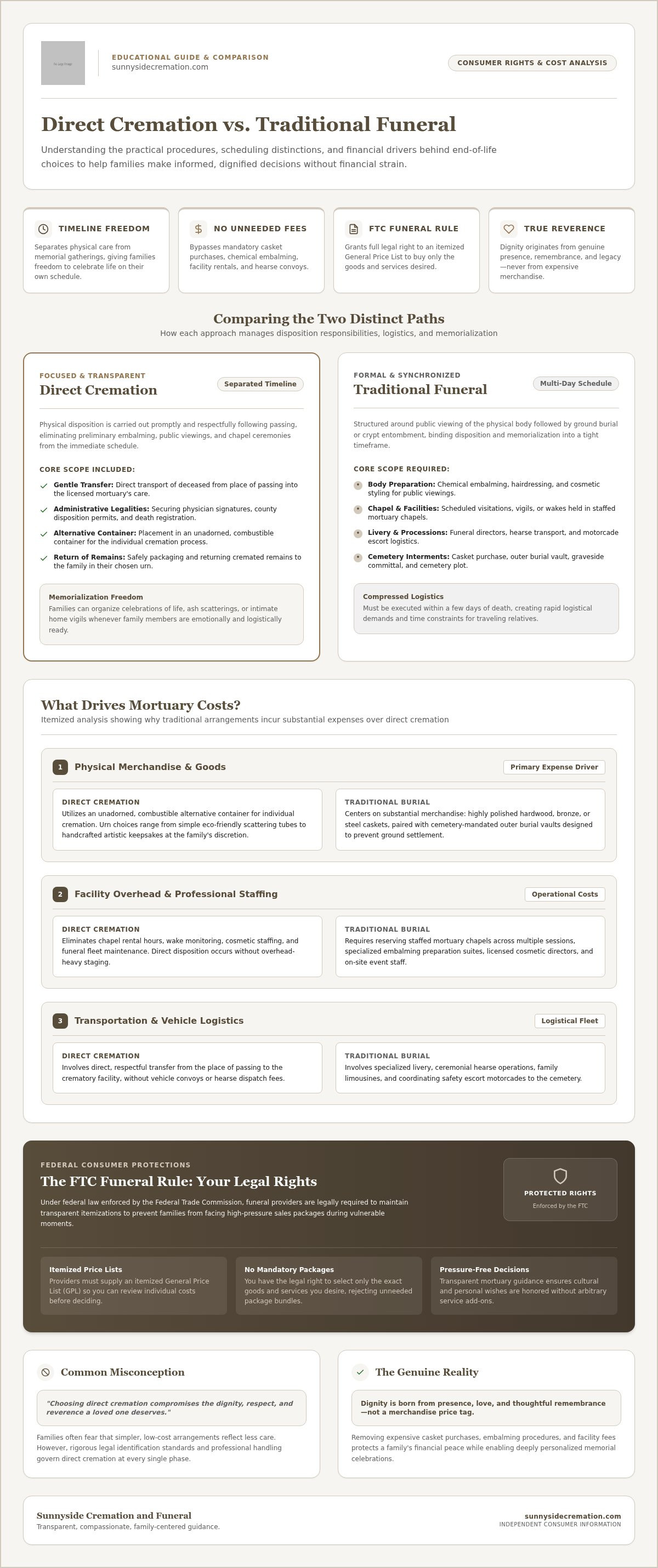
The fundamental distinction lies in how these events are timed. A traditional arrangement binds physical disposition and public memorialization into an immediate, multi-day schedule. Direct cremation separates the two. By handling physical care promptly and respectfully, direct cremation frees families from rigid mortuary timelines. This gives you the grace to schedule a personalized memorial, a celebration of life, or a quiet family gathering whenever everyone feels ready.
What Is Included in Direct Cremation?
Direct cremation represents a focused, dignified approach that honors physical remains without preliminary embalming, public viewings, or mortuary chapel ceremonies. Modern cremation practices follow rigorous legal standards to preserve dignity and ensure precise identification at every step. This path typically encompasses:
- Gentle transfer of the deceased from the place of passing into the licensed mortuary's care.
- Securing required legal paperwork, physician signatures, and county disposition permits.
- Placement in an approved alternative container for the individual cremation process.
- Safely packaging and returning the cremated remains to the family in a chosen urn.
The Essential Elements of a Traditional Funeral
Traditional funerals center on structured, multi-step rites designed around viewing the deceased before earth burial. When weighing direct cremation vs traditional funeral costs, the traditional path reflects the extensive facilities, specialized staff, and physical merchandise required within a compressed timeframe. Its core components usually include:
- Preparation services, such as chemical embalming, hairdressing, and cosmetic care for public presentation.
- Scheduled visitations, wake services, or vigils held in a dedicated mortuary chapel.
- Professional funeral staff directing services, coordinating procession escorts, and operating a hearse.
- A graveside committal ceremony followed immediately by earth burial or crypt entombment.
Itemized Cost Breakdown: Why Traditional Funerals Carry Substantial Expenses
A mortuary invoice can look like a maze during a time when you need simplicity most. When looking closely at direct cremation vs traditional funeral costs, the financial divide isn't about care or reverence. Instead, it reflects facility overhead, round-the-clock staffing, substantial physical merchandise, and cemetery real estate. Under the Federal Trade Commission's Funeral Rule, every provider must hand you an itemized General Price List, giving you the legal right to choose only what your family truly wants.
Merchandise and Physical Goods Differences
Traditional burials center on significant material goods. Caskets crafted from polished hardwoods, bronze, or reinforced steel represent major purchases, often accompanied by mandatory outer burial vaults that cemeteries require to prevent ground settlement. Direct cremation bypasses these large expenses. It utilizes an unadorned, combustible alternative container designed to hold your loved one securely. Urn selections remain entirely up to you, from simple eco-friendly scattering tubes to handcrafted artistic keepsakes.
Facility, Transportation, and Professional Staffing Fees
Traditional arrangements require reserving staffed mortuary chapels across multiple sessions for viewings, vigils, and religious ceremonies. These gatherings necessitate embalming suites, professional cosmetic preparations, and licensed directors managing logistics. Processions also involve specialized livery, hearse transport, and safety escorts. Direct cremation eliminates these facility rental hours and transportation convoys. For families seeking a calm, transparent alternative, arranging affordable cremation in Orange County provides meaningful savings by removing services you may not need or desire.
Cemetery Property and Ground Interments
Southern California cemetery real estate is among the most expensive in the country, significantly widening the gap in direct cremation vs traditional funeral costs. Purchasing a traditional full-sized grave space in established regional memorial parks involves premium land values. On top of the property price, cemeteries assess mandatory fees for mechanical excavation, grave closing, and perpetual endowment care. In contrast, cremation allows you to retain remains in a family urn, scatter in a beloved natural setting, or place an urn in a compact columbarium niche at a fraction of the land cost. If you ever need compassionate help comparing these practical considerations, the team at Sunnyside Cremation & Funeral is always ready to guide you gently through every step.
Balancing Dignity and Affordability: Clarifying Common Cremation Myths
One of the quietest burdens families carry during bereavement is the fear that choosing an economical option reflects poorly on how much they cared. When people first compare direct cremation vs traditional funeral costs, this misconception often surfaces. Love isn't measured in copper caskets or floral arrangements. Real reverence comes from honoring a person's life and values, not from stretching your family beyond its means. Incurring lasting debt during grief doesn't deepen honor; it only prolongs emotional strain for those left behind.
Consumer advocacy groups like the Funeral Consumers Alliance regularly remind families that simplicity is entirely honorable. Selecting an affordable approach gives you the breathing room to focus on personal healing rather than monthly payments, allowing your grief journey to unfold without unnecessary financial distress.
The Myth That Cremation Forbids a Meaningful Goodbye
Choosing direct disposition doesn't eliminate closure or prevent a deeply personal farewell. A brief, private identification viewing before the cremation process begins often provides an intimate moment of goodbye for immediate family members. After the ashes return home, ceremonial options open wide. Distant relatives have the breathing room to arrange travel for a celebration of life scheduled weeks down the road. The urn can take a central place at a church service, a scenic beach gathering, or a family living room surrounded by treasured photographs and shared stories.
Respecting Cultural and Spiritual Beliefs on a Budget
Many spiritual traditions fully embrace cremation while maintaining sacred rituals, chants, and blessings. From Buddhist customs to Hindu ceremonies, the focus remains firmly on prayer, respect, and ancestral remembrance rather than mortuary merchandise markups. Bilingual directors who understand these sacred rites can arrange modest witness viewings without requiring an elaborate commercial package. Planning ahead can bring incredible clarity to these moments. Families looking into traditions can review funeral pre-planning for Asian families to ensure their cultural heritage is honored faithfully without incurring excessive direct cremation vs traditional funeral costs.
How to Choose the Right Path for Your Family and Budget
Making final arrangements requires balancing practical realities with deep affection. Start by searching for any advance health directives, written wills, or pre-planning notes your loved one may have left behind. Honoring their recorded preferences provides immediate clarity and relieves your family from guessing during moments of intense grief.
Take an honest look at your family's current financial resources. The pressure to make quick choices can push people toward high-interest credit lines or personal loans. You don't have to carry debt to prove your devotion. When you analyze direct cremation vs traditional funeral costs, consider whether your family genuinely benefits from an immediate open-casket wake, or if the flexible schedule of memorializing with an urn better accommodates relatives who need time to travel.
Exercising Your Consumer Rights Under the FTC Funeral Rule
Federal regulations protect you from high-pressure sales environments. Under the FTC Funeral Rule, mortuaries must share pricing over the phone if you ask, and they must provide an itemized General Price List the moment you discuss arrangements in person. You maintain the right to select individual line items rather than being forced into bundled packages. You can also purchase an urn or alternative container from an outside vendor without the mortuary charging handling fees.
Key Questions to Ask Before Signing an Agreement
Comparing providers requires transparency. Before putting your signature on any mortuary contract, ask these practical questions to prevent unexpected expenses:
- Are county filing fees, disposition permits, and certified death certificates included in this itemized total, or billed separately?
- Do you manage your own care facilities directly, or do you transfer the deceased to an offsite third-party contractor?
- If our family decides on ground burial or placement later, do you coordinate arrangements with regional cemeteries like Forest Lawn or Rose Hills?
- What is the total cost including all non-declinable professional service fees?
Taking a moment to evaluate these details ensures you make decisions grounded in calm certainty. If you would like straightforward guidance without sales pressure, you can reach out to Sunnyside Cremation & Funeral to request an itemized price list and discuss what arrangement path best honors your loved one's memory.
Compassionate, Transparent End-of-Life Guidance with Sunnyside Cremation
Every family deserves an honest, supportive guide when a death occurs. As a family-owned mortuary serving Orange County and Southern California communities, Sunnyside Cremation & Funeral believes that understanding direct cremation vs traditional funeral costs shouldn't mean choosing between heartfelt tradition and financial distress. Upfront pricing clarity and FTC compliance guide every interaction, ensuring you never face hidden line items or sales pressure.
Whether you choose affordable cremation, a traditional burial, or require coordination with established memorial parks such as Rose Hills or Forest Lawn, experienced directors handle every administrative and logistical detail. Our focus remains on preserving the deep dignity of your loved one while shielding your family from avoidable financial strain.
Honoring Heritage with Culturally Specialized Care
Southern California is home to vibrant, diverse communities with unique customs. Honoring those traditions shouldn't require paying for unnecessary commercial bundles. Dedicated care teams provide specialized arrangements for Korean, Chinese, Taiwanese, Vietnamese, and Hindu traditions, ensuring ceremonies reflect sacred cultural expectations. Mandarin-speaking staff are available to assist with traditional Buddhist and ancestral rites, and witnessed cremation accommodations allow families to gather for sacred chants, prayers, and final farewells. You can connect with Sunnyside Cremation and Funeral to discuss how your family's distinct heritage can be observed with reverence and care.
Proactive Peace of Mind Through Pre-Planning
The most compassionate gift you can leave behind is certainty. Securing pre-planning funeral contracts locks in arrangements ahead of time, ensuring surviving relatives are spared the burden of guessing your preferences or managing sudden financial requirements during deep grief. Pre-planning allows you to explore direct cremation vs traditional funeral costs in a calm, reflective environment without time constraints. Documenting your specific wishes guarantees your final wishes are honored exactly as intended, giving your entire family enduring peace of mind.
Making a Grounded, Confident Choice for Your Loved One
Navigating final arrangements shouldn't be defined by financial pressure. Understanding direct cremation vs traditional funeral costs empowers you to prioritize what genuinely matters: celebrating a unique legacy while preserving your family's financial well-being. Separating physical disposition from ceremonial gatherings gives you the freedom to gather, reflect, and remember on a schedule that brings real comfort.
As a family-owned mortuary serving Orange County and Southern California, Sunnyside Cremation & Funeral believes every family deserves uncompromised dignity. We strictly honor the FTC Funeral Rule through complete pricing transparency, whether you need simple direct care or specialized multicultural services honoring Chinese, Korean, Vietnamese, or Hindu traditions.
You don't have to walk through these decisions alone or under high pressure. Take a gentle step forward and explore transparent cremation and funeral options with Sunnyside Cremation to find peaceful, compassionate guidance tailored to your family's wishes.
Frequently Asked Questions
What is the primary difference between direct cremation and traditional funeral costs?
The primary difference centers on the facility hours, professional staffing, and merchandise required. A traditional funeral involves chemical embalming, public chapel visitations, ceremonial hearse transportation, and casket purchases. Direct cremation bypasses these preliminary ceremonial requirements, focusing resources purely on respectful, prompt disposition. When comparing direct cremation vs traditional funeral costs, this separation of physical care from public gatherings removes thousands in mortuary overhead.
Can our family still have a memorial service if we choose direct cremation?
Yes, your family retains full freedom to hold a deeply meaningful memorial service at any time. Direct cremation simply handles the physical disposition first. Once the cremated remains return home in an urn, you can arrange a celebration of life at a community center in Garden Grove, hold a religious gathering at a church in Anaheim, or scatter ashes in nature without strict mortuary scheduling.
Why do cemetery plots and ground burials add so much to overall funeral costs?
Cemetery real estate carries premium land valuations throughout Southern California communities like Fullerton, Irvine, and Buena Park. Beyond buying the physical grave space, cemeteries charge mandatory opening and closing fees for mechanical excavation and backfilling. Most memorial parks also require concrete outer burial vaults alongside state-mandated endowment care contributions, which maintain the grounds perpetually.
Does the FTC Funeral Rule allow me to purchase an urn or casket online?
Yes, federal regulations guarantee your right to buy caskets or urns from any third-party vendor. Under the FTC Funeral Rule, mortuaries cannot refuse outside merchandise, require you to be present for deliveries, or assess handling fees for using an external container. This protection ensures you can find an urn matching your family's personal tastes without inflated retail markups.
Are death certificates and disposition permits included in basic cremation quotes?
Cash advance items like certified death certificates and county disposition permits are regulated government fees that mortuaries pay on your behalf. While transparent providers list these out explicitly, some low-cost advertisements leave them off promotional quotes. Always ask whether state filing charges and local health department permits in Orange County are reflected in your initial total before signing.
Is direct cremation accepted by major cultural and religious traditions?
Yes, direct disposition is widely embraced across many faiths and cultures. Buddhist, Taiwanese, Chinese, and Hindu traditions frequently practice cremation, pairing the process with sacred prayers, chanting, and witness viewings. Families throughout Westminster, Cerritos, and Buena Park frequently coordinate cultural rites alongside direct care, keeping ancestral customs intact while avoiding the bloated expenses often found in direct cremation vs traditional funeral costs.
How does pre-planning protect my family from rising end-of-life expenses?
Establishing pre-planning funeral contracts locks in current pricing, shielding your estate from future inflation. It ensures your specific disposition preferences are clearly documented so surviving relatives don't face emotional guesswork or financial anxiety during deep grief. Setting these details in place offers lasting reassurance to your loved ones across Southern California.


