

Imagine standing at the entrance of the funeral chapel, wondering if the white flowers in your hand or the specific shade of your suit might accidentally send the wrong message during a time of deep sorrow. It's completely natural to feel a sense of hesitation when attending a service rooted in traditions that feel unfamiliar. You want to honor your friend or colleague with the highest respect, yet the fear of bringing "bad luck" to a grieving family often creates unnecessary anxiety. Understanding Chinese funeral etiquette for guests doesn't have to be a source of stress or confusion.
We're here to act as your steady guide, helping you navigate these sacred customs with a calm heart and a clear mind. By learning the subtle meanings behind color symbolism and the proper way to approach the altar, you can focus entirely on offering comfort to those who need it most. This guide will walk you through exactly what to wear to show reverence, how to participate in the incense and bowing rituals, and the meaningful tradition of the "Bai Jin" condolence gift. You'll feel prepared to honor a beautiful legacy with confidence, dignity, and genuine care.
Key Takeaways
- Understand the core value of filial piety to appreciate how each ritual serves to honor the deceased’s legacy and support their peaceful transition.
- Learn how to choose appropriate attire by opting for dark, somber tones while strictly avoiding red to maintain proper Chinese funeral etiquette for guests.
- Discover the tradition of "Bai Jin" and why providing a white envelope with an odd-numbered monetary gift is a meaningful gesture of support for the family.
- Prepare for ceremony rituals like "San Ju Gong," the three purposeful bows performed at the altar to show deep reverence for the departed.
- Recognize the importance of attending the post-funeral longevity feast and the significance of traditional mourning markers like the 49-day observance.
Understanding the Spirit of Chinese Funeral Etiquette
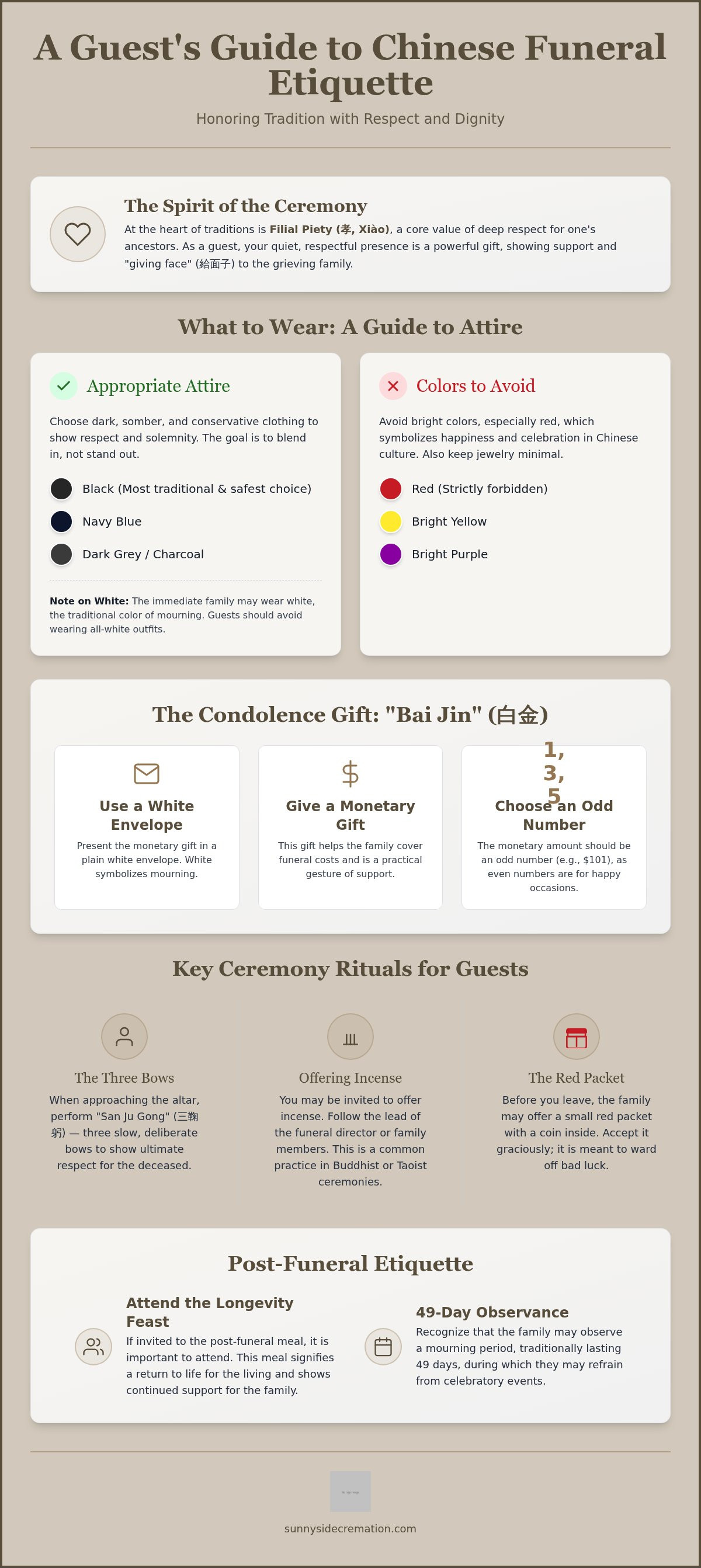
At the heart of every ritual is the concept of "Filial Piety," or Xiao. This isn't just a tradition; it's a deep-seated value of showing respect and devotion to one's parents and ancestors. During a funeral, these rituals serve as a final act of love, ensuring the deceased is honored properly. Proper Chinese funeral etiquette for guests helps create a space where the soul can transition peacefully to the next life. Whether the family follows Buddhist, Taoist, or Christian traditions, the core intention remains the same: to provide a dignified farewell that honors a life well-lived.
As a guest, your presence carries immense weight. In Chinese culture, attending a funeral is seen as "giving face" to the family. It's a public demonstration of support that validates the family's grief and the importance of their loved one. You don't need to be an expert in every ritual to make a difference. Your quiet, respectful attendance is a powerful gift in itself. It tells the family that their loved one was valued by the community.
The Importance of Avoiding "Bad Luck"
Much of the etiquette is designed to protect the living and the dead from "bad luck." This is why you'll see a strict avoidance of certain colors, especially red, which is reserved for celebrations like weddings. You might also notice that certain numbers are avoided in conversation or gift-giving. While you might hear about zodiac signs "clashing" with the day of the service, guests rarely need to worry about this level of detail. The most vital part of Chinese funeral etiquette for guests is arriving with a sincere heart. Families appreciate your effort to learn their ways, and they'll always value your intention over perfect execution of every custom.
Regional Variations: Mainland, Taiwan, and Hong Kong
Traditions can shift slightly depending on where a family originates. Families from Mainland China might follow more secular or traditional folk customs, while those from Taiwan or Hong Kong may incorporate specific Buddhist or Taoist rites. In our community, Chinese funeral services in Southern California often blend these regional nuances into a beautiful, cohesive tribute. If you're ever unsure of what to do next, simply look to the immediate family or the funeral director for guidance. They're there to lead the way with grace and patience, helping you feel comfortable in your role as a supportive observer.
What to Wear: A Guide to Colors and Attire
Selecting your attire is one of the first ways you can demonstrate respect for the family's grief. The goal is to blend into the background, offering a quiet and supportive presence. When considering Chinese funeral etiquette for guests, the primary rule is to choose dark, somber colors. Black is the most traditional and safest choice, but navy blue and dark grey are also perfectly acceptable. These muted tones reflect the gravity of the occasion and show the family that you share in their solemnity.
The most critical rule to remember is the "Red Taboo." In Chinese culture, red is the color of vitality, happiness, and weddings. Wearing red to a funeral is considered deeply offensive, as it suggests you are celebrating while the family mourns. This prohibition extends beyond your main outfit. Avoid red ties, scarves, or even subtle red patterns in your socks or accessories. Bright yellow and purple should also be avoided, as these colors can carry celebratory connotations that feel out of place in a house of mourning.
Jewelry and accessories should be kept to an absolute minimum. Choose simple, understated pieces rather than anything flashy or distracting. If the deceased was over 80 years old, you might notice the family incorporating hints of pink or red into the service. This is known as a "longevity funeral," celebrating a long and full life. While the family may use these colors to signify a life well-lived, guests should still stick to their dark, somber palette out of reverence. If you find yourself helping a friend plan these delicate details, our team offers compassionate funeral planning to ensure every cultural nuance is honored with dignity.
Traditional Mourning Colors vs. Guest Attire
There's often confusion regarding the color white. In Chinese tradition, white is the primary color of mourning and death, rather than black. You will likely see the immediate family wearing white robes or burlap garments to signify their status as mourners. Because white is reserved for the family, guests should generally avoid wearing all-white outfits. Stick to black or charcoal to maintain a clear distinction between the immediate family and the supportive community members in attendance.
Footwear and Grooming for Guests
Practicality is just as important as color when choosing your footwear. You may be standing for long periods during the rituals or walking across grassy areas at Forest Lawn or Rose Hills. Opt for closed-toe, conservative shoes in a dark color that are comfortable yet professional. Keep your hair and makeup simple and natural to reflect the quiet dignity of the service. A guest's somber palette should consist of deep, muted tones that prioritize humility over personal expression.
Condolence Gifts: Bai Jin (White Envelopes) and Flowers
Offering a gift is a profound way to show you care during a time of loss. In Chinese tradition, this gesture typically takes the form of "Bai Jin," which translates to "white gold" or "white cover." These cash contributions are intended to help the family cover funeral costs and show communal support. When navigating Chinese funeral etiquette for guests, the way you present this gift is just as important as the gift itself. Always offer the envelope with both hands as a sign of deep respect, or place it gently in the designated box usually found near the entrance of the chapel or funeral home.
One of the most unique aspects of this custom is the "odd number" rule. While even numbers are celebrated at weddings or birthdays to symbolize harmony and pairs, they're strictly avoided at funerals. You should give an amount that ends in an odd digit, such as $51, $101, or $151. This practice ensures the gift is clearly distinguished from a celebratory one, respecting the solemn nature of the day. It also reflects the belief that "sorrow should not be doubled," making the odd number a symbolic wish that the family's grief does not repeat.
Calculating the Bai Jin Amount
Deciding on an amount often depends on your relationship with the deceased and their family. For a coworker or a distant acquaintance, a smaller token is appropriate. For a close friend or a relative, you might choose a more substantial contribution. It's helpful to remember that the family values your presence and your heart above the specific dollar amount. Interestingly, funeral pre-planning for Asian families often includes discussions on how these contributions are handled, which helps the family manage the logistics with grace during their time of grief.
Appropriate Funeral Flowers
Flowers provide a soothing visual tribute and a sense of peace in the service room. White and yellow chrysanthemums are the gold standard for Chinese funerals because they symbolize grief, lamentation, and the nobility of the soul. Lilies and white carnations are also beautiful, respectful choices. However, you must avoid roses, particularly red ones, as they carry romantic or celebratory meanings that are out of place. Most floral arrangements will feature a white ribbon where your name is clearly written so the family can acknowledge your kindness during their quiet moments of reflection later. If you are unsure of the delivery timing, checking the funeral home's official announcements, such as the funeral notices provided by Ashley Edwards, can ensure your tribute arrives at the correct time and place.
Participating in the ceremony rituals is a deeply moving way to honor the deceased and stand in solidarity with the family. When you enter the service area, maintain a quiet and somber expression. You'll typically be invited to approach the altar or casket in small groups. This is a moment for reflection and quiet tribute. Proper Chinese funeral etiquette for guests suggests following the lead of the funeral attendants, who will guide you through each step with patience and grace.
The core of the guest's participation involves the bowing ritual, known as San Ju Gong. You'll stand before the altar and perform three purposeful bows. These aren't hurried movements; they're slow, deliberate signs of deep respect. If the family provides joss sticks, or incense, hold them between your palms at forehead level while bowing. After your third bow, place the sticks upright in the incense burner. This act signifies your prayers or well-wishes rising to the heavens, providing a sense of peace for the departed soul.
One of the most important social rules involves how you speak to the grieving family. It's a natural instinct to say "Thank you" when they acknowledge your presence, but in this context, "Xie Xie" is strictly avoided. Saying thank you can inadvertently suggest you're "thankful" for the occasion. Instead, use phrases like "Take care" or "I am sorry for your loss." If you're feeling overwhelmed by these nuances, our team at Sunnyside Cremation and Funeral can help you understand these traditions so you can focus on being a supportive friend.
The Symbolic Meaning of the Candy and Coin
As you leave the service, you'll often receive a small red envelope containing a single coin and a piece of candy. This ritual is designed to protect guests as they return to their daily lives. The candy is meant to be eaten immediately to "take away the bitterness" of the death. The coin is intended to pay for your safe journey home; tradition dictates that you must spend it that day, perhaps on a small snack or drink. To keep the somber energy of the funeral separate from your home, these items should not be brought inside your house.
Burning Joss Paper and Spirit Money
You may also observe the family burning elaborate paper houses, cars, or "spirit money" in large burners. This is a beautiful tradition based on the belief that these items transition into the afterlife to provide for the deceased. Guests aren't usually required to participate in the burning, but your respectful observation is a valued part of the ceremony. Sunnyside Cremation and Funeral coordinates these traditional rites at local facilities like Rose Hills, ensuring that every symbolic gesture is performed with the reverence it deserves.
Post-Funeral Etiquette and the Longevity Feast
The conclusion of the formal service marks the beginning of a long journey of remembrance for the family. In many Southern California communities, the mourning process follows specific markers, most notably the 49-day and 100-day periods. These dates are significant because they represent the time believed necessary for the soul to complete its transition. As a guest, your role shifts from a formal observer to a steady source of emotional support. While the intensity of the initial days may fade, checking in with the family during these milestones shows a deep level of care that honors Chinese funeral etiquette for guests.
Our team at Sunnyside understands how complex these timelines can be for families balancing modern life with ancient tradition. We take pride in assisting with Buddhist funeral services in Orange County, coordinating the intricate details that allow families to focus on their grief and their loved one's legacy. Whether it's arranging specific prayer sessions or helping guests understand their role in the days following the burial, we're here to provide a steady hand through every step of the process.
The Feast of Longevity (Shou Zhe)
If you're invited to a post-funeral meal, often called the Feast of Longevity or "Shou Zhe," it's considered polite and respectful to attend. This meal serves a dual purpose: it's a celebration of the life lived and a sincere way for the family to thank those who supported them. Participating in this meal is a key part of Chinese funeral etiquette for guests, as it helps the family feel the warmth and strength of their community. You'll notice the atmosphere is often lighter than the service itself. Conversations may turn toward happy memories and shared stories. The menu often includes symbolic foods, such as noodles representing long life or specific vegetarian dishes that honor Buddhist values of compassion.
Visiting the Gravesite in Southern California
For burials at Forest Lawn or Rose Hills, the gravesite visit is a central part of the day. You'll observe that the orientation of the grave is carefully chosen, often influenced by Feng Shui principles to ensure harmony and peace for the deceased and their descendants. Guests should remain respectful during the final graveside rites, following the family's lead on when to approach. Looking ahead, you might be invited to join the family again during the Qingming Festival, or Tomb Sweeping Day. This annual event is a beautiful time for the community to return to the park, clean the headstones, and offer fresh flowers, ensuring the bond with the ancestor remains strong for generations to come.
Honoring a Legacy with Confidence and Grace
Attending a service for a loved one is a profound gesture of support that the family will remember for years to come. By choosing somber attire, understanding the "odd number" rule for condolence gifts, and participating in the bowing rituals, you provide a sense of peace during a difficult time. Navigating Chinese funeral etiquette for guests doesn't have to be overwhelming when you focus on the sincere intention behind every gesture. Your presence is a gift of "face" that validates the life lived and offers immediate comfort to those in mourning.
For families seeking a partner to guide them through these sacred traditions, we're here to help. Our family-owned home has served the Garden Grove, Buena Park, and Anaheim communities for years with Mandarin-speaking staff and Buddhist ceremony experts. We specialize in seamless coordination with major parks like Forest Lawn and Rose Hills to ensure every detail is handled with reverence and professional care.
Contact Sunnyside Cremation and Funeral for culturally respectful Chinese services and let us provide the steady hand you need. You're never alone in this journey of remembrance, and we're honored to walk beside you with kindness and expertise.
Frequently Asked Questions
What is the most important thing to avoid at a Chinese funeral?
Avoiding the color red is the most critical rule, as it symbolizes celebration and happiness. You should also refrain from wearing bright yellow or purple, as these can be seen as festive. Additionally, avoid saying "thank you" to the grieving family. Instead, offer quiet words of sympathy or a simple "take care." These small adjustments show you respect the solemn nature of the day and support the family's healing process.
How much money should a guest put in a white envelope (Bai Jin)?
You should choose an amount that ends in an odd digit, such as $51 or $101, to distinguish the gift from celebratory even-numbered ones. The specific amount often depends on your closeness to the deceased. While acquaintances might give a smaller token, close friends often provide more. In the context of Chinese funeral etiquette for guests, the family values the gesture of communal support more than the specific dollar value you provide.
Can I attend a Chinese funeral if I am not Chinese or Buddhist?
Yes, your presence is highly valued as a "gift of face" to the family, regardless of your personal background or faith. Chinese services are inclusive, and families appreciate the support of friends from all walks of life. You aren't expected to know every ritual perfectly. Simply observing with a quiet, respectful heart is the most important way to show you care. Most families welcome diverse guests who come to honor their loved one.
Why do I receive a red envelope and a piece of candy at the end?
These items are given to protect you from the somber energy of the service as you return home. The candy is meant to "take away the bitterness" of death, and you should eat it immediately. The coin in the red envelope is for your safe passage; it must be spent before you enter your house. These traditional gestures ensure that you leave the funeral with a sense of peace and protection for your journey back to daily life.
What should I say to the family if I cannot say "thank you"?
Use supportive phrases like "Please take care" or "I am truly sorry for your loss" instead of saying thank you. In Chinese culture, saying "Xie Xie" at a funeral can imply you're thankful for the event, which is unintentionally hurtful. By choosing words that focus on empathy and comfort, you align with proper Chinese funeral etiquette for guests. Your sincere tone will communicate your sympathy far more effectively than any specific formal phrase.
Is it okay to take photos during a Chinese funeral service?
Photography is generally discouraged during the service to maintain an atmosphere of quiet reverence and privacy for the family. While some families may hire a professional to document the day, guests should keep their phones tucked away. Taking photos can be seen as a distraction from the sacred rituals being performed. Focusing your attention on the ceremony shows the family that you are fully present in their time of grief and reflection.
Do I have to participate in the incense or bowing rituals?
You are not required to participate if you feel uncomfortable, but doing so is a meaningful way to show respect. If you choose not to bow or light incense, you can simply stand quietly and bow your head for a moment of silence. Most families understand that guests have different comfort levels with traditional rites. Your respectful presence at the altar is what matters most to the grieving family as they say their final goodbyes.
What color flowers are best to send to a Chinese family in Orange County?
White and yellow flowers are the most appropriate choices, specifically chrysanthemums or lilies. These colors symbolize mourning and the nobility of the soul in Chinese tradition. Avoid red flowers of any kind, as they are reserved for happy occasions. When sending arrangements to local parks like Forest Lawn or Rose Hills, ensure the card is clear and the ribbon is white. This thoughtful choice provides a soothing visual tribute for the family to appreciate.


