

What is the most respectful way to honor Chinese funeral traditions? Start by asking what matters to the family. If you’re wondering what to expect at a service, or what to wear, bring, or say, this Chinese funeral customs guide explains common practices while recognizing that families may follow different traditions, beliefs, and personal wishes.
Some families observe Buddhist prayers or mourning rituals; others blend heritage with contemporary choices, including cremation. Customs vary by region, religion, and family, so no single list applies to everyone. A thoughtful question and a willingness to follow the family’s guidance can mean more than assuming a particular practice is expected.
This guide covers what common customs may mean, how to show respect as a guest or family member, and how families can make meaningful choices while arranging a funeral in California. It also offers practical guidance on clothing, flowers, and condolence gifts, and explains how compassionate coordination and Mandarin-language support can help families honor the traditions that feel right to them.
Key Takeaways
- This Chinese funeral customs guide presents common practices as possibilities, not requirements. Follow each family’s wishes.
- Remembrance and respect can be expressed in different ways. Beliefs and family preferences shape which customs feel meaningful.
- Prepare to attend with confidence: follow service instructions, dress respectfully, offer sincere condolences, and take your cues from the family.
- When helping plan, begin with the family’s wishes, identify meaningful customs, then coordinate funeral or cremation arrangements around those priorities.
- Sunnyside supports Chinese funeral and cremation arrangements in Orange County, with Mandarin-speaking staff and Buddhist funeral guidance for families who want them.
Chinese Funeral Customs: What They Honor and Why Practices Differ
Chinese funeral customs reflect a family’s heritage, beliefs, and personal wishes. They are not a single set of rituals shared by every Chinese family. Practices may offer ways to honor a person’s life, express grief, and bring loved ones together. A custom that is meaningful to one family may be unfamiliar or unsuitable for another.
Filial respect, often understood as honoring and caring for parents and elders, and remembrance are recurring themes in some traditions. These are values, not instructions that every family follows in the same way. A family might express them through a religious ceremony, shared stories, a quiet gathering, or other choices that reflect the person who died.
The broad history of Chinese funeral rituals reflects differences across regions and religious traditions. That context can help explain why customs vary, but it can’t tell you what a particular family wants. Their wishes are the best guide.
What values can Chinese funeral traditions express?
Families may express remembrance by sharing memories, displaying photographs, or gathering relatives and friends. Respect for elders can shape how family members participate or speak about the person who died. A ceremony may also connect generations, giving loved ones time to grieve together and acknowledge a lasting bond.
These values can be expressed through religious or nonreligious rituals, or in ways that aren’t formal rituals at all. Some families observe ancestor veneration; others don’t. Even when a practice is familiar within a family’s heritage, relatives can decide whether and how it fits their beliefs. The meaning comes from the family’s intention, not from assuming a ritual is universal.
Why do customs differ among Chinese families?
Several influences can shape funeral choices:
- Regional heritage: Family traditions may reflect the place and community their relatives come from.
- Religious affiliation: Buddhist, Taoist, Christian, folk-religious, and secular beliefs can inform different ceremonies and observances.
- Family preference and personal belief: Relatives may adapt inherited practices, choose only those that feel meaningful, or honor the deceased’s own wishes.
- Generation and migration: Life across countries and generations, including in California, can shape how traditions are understood and observed today.
These influences can overlap. Relatives in one family may hold different beliefs, and the person’s preferences may guide decisions too. If you’re attending a service, follow the immediate family’s instructions rather than relying on assumptions about what a “Chinese funeral” must include. If you need clarification, ask a close family contact a brief, considerate question instead of asking grieving relatives to explain or defend their customs.
Common Chinese Funeral Customs and the Meaning Behind Them
There isn’t a checklist that applies to every Chinese funeral. Practices can reflect a family’s religious beliefs, regional heritage, and wishes for the person who died. A familiar custom may be meaningful to one household and absent from another. Think of the examples below as ways some families express care, not rules guests should expect at every service.
Incense, joss paper, and symbolic offerings
Some families use incense during prayers or other ceremonial moments. For those who observe the practice, its rising smoke may mark a moment of reverence or prayer. Joss paper, sometimes called spirit money, may be burned as a symbolic offering connected with care for the deceased in the afterlife. These are spiritual meanings held by some practitioners, not beliefs shared by every Chinese person or family. The Chinese Funeral Customs in Singapore resource describes how offerings can be connected with filial piety and an ongoing relationship between the living and the dead.
Offerings can express a family’s care and remembrance, with their meaning shaped by the beliefs of those taking part. Whether incense or paper offerings are included depends on the family’s wishes, the ceremony’s religious context, and the setting. As a guest, follow the family’s lead rather than bringing or using an offering on your own.
Flowers, condolence gifts, and mourning attire
Flowers can offer a quiet expression of sympathy, but preferences around arrangements and colors differ. Some families include flowers in the service; others prefer a different form of tribute. Follow any instructions the family has shared. A short, sincere message can be meaningful even if you’re unsure which gift is appropriate.
In some communities, guests offer condolence money to support the bereaved family or express sympathy. It isn’t an obligation for everyone, and customs around giving can vary. Follow guidance from the family or hosts rather than assuming a particular amount or method is expected.
When no dress code is provided, choose subdued, respectful attire. Specific color expectations can vary, so avoid relying on a universal rule. If you’re unsure, ask the person organizing the gathering rather than placing the burden on the closest mourners.
A considerate approach is simple: read the service details, respect the family’s preferences, and take your cues from those present. Families arranging a service can find Chinese funeral and cremation arrangements through Sunnyside, with attention to their wishes.
How Chinese Funeral Traditions Adapt to Family Beliefs and Choices
A family’s beliefs can shape who leads a ceremony, which rituals feel meaningful, and whether the gathering is religious, spiritual, or secular. Chinese heritage alone doesn’t determine these choices. The deceased’s wishes, relatives’ beliefs, and practical circumstances all matter. The examples below are possibilities, not a formula for every family.
How religion and family preference shape ceremony choices
A family may invite a monk, Taoist celebrant, Christian clergy member, or another person they trust to lead or support the service. Some families combine elements from different traditions; others prefer a family-led or nonreligious gathering. The Chinese Funeral Rites and Burial Customs overview offers historical context, while the choices for an individual service remain personal.
This comparison is a starting point for conversation, not a way to assign beliefs based on someone’s background:
| Possible practice | What it may express | Who guides the choice |
|---|---|---|
| Buddhist prayers or a monk’s participation | A religious observance and a way to honor the deceased | The family, the deceased’s wishes, and a chosen Buddhist leader |
| Taoist rites or a Taoist celebrant | Observance connected with the family’s Taoist beliefs | The immediate family and their religious guide |
| Christian prayer or scripture | Comfort and remembrance within a Christian faith | The family and chosen clergy member |
| Folk-religious practices or offerings | Traditions meaningful to the family’s own beliefs | Family members and, if desired, a trusted ritual guide |
| Secular, family-led remembrance | Personal memories and connection without a formal religious service | The family, guided by the deceased’s preferences |
When relatives have different views, begin with the person’s known wishes and identify which elements matter most to the immediate family. A ceremony can honor heritage without including every custom. For more service-planning context, see this Chinese funeral services guide.
How traditions fit contemporary California arrangements
In California, families can shape a service around who will attend, the setting, and the memorial arrangements they want. A family might hold a religious ceremony before cremation, arrange a burial with a gathering, or choose another way to remember their loved one. Chinese heritage does not dictate one choice between cremation and burial; wishes, beliefs, and circumstances shape the decision.
Practical coordination helps families preserve meaningful elements while organizing the arrangements. They can discuss the service format, the chosen celebrant, and how relatives will participate. Families considering Buddhist observances can learn more about Buddhist funeral services in Orange County. Sunnyside provides culturally specific arrangements, Mandarin-language support, and Buddhist funeral guidance for families who want it. A Chinese funeral and cremation service can help coordinate arrangements around the family’s wishes.
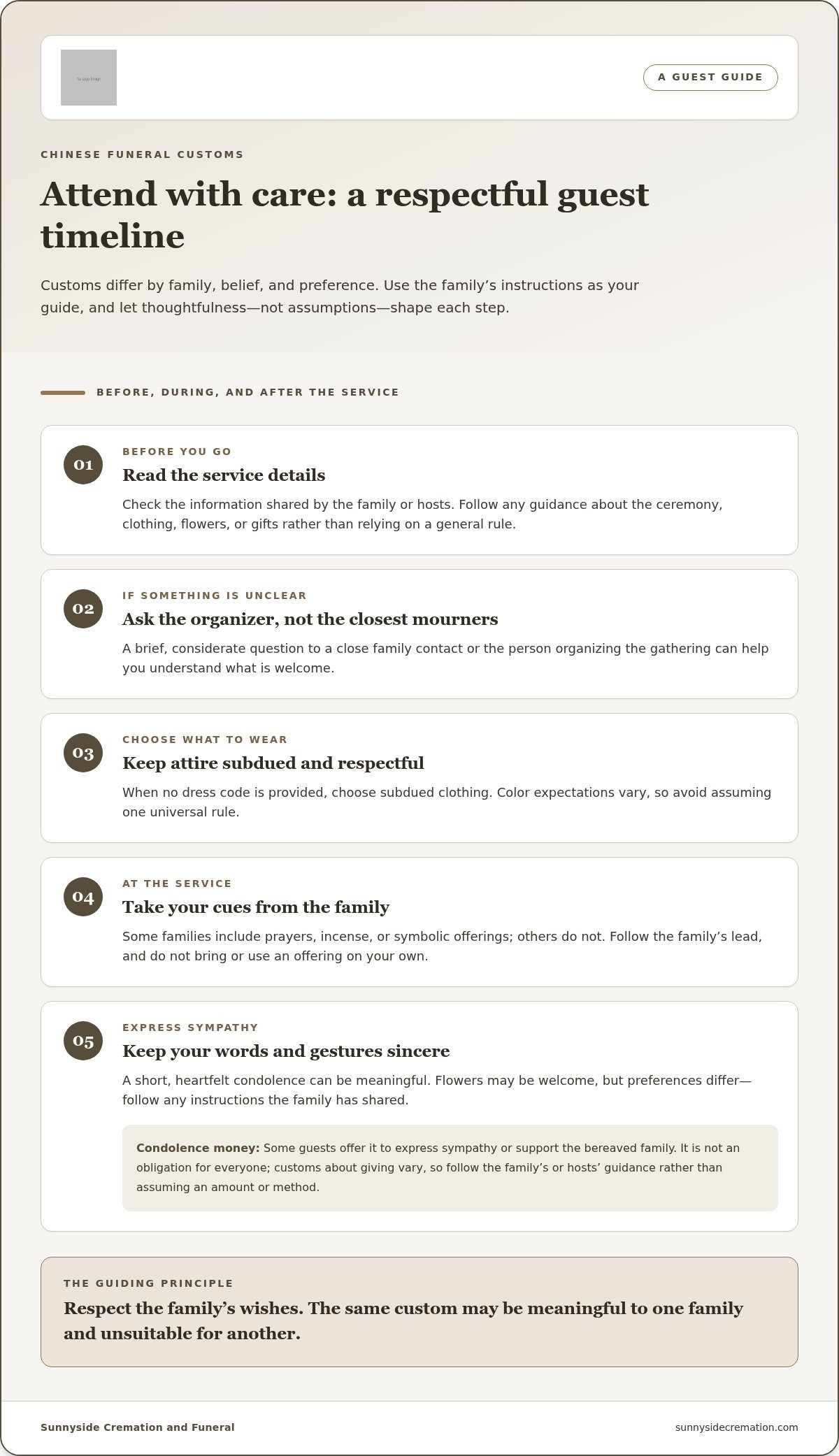
How to Attend a Chinese Funeral Respectfully
You don’t need to know every custom before attending. The family’s instructions matter more than general etiquette advice, because each service reflects its own beliefs and wishes. A Chinese funeral customs guide can offer context, but your best guide on the day is the family’s lead.
Attend with respect, pay attention to the family’s cues, and stay flexible as the service unfolds. A quiet presence and sincere sympathy matter more than knowing every tradition.
- Read the invitation or service instructions. Look for requests about attire, flowers, gifts, or participation.
- Choose respectful clothing. Wear modest, subdued attire unless the family specifies a different dress code.
- Offer a brief condolence. A simple expression of sympathy is enough; you don’t need perfect words.
- Follow the family’s lead. Observe before joining prayers, approaching offerings, or taking part in other customs.
What should you wear or bring?
Modest, subdued clothing is considerate when no dress code is given. Avoid assuming specific colors or styles are required, since family preferences can differ. Check the invitation for guidance, or ask a close family contact if you’re uncertain.
Flowers and condolence gifts also depend on family preference and community custom. Some families welcome flowers or condolence money; others may request a different gesture or no gifts. Follow stated wishes rather than feeling you must bring something. A thoughtful message or quiet visit can express care, too.
What can you say and do during the service?
Keep condolences warm and simple: “I’m so sorry for your loss” or “I’m thinking of your family” acknowledges grief without asking the bereaved to explain traditions. Listen if they want to share memories, and let them guide the conversation. Avoid unsolicited religious advice or assumptions about what they believe.
During the service, watch how family members and hosts participate. They can guide you on whether to approach incense or offerings, join prayers, or take part in a moment of remembrance. If you’re unsure, remain quietly present. Don’t photograph sensitive moments or share images without permission.
There’s no need to perform a custom you don’t understand. Being attentive, considerate, and guided by the family is a meaningful way to show support. Families arranging a Chinese funeral can find Chinese funeral and cremation support through Sunnyside.
Planning a Chinese Funeral in Orange County with Respectful Support
Planning can feel more manageable when the family starts with what matters most, rather than trying to include every custom associated with Chinese funerals. A Chinese funeral customs guide offers context, but the arrangements should reflect the person who died and the wishes of those closest to them. In Orange County, thoughtful coordination can help families honor meaningful traditions while making practical decisions one step at a time.
- Gather family wishes. Share any known preferences of the person who died, along with the family’s faith practices and priorities for the service.
- Identify meaningful customs. Decide which rituals, prayers, or ways of remembering feel right to the immediate family. There’s no need to include a practice simply because it’s familiar to others.
- Coordinate the arrangements. With the family’s priorities in view, organize the service and memorial details around their choices.
Choose one family contact to gather preferences and communicate decisions. This gives relatives a clear point of contact and can reduce repeated conversations during a difficult time. Family members can offer input, while the designated contact helps keep the next steps organized.
A family-centered way to begin planning
Start with a conversation about the customs, faith practices, and personal wishes that matter most. The family might want a particular religious leader, a gathering centered on memories, or arrangements that reflect the deceased’s stated preferences. Sunnyside supports culturally specific Chinese funeral arrangements for families in California, with planning shaped around each family’s needs rather than a fixed template.
How local coordination can support meaningful customs
Local arrangements can bring ceremony preferences and memorial plans together while keeping the family’s priorities in view. Sunnyside’s Mandarin-speaking staff can support families who prefer to discuss arrangements in Mandarin, and Buddhist funeral guidance is available for those who want it. Sunnyside also coordinates with Forest Lawn and Rose Hills. For cemetery-specific planning context, see the Chinese funeral planning with Forest Lawn guide.
These supports let families shape arrangements around their own beliefs, preferences, and plans for remembrance. A considerate planning conversation makes room for differences and keeps decisions connected to what the family values.
If you’re beginning to make arrangements, speak with Sunnyside about Chinese funeral arrangements and discuss the customs and choices that matter to your family.
Take the Next Step with Your Family’s Wishes in Mind
Choosing what to honor can begin with a simple conversation: what would the person who died have valued, and what would bring comfort to those gathering to remember them? You don’t need to settle every detail at once. A Chinese funeral customs guide offers useful context, but the most meaningful arrangements are shaped by your family’s wishes.
When planning feels difficult, a steady partner can help with practical decisions. Sunnyside is a family-owned California mortuary serving Chinese families with culturally meaningful funeral and cremation arrangements. You can talk through your family’s priorities and consider a thoughtful next step at a manageable pace.
Speak with Sunnyside about culturally respectful Chinese funeral arrangements. Your family’s choices deserve care as you find the right way to honor the life you remember.
Frequently Asked Questions
Do all Chinese families follow the same funeral customs?
No. Chinese families don’t all observe the same customs, and relatives within one family may hold different beliefs. For example, a family with Buddhist and Christian relatives might center the service on the deceased’s wishes while making space for relatives to remember them in their own ways. A Chinese funeral customs guide offers general context, but it can’t tell you which practices a particular family follows. Let the family’s organizer guide you.
What should I wear to a Chinese funeral?
Choose modest, subdued clothing unless the family gives another dress code. A plain, dark or neutral outfit is a considerate default; keep accessories understated and choose shoes suitable for the venue. Don’t assume one color rule applies to every family. Follow the invitation if it specifies attire, even if it differs from general advice. If the instructions leave you uncertain, ask the host privately rather than putting the bereaved on the spot.
Is it appropriate to bring flowers to a Chinese funeral?
Flowers can be appropriate if the family welcomes them, but they aren’t expected at every service. Check the invitation, memorial notice, or a close family contact for requests such as “in lieu of flowers.” If flowers are welcome, a simple arrangement and a brief condolence card can be thoughtful. If you’re unsure where to send an arrangement, ask the organizer so it reaches the family in the right place.
Can non-family members participate in Chinese funeral rituals?
Yes, when the family or service leader invites guests to take part. The invitation might be to join a prayer, make a gesture of respect, or participate in another part of the service. If you’re unsure, wait for a cue rather than copying a ritual you don’t understand. Quiet observation is also respectful. You can ask the organizer beforehand whether guests are expected to participate.
What is joss paper, and why do some families burn it?
Joss paper is paper burned by some families as a symbolic offering connected with caring for the deceased after death. The practice reflects beliefs held by those who choose it, not a custom observed by every Chinese family. Guests shouldn’t assume they should bring or burn it themselves. If the family includes a paper offering, follow the ceremony leader’s directions and any instructions for the setting, and participate only if invited.
How should I offer condolences at a Chinese funeral?
Offer a few sincere words, then give the bereaved room to respond or remain quiet. You might say, “I’m thinking of your family,” or share a kind memory of the person who died. Avoid asking relatives to explain a ritual while they’re grieving or pressing them to talk. If you want to offer practical help, make a specific, low-pressure offer, such as bringing a meal on a particular day.
How long does a Chinese funeral service last?
There’s no single service length. It depends on the family’s plans, ceremony format, and any prayers or remembrances included. The invitation or organizer may provide timing for the service and any gathering afterward. If you have a scheduling constraint, ask discreetly whether guests are expected to stay for the full program. Arriving on time and allowing flexibility can help you avoid interrupting a ceremony or leaving during an important moment.
What should a family consider when planning a Chinese funeral in California?
Begin with the person’s wishes and the family’s faith preferences. Then consider burial or cremation, the ceremony and gathering, and cemetery coordination. Sunnyside serves Chinese families across Orange County, including Garden Grove, Buena Park, La Mirada, Cerritos, Anaheim, La Habra, Fullerton, Norwalk, Cypress, Artesia, Stanton, Tustin, Orange, Los Alamitos, Westminster, and Irvine. A designated family contact can keep decisions and updates organized.


