

What if the final act of love for your parent wasn't just a goodbye, but a precise spiritual bridge to their next journey? For many families in Garden Grove and Buena Park, the pressure to get every detail right can feel like a heavy burden. You worry that a missed step or a misunderstood ritual might disrupt the peace of your loved one or bring misfortune to those left behind. It's natural to feel overwhelmed when you're trying to honor ancient Chinese Buddhist funeral traditions while also dealing with the fast-paced logistics of Southern California life.
At Sunnyside Cremation and Funeral, we understand that this is a time of deep emotional vulnerability. You deserve a partner who speaks your language and respects your heritage. This guide provides the clarity you need to plan a dignified farewell that honors your loved one's legacy without the stress of confusion. We'll explore the essential spiritual rites, explain what guests should wear, and show you how to coordinate seamlessly with major memorial parks like Forest Lawn and Rose Hills. From the first incense offering to the final transfer of merit, we're here to help you find a steady path forward through this landscape of uncertainty.
Key Takeaways
- Understand how ancient rites like sutra chanting and joss paper burning serve as a spiritual bridge for your loved one's transition to the next life.
- Learn the essential etiquette for Chinese Buddhist funeral traditions, including why white or black attire is required and red is strictly avoided.
- Discover how to seamlessly coordinate complex logistics and ceremonies with major Southern California memorial parks such as Forest Lawn and Rose Hills.
- Find comfort through the support of Mandarin-speaking staff in Garden Grove and Buena Park who respect your specific cultural and language needs.
- Gain a clear, step-by-step roadmap to honor your family’s legacy while navigating local regulations and modern funeral planning with confidence.
Understanding the Spiritual Significance of Chinese Buddhist Funeral Rites
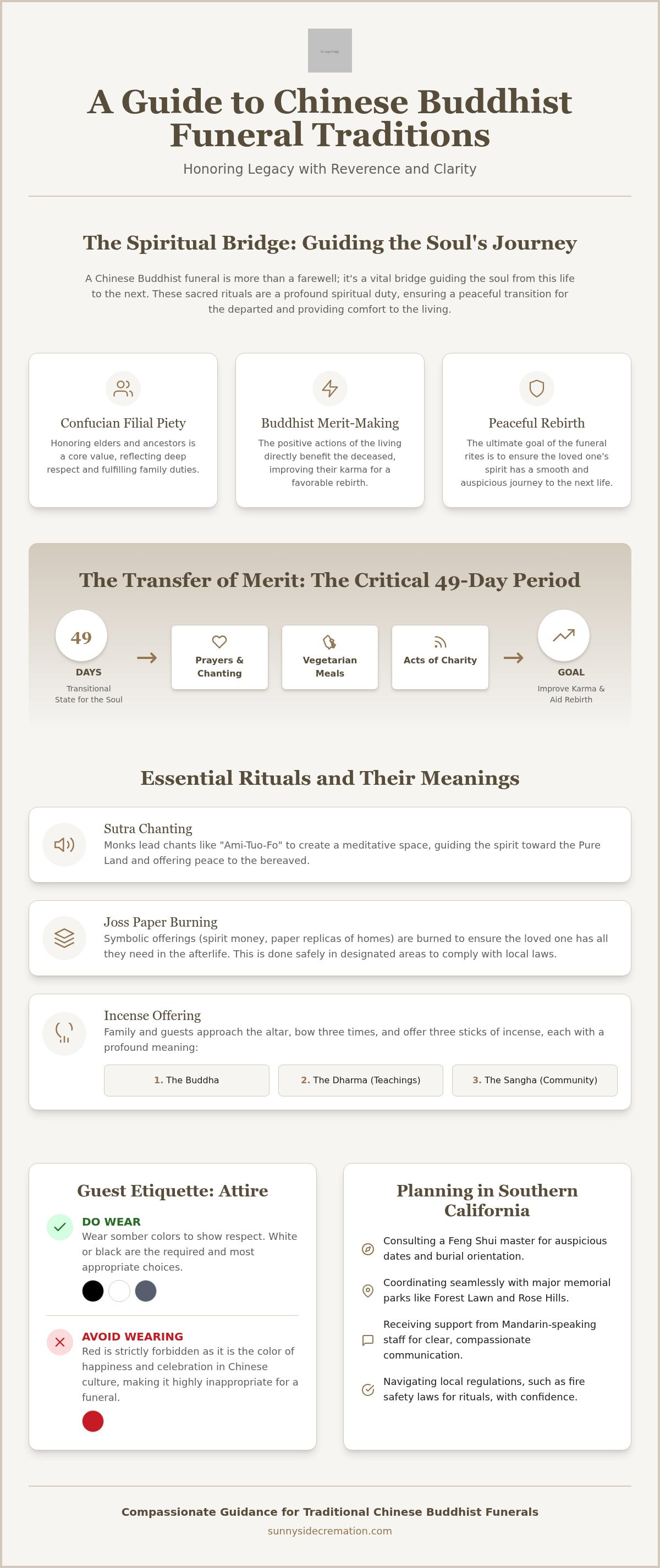
A Chinese Buddhist funeral serves as a vital bridge. It guides the soul from this life to the next. These Chinese funeral rituals aren't just about tradition; they're a spiritual duty. They blend Confucian values of filial piety with Buddhist concepts of merit-making. When a family honors their elder with precision, they aren't just saying goodbye. They're actively participating in the deceased's journey toward a peaceful rebirth. It's a profound act of stewardship that provides comfort to both the living and the departed.
Many families in Garden Grove and Buena Park feel a deep responsibility to follow these rites strictly. There's a traditional belief that skipping a ritual or choosing an inauspicious date might bring bad luck to the surviving relatives. To prevent this, families often consult a Feng Shui master. This expert helps select the most auspicious time for the service and the ideal orientation for the burial. This ensures the environment remains in perfect harmony with the spiritual world, providing a calm foundation for the grieving process.
The Concept of Meritorious Deeds
In Chinese Buddhist funeral traditions, the actions of the living directly benefit the dead. This is known as the transfer of merit. The first 49 days after a passing are especially significant. During this period, the soul is believed to be in a transitional state. The prayers, vegetarian meals, and acts of charity performed by the family can improve the deceased's karma. Your conduct during the service is a reflection of your love; it's a way to provide the spirit with the spiritual support it needs for a favorable transition. We help you manage these details so you can focus on these meaningful acts of devotion.
The Role of Buddhist Clergy and Monks
Monks and clergy are the steady guides in this process. Their chanting of sutras creates a rhythmic, calming atmosphere that serves two purposes. It guides the spirit toward the light while providing a sense of peace to the bereaved. At Sunnyside, we help facilitate this by setting up a traditional altar. This sacred space includes the deceased's portrait, fresh fruit offerings, and burning incense. Even within a modern Southern California mortuary setting, we ensure these elements are placed with reverence. We create a sanctuary where faith and tradition can flourish, even amidst the busy life of Orange County. This careful coordination ensures that every spiritual requirement is met with dignity and respect.
Essential Rituals: From Chanting to Joss Paper Burning
The rhythmic sound of sutra chanting, particularly the repetition of "Ami-Tuo-Fo," serves as a profound anchor for the grieving family. These ancient vibrations do more than fulfill a religious requirement; they create a meditative space that helps quiet the mind during a time of chaos. This chanting guides the spirit toward the Pure Land while providing the bereaved with a steady, calming focus. It's a shared experience that connects the living with the departed in a final, harmonious act of devotion.
Symbolic offerings like joss paper or spirit money are traditionally burned to ensure the loved one has everything they need in the next realm. These paper replicas represent currency, clothing, and even homes. Because California has strict fire safety laws, we adapt these practices to ensure they remain both sacred and safe. We provide specialized burn barrels and designated areas at our facilities in Garden Grove and Buena Park, allowing families to maintain these Chinese Buddhist funeral traditions without worry. This balance of safety and spirituality ensures the ritual remains a source of peace rather than stress.
The "final viewing" is another cornerstone of the process. It offers a quiet, sacred moment for family members to see their loved one in a state of rest. This ritual provides essential closure, allowing the family to witness the transition before the final rites begin. If you're feeling unsure about how to manage these delicate moments, our Mandarin-speaking staff can guide you through each step with gentle professionalism.
Incense and the Transfer of Merit
Offering incense is a deeply personal protocol. Family members typically lead the way, followed by guests, each bowing three times before the altar. Each of the three sticks represents a core pillar of the faith: the Buddha, the Dharma (the teachings), and the Sangha (the community). The rising smoke of the incense serves as a sacred messenger, carrying the family's prayers and intentions directly to the heavenly realms. This act simplifies complex emotions into a single, graceful gesture of respect and merit-making.
Witnessed Cremation: A Spiritual Requirement
For many families, being present at the start of the cremation is a vital spiritual requirement. It marks the moment the physical form is surrendered to the elements. Many families choose the symbolic act of "pushing the button" to initiate the process. This isn't just a logistical step; it's a powerful act of letting go and acknowledging the cycle of life and death. We specialize in facilitating witnessed cremation Orange County, providing a private and respectful environment where families can stay as long as they need to find peace.
Etiquette and Customs: What to Wear and Expect
Attending a service can feel heavy with the fear of doing something wrong. Your presence is the greatest gift you can offer. In Chinese Buddhist funeral traditions, the way you present yourself reflects your respect for the deceased's journey. Most guests choose subdued colors like black or dark gray. White is the traditional color of mourning in Chinese culture; it represents purity and the spiritual void. It's vital to remember that red is strictly forbidden. In this context, red symbolizes celebration and happiness. Wearing it would be deeply insensitive to the grieving family.
Family members in Orange County often wear specific mourning bands on their sleeves. These markers identify their relationship to the deceased. Usually, a band on the left sleeve signifies a paternal loss; the right sleeve is for a maternal one. These bands are worn throughout the service and sometimes during the 49-day mourning period discussed earlier. They serve as a quiet, visible sign of the wearer's current state of reflection and grief.
When you approach the altar, it's customary to bow three times. This simple gesture acknowledges the spirit and the family's loss. If you're attending a service in Garden Grove or Buena Park, you might notice "Ging Bao," which are white envelopes containing monetary gifts. These are given to the family to help cover funeral expenses and show communal support. It's a practical way for the community to carry the burden together.
The Meaning of Colors and Symbols
White isn't just a lack of color. It signifies a return to the source. You'll see yellow or saffron used primarily for the monks and clergy. These colors denote high spiritual status and the light of the Buddha's teachings. Guests should stick to the most muted tones possible. Avoiding bright patterns ensures the focus remains entirely on the solemnity of the occasion and the spiritual transition taking place.
Gifts and Reciprocal Tokens
Gifts are handled with a quiet grace. If you provide a white envelope, the family will receive it with both hands as a sign of respect. This exchange is often done without a lot of conversation, allowing the focus to remain on the ceremony. It's a moment of shared stewardship between the family and their support network.
At the end of the service, you'll likely receive a small white envelope in return. It usually contains a piece of candy and a coin. It's a thoughtful tradition. The candy takes away the bitterness of sorrow, and the coin is meant to ensure your safe passage home. Many families also host a "Feast of Longevity" or a vegetarian meal after the burial. This gathering isn't just about food. It's a time for the community to transition from the weight of the ceremony back into the light of shared connection.
Planning a Chinese Buddhist Service in Orange County
Organizing a service in Orange County requires a delicate balance of spiritual timing and logistical precision. Many families in Garden Grove and Buena Park prioritize finding a Mandarin-speaking funeral home to ensure every detail of their heritage is understood and respected. This linguistic comfort is essential when organizing Chinese funeral services Southern California families rely on for cultural accuracy. One of the most complex tasks is the timeline. You may have a specific date chosen by a Feng Shui master, but you must also account for cemetery schedules and availability. We act as your steady guide, managing these moving parts so you can focus on your family's needs.
Coordination with Forest Lawn and Rose Hills
Major memorial parks like Forest Lawn and Rose Hills have specific protocols for Buddhist burials. The transition from our chapel to the graveside requires careful timing and clear communication. We handle the liaison work, ensuring the cemetery staff is prepared for rituals like the burning of joss paper or the placement of specific offerings. Our directors understand the layout and requirements of these parks, which allows us to provide a seamless experience. We manage several key logistical steps to support you:
- Securing the necessary permits for incense or ritual burning at the graveside.
- Arranging transportation for family members and the clergy to ensure everyone arrives together.
- Verifying that the burial plot orientation matches the Feng Shui master's guidance.
This level of coordination ensures that the spiritual precision of Chinese Buddhist funeral traditions is maintained even in large, public settings. It provides you with the peace of mind that your loved one's transition is being handled with the utmost reverence.
Pre-Planning for Cultural Preservation
Thinking ahead is a powerful way to protect your family from future stress. Engaging in funeral pre-planning for Asian families ensures that your specific Buddhist wishes are documented and legally binding. This process allows you to secure Mandarin-speaking services and specific ritual requirements in advance. It removes the guesswork for your children and grandchildren, giving them a clear path to follow during an emotional time. By documenting your preferences now, you're ensuring that your legacy is honored exactly as you envision. It provides a sense of security, knowing that your cultural and spiritual values will be upheld without compromise.
Compassionate Guidance for Traditional Chinese Buddhist Funerals
At Sunnyside Cremation and Funeral, we believe that a farewell should be as unique as the life it honors. We understand the heavy weight of responsibility you feel to get every detail of Chinese Buddhist funeral traditions exactly right. It isn't just about following a checklist; it's about creating a sacred space where the transfer of merit can happen without distraction. Our family-owned mortuary serves as a calm presence in the storm of grief. We provide a reverent environment specifically designed for rhythmic chanting and family gatherings, ensuring your traditions are upheld with the dignity they deserve.
Our commitment to language-first care is at the heart of what we do. Our Mandarin-speaking team acts as more than just translators; they're cultural advocates who ensure that every ritual, from the altar setup to the final incense offering, is performed with precision. This linguistic expertise bridges the gap between ancient rites and modern Orange County logistics. It allows you to communicate your deepest wishes without the fear of being misunderstood. We're here to ensure your loved one's legacy is stewarded with kindness and integrity.
A Steady Guide Through Grief
The journey doesn't end when the service concludes. We provide ongoing support throughout the 49-day mourning period, helping you navigate the traditional milestones of merit-making. By managing the intricate logistics with local memorial parks, we free you to focus on the spiritual well-being of your loved one. Our specialized Chinese Funeral Package is designed to be comprehensive, covering the specific needs of Buddhist families while remaining accessible and respectful. We handle the details so you can find the peace you need to reflect and heal. You don't have to carry this burden alone.
Serving Our Local Neighborhoods
Our roots run deep in Garden Grove, Buena Park, and Irvine. We've spent years building relationships within the local community, and we take pride in being a reliable partner for our neighbors. Many families have shared how our specialized Buddhist funeral services Orange County provided them with a sense of security during their most vulnerable moments. If you're looking for a partner who understands the delicate balance of faith and tradition, we're here to help. Please contact our Mandarin-speaking staff for a compassionate consultation today. We'll walk beside you every step of the way.
Honoring a Legacy with Peace and Dignity
Finding a balance between ancient spiritual requirements and the practical demands of life in Southern California is a journey of deep love. You've learned how the precise practice of Chinese Buddhist funeral traditions, from the rhythmic chanting of sutras to the symbolic burning of joss paper, serves as a vital bridge for your loved one's transition. By understanding the nuances of color etiquette and the logistical coordination required for memorial parks like Rose Hills and Forest Lawn, you can ensure a farewell that is both respectful and seamless. These acts of merit-making are your final gift, providing comfort to the living while honoring the deceased's spiritual path.
Our family-owned team is here to act as your steady guide through every decision. We offer specialized Buddhist funeral packages and expert coordination with local memorial parks to alleviate your burden. Please speak with our Mandarin-speaking staff for culturally respectful funeral planning. We're dedicated to protecting your family's heritage with the kindness and reverence it deserves. You don't have to navigate this landscape alone; we're ready to walk beside you toward a place of quiet reflection and lasting peace.
Frequently Asked Questions
What is the traditional color to wear to a Chinese Buddhist funeral?
Subdued colors like black or dark gray are the most appropriate choices for guests. White is the traditional color of mourning in Chinese culture, representing purity and the spiritual void. It's vital to remember that red is strictly prohibited at these services. Red signifies celebration and happiness, so wearing it would be deeply insensitive to the grieving family. Choosing muted, non-festive clothing helps maintain the solemnity of the occasion.
How long does a typical Chinese Buddhist mourning period last?
The most significant phase of the mourning period traditionally lasts 49 days. In Chinese Buddhist funeral traditions, this time is vital as the soul is believed to be in a transitional state. Families in cities like Garden Grove often perform meritorious deeds or hold prayers every seven days during this period. These acts are intended to assist the deceased's karma and ensure a peaceful, favorable rebirth in the next life.
Can we have a cremation instead of a burial in Chinese Buddhist tradition?
Cremation is widely accepted and has become increasingly common in modern Chinese Buddhist practice. It's viewed as a way to return the physical body to the elements while the spirit continues its journey. We offer specialized Chinese Funeral Package options that include both traditional ceremonies and cremation. This allows families in Orange County to honor their faith while managing the practical logistics of local memorial parks and regulations.
What should I put in a "white envelope" (Ging Bao) for the family?
A white envelope, or Ging Bao, usually contains a monetary gift to support the family with funeral costs. The amount is a personal choice, though it's often an odd number to distinguish it from festive gifts. This gesture reflects the community's shared stewardship and respect for the deceased. The family typically receives these gifts with both hands as a sign of gratitude during the visitation or the service itself.
Is it appropriate to send flowers to a Chinese Buddhist funeral?
Flowers are a respectful way to show sympathy, but specific types are preferred to maintain the correct atmosphere. White or yellow chrysanthemums are the traditional choice for Buddhist services. You should avoid red flowers or overly festive arrangements. These floral tributes are typically placed near the altar alongside the portrait of the deceased, creating a serene and sacred environment for the family and guests to reflect and pray.
What happens during a witnessed cremation at Sunnyside?
A witnessed cremation is a private, sacred goodbye where the family is present for the start of the process. Many families find essential closure through the symbolic act of "pushing the button" to begin the cremation. We provide a calm, reverent space for this final act of letting go in Orange County. We ensure your loved one is treated with the highest level of dignity and that every spiritual requirement is met.
Why do Chinese families cover mirrors after a death occurs?
This tradition is rooted in the belief that seeing the reflection of the deceased's coffin or the spirit in a mirror could bring misfortune or trap the soul. Covering mirrors with white cloth or paper allows the family to focus entirely on the spiritual rites without distraction. It's an act of protection and reverence for the transition taking place. This practice creates a focused environment for mourning and prayer within the family home.
How does Sunnyside coordinate with Forest Lawn or Rose Hills?
We act as a steady guide between your family and major memorial parks like Forest Lawn and Rose Hills. Our directors manage all the logistics, including transportation, permits for ritual burning, and graveside timing. We serve local neighborhoods like Buena Park and Irvine, ensuring that your specific cultural requirements are communicated clearly to cemetery staff. This coordination ensures a seamless transition from our chapel to the final resting place with professional care.


