
In the Buddhist tradition, a funeral is not merely a final farewell; it's a vital spiritual bridge that helps the soul transition toward its next life. It's natural to feel a sense of uncertainty when preparing to honor a loved one within a tradition that may be unfamiliar to you. Perhaps you're worried about choosing the wrong clothing colors, or you feel unsure about what to expect at a Buddhist funeral regarding the proper way to show your respect during the solemn chants and rituals. These feelings come from a place of deep care, and we're here to help you move through them with grace.
Understanding the customs of this sacred ceremony can replace that anxiety with a sense of peace and purposeful presence. Whether you're attending a Vietnamese, Chinese, or Korean service, the underlying focus remains on compassion and the cycle of rebirth. This guide will walk you through the symbolic meaning of the rites, clarify essential etiquette for guests, and explain the specific significance of colors and gifts. By the time you finish reading, you'll feel spiritually prepared to support the family and honor the deceased with the reverence they deserve.
Key Takeaways
- Understand the spiritual significance of Samsara and how your presence provides comfort and merit for the deceased.
- Learn what to expect at a Buddhist funeral regarding attire, including the importance of wearing white or black while avoiding red.
- Gain confidence in participating in traditional rites, such as the altar offerings and the symbolic use of incense.
- Discover why the 49 days following a passing are considered the most critical window for a soul's transition.
- Find guidance on planning culturally respectful services at local Southern California locations like Forest Lawn or Rose Hills.
The Spiritual Core: What is the Purpose of a Buddhist Funeral?
A Buddhist funeral is a deeply sacred event, centered on the belief that life is part of an eternal cycle. When you are learning what to expect at a Buddhist funeral, it helps to understand that the focus isn't just on the physical loss, but on the spiritual journey ahead. Death is viewed as a transition, a moment where the consciousness prepares to move into a new form. This perspective allows for a unique balance of emotions. There is natural grief for the person who has passed, yet there is also a sense of hope and joy for their soul's continued journey.
Maintaining a calm, serene environment is vital during this time. Buddhists believe that the energy surrounding the deceased can influence their state of mind as they cross over. A peaceful atmosphere helps ensure a favorable rebirth, making the conduct of guests and family a direct contribution to the loved one's well-being. This collective effort creates a sense of shared stewardship over the deceased's legacy, providing a steady hand through a time of profound change.
The Significance of Reincarnation and Karma
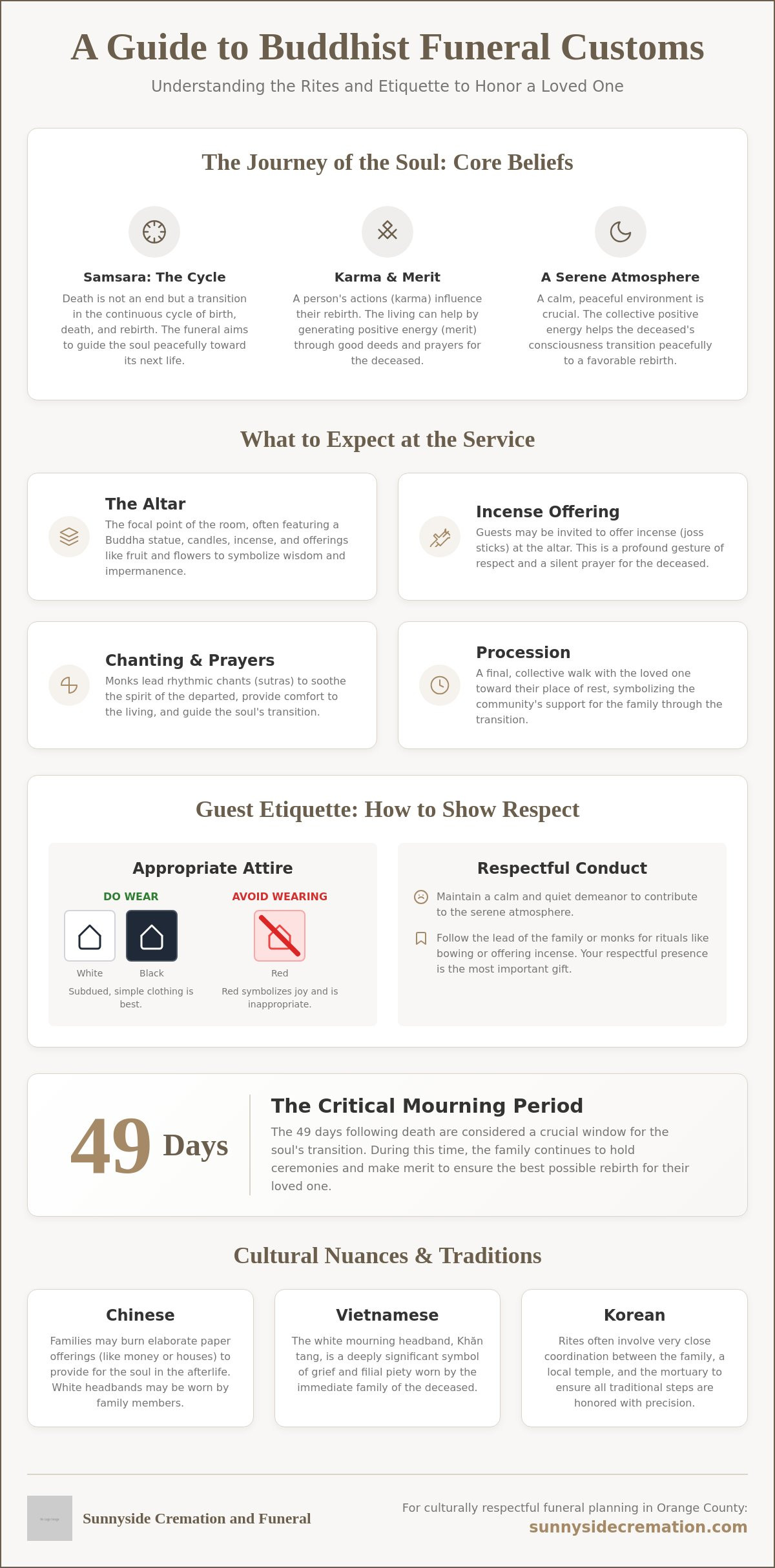
The transition between lives is heavily influenced by karma, which is the sum of a person's actions and intentions. At the moment of passing, the deceased's state of mind is considered crucial. It should ideally be one of peace and detachment. Samsara is the continuous cycle of birth, death, and rebirth. To support a peaceful transition, families and friends engage in the practice of transferring merit, or Punya. By performing good deeds or participating in Buddhist funeral traditions, the living generate positive energy. This merit is then dedicated to the deceased to help them find a path toward a better rebirth.
The Role of the Monk and the Community
Monks play a central role as spiritual guides during the ceremony. Their presence brings a sense of order and sacredness to the space. You'll often hear them leading rhythmic chants that serve several purposes. These prayers aren't just for the dead. They provide comfort and wisdom to the living, reminding everyone of the impermanent nature of life. The community's responsibility is equally important. In many traditions, such as a Vietnamese or Korean funeral, the community gathers to provide a supportive presence for the grieving family. This communal prayer carries significant spiritual weight, as the collective intention of many voices helps to create a powerful field of merit and support for the soul's next steps.
Traditional Rites and the Funeral Service Flow
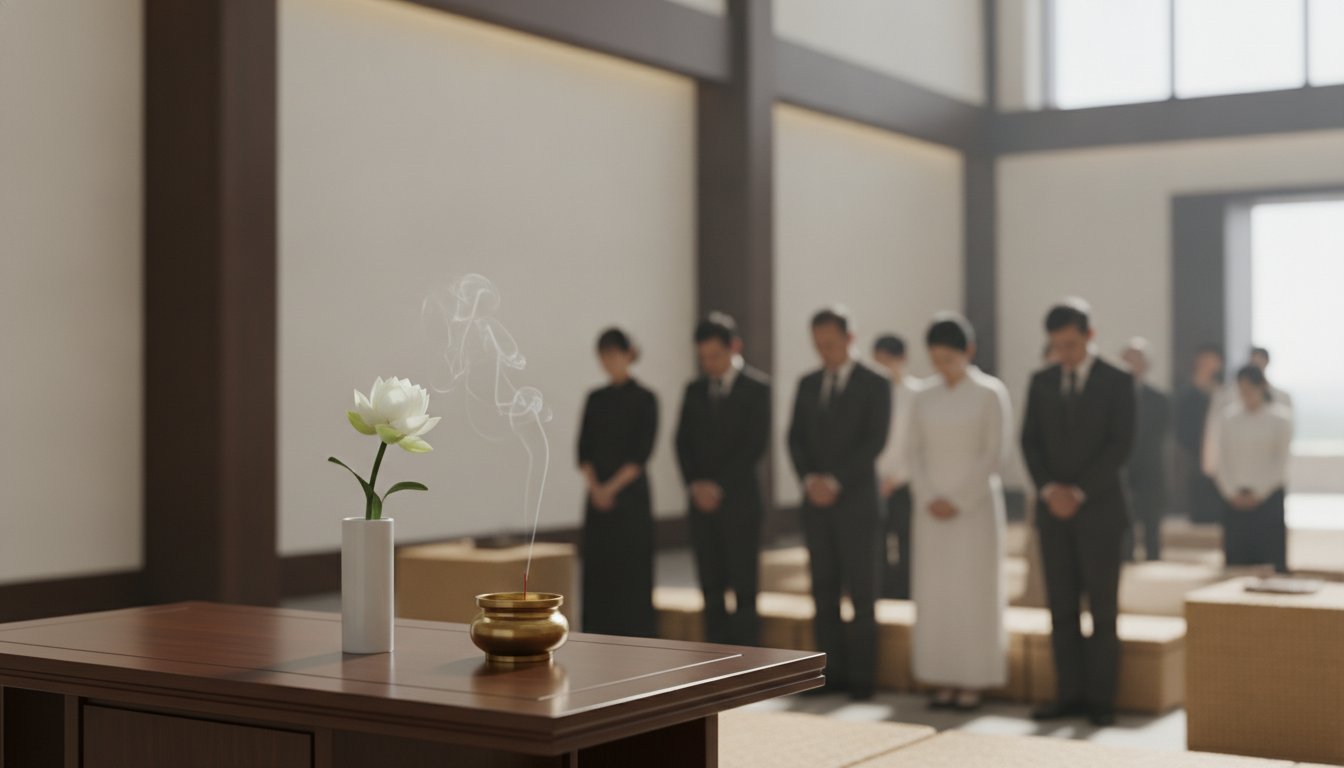
When you step into the service hall, the visual landscape is often the first thing you'll notice. Understanding what to expect at a Buddhist funeral begins with the altar, which serves as the focal point of the room. You'll likely see a statue of the Buddha, flickering candles, and vibrant offerings of fresh fruit and flowers. These elements aren't merely decorative. They symbolize the light of wisdom and the inherent impermanence of all things. The atmosphere is designed to be meditative, helping the living focus on the spiritual transition of their loved one.
Offering incense, or joss sticks, is a core ritual that guests are often invited to perform. You'll usually approach the altar, bow slightly with your hands together in a prayer position, and place the incense in a communal burner. This gesture is a profound sign of respect and a silent prayer for the deceased's journey. These Buddhist Death Rites create a sensory connection to the sacred, filling the air with a scent that many find deeply grounding during times of grief.
The service itself is characterized by rhythmic chanting led by monks or lay leaders. These sutras are meant to soothe the spirit of the departed and provide comfort to those left behind. Following the prayers, a procession may take place. This is a final, collective walk with the loved one toward their place of rest, symbolizing the community's commitment to supporting the family through every step of this transition.
Cultural Variations: Chinese, Vietnamese, and Korean Traditions
Every culture brings its own beautiful nuances to the faith. In a Chinese funeral, you might see family members wearing white headbands or burning elaborate paper offerings to provide for the soul in the afterlife. For those attending a Vietnamese funeral, the white mourning headband, known as Khăn tang, is a deeply significant symbol of grief and filial piety. Korean funeral rites often involve a very close coordination between the local temple and the mortuary to ensure every traditional step is honored with precision. If you are helping a family arrange a Vietnamese funeral package or a similar cultural service, having a guide who understands these specific steps can bring immense peace of mind.
The Cremation Ceremony and Witnessing
Cremation is the preferred choice for many Buddhist families because it mirrors the Buddha's own transition and represents the release of the spirit from the physical form. In Orange County, many families find comfort in a witnessed cremation. This allows loved ones to be present as the process begins, providing a final, quiet moment of closure. Afterward, the remains are carefully collected and may be placed in a columbarium at local landmarks like Forest Lawn or Rose Hills. This final placement serves as a place of legacy where family can return for future prayers and reflections.
Guest Etiquette: What to Wear and How to Act
Entering a space of mourning requires a gentle touch and a quiet heart. When you're considering what to expect at a Buddhist funeral, your primary goal is to provide a steady, supportive presence for the grieving family. While the rituals may feel unfamiliar, the underlying spirit is one of universal compassion. Observing the room and moving with a sense of deliberate patience will help you feel at ease. It's perfectly okay to be a silent observer, as your respectful witness is a meaningful contribution to the collective merit being shared.
Color symbolism is perhaps the most important aspect of funeral attire. In many Buddhist traditions, white is the primary color of mourning, symbolizing purity and the soul's transition. While the immediate family will likely be in white, guests are generally expected to wear somber, dark colors like black, dark grey, or navy blue. You must strictly avoid wearing red. In many Asian cultures, red is reserved for celebrations and weddings; wearing it to a funeral is considered a profound sign of disrespect. In our local Southern California communities, a standard of business-casual respect is common, prioritizing modesty and neatness over formal luxury.
Monetary gifts, often referred to as "condolence money" or Koden in Japanese traditions and Li Shi in others, are a thoughtful way to support the family with funeral expenses. If you choose to give, place a crisp, new bill inside a plain white envelope or a specific funeral envelope. Hand it to the family or place it on the designated table with both hands as a sign of sincerity and stewardship of the relationship.
Appropriate Attire for Buddhist Services
Modesty is a key sign of reverence in a sacred space. Ensure that your clothing covers both your shoulders and your knees. Jewelry should be kept simple and understated, avoiding anything flashy or distracting. You should also be prepared to remove your shoes, especially if the service is held within a temple. Wearing clean, plain socks is a practical way to remain comfortable while honoring this traditional requirement for cleanliness and humility.
Participating in the Rituals
To better understand the Rituals and Symbolism of Buddhist Funerals, it's helpful to watch the family's movements. If you're invited to the altar to offer incense, the "three-bow rule" is a common practice. You'll bow once as you approach, once after placing the incense, and once as you depart. If you belong to a different faith, you don't need to pray or chant. A simple, silent bow or a moment of quiet reflection is a perfectly acceptable way to show your respect. Guests should follow the lead of the family when bowing toward the casket.
The Mourning Period: 49 Days and Beyond
In the Buddhist tradition, the journey of the soul does not conclude when the funeral ends. For many families, the most significant work begins after the service. This period is a time of active stewardship, where the living provide the spiritual fuel necessary for the deceased's transition. Understanding what to expect at a Buddhist funeral means recognizing that the 49 days following the passing are the most critical. This window represents the time the soul spends in an intermediate state before its next rebirth. It's a time of profound potential, where the actions of the living can directly influence the soul's future path.
To assist in this journey, families often hold prayer services every seven days. These weekly gatherings are opportunities to generate merit through chanting and offerings. Many families also choose to observe a vegetarian diet during this time. By abstaining from meat, they practice compassion for all living beings, which creates positive karma that can be dedicated to their loved one. It's a quiet, daily act of devotion that honors the sanctity of all life and helps to maintain a peaceful heart during the grieving process.
Once the 49-day mark passes, the intensity of the mourning rituals begins to shift. At the 100-day mark, a special ceremony is often held to celebrate the soul's successful transition. This milestone marks the end of the initial, heavy period of grief and moves the family toward a long-term practice of remembrance. It is a moment of both closure and continuation, acknowledging that while the physical presence is gone, the spiritual bond remains unbreakable.
Creating a Home Altar
Establishing a dedicated space at home allows the family to maintain a daily connection with the departed. A home altar typically features a photograph of the loved one, a small incense burner, and daily offerings of fresh water or fruit. These simple gestures keep the memory alive and provide a focal point for daily reflection. For those looking to ensure these traditions are carried forward by future generations, exploring funeral pre-planning for Asian families can provide a structured way to preserve your family's unique legacy and cultural values.
Annual Memorials and Ancestor Veneration
The commitment to a loved one's spirit continues for years through annual festivals and memorials. During Qingming, families visit burial sites to clean the headstones and offer prayers. Similarly, the Ullambana festival is a time to honor ancestors and provide for those who may be suffering in other realms. These traditions ensure that the spirit is never forgotten, eventually transitioning into the revered ancestral lineage of the family. If you need help coordinating these ongoing rites or need guidance on local customs, you can find support through a dedicated Mandarine Funeral home that understands these deep-rooted cultural values.
Planning a Buddhist Funeral in Orange County
Planning a final tribute is a sacred responsibility that requires both spiritual sensitivity and practical precision. In Orange County, families often find themselves managing complex logistics while navigating the depths of their grief. Knowing what to expect at a Buddhist funeral from a planning perspective means finding a partner who understands the delicate balance between ancient tradition and modern requirements. We provide a calm presence, guiding you through every intricate detail to ensure your loved one's transition is handled with the highest level of reverence. Our goal is to reduce the cognitive load on your family, providing a steady hand through a landscape of uncertainty.
Beyond the spiritual rites, there are practical California-specific steps that must be managed with care. This includes securing necessary burial permits and obtaining death certificates through local health departments. These tasks can feel overwhelming during a period of emotional vulnerability. Our team handles these methodical procedures for you, leading you through the paperwork in a way that feels manageable rather than heavy. This structural clarity allows you to focus your energy on the spiritual significance of the mourning period and the comfort of your family, knowing the logistical details are in capable hands.
Local Coordination and Memorial Parks
Choosing the right final resting place is a key part of the planning process. Many families in our community look toward established landmarks for burial or niche placement. We specialize in Chinese funeral planning with Forest Lawn, as well as coordinating services at Rose Hills. Our team maintains close relationships with local Buddhist temples in Garden Grove and Westminster to ensure every ritual is honored according to your specific tradition. We take the lead in aligning the monk’s schedule with both the mortuary and cemetery timing, preventing any unnecessary stress or delays during the service.
A Compassionate Partner in Orange County
As a family-owned mortuary, we share the cultural values that define our diverse community. We understand that language is more than just a tool for communication; it's a bridge to comfort, trust, and peace of mind. Our Mandarin and Vietnamese speaking staff provide language-first care, ensuring that every detail of a Vietnamese funeral package or a Chinese Funeral Package is understood and respected. We act as your advocate and guide, blending professional expertise with the humility of a dedicated community servant. For more information on how we support these sacred traditions, please explore our comprehensive guide on Buddhist funeral services Orange County. We're here to ensure your family feels supported, heard, and spiritually prepared for the journey ahead.
Honoring a Sacred Transition with Confidence
Navigating the rituals of a final farewell is a profound act of love and stewardship. By understanding the spiritual purpose of these rites and the etiquette required of guests, you provide essential support to both the living and the deceased. From the symbolic incense offerings to the critical 49-day mourning period, every gesture helps create a field of merit for your loved one's journey. Knowing what to expect at a Buddhist funeral allows you to replace uncertainty with a sense of peace and presence.
If you're beginning the planning process, you don't have to manage these intricate details alone. As a family-owned mortuary in Orange County, we specialize in coordinating with local landmarks like Forest Lawn and Rose Hills. Our Mandarin and Vietnamese speaking staff are here to ensure every cultural nuance is respected with gentle professionalism. Please contact Sunnyside Cremation and Funeral for compassionate Buddhist funeral guidance today. We're honored to walk beside you, providing a steady hand and a calm presence during this sacred time of transition.
Frequently Asked Questions
Is it okay to attend a Buddhist funeral if I am not Buddhist?
Yes, you are absolutely welcome to attend regardless of your personal faith or background. Buddhist families deeply appreciate the presence of friends and community members who come to honor their loved one's memory. You don't need to participate in the chanting or specific rituals to show your support. Simply standing or sitting respectfully during the ceremony is a meaningful way to share in the collective merit of the service.
What color should I wear to a Buddhist funeral as a guest?
Guests should choose dark, somber colors such as black, charcoal grey, or navy blue. While the immediate family often wears white to symbolize mourning, guests typically stick to traditional funeral attire. It's vital to avoid wearing red, as this color is associated with happiness and celebration in many Asian cultures. Choosing modest, understated clothing shows that you understand what to expect at a Buddhist funeral and respect the family's grief.
How long does a typical Buddhist funeral service last?
A typical service generally lasts between 45 and 90 minutes. The duration depends on the specific tradition being followed and the length of the chanting led by the monks. Some ceremonies might include a longer procession or additional eulogies from the family. It's a good idea to arrive about 15 minutes early to find your seat and settle into the quiet, meditative atmosphere of the hall.
Should I bring flowers or a gift to the funeral?
White flowers or monetary gifts are the most appropriate offerings for the family. If you choose flowers, lilies or chrysanthemums are traditional choices; however, you must ensure there are no red blooms in the arrangement. Condolence money should be placed in a plain white envelope and handed to the family with both hands. These gestures provide practical support and demonstrate your sincere care for the family during their transition.
What is the significance of the incense at the service?
Incense serves as a symbolic bridge between the physical world and the spiritual realm. As the smoke rises, it represents the purification of the space and the spreading of the Buddha's teachings. Offering incense is a way for you to pay your final respects and send a silent prayer for the deceased's favorable rebirth. It's a sensory ritual that helps everyone present feel a deeper connection to the sacredness of the moment.
Are children allowed to attend Buddhist funeral rites?
Children are usually welcome and encouraged to attend Buddhist funeral rites. In this tradition, death is seen as a natural part of the cycle of life, and involving children helps them understand this transition early on. Most families appreciate the presence of all generations, as it symbolizes the continuation of the family lineage. Just ensure that younger children are guided to remain quiet and respectful during the more solemn chanting portions of the service.
What happens if I accidentally wear red or a bright color?
If you realize you've worn a bright color by mistake, the best approach is to remain calm and discreet. You might try to cover the bright item with a dark coat or sweater if you have one available. While red is traditionally avoided, the family will likely understand that your presence comes from a place of love and sincerity. Your respectful behavior and kind words will always carry more weight than an accidental wardrobe choice.
Can I take photos or videos during the ceremony?
Taking photos or videos is generally discouraged during the sacred portions of the ceremony. Because a funeral is a deeply private and spiritual event, it's best to keep your phone put away to maintain the meditative atmosphere. If the family has hired a professional or specifically asked you to document the day, then it is acceptable. Otherwise, focusing on being fully present helps you better understand what to expect at a Buddhist funeral and honor the rites.


