

What if the most respectful funeral flowers aren’t the ones a general guide recommends, but the ones the family would find meaningful? Choosing Vietnamese funeral flowers and customs to honor can feel uncertain when you’re unsure about colors, arrangements, or what to expect at the service. It’s thoughtful to seek guidance, but no single set of customs represents every Vietnamese family.
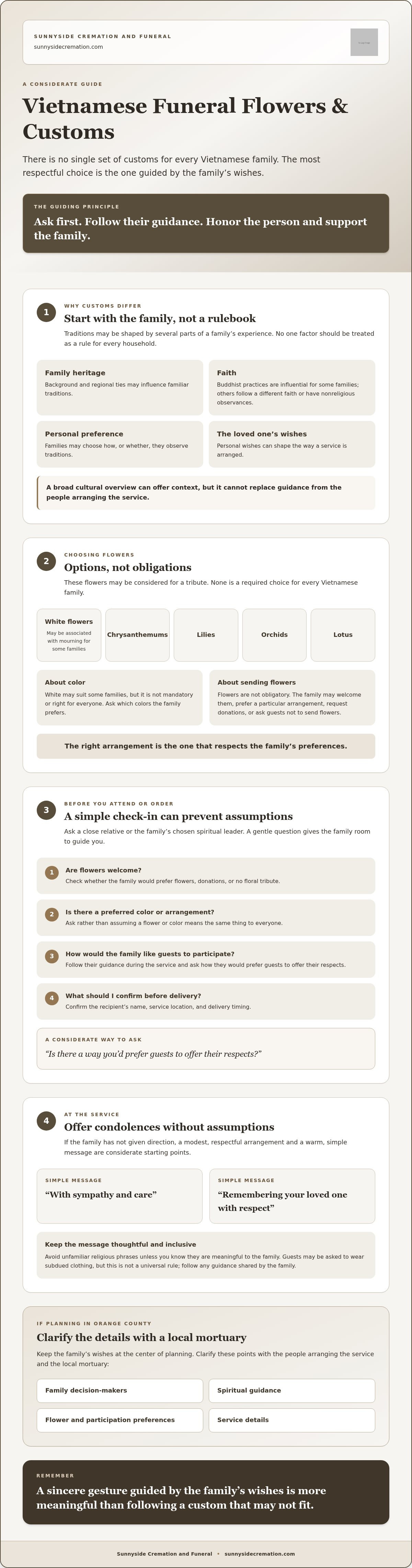
Traditions can differ by family, faith, regional background, and personal preference. White may be associated with mourning for some families, and guests may be asked to wear subdued clothing, but these practices aren’t universal rules. Let the family’s wishes guide your choices. This guide covers ways to select a considerate floral tribute, prepare for common ceremony elements, and offer condolences without making assumptions. It also includes practical questions to ask before attending or ordering flowers.
Key Takeaways
- Let the family’s preferences guide your flower choice. White flowers, chrysanthemums, lilies, orchids, or lotus may be options, not universal requirements.
- Understanding Vietnamese funeral flowers and customs starts with recognizing that traditions vary by family, faith, and personal preference.
- Ask whether flowers are welcome and how to participate before attending, then follow the family’s guidance during the service.
- Consider how religious or nonreligious observances may shape the ceremony. Don’t assume every family follows the same practices.
- When planning in Orange County, clarify the family’s decision-makers, spiritual guidance, preferences, and service details with a local mortuary.
Vietnamese Funeral Flowers and Customs: What Families May Value
You don’t need to memorize a list of supposed rules to show respect. A sincere gesture guided by the family’s wishes is more meaningful than following a custom that may not fit their beliefs or preferences. Funeral practices are shaped by heritage, regional background, faith, and personal choice. Vietnamese funeral flowers and customs can’t be reduced to one arrangement or ceremony that suits every household.
Vietnamese communities are diverse, and families may honor a loved one in different ways. A broad overview of Vietnamese funeral customs can offer cultural context, but it shouldn’t replace guidance from the people arranging the service. Let their preferences, rather than assumptions, lead your decisions.
Why Vietnamese funeral practices vary between families
Family heritage and regional background may influence which traditions feel familiar. Religious beliefs also matter. Buddhist practices are influential for some Vietnamese families, while others follow a different faith or have nonreligious observances. Personal wishes can shape how traditions are observed, even within the same family.
If you’re uncertain, ask a close relative or the family’s chosen spiritual leader. A gentle question such as, “Is there a way you’d prefer guests to offer their respects?” lets the family guide you without asking them to speak for every Vietnamese household.
How flowers can express sympathy and remembrance
Flowers can express condolence and remembrance, but they aren’t an obligatory offering. The family may welcome a floral tribute, prefer a particular arrangement, request donations, or ask guests not to send flowers. Check first to avoid an unwanted delivery and make sure your gesture reflects what the family finds comforting.
If flowers are welcome, ask whether the family has a preference rather than assuming a specific color or flower carries the same meaning for everyone. Check with a relative or review any instructions shared with guests. A simple, respectful tribute is enough. What matters most is honoring the person who has died while supporting those who are grieving.
Let the family guide cultural decisions. Their wishes are the clearest expression of what will feel respectful to them.
Choosing Vietnamese Funeral Flowers Without Assuming Their Meaning
Flower choices can feel like a small decision with a lot of meaning attached. White flowers, chrysanthemums, lilies, orchids, and lotus may all be considered for a funeral tribute, but none is a required choice for every Vietnamese family. A flower’s symbolism and a family’s preferences can vary. Avoid relying on broad rules about what a particular color or bloom must represent.
The university-affiliated resource Death Rituals in Vietnamese Society offers context about Vietnamese mourning practices and their social setting. It can help you understand why customs deserve thoughtful consideration, but it can’t tell you what a specific household wants. Ask the family or someone they’ve chosen to guide arrangements.
Are white flowers appropriate for a Vietnamese funeral?
White flowers may be chosen for a solemn tribute, but white isn’t mandatory or suitable for every family. If you’re unsure about color, ask a relative what palette the family prefers. You can also check with the funeral home or florist before ordering. The right arrangement is the one that respects the family’s preferences.
Check before ordering a large or prominently displayed tribute. A brief question can clarify whether flowers are welcome, which styles or colors are preferred, and where the arrangement should be sent. If no one has shared guidance, don’t present your choice as a cultural rule.
How to choose an arrangement and condolence message
If the family hasn’t offered direction, a modest, respectful arrangement is a considerate starting point. Keep your message warm and simple. “With sympathy and care” or “Remembering your loved one with respect” conveys support without assuming the family’s religious beliefs. Avoid unfamiliar religious phrases unless you know they’re meaningful to the family.
Before ordering, confirm the recipient’s name, service location, and delivery timing. These details help the tribute reach the right place at a suitable time. If the family prefers donations, a particular arrangement, or no flowers, respect that request. Their guidance matters more than choosing what you believe is traditional.
Families arranging a service in Orange County can review information about Vietnamese funeral services from Sunnyside Cremation and Funeral. Keep the family’s cultural and personal priorities at the center of each decision.
Vietnamese Funeral Customs: Ceremony, Remembrance, and Family Wishes
A Vietnamese funeral may include time for relatives and friends to gather, share memories, pray, or attend a memorial service. The order and details depend on the family’s beliefs and arrangements. Some services include a religious leader or specific prayers; others follow different faith traditions or are nonreligious. There’s no single schedule or set of rituals guests should expect at every service.
For a broader cultural overview, Vietnamese funeral customs can provide helpful context. Use general information as background, not as a checklist of what a particular family must do. A family may continue some traditions, adapt them, or choose a personal approach that feels right for their loved one.
What might happen at a Vietnamese funeral service?
There may be a period of visitation or remembrance, followed by a service or another observance. The length, setting, and sequence can vary, so check the family’s announcement for practical details rather than relying on assumptions. A religious leader, family member, or another person chosen by the family may lead the ceremony.
Take your cues from the family and the people leading the observance. Wait to see when it’s appropriate to speak, bow, or join a prayer. If you’re unsure whether to participate, quiet attention is respectful. You can also ask a relative discreetly beforehand, especially if you’re unfamiliar with the service.
How ancestor remembrance and Buddhist practice may shape observances
For some households, remembrance of ancestors is part of how family bonds and a loved one’s memory are honored. Don’t assume this belief or practice applies to every Vietnamese family. Buddhist prayers or clergy may be included in some services, while other families may draw on another religion or no religious observance.
If you’re helping with arrangements or want to understand a ceremony, ask a close relative what the family has planned. They may suggest speaking with the family’s chosen spiritual leader about prayers or participation. Keep the question open, such as, “Are there any parts of the service you’d like guests to know about?”
Examples of Vietnamese funeral customs can offer context, but they are not requirements for every family. Learn enough to be considerate, then let the family’s choices guide how you participate. When questions arise about Vietnamese funeral flowers and customs, the most reliable guidance comes from the people honoring their loved one.
Vietnamese Funeral Etiquette: Visiting, Offering Condolences, and Sending Flowers
A few simple steps can make a visit feel more manageable: confirm attendance if the family has shared a way to respond, follow their instructions, offer a brief condolence, and send flowers only if they’re welcome. Asking a trusted relative about clothing, participation, or flowers is respectful, not intrusive. It can spare the family from receiving a gesture that doesn’t fit their wishes.
Expectations differ between households, so don’t assume a particular clothing color, greeting, prayer, or form of participation is required. Use the family’s service instructions as your guide. If no instructions are available, a calm presence and consideration for the family’s needs are good places to begin.
What should guests say and do at a Vietnamese funeral?
Keep condolences simple and sincere. You might say, “I’m sorry for your loss” or “I’m thinking of your family.” There’s no need to ask relatives for details about the death or expect them to continue a conversation. A quiet expression of care is enough.
During the service, follow cues from family members or the person leading the ceremony. If you’re unsure whether to bow, join a prayer, or take part in another gesture, remain respectfully present and ask a relative privately when there’s a suitable moment. Confirm clothing preferences rather than inferring them from broad cultural guidance.
How to send flowers respectfully in Orange County
Before ordering, check whether flowers are welcome and ask where and when they should arrive. Confirm the recipient’s name, service location, and delivery timing with the family or mortuary. This is especially helpful if the family has chosen a particular arrangement, requested donations, or asked guests not to send flowers.
For more local context, read this guide to Vietnamese funeral services in Orange County. It may help you prepare questions about family preferences and arrangements. Sunnyside Cremation and Funeral offers Vietnamese funeral services in Garden Grove and other Orange County communities. You can also review its Vietnamese funeral services.
Thoughtful etiquette isn’t about getting every detail perfect. It’s about listening, respecting what the family asks, and offering support without adding to their burden.
Planning a Vietnamese Funeral in Orange County Around the Family’s Wishes
Planning becomes more manageable when the family agrees on what matters most and who will communicate those decisions. A local mortuary can help coordinate arrangements, while relatives set the cultural, spiritual, and personal priorities. This makes room for meaningful traditions without assuming every household wants the same ceremony.
A short planning checklist can keep conversations clear:
- Identify decision-makers: Agree on who will communicate the family’s choices and answer questions.
- Discuss preferences: Ask which customs, flowers, prayers, and forms of remembrance feel meaningful to the family.
- Confirm spiritual guidance: If the family wants religious participation, identify who will lead or advise on it.
- Clarify service details: Confirm the location, schedule, guest guidance, and how information will be shared.
- Record personal wishes: Make space for the loved one’s stated preferences, especially if they differ from relatives’ expectations.
Questions families can discuss before arranging the service
Start with open questions rather than assumptions: “Are there customs you’d like included?” or “Would the family welcome flowers?” Decide who will relay answers to guests, clergy, florists, and the mortuary. Having one person share updates can reduce confusion as details change or are passed along.
These conversations can also distinguish the loved one’s own wishes from practices relatives expect to follow. There may not be one answer that satisfies everyone, so taking time to listen can help the family make considered choices. Clear notes about preferences and service details give the people helping with arrangements a reliable reference.
Finding culturally respectful support in Orange County
Sunnyside Cremation and Funeral offers Vietnamese funeral services and serves families in Garden Grove and other Orange County communities. Families can discuss their traditions and service needs, then decide which arrangements fit their wishes. A local mortuary can help coordinate practical details without deciding which customs the family should observe.
If Buddhist guidance is relevant to your family, the overview of Buddhist funeral services in Orange County may help you prepare questions about spiritual considerations. For information about culturally respectful arrangements, visit Sunnyside Cremation and Funeral.
Thoughtful planning for Vietnamese funeral flowers and customs begins with listening. The family’s choices can guide each step, from selecting a tribute to shaping a ceremony that honors the person who has died.
Honor Your Loved One With Thoughtful, Family-Led Choices
Choosing Vietnamese funeral flowers and customs with care doesn’t mean knowing every tradition. It means recognizing that families may differ, asking what feels meaningful, and letting their wishes guide your choices. Flowers can be a gentle tribute when they’re welcome. A quiet presence and sincere condolences can offer support in their own way.
For families planning a service, clear conversations about spiritual guidance, ceremony details, and personal preferences can help everyone move forward with greater confidence. No assumed rule needs to take the place of listening to the people closest to the person who has died.
Sunnyside Cremation and Funeral offers Vietnamese funeral services and serves Garden Grove and communities across Orange County. If you’d like to discuss arrangements shaped around your family’s needs, contact Sunnyside Cremation and Funeral.
One considerate question at a time can help you create a tribute rooted in love, dignity, and remembrance.
Frequently Asked Questions
What flowers are appropriate for a Vietnamese funeral?
White flowers, chrysanthemums, lilies, orchids, or lotus may be suitable choices, but no flower is right for every family. Vietnamese funeral flowers and customs vary with family preferences, faith, and personal wishes, so avoid assuming a bloom has a fixed meaning. Ask a relative whether flowers are welcome and whether the family prefers a certain style or color. Without specific guidance, choose a modest, respectful arrangement.
Can I send flowers to a Vietnamese funeral service?
Yes, if the family welcomes them. Some families may prefer flowers, while others may request donations, a particular type of tribute, or no flowers. Check before ordering, especially for a large or prominent arrangement. Confirm the recipient’s name, service location, and delivery timing with the family or mortuary. If flowers aren’t requested, a brief condolence message or quiet visit can still express care.
What happens at a Vietnamese funeral?
A service may include a family gathering, a period of visitation or remembrance, prayers, or a memorial ceremony. The order and details depend on the family’s beliefs and arrangements, so there’s no single schedule to expect. A religious leader or family member may guide parts of the ceremony. As a guest, follow cues from the family or service leader about when to speak, bow, or participate.
What should I say to a Vietnamese family after a death?
Offer a brief, sincere condolence, such as “I’m sorry for your loss” or “I’m thinking of your family.” Keep the focus on care, and don’t press relatives to discuss what happened. If you’re attending a service, follow the family’s lead and allow them space to grieve. A quiet presence can be meaningful. You don’t need perfect words or knowledge of every custom.
Do all Vietnamese families follow Buddhist funeral customs?
No. Some Vietnamese families include Buddhist prayers or clergy, while others follow another religion or choose nonreligious observances. Family heritage, faith, and personal wishes all shape how a service is arranged. Don’t assume a family’s beliefs based on their background. If you’re unsure about a prayer or ceremony, ask a relative or the family’s chosen spiritual leader how guests may respectfully participate.
How can I make sure funeral flowers are delivered respectfully in Orange County?
First, ask whether flowers are welcome and confirm where and when they should arrive. Verify the recipient’s name, service location, and delivery details with the family or mortuary before ordering. This is useful for services in Garden Grove, Buena Park, La Mirada, Cerritos, Anaheim, La Habra, Fullerton, Norwalk, Cypress, Artesia, Stanton, Tustin, Orange, Los Alamitos, Westminster, and Irvine. Follow any instructions the family provides.
For help discussing a Vietnamese funeral service in Orange County, contact Sunnyside Cremation and Funeral.


